
Release file
Released: March 7, 2025
Runtime: 03:02
Label / channel trail: JENNIE
Sound: She put her own name in the hook, made everybody else audition for it, and then left a capybara holding the evidence.
Sources:  Exact official playlist uploadDaily+267.2KTotal views297.8M.
RaeRae Reacts · K-pop · JENNIE
like JENNIE
She put her own name in the hook, made everybody else audition for it, and then left a capybara holding the evidence.
Watch the official video
Open the official JENNIE upload on YouTube ↗Daily+267.2KTotal views297.8M
Release file
Overall vibe: a two-minute personal logo with teeth
This is not JENNIE sitting us down for a thoughtful introduction. It is JENNIE kicking the door open, pointing at the nameplate and assuming we already understand why the room belongs to her. The bass is blunt, the percussion stays clipped and impatient, and the song keeps moving like it has an expensive appointment in eight minutes.
That confidence is the appeal and the risk. “like JENNIE” is built as impact first, explanation later. It does not gradually earn the swagger; it starts at full volume and makes the listener decide whether to catch up. On a first play, the repetition can feel almost aggressively simple. On the third play, the name has moved into the part of your brain normally reserved for phone numbers you did not mean to memorize.
Inside Ruby, that makes sense. The album has more emotional rooms than this single suggests—desire, loneliness, performance, fame, soft spots that do not photograph as neatly. “like JENNIE” is the nameplate near the entrance, not the entire house. Reviewing the whole album from this track would be judging a mansion by the doorbell, even if the doorbell has a frightening bass system.
The hook vibe: her name stops being a noun
The hook is not trying to hold a conversation. It stamps the same name until “JENNIE” stops behaving like a person and starts functioning as rhythm, logo and challenge. That is clever branding, yes, but it also fits her delivery. The consonants hit cleanly enough to become part of the beat.
What I love is the nerve. A weaker performance would make the repetition feel like merchandise copy. JENNIE changes the weight around it—breathier here, sharper there, then the Korean rap arrives and gives the song the actual proof behind the slogan. She tightens the cadence, lets the vowels snap and briefly turns the record from a campaign into a microphone test.
What I wanted more of is one additional musical turn. The track runs a little over two minutes, and it leaves just as the contrast becomes interesting. Another verse, a bridge that pulled the beat apart, or even twenty seconds of vocal mess would have made the final hook hit harder. The song knows exactly what its job is. I just wish it had stayed long enough to clock overtime.
Lyrics and meaning: confidence, imitation and the cost of becoming a reference point
The surface message is easy: other people may copy the clothes, posture, phrases or attitude, but imitation does not reproduce the person. Under that is a messier celebrity argument. JENNIE has spent years being treated as both a human being and a style template. Every airport look becomes a mood board. Every facial expression becomes a reaction image. Every quiet period becomes evidence for somebody’s theory.
So when she makes her own name the chorus, it can sound vain—and it is vain, joyfully—but it is also reclamation. She is using the thing everybody else already turned into shorthand. The song does not ask whether the brand exists. It asks who gets to control it.
The Korean rap matters because it puts friction into an otherwise polished slogan. Her delivery gets less glossy and more pointed. That shift is why the track feels like JENNIE rather than a generic self-confidence brief handed to her by six writers. ZICO’s writing credit is worth noting, but a credited pen does not automatically create a performance. The words still have to survive in her mouth. They do.
The video story: a fashion campaign keeps losing structural integrity
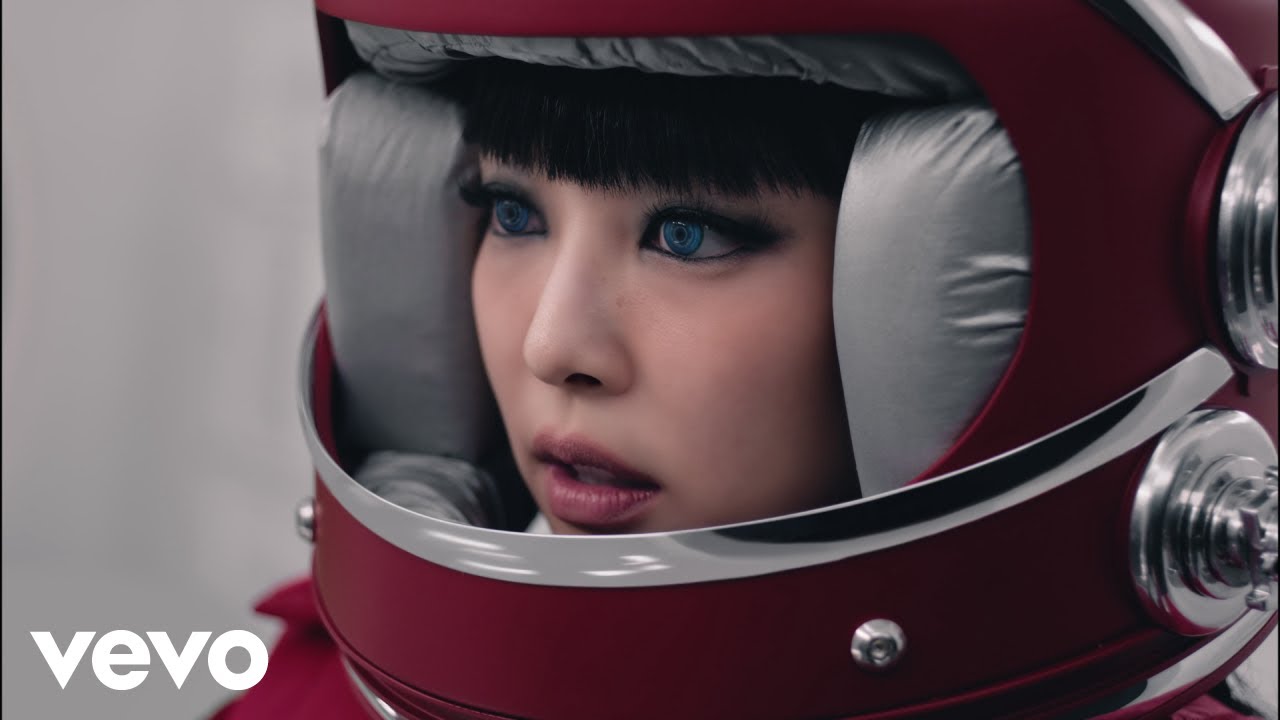
Director HANBAGO starts with controlled isolation. JENNIE appears in an astronaut-like suit, suspended inside a sterile space as if the song arrived from its own orbit. Then the floor keeps changing: black voids, silver chambers, red pressure, flesh-toned formations and dance spaces where human bodies become the walls.
The plot is not complicated because the central test is visual: can she hold the middle while everything around her moves? The dancers crowd, circle, frame and nearly swallow the set. The camera cuts from huge formations to tiny gestures—a shoulder setting into place, a glance held half a beat longer, a pause that does the work of a full costume change. JENNIE wins the close shots because she understands that stillness can be louder than choreography.
The wide shots do something different. They turn her influence into scale. One person becomes a formation; the formation becomes a symbol; the symbol gets copied until the whole room looks organized around the same center. That is the song’s imitation argument translated into bodies rather than another paragraph of lyrics.
Easter eggs, visual jokes and the capybara crime scene
- The space suit: it places her outside the ordinary pop room before the beat even settles. She is not arriving at the party; she is landing on it.
- Red, black and silver: the palette keeps one foot in BLACKPINK’s visual history without turning the solo video into a group callback reel.
- Body architecture: dancers repeatedly form frames, tunnels and moving walls. Influence is shown as something that builds an environment around its source.
- The disappearing floor: several transitions make the set feel unstable while JENNIE remains composed. Everything changes except the center.
- The capybara: after two minutes of precision and image control, the video replaces its star with the internet’s most unbothered animal. It punctures the glamour before the glamour can become unbearably serious.
That ending is not random nonsense pasted on for memes. The video spends its runtime insisting that nobody can reproduce JENNIE, then substitutes something completely unreproducible in context. It is confidence with a pressure-release valve. Also, yes, the capybara looks calmer than I have felt in my entire adult life.
The credits and the bigger Ruby argument
“like JENNIE” arrived with Ruby on March 7, 2025, after the members of BLACKPINK had built separate solo infrastructures outside the old all-roads-lead-to-YG model. That context gives the song more weight than a standard vanity single. OA Entertainment is JENNIE’s company. The album is not simply a label assigning her a character; it is the first full-scale test of what she chooses when the solo machinery is hers to steer.
Diplo’s production fingerprint helps explain the low-end economy and the refusal to overdecorate the track. Tayla Parx and Kiddo A.I. bring pop-writing experience, while ZICO’s credit makes the Korean rap texture less surprising. Chris “Tek” O’Ryan’s lead-vocal production credit matters too: the vocal is treated as percussion without sanding away every grain in JENNIE’s tone.
The most useful way to hear the song is not as “JENNIE proves she is better than everyone.” It is “JENNIE understands that her public image is already a product, so she is going to be the loudest person in the room when that product gets named.” That does not make every repeated hook profound. It does make the repetition part of the story instead of an excuse for not writing a third verse.
RaeRae verdict
The song: 8.5/10. The bass, clipped delivery and Korean rap are stronger than the deliberately repetitive hook. The hook still knows exactly what job it was hired to do, and unfortunately it is excellent at that job.
The video: 9.3/10. Precise, strange, dance-heavy and willing to puncture its own glamour before the credits. The formations reward rewatches; the capybara rewards being alive on the internet.
What I love: the Korean rap, the physical confidence in the close shots, and a director who understood that “expensive” is not the same thing as “interesting.”
What I wanted more of: one musical detour and another thirty seconds. If your legal name is also Jennie, congratulations on receiving the world’s most expensive personalized ringtone.
Official links and receipts
- JENNIE official video and director creditDaily+267.2KTotal views297.8M
- Sony Music Canada: Ruby release and JENNIE’s album statement
- Korean Music Awards: credited composers
- MusicBrainz: detailed recording personnel
Bottom line
like JENNIE turns a globally recognized name into hook, percussion and challenge. It works because self-branding is treated as labor rather than destiny: the song keeps asking whether an image can be owned by the person living inside it.
What changed every time I replayed it
Replay one tracks clipped consonants in the hook. Replay two follows how dancers repeat and distort the central identity cue. Replay three notices the quieter problem beneath the flex: if everybody wants to be “like JENNIE,” the real person can become the least available version of the name.
Repetition as production
A name hook can become advertising with a beat. Here repetition gains rhythmic function through spacing and vocal attack. The arrangement leaves enough air for each return to feel like punctuation. The danger remains—branding can eat biography—but the performance knows that danger and makes it visible.
The counterargument
Listeners who hear a slogan before a song are not missing the point. The slogan is the point, and it will feel exhilarating or exhausting depending on tolerance for self-mythology. JENNIE brings enough precision and self-awareness to make the exercise more than empty affirmation, though the lyric rarely escapes its own mirror.
What I would change
Give the bridge one image unrelated to fame, beauty or imitation. A private detail would make the final return of the name feel reclaimed rather than merely repeated louder.
Canonical profiles
Receipts
JENNIE’s official videoDaily+267.2KTotal views297.8M is the exact tracked file.
Final take
like JENNIE React examining the name hook, identity, choreography, self-branding, replay changes and verdict.