
RaeRae Reacts · WONHO · CORE
Don’t Wake Me Up!
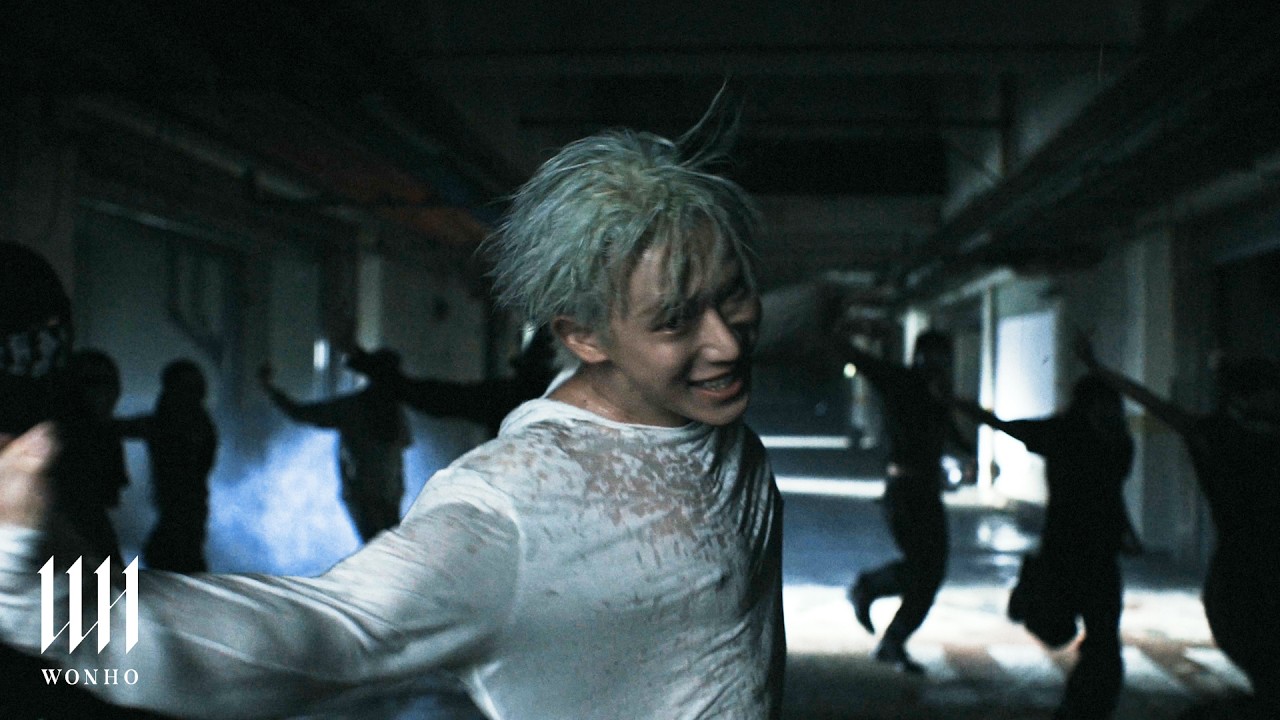
WONHO built a club inside a panic dream, barricaded the doors with bass, and left the chorus outside asking whether it was still on the guest list.
Release file
Released: July 21, 2026
Runtime: 02:37
Label / channel trail: WONHO; Highline Entertainment
Sound: Escalating club-pop built from heavy bass, pressure-release drops, a deliberately repetitive hook, and WONHO’s warmer vocal tone against the machine.
Lyrics: WONHO, BrotherSu, ENAN, and Sun Ahn
Composition: WONHO, ENAN, and Sun Ahn
Arrangement: WONHO and ENAN
Sources: Exact official playlist uploadDaily+14.2KTotal views4.2M; official CORE release credits cited below.
ArtistWONHO
ReleaseJuly 21, 2026
ProjectCORE
RaeRae verdictThe bass won; the missing verse still owes me money
Verdict: This works because WONHO’s warm voice gives the machinery a human pulse. It falls short because the song keeps reaching the drop before its emotional argument finishes speaking.
Jump to: Replays · Sound · Lyrics · Video · Celebrity lens · Credits · Final take
What the song means
WONHO described “Don’t Wake Me Up!” as wanting to stay inside a dream instead of returning to reality. That could have been a sad little synth song. He chose violence. The dream here is not quiet or soft. It is the place where desire gets louder than consequence and nobody has to explain what happens tomorrow.
The larger CORE concept makes that escape less shallow. RAW is the exposed self. SHELL is the armor built around old wounds. CRACK is the moment the protection starts failing. CORE is what remains. “Don’t Wake Me Up!” sits in the middle of that emotional undressing and says, for one night, leave me inside the fantasy.
WONHO participated in writing, composition, and production across the seven-track EP. That matters because CORE is being sold as his essential self. If you peel away the shell and find a pounding club beat, fair enough. Some people journal. Some people install a subwoofer.
The lyrics are a locked door, not a whole house
The central plea is blunt: leave him in the dream. That simplicity suits a club track because the line has to survive distortion, movement, and one bass drop arriving like it has a warrant. The problem is not repetition by itself. Dance music can repeat four words until they become religion. The problem is that the lyric gives the dream almost no furniture. What does he see there? Who is waiting? What part of waking hurts?
The CORE sequence supplies some of the missing context. RAW exposes him. SHELL protects him. CRACK shows the defense failing. CORE asks what remains after the image, muscle, scandal, praise, and public appetite finish taking their turns. Inside that frame, “don’t wake me up” sounds less like laziness and more like one exhausted person asking for a room where nobody needs anything from him.
I still wanted one concrete image. Give me a light under a door, a name on a phone screen, cold sheets, a car circling the same block: anything the listener can carry into the drop. WONHO’s delivery creates vulnerability, but the words keep making him perform emotional labor without enough lyrical equipment.
The symbols are doing more work than the plot
The car is mobility that cannot move. It should carry him somewhere, yet the crowd turns it into a glass cage. That is celebrity in one ugly little object: a person can travel everywhere and still have no private exit. The windows protect him from touch while keeping his face available for inspection.
The dancers and the crowd pull in opposite directions. Choreography gives WONHO control. Every count has a place, every body understands the assignment, and pressure becomes a shape he can command. The crowd has no formation. It surrounds, reaches, and turns attention into threat. Public performance is the world he can organize. Public possession is the world he cannot.
The dream is also not gentle. That matters. He is not escaping into a pastel cloud with one tasteful piano. He chooses noise, sweat, repetition, and physical force. Safety does not always look quiet. Sometimes safety is the one place loud enough to drown out everybody else.
The music video
What changed every time I replayed it
First listen: Why are people attacking his car? Also, why does the beat sound prepared to attack mine? This is sleep paralysis with a gym membership.
Second listen: The missing traditional chorus starts feeling intentional. Builds and drops carry the architecture, while WONHO’s warmer voice supplies the human contrast the production keeps trying to flatten.
Third listen: The CORE sequence sharpens the dream. RAW exposes, SHELL protects, CRACK breaks the protection, and CORE asks what remains. Apparently what remains owns a very large subwoofer.
Fourth listen: I still need a longer melodic section. A full verse would show the reality he refuses to wake into. Escape becomes more meaningful when the listener understands the room being escaped.
A song made from builds and drops
The structure is the gamble. “Don’t Wake Me Up!” has fragments that behave like verses, but the chant and beat are the real architecture. It rises, drops, pulls back for a few lines, then charges again. The result feels more like a festival set compressed into a single than a traditional pop song.
That works because WONHO’s voice provides contrast. The production is blunt. His vocal tone is warmer and more vulnerable, especially when the arrangement briefly loosens its grip. I wanted those melodic sections to last longer. A full verse would give the escape fantasy something human to escape from.
The final hardstyle push is ridiculous in the correct way. It does not solve the song. It kicks the remaining furniture over and runs.
The crowd outside the car
The video begins with WONHO trapped inside a vehicle while a crowd pounds on the windows. Fame is the obvious reading. Everybody wants access to the body, the face, the private self, and whatever emotion might be useful for a clip. He stays separated by glass, but the barrier is already failing.
That image fits CORE. A car can be a shell. It protects him while also trapping him. The crowd turns attention into pressure. Once he leaves that enclosure, the video moves into large-scale choreography and controlled chaos. The private panic becomes public performance.
The problem is that crowds surrounding vehicles also resemble protest and civil-unrest footage. One viewer sees celebrity pressure. Another sees real political imagery being borrowed to make a handsome man look endangered. The video needed one extra clue to control that reading. A phone camera, tabloid flashes, fan signs, anything.
The body, celebrity, and escape lens
WONHO’s public body has long been treated as both achievement and public property. Fans praise discipline, cameras frame muscle as spectacle, and the industry turns physical labor into branding. The crowd at the car window makes that access demand visible.
The glass creates a cruel bargain. It protects him from touch while keeping him available to sight. Celebrity works the same way: the person appears constantly accessible, yet real privacy survives only through barriers that audiences often resent.
RaeRae lens: A Buddhist reading sees the dream as attachment to a self and world that feel safer than change. The harder he demands not to wake, the more the song reveals that the fantasy cannot hold forever. A Confucian lens notices the conflict between public role and private person. The performer owes the stage labor, not unlimited ownership of the self behind it.
The protest-like imagery remains the video’s biggest ethical risk. Crowds around vehicles carry real histories of political anger, danger, and state violence. If the intended subject is fame, the direction needed clearer signs of cameras, fandom, media, or celebrity pursuit. Ambiguity can create meaning; it can also borrow seriousness without earning it.
The artistic vision succeeds when sound and image share pressure. The track traps melody between drops. The video traps WONHO behind glass before releasing him into choreography. Private panic becomes public performance because performance is the survival skill he controls.
WONHO’s lighter vocal tone is useful against the size of the performance. He does not force every line toward anguish. The narrator already chose the fantasy, so the warmth around his voice explains why waking up feels rude.
What worked
- The beat commits. It does not politely suggest the club.
- WONHO’s voice gives the track emotional contrast.
- The CORE concept adds context. Escape is part of a larger story about armor and vulnerability.
- The choreography matches the sound’s physical force.
- The final escalation earns its chaos.
What did not
The hook repeats before the song has given me enough reason to need it. I like repetition when each return feels slightly more desperate. Here, production changes do most of that work. Another verse or a stronger lyrical image would make the chant hit harder.
I also understand the criticism of the protest-like staging. The concept is not automatically offensive, but the video borrows emotional weight without clearly naming what the crowd represents. Ambiguity can be useful. Accidental vagueness is just expensive fog.
RaeRae’s final take
“Don’t Wake Me Up!” is a very good two-and-a-half-minute bad decision. It is loud, physical, strangely vulnerable, and built around a structure that should annoy me more than it does. WONHO sounds like the only warm thing inside a machine losing control.
I wanted more lyrics. I wanted the video to explain its crowd. I still replayed the hardstyle ending immediately. Sometimes criticism has to coexist with the fact that the beat already won.
Receipts and further digging
- WONHO: Official music videoDaily+14.2KTotal views4.2M
- Star News Korea: WONHO explains CORE and the song
- Forbes: album concept, production, and vulnerability
- EnVi Media: track and album breakdown
- Tower Records Japan: complete CORE track file
- Apple Music: release file
- Fan discussion: structure, production, and disagreement
Keep digging: WONHO profile
Bottom line:
WONHO’s “Don’t Wake Me Up!” from CORE, released July 21, 2026.