
RaeRae Reacts · J.Y. Park · Waterbomb 2026
WET
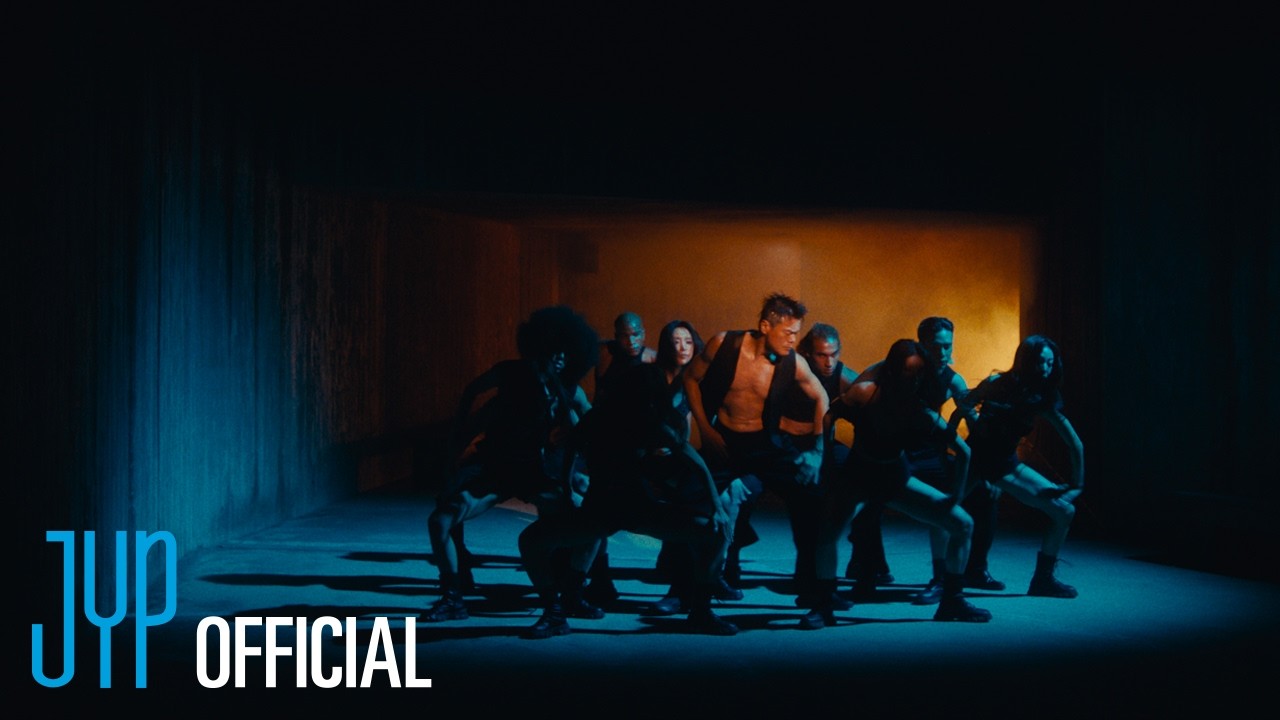
Reggaeton heat, red walls, a grown-man dance break and the confidence of somebody who has survived thirty years of people begging him to act normal.
Artist: J.Y. Park
Song: WET
Release: July 23, 2026
Project: Waterbomb 2026 official theme
RaeRae lane: reggaeton/Latin-pop, minimalist dance track, adult summer thirst with a knowing meme streak
Bottom line: WET is embarrassing, smart, and built for the stage. J.Y. Park stole the internet’s JYPapi joke, put it over a Waterbomb-ready reggaeton pulse, and made the audience chant it before anyone else could weaponize it.
What changed every time I replayed it
First listen: Sir. You co-chair cultural things now. Why are you rolling your hips against a red wall and making a stadium chant “JYPapi”?
Second listen: The sparse production makes more sense. Waterbomb will swallow delicate detail, so percussion, bass, and short vocal phrases carry the structure. The song is built to survive water cannons and thirty thousand vertical videos.
Third listen: The dance break becomes the thesis. Park does not treat movement as decoration placed on a finished song. Weight, line, stillness, and timing complete the arrangement.
Fourth listen: The meme strategy wins. He takes “JYPapi,” a nickname that could be used to embarrass him, says it first, and turns the audience into his chant section. Deeply embarrassing. Also annoyingly intelligent.
What “WET” means, and yes, it means all of it
At the cleanest level, WET is literal festival branding. Waterbomb is built around summer heat, live music, water guns and crowds accepting that every clothing choice will become transparent or regrettable. The title names the event’s entire physical experience in one syllable.
J.Y. Park is not interested in keeping that meaning clean. The song turns sweat, water, attraction and physical rhythm into one adult invitation. It understands that a Waterbomb anthem cannot behave like a tasteful beverage commercial. The performance needs heat before the cannons switch on. The word becomes a command, condition and joke the audience is already in on.
Then he adds “JYPapi,” a fan nickname that has circulated online for years, directly into the hook. This is strategic meme theft: if Park says it first, nobody can use it to embarrass him. He takes the audience’s teasing language, puts it on beat and makes thousands of people chant it in public. That may be the most executive-producer move in the entire song.
The track: modern production, old-school performer instincts
WET is built around reggaeton and Latin-pop rhythm rather than Park’s familiar new jack swing, disco or retro R&B lanes. The production is contemporary but deliberately spare. Percussion and bass establish the temperature; short vocal phrases sit inside the groove instead of fighting to become a giant melodic chorus. It sounds made for a live environment where detail disappears but pulse survives.
The restraint is important. Park has a habit of loving concept so loudly that the music can become theater before it becomes song. Here, the instrumental leaves him a strict frame. He cannot solve every moment with an extra brass hit, key change or inspirational speech. The body, rhythm and repeated hook do the work.
His voice is used like a performer’s voice, not a vocal-competition submission. Breath, attack and timing matter more than range. He drops phrases into the pocket, lets the percussion answer, then increases energy through movement rather than belting. At thirty-plus years into a solo career, that is smart writing: build around the instrument you actually have and the stage language nobody else can quite impersonate.
The music video: red heat, clean lines, zero hiding places
The MV is intentionally simpler than most idol productions. Red walls, sunlight haze, modern art direction, dancers and strong color contrast keep attention on Park’s body and the choreography. There is no lore packet, alternate universe or expensive car parked indoors for reasons nobody will explain. The visual thesis is temperature.
That simplicity is risky. When a set is bare, the performer cannot wait for editing to manufacture charisma. Park uses stillness, eye contact and controlled weight before the later choreography opens up. He has always understood that dance is not constant motion. Holding a line long enough for the camera to read it can be more commanding than completing another eight-count at emergency speed.
The red environment also turns age into part of the image rather than something the styling tries to erase. He is not dressed as a rookie and he is not performing “still young” cosplay. He is presenting veteran physical confidence: the kind built from knowing exactly which movement the camera needs and refusing to apologize for sensuality after fifty.
The dance break is the résumé
The final escalation moves from groove into full performance proof. This is where the Waterbomb assignment becomes clearest. A festival track needs a section where dancers, water effects and audience noise can take over without harming the song. The break provides that open space.
Park’s technique has always prioritized line, isolation, weight transfer and theatrical intention. He is not trying to out-acrobat fourth-generation idols. He is showing the fundamentals he has demanded from generations of trainees: finish the shape, know where the camera is, make a simple movement look chosen, and never let exertion erase expression.
That makes the section more than a “look, the older man can still dance” novelty. Longevity is not preserved youth. It is adaptation. The choreography meets his current body, the contemporary beat and the size of the stage he plans to perform on. The result is physical without looking desperate to win a comparison nobody asked for.
The Waterbomb machine behind the single
WET was announced as Waterbomb 2026’s official theme and previewed through a dance challenge before release. Festival artists joined the challenge, turning the track into event marketing before the full song arrived. Park was scheduled for music-show promotion and Waterbomb stages immediately after release, so the campaign connected social clips, broadcast performance and the actual festival rather than hoping a streaming upload would invent summer by itself.
The single also received a physical edition, his first in roughly thirteen years, despite containing the title track and instrumental. That is partly collector culture and partly the joke of J.Y. Park entering modern idol packaging on his own terms. Yes, there are people opening a WET album to pull a JYP photocard. The future arrived and chose violence.
The age, authority, and cultural-power lens
Pop culture grants older male executives authority, but it rarely expects them to remain visibly sensual performers. Park combines both roles and creates discomfort because audiences cannot file him neatly as either elder statesman or dancing idol. “WET” refuses the choice.
That refusal can be funny without being trivial. Ageism often hides inside the claim that an older body should become dignified by becoming invisible. Park does not dress like a rookie or ask the camera to erase time. He uses veteran control, smaller precise movements, and decades of performance knowledge.
A Buddhist lens adds another joke. Public embarrassment loses power when the person stops defending a perfect self-image. By claiming “JYPapi,” Park removes the audience’s weapon. The meme cannot puncture dignity he has already decided does not require stiffness.
The macro industry problem is conflict of power. Park is not merely a performer; he helped build an idol system and still carries institutional influence. That history should remain visible when we praise the craft. Admiring his stage intelligence does not require ignoring debates about executive decisions, trainee culture, or the imbalance between the person who sets standards and the artists judged by them.
That tension makes the song more interesting. “WET” is both a veteran showing why fundamentals last and a powerful man turning a festival’s attention machine toward himself. The performance earns its confidence. The institution behind the confidence still deserves scrutiny.
Easter eggs, context and things worth catching
- “JYPapi” is self-aware fandom bait. The nickname existed before the song; Park converts the meme into an official crowd response.
- The title performs two jobs. It brands Waterbomb literally while keeping the adult double meaning in permanent view.
- The production is more current than nostalgic. Reggaeton/Latin-pop rhythm replaces the retro disco and new jack swing most associated with his recent catalog.
- The video avoids idol-world clutter. People, choreography, color and heat are the concept.
- The late dance break is festival architecture. It leaves room for water effects and crowd escalation without needing another lyrical section.
- The physical single is part of the joke and the strategy. A two-track project enters photocard-era collecting like Park never left the center of idol culture.
Credits I actually wanted to know
Lyrics: J.Y. Park “The Asiansoul.”
Composition: J.Y. Park “The Asiansoul,” Michael Fatkin, CASTLE, Bailey Flores, Ninos Hanna, CX Lucas, Maya Rose, Adam Ben Yahia and Lee Hae Sol.
Arrangement: J.Y. Park “The Asiansoul,” Michael Fatkin and Lee Hae Sol.
The international room helps explain the contemporary Latin-pop frame, while Park’s lyric and arrangement involvement keeps the record connected to his performance instincts. The JYP Publishing page condenses some roles differently, but the full Korean service credits list the complete writing team above.
Production and performance ledger: Michael Fatkin, J.Y. Park, and Lee Hae Sol handled programming. Michael Fatkin and J.Y. Park are credited for instruments, keys, and synth work, with Lee Hae Sol also in the programming team. Devon Curry played drums and Bailey Flores provided background vocals. Sangyeop Lee handled editing at JYPE and recorded with Matthew Kim. Jaycen Joshua and Penua Project mixed at Canton House with engineer Mike Seaberg and assistants Jacob Richards and Chris Bhikoo. Chris Gehringer mastered at Sterling Sound. Bongwon Shin handled the Atmos mix at GLAB with Namjun Park assisting.
The exact official video and 2:39 studio master arrived July 23 at 6 p.m. KST; Bugs lists the film at 2:48. The instrumental, official dance practice, broadcast stages, and Waterbomb performance belong to the same song family and should fold into this review unless a later item contains genuinely distinct editorial treatment.
No reliable official source exposed the music-video director, cinematographer, production company, or choreographer. Those fields remain unavailable here rather than being guessed from visual style or copied from an unsourced upload.
J.Y. Park is the canonical solo artist Park Jin-young, born 1971, with a 1994 solo debut. He is not GOT7 member Jinyoung, also Park Jin-young, and not Jay Park, Park Jae-beom. This release reinforces the existing Solo Artist person route; it does not create another identity page.
Final take
WET knows exactly what it is: a festival tool, a dance vehicle, a meme trap and an adult summer song made by somebody who will not move politely into the founder’s lounge. It does not offer deep emotional storytelling. It offers temperature, pulse and the spectacle of J.Y. Park grabbing “JYPapi” out of the comments and wearing it as a name tag.
The song works because the production does not overcomplicate the assignment. The hook is shameless, the groove is sturdy and the video trusts performance more than set money. I expect half the internet to be horrified and the other half to learn the challenge while claiming irony.
RaeRae’s final diagnosis: the man is wet, the joke is intentional, and unfortunately the beat has legal custody of my shoulders.
Receipts, not rumors
- Official “WET” music video , JYP EntertainmentDaily+39.9KTotal views3.2M
- JYP Publishing song page
- Bugs album introduction and complete credits
- Korea JoongAng Daily release report
- The Korea Times preview and Waterbomb context
- SBS Korean Waterbomb and challenge report
- OSEN music-video report
- iMBC Waterbomb and promotion report
- Official J.Y. Park FANS dance practice