
RaeRae Reacts · YOUNG POSSE · Music Video
we don’t go to bed tonight
YOUNG POSSE turns Seoul into everybody’s shared bad decision, fries the vocals on purpose, and makes exhaustion sound like proof that life is still moving.
What changed every time I replayed it
First intake: This sounds like somebody fed a Seoul club night into a corrupted ZIP file. The drums twitch, the voices sparkle at the edges, and the song refuses to sit still long enough for good posture.
Second intake: The pre-chorus creates just enough open air for the chorus to feel like a decision. Without that small breath, the whole track would become one long notification alarm.
Third intake: I followed the members instead of the effects. Their different flows keep the production from becoming the only character in the room.
Later replay: The repetition still limits the song’s emotional range, but I believe the night. It feels specific to five people who know they should go home and have already voted against it.
The lyrics are simple, but the social choice is not
The chorus gives us the full plan: dance, stay out, and refuse bedtime. That is not a hidden manifesto. The interesting part sits around the command. Red eyes, ringing phones, messy lives, worried mothers, money, playlists, and another party waiting turn the night into a temporary escape from schedules that already own the morning.
Young women in pop are often sold through discipline. Train harder, look clean, smile on time, and never let the audience see the work making you tired. YOUNG POSSE flips that image. The members admit they are tired, then treat tiredness as evidence that they went somewhere. “Good girl, no thanks” applies to the sound as much as the behavior.
That does not mean sleep is uncool or self-destruction is liberation. From a Buddhist lens, craving another hit of stimulation does not become freedom because the bass is excellent. The song captures one night, not a healthy life plan. Its value is honesty: sometimes people know the sensible answer and choose the loud answer anyway.
The production uses Auto-Tune as paint
Heavy vocal processing is the first argument fans will have. Some listeners hear Auto-Tune and assume somebody failed to sing cleanly. That reading misses the point here. The voices bend, crackle, smear, and stack because digicore treats the human voice as one more synthesizer.
The effect fits YOUNG POSSE’s career turn. Their earlier identity leaned hard into old-school hip-hop references, West Coast imagery, and rap-first arrangements. This single keeps the group’s appetite for rhythm but pushes it through internet-age distortion. The past does not disappear. It gets uploaded, compressed, and sent back with too many stickers.
My side-eye is not aimed at the processing itself. I want more structural surprise underneath it. The chorus repeats enough that momentum has to perform the work development usually handles. If the central chant does not catch you, the track has no secret bridge waiting to rescue the relationship.
Five writers, five angles on the same night
Sunhye, Yeonjung, Jiana, Doeun, and Jieun all helped write the lyrics. That matters because the verses feel like overlapping messages rather than one adult’s idea of what young people say at parties. One member refuses to go home. Another notices the phone. Another admits life is messy. The details bump into one another the way friends do when nobody has agreed on the story yet.
- Sunhye: gives the low, grounded center that stops the digital production from floating away.
- Yeonjung: sharpens transitions and makes clipped phrasing feel like momentum.
- Jiana: brings the kind of tonal switch that wakes up a section before the beat has to.
- Doeun: sells the night as a joke she expects us to join.
- Jieun: keeps brighter textures visible inside the distortion.
Seoul is the sixth member
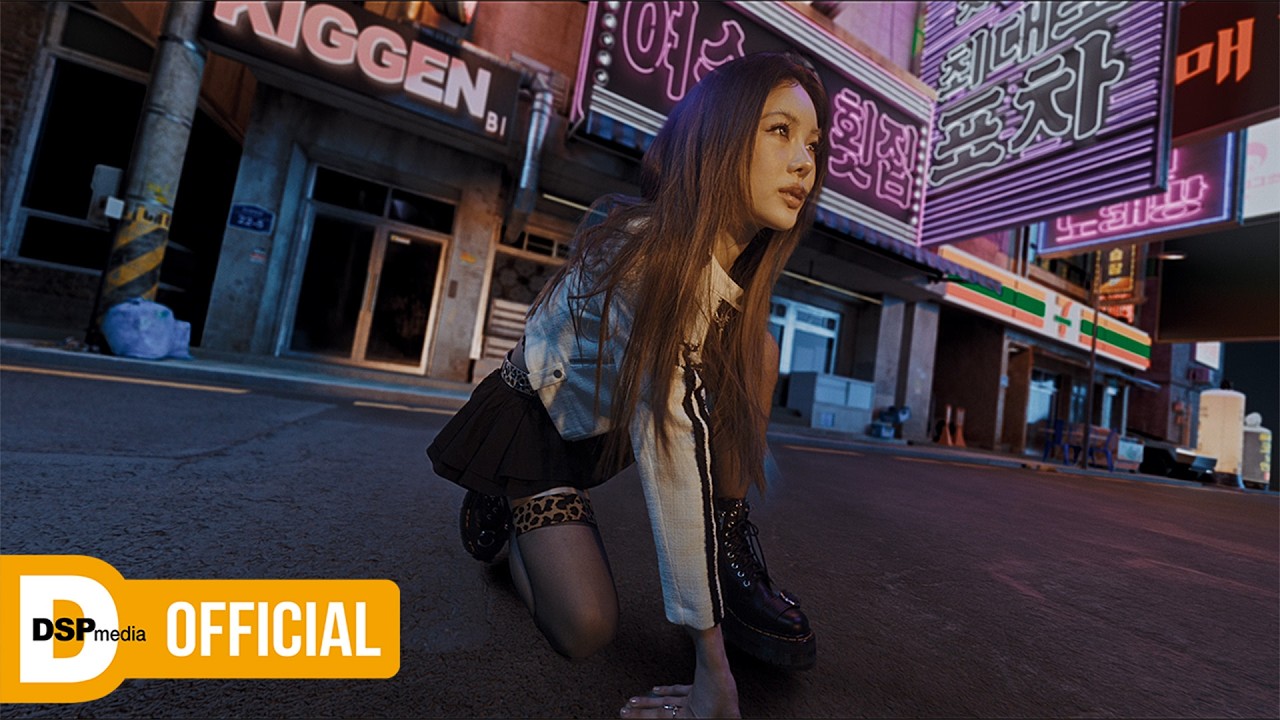
Korlio directs the city as an active participant. Crowded interiors, street light, signs, movement, and visual clutter make midnight louder than noon. The members do not stand in a clean box waiting for close-ups. They push through environments that look awake without caring whether anybody has class tomorrow.
The city gives the lyrics stakes. “We are not going to bed” means more when there is somewhere to go, someone calling, and another corner glowing after the current scene ends. Seoul is not a postcard here. It is infrastructure for temptation.
The graphics and effects add to the overstimulation without replacing the group. That boundary matters. YOUNG POSSE has enough character to carry the video. Technology should make the night worse for their sleep schedule, not make the people disappear.
The party is freedom, avoidance, and one unpaid morning bill
Staying out all night can mean liberation when daily life has too many people telling young women where to be, how to behave, and when to become respectable. The song treats the city after midnight as a temporary country with looser laws. Friends choose each other. Noise replaces supervision. Nobody asks whether the fun looks productive on a résumé.
That freedom is real, but temporary freedom can also become avoidance with better lighting. The title refuses sleep, which means it also refuses the morning. Morning brings schedules, consequences, messages nobody answered, and the question of whether last night solved anything. It probably did not. Sometimes the point is not solving. Sometimes the point is surviving long enough to laugh with people who understand why you needed out.
The group chemistry keeps that tension from becoming a lecture. Each member sounds like she joined the same night for a slightly different reason: thrill, friendship, curiosity, rebellion, or the basic human desire to make a questionable decision before somebody else assigns one.
My issue is that the song stops before the emotional bill arrives. I do not need a morality speech or five women waking beside one symbolic alarm clock. I wanted one tiny crack in the confidence—a line that admits the night ends, then chooses it anyway. That would make the fun feel owned instead of merely extended.
The macro and micro story
At the micro level, this is five friends choosing one more hour. The interpersonal pleasure comes from agreement. Nobody has to be convinced because everybody understands the assignment.
At the macro level, nightlife creates temporary communities. People who would never share a classroom, office, language, or family table can share one beat for three minutes. That unity is real, but it expires. The train starts again. The phone battery dies. Somebody still has to find breakfast.
YOUNG POSSE does not pretend the temporary feeling is permanent. That is why the song is funnier than a generic freedom anthem. They are not overthrowing society. They are ignoring bedtime and acting like sunrise is a personal attack.
Easter eggs and replay points
- Watch how signs, screens, and phone-like graphics make the city feel like a feed nobody can close.
- The pre-chorus clears space before the hook, mimicking the quick breath before running back into the crowd.
- English phrases work like signs flashing past a taxi window rather than random decorations.
- The group’s old-school hip-hop identity remains in the rap confidence even when the sound moves into digicore.
- The companion release of stems turns the song into an invitation for fans to remix the mess themselves.
- The video keeps individual member texture readable inside deliberately crowded frames.
What works and where the night runs out
What works
The production commits to its distortion, the members sound like participants rather than hired narrators, and Seoul belongs to the lyric. The video is unruly without becoming unreadable.
What misses
The hook depends on repetition more than development. I wanted one late verse with a specific disaster, because a night this messy should leave at least one unforgettable story behind.
RaeRae verdict
“we don’t go to bed tonight” understands that an all-night song should not sound responsible. YOUNG POSSE is loud, funny, restless, and a little exhausted. The video turns Seoul into a shared bad decision, while the processing makes every voice sound like it stayed under the neon too long.
I believe they stayed up. I also believe somebody’s phone died before breakfast. The song does not need to teach a life lesson. It needs to make the last hour before sunrise feel worth one more replay, and it does.