
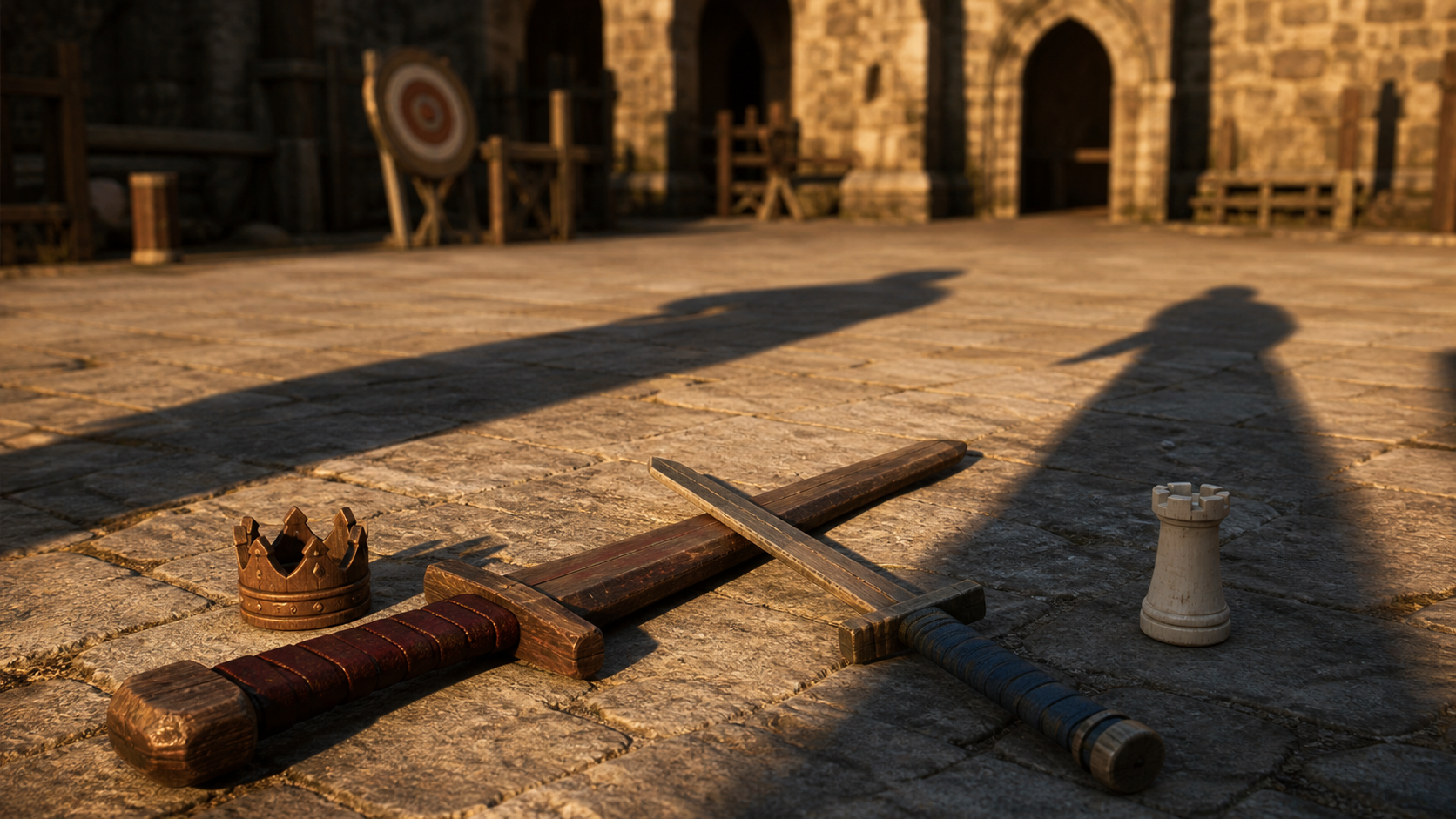
The Brothers Are Technically Holding Wooden Swords
It is a childhood game right up until the future king and future rebel start rehearsing inheritance, humiliation, and opposition with splinters in their hands.
The moment
Play gives the brothers permission to tell the truth sideways
Young Elias and Josua meet with wooden swords, which should make the scene harmless. Instead, the toys create a temporary court where rivalry can speak without being formally accused of anything. A strike is only a game. A victory is only a game. The anger attached to both is already real.
The image sticks because childhood has not yet taught them the polished language adults use to disguise resentment. Comparison lives close to the surface: who is stronger, who is favored, who will inherit, who gets to define the rules after winning. The swords are wooden; the roles they rehearse are not.
Why it hits
The civil fracture begins before either brother has an army
Book 1 refuses to make the Elias–Josua break a disagreement that appears fully formed after John’s death. The succession crisis gives old pressure a political machine. Elias has learned to experience challenge as humiliation. Josua has learned to occupy the position of skeptical counterweight, even when skepticism cannot protect him.
That history matters because neither brother is only performing a public ideology. They are carrying a family argument into the kingdom’s institutions. Soldiers, dukes, priests, servants, and refugees will eventually pay for wounds first practiced in a yard where adults could still call everything play.
Aftershock
The real swords preserve the childhood geometry
Once Elias holds Sorrow and Josua offers his life before it, the scale has changed but the arrangement remains recognizable. One brother possesses the weapon and demands recognition; the other stands in opposition and turns vulnerability into moral pressure. Neither has escaped the old game.
The tragedy is not that childhood play predicts destiny with magical certainty. It is that a kingdom built around one family gives private damage public reach. Wooden swords can be dropped at supper. Royal comparison becomes law, imprisonment, siege, and burning Naglimund. The scene looks small because the boys are small; the consequences were waiting for them to grow.
On the record
The scene receipt
Return to The Dragonbone Chair hub → · Open every Book 1 React → · Open the series hub →