
RAERAE REACTS
ODORIKO
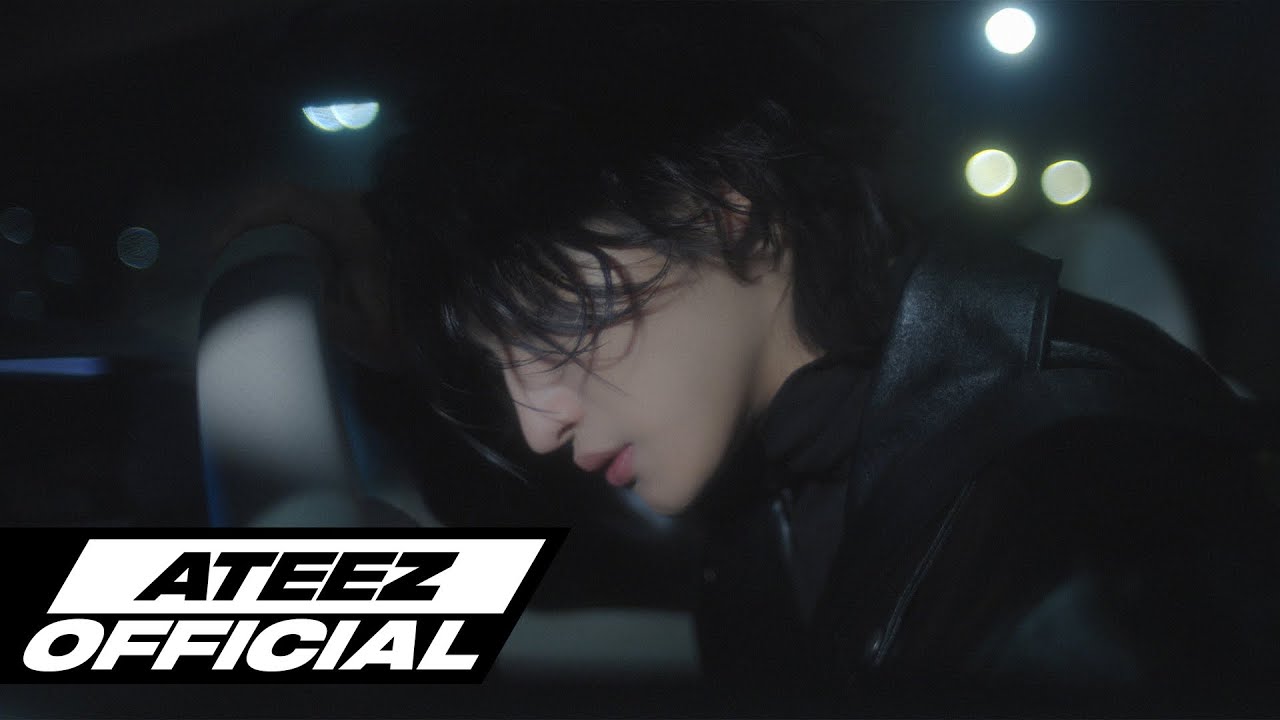
Seonghwa covered Vaundy’s Japanese hit with almost none of ATEEZ’s usual firepower. No pirate ship. No collapsing kingdom. No eight-man attack formation. He stood inside a quiet special clip and trusted one unsettled song to hold the room.
Original artist and writer: Vaundy
Japanese title: 踊り子
Meaning: Dancer
Original release: November 17, 2021
Cover release: January 9, 2025
Official cover credits: Seonghwa, chorus; Yeo Minsu, recording and digital editing; Jung Eunkyung, mixing and mastering; KQ Video Production, production, direction, cinematography, and editing
First reaction: where did all that space come from?
ATEEZ songs usually arrive with architecture. Even the quiet moments feel attached to a larger stage, a storyline, or a performance that knows eight people will eventually move at once. “Odoriko” removes that safety net. Seonghwa cannot hide inside group momentum because the cover keeps returning the listener to one voice and one emotional temperature.
My first reaction was not “look at the range.” It was “he understands the room.” That matters more. A cover can become embarrassing when a singer treats every borrowed song like a chance to prove superiority. Seonghwa does not wrestle Vaundy for ownership. He enters the existing shape, tests how it fits his body, and leaves the seams visible.
The result feels private without pretending we overheard a diary. Seonghwa is interpreting a song. He is not confirming a rumor, announcing a relationship, or handing fandom a coded confession. Fans do not need to invent autobiography for a performance to feel personal.
The title says dancer, but the song keeps circling
“Odoriko” means “dancer,” yet the emotional motion is not a clean dance toward closure. The song circles a connection that no longer feels stable. Repetition becomes the point. The narrator returns to the same images and questions because knowing a relationship is slipping does not make the mind stop revisiting it.
That structure is painfully ordinary. People imagine heartbreak as one dramatic break, but many relationships end through repetition. The same concern returns. The same promise loses weight. Two people keep moving together while realizing they may not be moving toward the same place.
The dancer image fits because dance can look coordinated from the outside while each person carries a different count in their head. Bodies remain close. Timing begins to drift. Nobody watching from across the room knows exactly when the partnership stopped feeling mutual.
I like that the song does not turn this into a courtroom. There is no cartoon villain. There is fatigue, distance, and the fear that the beautiful motion may have become habit. That is harder to resolve because blame would be easier.
Why a Japanese cover changes the job
Seonghwa is a Korean singer covering a Japanese songwriter. That is not exotic trivia. Language changes the physical work of singing. Vowels sit differently. Consonants arrive in different places. A performer must protect meaning, rhythm, and emotional tone without turning pronunciation into the entire performance.
K-pop has always traveled through Japanese releases, tours, and covers, but the exchange does not move through an empty history. Korea and Japan share music markets alongside colonial memory, cultural arguments, business strategy, and generations of ordinary listeners who keep choosing one another’s songs. A respectful cover cannot solve that history. It can still show what cultural exchange looks like when the original creator remains visible.
The official title does this correctly. KQ names Vaundy and identifies “Odoriko” as the original. The credits do not pretend Seonghwa wrote the song or quietly absorb it into ATEEZ’s catalog. That basic honesty gives the interpretation room to breathe.
Seonghwa also avoids the tourist version of Japanese performance. He does not pile on visual clichés to announce that the song came from Japan. The cover trusts the language and composition. Nobody needs a random torii gate in the background to understand where the song began.
The production chooses control over spectacle
The official credits matter because “simple” videos still require labor. KQ Video Production handled production, direction, cinematography, and editing. Yeo Minsu recorded and digitally edited the vocals. Jung Eunkyung mixed and mastered the track. Seonghwa supplied his own chorus layers.
That last credit deserves attention. Background vocals can quietly decide whether a restrained cover feels empty or intimate. Layering the same performer lets the arrangement widen without importing a crowd. The song can feel surrounded while the visual frame remains focused on one person.
The mix does not need to imitate an ATEEZ title track. A huge low end, aggressive percussion, or a final-stage explosion would change the emotional contract. “Odoriko” needs enough air for uncertainty. The production gives Seonghwa room to sound present without forcing him to sound victorious.
This is where restraint becomes craft instead of absence. A singer who does less must make every entrance, held note, and pause carry more weight. The production team also has to resist “fixing” the quiet with extra decoration. They choose a smaller target and hit it.
The clip refuses to manufacture a plot
The visual does not build a giant narrative puzzle, and thank goodness. K-pop fans can turn three chairs and a lamp into a ten-page lore emergency before breakfast. This clip does not need that treatment.
The camera stays interested in Seonghwa’s presence. The muted setting and patient framing keep attention on small changes rather than a sequence of events. That does not mean every glance hides a secret code. Sometimes a close frame exists because the performance depends on attention.
The lack of spectacle also pushes against a narrow reading of Seonghwa. He is often praised for dramatic styling, sharp stage control, and the ability to look expensive while participating in total fictional collapse. Those skills are real. They are not the entire person. “Odoriko” shows that he can hold interest without armor, fire, or a concept screaming over his shoulder.
That is useful for ATEEZ too. Group identity becomes stronger when members can leave the main sound, test another scale, and return with more tools. Solo covers are not a threat to the group. They are a workshop.
What I love
I love that the cover respects the original song’s size. Seonghwa does not add a giant climax just because fans know he can handle one. I love the decision to credit the production team clearly. I love that the Japanese language remains central without being treated like a novelty prop.
I also love the timing of the project in his career. A performer with years of major stages chose a song that rewards patience. That choice says more than another demonstration of obvious power would have said.
What gets side-eye
The cover is so controlled that a few passages risk flattening into the same emotional color. I wanted one section to expose a little more friction, not through a bigger note, but through a sharper change in phrasing or arrangement.
The clip could also use one visual interruption. Not a spaceship. Not a murder board. One meaningful shift in distance, light, or location would give the final stretch another layer without breaking the quiet.
Those complaints do not come from boredom. They come from the cover proving Seonghwa can handle subtle work, then stopping just before the interpretation becomes fully his.
The original video gives us a useful boundary
Vaundy’s official video stars Nana Komatsu and was directed by Kodai Kobayashi. The director described the song through rebellion and a strong gaze, while Komatsu remembered a set where the track made her want to keep moving. Those comments matter because they show the original project was never only soft sadness. The song carries resistance inside its repetition.
Seonghwa’s cover does not copy that video, and it should not. Copying the same gestures would reduce interpretation to cosplay. Instead, the special clip pulls the focus toward stillness and close attention. The original associates the song with a body that wants to move. Seonghwa asks what happens when the body stays in place while the mind keeps circling.
That difference is where the cover earns its existence. A faithful cover does not have to reproduce every original choice. It must understand which choices belong to the song and which belonged to one earlier performance. Seonghwa keeps the uncertainty, repetition, and gaze. He changes the physical temperature.
Fandom translation can help, and it can also flatten the song
International fans often meet Japanese songs through romanized lyrics, short translation threads, or one dramatic sentence clipped for social media. Those tools open doors. They can also make a complicated song sound like a motivational quote somebody printed on a tote bag.
“Odoriko” needs more care. Translation has to carry images, grammar, tone, and the emotional distance between what a narrator says and what the narrator seems to fear. A literal English line may explain the action while losing the hesitation. A smoother translation may sound beautiful while adding certainty the Japanese never promised.
That is why I do not want to turn this review into a line-by-line claim that one phrase proves one secret meaning. The stronger reading follows repeated ideas across the whole song: movement, distance, memory, and the fear that two people can keep performing closeness after the connection has changed.
Fans can compare translations, check the original Japanese, and admit when a word carries more than one useful shade. That approach is slower. It is also less likely to turn Vaundy into a vending machine for captions.
Seonghwa’s public image makes this choice sharper
Seonghwa often performs with precision that reads as intensity. Styling, posture, and eye contact can make him look like the person in the room who already knows how the scene ends. ATEEZ concepts use that control well because the group thrives on drama, confrontation, and large emotional stakes.
“Odoriko” removes the certainty. The song does not reward a performer for looking invincible. It asks whether he can remain interesting while the emotional answer stays unresolved. That is a different form of control. Instead of commanding the story, he has to live inside the question.
Fans sometimes describe idols through one marketable trait until the trait becomes a cage. The powerful performer must always be powerful. The funny member must remain funny. The beautiful member gets treated like beauty explains the work. Covers create a small escape route because the performer can choose material that interrupts the summary.
Seonghwa chose a song that does not need him to conquer anything. He does not defeat loneliness. He does not close the relationship file. He stays near the uncertainty and lets the listener decide whether the dance can continue.
The quiet has an industry value too
A special clip costs less than a title-track campaign, but it still builds an artist’s catalog. It gives fans a reason to revisit the official channel between major releases. It introduces one member to listeners who may not be ready for the full ATEEZ machine. It also creates searchable connections between Korean and Japanese music audiences.
That business function does not cancel the art. Pop projects can hold emotional value and strategic value at the same time. The useful question is whether the strategy deforms the performance. Here it does not. KQ’s branding stays present, but Vaundy remains named, the production credits are visible, and the clip does not pretend to be a new original single.
The project also shows why member-focused work should not be treated as a loyalty crisis. Eight people cannot display every creative interest inside one group song. Giving members separate rooms can protect the group from creative claustrophobia. They return with more range, and fans learn to see them as workers with tastes rather than pieces of one permanent concept.
What changed every time I replayed it
First watch: I focused on the absence of ATEEZ-scale spectacle. The quiet felt almost confrontational.
Second watch: The cover stopped feeling small. The production credits made the restraint look more deliberate because every layer had a named worker behind it.
Third watch: The title became the key. This is a song about motion that cannot guarantee progress. The emotional circles began to matter more than any single lyric.
After returning to Vaundy: Seonghwa’s best choice was refusing to erase the original identity. The cover does not win by replacing Vaundy. It wins by showing another body inside the same dance.
Now: I hear the performance as a career note. Seonghwa can command a giant stage, but he does not need one to prove he understands attention.