
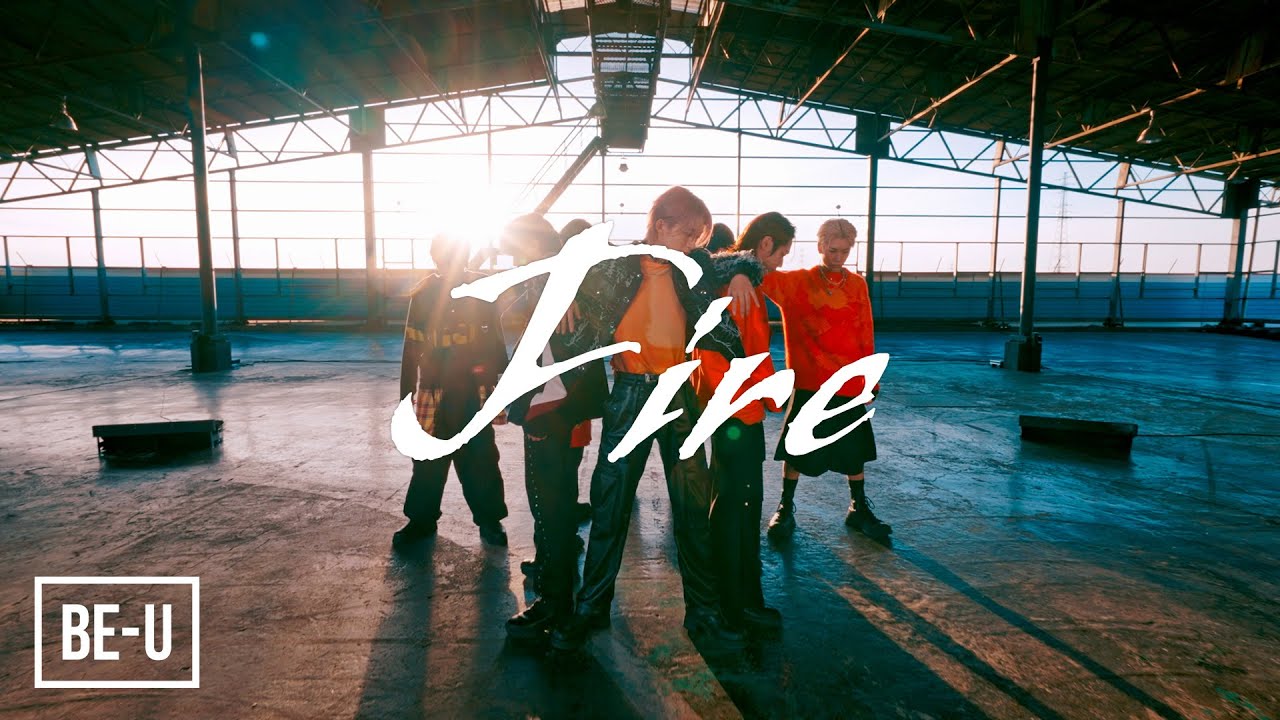
Fire Dance Performance: MAZZEL Try to Break Out of Noppo’s Choreographic Cage
Noppo said he built body control into the choreography and then watched MAZZEL perform like they wanted out of the cage. That description is better than pretending somebody set the warehouse on fire.
RaeRae verdict: bottom line
“Fire” is an eight-member vocal song wearing a heavy hip-hop body. SKY-HI and Ryosuke “Dr.R” Sakai give MAZZEL enough low-end pressure to sound dangerous, but the real heat comes from individual voices refusing to blur into a single polished group tone. Noppo’s choreography responds with controlled contraction, tension through the torso and shapes that look as if the performers are holding energy inside until the next count gives it somewhere to escape.
I prefer this performance file to any version that would bury the body under literal flames. The daylight, open industrial room and simple camera make the dancers responsible for the title. Sometimes they oversell the face before the movement earns it. Most of the time, the restraint makes the eventual release hit harder.
Release file
Song: “Fire”
Artist: MAZZEL
Song released: October 16, 2023 on the Carnival single
Dance performance released: December 27, 2023
Exact reviewed upload: 6PAEczbmt2M
Runtime: exact dance-performance file reviewed in full
Label / channel trail: MAZZEL; BMSG / BE-U / Universal Music
Sound: heavy hip-hop pulse, melodic tension, rising vocal urgency and a chorus built to burn forward
Written by: SKY-HI, Ryosuke “Dr.R” Sakai and Daisuke Nakamura
Produced by: SKY-HI and Ryosuke “Dr.R” Sakai
Choreography: Noppo of s**t kingz
Video direction: te2ta
Sources: exact official upload, release credits and Noppo’s credited performance comments linked below
Lyrics and meaning: the song starts with something smoldering
“Fire” does not begin at explosion. The opening holds emotion down inside a darker melodic space, letting voices describe words swallowed and a feeling that has not found a safe exit. The heavier beat gives that restraint weight. When the song finally reaches “spit like a fire,” the chorus feels like pressure crossing a threshold rather than a title pasted over loud drums.
Ryosuke “Dr.R” Sakai’s production keeps the low end broad enough for MAZZEL’s different tones to push against it. SKY-HI’s writing moves between desire, risk and forward motion. “U-turn is impossible” works as romantic urgency inside the lyric and as an accidental group manifesto. MAZZEL were too new to retreat into a safe identity even if they wanted one.
The vocal line is the first fire
The group’s eight members are RAN, SEITO, KAIRYU, NAOYA, RYUKI, TAKUTO, HAYATO and EIKI. “Fire” gives them more room to sing across tension than a pure dance track might suggest.
KAIRYU can hold a melodic line with enough confidence to keep the chorus from collapsing into performance noise. EIKI adds clean vocal strength. RAN carries urgency that connects singing to movement. NAOYA can soften the edge without reducing intensity. RYUKI’s rap attack makes the forward language feel less decorative. SEITO and TAKUTO bring bodies trained to understand where the beat lives, while HAYATO’s younger energy gives the group another temperature.
The song is most interesting when those colors remain recognizable. Heat is not one sound.
Noppo builds tension into the torso
Noppo said he deliberately used movement that requires body control so the members’ inner heat could become visible. The choreography follows through. Energy is pulled inward, redirected through the ribs and shoulders, then released into a larger group picture. A performer cannot fake that by hitting the final pose hard.
Watch the preparation. Knees lower the center before a phrase expands. Arms do not merely draw flame shapes; they create resistance around the torso. When the group travels, the formation looks pressed forward by something accumulating behind it.
Eight bodies should not burn identically
RAN performs heat as urgency. SEITO makes it grounded and street-heavy. TAKUTO’s technical cleanliness gives difficult control a sharp outline. NAOYA can turn the same count more fluid and expressive. RYUKI attacks. KAIRYU lets vocal intention remain visible in the body. EIKI brings steadiness. HAYATO often looks like the energy reached him faster than he expected, which can be thrilling when the control catches up.
Noppo’s cage metaphor works because the choreography is consistent enough to contain those personalities without making them uniform. The members look trapped inside the same structure, not manufactured from the same dancer.
The warehouse refuses easy symbolism
te2ta films the group in a broad industrial space with daylight pouring through the structure. Warm clothing colors and low sun suggest heat without asking visual effects to draw fire around every wrist. The open floor makes spacing visible, while beams and window lines give the formations a rigid frame to push against.
The setting also protects the choreography from dramatic nonsense. Nobody is running through a burning house while the chorus waits. Eight performers, one room and a camera have to create escalation themselves.
Why this exact performance matters
A dance-performance video answers questions an MV often avoids. Can the formation survive a wide shot? Does the intensity continue after center changes? Are the members generating the visual rhythm, or was the editor generating it for them?
“Fire” survives. The camera moves and cuts, but the full body remains the main source of information. I can see weight transfer, spacing and recovery. That is why this playlist upload receives its own React instead of being filed as an extra clip under the song title.
Where the performance pushes too hard
Several expressions announce intensity before the body has built it. The song already provides emotional pressure, and the choreography already demands control. A performer does not need to glare at every camera entrance to prove the title is “Fire.” Let one phrase begin cold. The heat becomes more convincing when it has somewhere to rise from.
I also wanted the edit to hold a few formation changes longer. The best evidence happens between the attractive endpoints. Cutting on arrival can hide how hard the route was.
Fire and Waterfall are opposite MAZZEL tests
“Waterfall” asks the group to look carried by continuous motion. “Fire” asks them to look like motion is being contained inside. YUMEKI’s “Waterfall” changes direction and channel. Noppo’s “Fire” concentrates pressure and releases it. Reviewing both as generic “powerful choreography” would erase the reason separate files matter.
Together, the performances show MAZZEL’s early identity forming around adaptability. The group can rush and contract, brighten and darken, without abandoning the individual movement histories its members brought into BMSG.
What changed every time I replayed it
First pass: faces and chorus. Second pass: ribs, shoulders and the preparation before each release. Third pass: I follow the member leaving center and watch whether the fire disappears when the camera stops rewarding him. It does not.
Audio-only, the vocal construction becomes more important than the dance title. On the final visual pass, I notice how often Noppo makes the body resist the very beat it eventually obeys. That friction is the choreography’s real flame.
Exact-file and image trail
This React covers exact dance-performance upload 6PAEczbmt2M. The original song, live D.U.N.K. stage and any later performance are separate artifacts. The featured image, hero, landing-page card and social image all use the same unique local frame from this upload.