
RAERAE REACTS · MARK TUAN
Alone
Mark Tuan threw a warm-weather house party for people who can smile through a room while mentally drafting the text they absolutely should not send.
On this page
Release file · The song · The video · First reaction · Mark’s voice · What worked · Details · Credits and limits · Verdict · Receipts
Release File
Song: “Alone”
Release and video date: July 31, 2026
Format: One-song solo single with an official music video
Exact playlist video: waPmQeaziEk
Verified by: Apple Music’s current Mark Tuan catalog and official DNA/Mark campaign promotion
Verdict: Mark Tuan made a clean summer single about the ugliest corner of a house party: the moment the music is working, the drinks are present, everybody looks good, and one missing person still owns the room. The bright production makes the loneliness more believable, not less.
Apple Music lists “Alone – Single” as Mark’s latest release on July 31, 2026, identifies it as one song, and separately lists an “Alone” music video in its 2026 video catalog. DNA Management’s official campaign posts announced the music-video teaser and a July 31 midnight Eastern release. Those records close the date and the basic release identity. They do not expose a complete studio-credit ledger or film-crew roll, so this page does not pretend they do.
Lyrics and meaning: what the song means
“Alone” is not really about enjoying solitude. It is about using noise, drinks, people, and a pretty location to postpone admitting that one specific absence has taken over the entire room. Mark opens already a couple of drinks into the night. He is not arriving fresh and hopeful. He is already trying to blur the edges.
The song keeps returning to the same problem: he can be surrounded and still feel stranded. Somebody has moved on faster than he has, or at least looks like they did. His mind circles what they are doing, who they are with, and whether he has been replaced. He knows this line of thought is not helping. He also keeps doing it. Very human. Extremely annoying. I approve because I have also lost arguments to my own brain at unreasonable hours.
Musically, the track refuses to dress that anxiety in funeral clothes. The beat stays light, polished, and easy. Mark’s vocal sits low and close instead of trying to overpower the production. The hook does not explode. It sinks in. That restraint is why the sadness works. If he had belted the crisis at us, the song would have become a speech. Instead, it feels like overhearing the truth after everyone else has gone to find another drink.
Fans quickly clocked the same contradiction. In the release discussion, listeners called it summer music while also describing its emotional center as miserable. That is not confusion. That is the concept doing its job. Fan comments belong here as reception only, not as proof of credits, lyrics, or production facts.
The music video
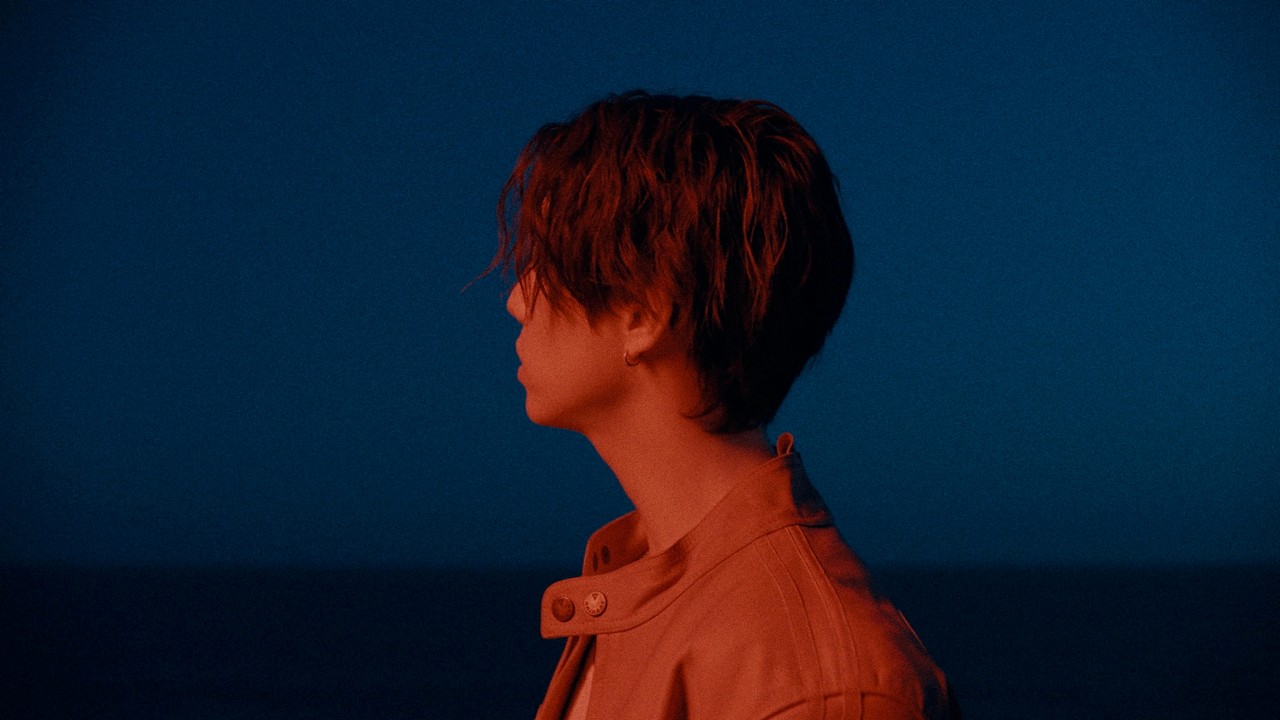
The video does not turn loneliness into a dark room with one chair. Thank goodness. It puts Mark inside the kind of setting where he is supposed to be having fun. The visual warmth, casual movement, poolside atmosphere, and people around him make his emotional distance easier to see. Everyone can be close without actually reaching him.
That choice fits the song better than literal misery would. Loneliness is easy when nobody is around. The interesting version happens when the room is full and your attention still keeps slipping toward the person who is missing. Mark looks present enough to pass. His voice tells on him.
What changed every time I replayed it
First listen: Oh, this is pretty. Why does it already feel like somebody is about to make a bad emotional decision? The warm production says pool party. Mark’s voice says he has checked one person’s profile fourteen times and called it closure.
Second listen: The hook gets clingier. It does not grow louder; it grows harder to leave. That matches the lyric’s thought loop. He knows the question is hurting him, but his mind keeps walking back to the same unlocked door.
Third listen: The party setting stops reading as freedom and starts reading as camouflage. The people, sunlight, and movement do not cure loneliness. They make it measurable. Everybody else seems connected to the moment, while Mark performs enough normalcy to avoid a group intervention.
Fourth listen: I want the mask to crack once. Not a key change, thunderstorm, or overturned catering table. One rough vocal, one emptied-out beat, or one final shot alone after the guests leave would give the last chorus a consequence. The restraint fits Mark, but the story stays almost too well behaved.
Why Mark’s voice works here
Mark has spent years separating his solo identity from the role people first learned inside GOT7. His solo work often favors conversational singing, muted confession, and songs that feel less performed than admitted. That is useful on “Alone.” He does not sound like he is begging the room to witness his heartbreak. He sounds like he wishes nobody had noticed.
This also avoids a trap identified in criticism of some earlier solo material. NME praised the vulnerability of The Other Side but found parts of its sound too homogeneous. “Alone” still lives in Mark’s comfortable emotional weather, but the summery arrangement gives the sadness a cleaner frame. It is familiar without feeling like another gray hallway.
What worked, and what needed more
- The contradiction. Happy-weather production carries a lonely thought spiral.
- The vocal restraint. Mark lets the lyric stay private even while sharing it.
- The setting. A social space makes isolation more visible than an empty room would.
- The patience. The mood gets time to settle instead of vanishing after two hooks and an outro.
- The replay value. The sadness sneaks into an easy listen.
I still wanted one moment where the composure cracked. Not a giant key change. Not rain falling indoors because somebody found the dramatic-weather button. Just one musical or visual turn that made the last chorus feel different from the first. The song understands obsessive loops, but loops can become too polite. Give me one ugly thought. Give me one second where the party mask slips all the way off.
The cultural and interpersonal layer
“Alone” separates physical solitude from relational loneliness. You can be surrounded by people and still organize the whole evening around one missing person. That is the interpersonal wound: the room offers many connections, but the mind keeps ranking one bond above every available human being.
Mark’s identity adds another layer. He built his public life across Los Angeles, Taiwan, South Korea, China, Thailand, and a global fandom that learned him first through GOT7. A person can belong to many places and still feel unanchored inside each one. I am not claiming this single is a coded autobiography. I am saying his restrained, border-crossing solo persona makes a song about social presence and emotional displacement feel unusually natural.
From a Confucian lens, the party is a network of relationships and expected participation. Mark performs the role of guest or host, stays in the group, and appears socially functional. His private fixation exposes the distance between correct participation and actual harmony. From a Buddhist lens, the pain grows through attachment to a version of the relationship that no longer matches the present. The brain keeps producing the person, the comparison, and the imagined replacement even when none of those thoughts can change the night.
The modern pop-industry choice is smart because male heartbreak often arrives dressed as spectacle, anger, or heroic collapse. Mark lets sadness stay quiet and slightly embarrassing. He is not conquering the feeling. He is managing it badly but politely. That smaller scale gives the song dignity, though it also explains why I want one less polite rupture near the end.
Details and the larger Mark Tuan story
The title places “Alone” beside a long-running concern in Mark’s solo catalog. Earlier songs such as “Lonely” and the darker material on The Other Side also examined isolation, uneven affection, and the point where distance becomes self-protection. The new song is not a repeat. “Lonely” pushes toward cutting a person off. “Alone” sounds like the stage before that decision, when you are still checking the emotional door even though nobody is coming through it.
There is another useful layer. Mark has spoken about figuring out who he is outside the machinery that once decided his schedule, styling, and public presentation. In a 2021 Allure interview, he described himself as still trying to find his solo aesthetic. By 2026, this release feels less like an artist trying on a costume and more like Mark choosing understatement. The video does not need twelve lore symbols and a burning moon. It needs his face, the social atmosphere, and the feeling that his brain is somewhere else.
“Alone” is a released recording performed by Mark alone, so it qualifies his existing person page for the Solo Artist relationship while preserving his GOT7 Member relationship. The music video and audio belong to one canonical song family. No separate alternate performance or recording surfaced in the current source pass.
Credits, sourcing, and what remains unknown
The July 31 release, one-song single format, solo billing, and separate official video are verified. A reliable current source did not expose the full songwriting, production, engineering, label, distributor, or music-video crew ledger. The official YouTube description was unavailable during this audit, and no qualifying song-specific Korean licensed report surfaced after Korean-language searches. Those are documented source gaps, not invitations to borrow credits from an older Mark release or copy an unsourced fan page.
The previously circulated ISRC could not be independently matched to an authoritative distributor record, so it is deliberately omitted. Likewise, scene descriptions above come from direct viewing of the official video. They are not claims about an unverified director’s intention. If Mark or DNA publishes a complete credit roll later, this section can be expanded with named receipts.
Bottom line: RaeRae verdict
“Alone” is not Mark Tuan reinventing heartbreak. It is Mark understanding exactly how attractive avoidance can look from across a summer party. The song is smooth, emotionally coherent, and easier to replay than the situation it describes. I wish the final section had risked one messier turn, but I understand why listeners immediately claimed it for summer.
Rating: 8.2/10. Excellent atmosphere, believable sadness, and one missing emotional knife twist.