
EPISODE 57 · DISNEY+ SEASON 2, EPISODE 18 · BUGBY · RAE RAE REACTS
Lilo & Stitch: The Series Episode 57: Bugby
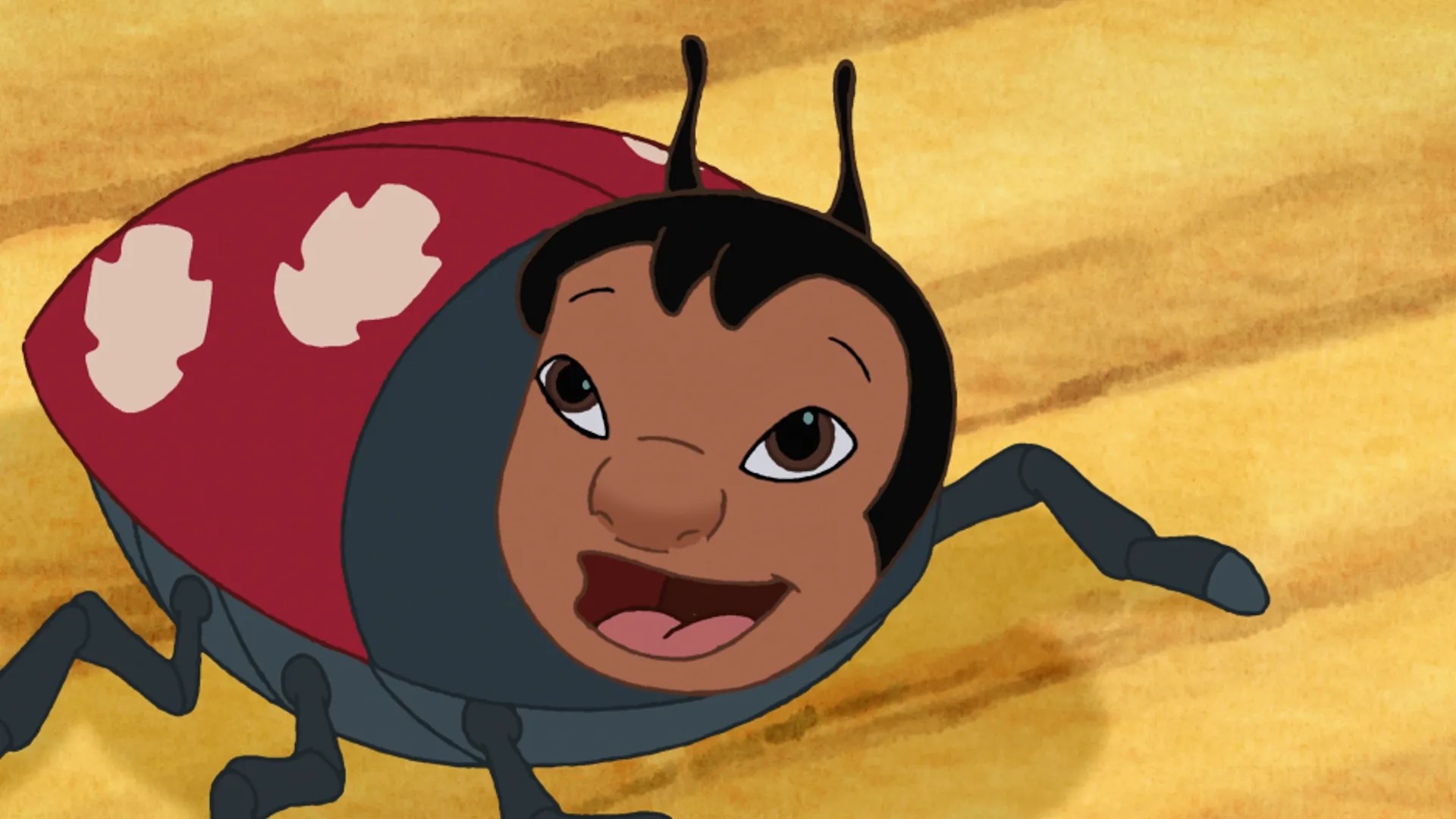
Lilo builds Bugopolis for her insect collection while Stitch keeps trying to eat its residents. Experiment 128 turns the household into insects and forces everybody to experience the danger, captivity, and fragile scale they treated as a game.
Bugopolis begins as care and becomes captivity
Lilo builds a miniature city for insects because she wants to observe and protect them. The houses and names show imagination, but the residents did not choose enclosure. Food, humidity, species compatibility, and escape matter more than whether the jar looks cute.
A child can learn from insects without collecting every one she finds. A supervised habitat should use appropriate species, short observation periods, and release at the original location whenever safe.
Calling captured insects citizens does not grant them agency
Lilo gives the collection a civic story, but a title cannot replace freedom. “Citizen” sounds respectful while the jar remains controlled by one person who decides entry, housing, and release. The language hides an unequal relationship.
Care requires attending to the animals’ needs rather than turning them into characters for a private world. Imagination is valuable when it does not erase biology.
Stitch sees food where Lilo sees community
Stitch’s appetite for insects creates immediate danger for Bugopolis. His behavior may be ordinary for his biology, yet the insects remain living beings under Lilo’s care. She cannot keep predator and prey together and rely on repeated scolding.
The household needs physical separation, appropriate food for Stitch, and a secure habitat. Moral language will not replace environmental management when instinct and access remain unchanged.
Lilo’s anger at Stitch skips over her own unsafe setup
She is right to stop him from eating the collection, but she placed insects inside a home shared with a known insect eater. Responsibility includes anticipating predictable behavior. Blaming Stitch alone makes the animals pay for weak planning.
A repair conversation can hold both truths: Stitch must respect the boundary, and Lilo must create conditions where compliance is possible.
Bugby is captured because he looks like the category Lilo already wants
Experiment 128 enters the jar because Lilo mistakes him for an ordinary bug. She does not assess species, injury, ownership, or whether he is an activated cousin. The collection habit turns unfamiliar life into an object before identification.
The experiment mission should have taught the family to scan unknown creatures first. Curiosity needs a pause between noticing and taking.
Experiment 128 performs involuntary species transformation
Bugby can turn people into insects, altering anatomy, sensory systems, movement, communication, and vulnerability. The victims remain mentally aware while losing the bodies and social recognition they depend on. That is a profound medical and identity crisis.
The family should treat exposure as an emergency, preserve each person’s identification, and avoid separating transformed individuals who may be impossible to distinguish later.
Insect scale makes ordinary rooms lethal
A cup of water becomes a drowning hazard, a footstep becomes impact trauma, and fans or vents create severe wind. Cleaning chemicals, pets, doors, and sunlight can kill a transformed person before anybody notices.
The safest response is a marked containment zone with no movement, pesticides, or machinery until every victim is accounted for. Household members need a visual alert that living people are present at floor level.
Communication changes, but personhood does not
The transformed group can understand insects and arachnids, yet humans may hear only noise. Loss of familiar speech can make observers assume reduced intelligence. The victims still have memories, relationships, preferences, and legal identity.
Responders should use yes-or-no signals, writing tools scaled to the body, and patient observation. Accessibility is the bridge between minds, not proof that one mind disappeared.
Understanding insects changes the ethics of Bugopolis
Once Lilo can comprehend the captive insects, she gains access to perspectives she previously imagined. If residents express fear, hunger, conflict, or desire to leave, the city stops being a harmless fantasy.
The experience should permanently change her collecting practice. Learning another being can communicate creates an obligation to listen after the magic ends, even when the words are no longer audible.
Stitch becoming possible prey forces an uncomfortable reversal
As an insect, Stitch enters the same food chain he treated casually. Fear may teach empathy, but the lesson should not imply a creature matters only after the predator shares its vulnerability.
His apology needs practical change: avoid the habitat, accept alternate food, and help release survivors. Empathy becomes meaningful through behavior rather than one frightened moment.
Jumba and Pleakley lose the authority their size normally provides
Both adults become insects and depend on Lilo, Stitch, and creatures they may have dismissed. The reversal exposes how much safety comes from bodies built for the environment and institutions designed to recognize them.
Their scientific knowledge remains useful, but expertise needs an accessible channel. Emergency planning should assume the smartest person in the room may suddenly be unable to reach the controls.
Only Jumba’s machine can reverse the change, which is a single point of failure
If the device breaks, loses power, or becomes unreachable, victims may remain transformed indefinitely. Jumba has created another condition where survival depends on one inventor and one untested machine.
The family needs maintenance records, backup power, redundant controls, written instructions, and independent verification. A cure that nobody else can operate is not a complete cure.
Restoration needs more than checking that everyone looks human
After reversal, clinicians should assess memory, vision, hearing, circulation, motor control, pain, and whether foreign material was carried across forms. Time spent at insect scale may also cause trauma and disorientation.
Each victim deserves privacy and a chance to report what happened. Comedy cannot erase the experience of nearly being crushed, eaten, or permanently misidentified.
Bugby’s original design targets entire civilizations
Experiment 128 was engineered to reduce populations into harmless insects. The word harmless describes their threat to an invader, not the suffering inflicted on transformed people. Jumba’s weapon removes political power by changing bodies.
That history makes secure containment and rehabilitation essential. The family cannot treat the incident as a quirky accident after learning the intended scale.
Reprogramming Bugby raises consent and identity questions
Jumba changes Bugby so his ray affects inanimate objects instead of living beings. The safety benefit is obvious, but the series rarely asks whether an experiment consents to neurological or behavioral reprogramming.
A humane process would explain the risk, seek assent through Bugby’s communication, preserve personality, and verify that the new function causes no pain. Rehabilitation should add choice rather than replace one command with another.
Turning rocks into ladybugs creates matter and ecological problems
A rock becoming many ladybugs changes mass, life, and local species balance. Released insects may carry disease, outcompete native populations, or consume more than the target aphids. Agriculture cannot assume that more predators always means a healthier field.
Use requires entomologists, native-species identification, measured releases, monitoring, and a plan for unintended population growth. Magical pest control still has ecology.
Farmers need informed consent before Bugby changes their land
A farmer may welcome aphid control without understanding that rocks, habitat, and food webs will be altered. The placement must disclose how many insects appear, how long they live, and what happens when prey declines.
Bugby should never be released as a surprise service. Land stewardship belongs to the people and ecosystems affected, not solely to the family assigning jobs.
Bugby can help without working every day
His value cannot depend on producing beneficial insects on command. He needs housing, food, social contact, medical care, and freedom from constant handling. A farm can be home only if he is treated as a resident rather than equipment.
He may prefer observation, flight, play, or relationships unrelated to the ray. One true place should remain true when his power is inactive.
The family needs ethical rules for collecting living things
Before capturing any organism, Lilo should identify it, determine whether observation is permitted, use a ventilated species-appropriate container, avoid mixing predators and prey, and set a release time. Endangered or protected species require expert involvement.
Photography, field notes, and drawing can preserve discovery without removing an animal. Wonder does not become smaller when the creature stays free.
The household needs a transformed-person emergency kit
Repeated experiments alter age, size, species, memory, and bodies. The Pelekai home should keep labeled safe enclosures, soft barriers, magnification, communication boards, backup power, and a roster linking each victim to identifying details.
Nani and trusted responders need access to instructions because Jumba may be transformed too. Preparedness is how the family stops relearning the same lesson through danger.
Body horror remains present even when the animation calls it cute
The transformed characters retain human or alien awareness inside radically different bodies. Limbs multiply, faces change, familiar voices disappear, and movement follows anatomical rules nobody has practiced. The bright design does not make that loss of bodily control emotionally small.
Each victim may respond differently. Lilo may focus on solving the problem, Jumba may intellectualize it, Pleakley may panic, and Stitch may adapt through instinct. None of those reactions proves the person is unharmed. Competence during crisis can coexist with fear that arrives later.
Recovery should include permission to describe the experience without jokes. A person may remember predators, confinement, hunger, or the sensation of a body that no longer matched internal identity. Others may feel curious or even enjoy parts of the new perception. Care should not prescribe one correct emotional response.
The family also needs boundaries around retelling the incident. Nobody’s insect form should become an embarrassing photograph, party story, or demonstration without consent. Being restored does not make the temporary body public property.
Identification becomes a life-or-death administrative problem
When several people become insects, responders can easily capture, release, injure, or reverse the wrong individual. Color and species may help, but stress, lighting, and unfamiliar anatomy make visual assumptions unreliable. Every transformed person needs a unique, nonharmful marker and a continuously updated roster.
The roster should record baseline name, transformed form, last known location, communication method, medical needs, and time of exposure. One person must own the count while another verifies it. Nobody activates the reversal machine until the list and enclosure contents match.
Ordinary insects complicate the search because they may resemble victims and deserve protection too. No protocol should permit spraying, crushing, or collecting every creature in the room. Soft barriers, magnification, and patient observation reduce harm across species.
After restoration, the family must confirm nobody remains missing. “Everyone important looks normal” is not an acceptable standard when Bugopolis contained lives that the household had already agreed to protect.
Collecting can teach care only when release is part of the lesson
Children often become fascinated by small animals because observation makes hidden worlds visible. A responsible activity can teach anatomy, habitat, life cycles, and patience. The educational value depends on designing around the animal’s welfare rather than the collector’s desire for possession.
Lilo should learn which species tolerate brief observation, which must never be handled, how to prevent overheating, and how to return each insect to the exact microhabitat where it was found. Mixing species for the visual appeal of a town can create predation, disease, and stress.
A field journal offers a richer long-term record than permanent capture. Drawings, dates, weather, plants, and behavior can turn Bugopolis into a map of living relationships across the yard. The city becomes larger because its residents remain connected to food and habitat.
Stitch can participate by photographing rather than tasting. Giving him a constructive role repairs trust and reduces the predator-versus-collector struggle that endangered the insects in the first place.
Agricultural benefit cannot excuse ecological substitution
Aphids damage crops, and ladybugs can help control them, but agricultural systems are specific. A predator useful in one field may become invasive elsewhere, carry pathogens, displace native insects, or consume beneficial species after the aphid population drops.
Turning rocks into living organisms also raises questions about matter, genetic origin, and lifespan. Are the ladybugs clones, locally adapted animals, or temporary constructs? Do they reproduce? What happens to the mineral material? Jumba must answer before the first field trial.
Farm workers and nearby communities deserve notice because they will encounter the release. Monitoring should track crop damage, predator survival, native populations, pesticide changes, and movement beyond the treatment area. A successful week is not proof of long-term safety.
Bugby’s placement can shift toward habitat support rather than mass transformation. He might help identify aphid outbreaks while farmers plant native vegetation that supports existing predators. The goal is a resilient ecosystem, not an unlimited supply of convenient insects.
What I would keep and what I would repair
I would keep Bugopolis, Stitch’s appetite, the unsettling insect transformations, interspecies communication, and the reversal that makes the collectors experience life inside the jar. The episode has genuine body-horror beneath its bright colors.
I would add medical recovery, release the original insects, require consent for reprogramming, and treat ladybug production as an ecological intervention rather than a cute farm trick.
RaeRae’s final verdict
“Bugby” turns Lilo’s jar city into a full civilization problem and makes the household discover how dangerous a kitchen becomes when everybody is six legs tall. The weirdness works because the episode forces collector, predator, scientist, and spectator into the bodies they treated as simple.
My verdict: count every transformed person, lock down the floor, back up Jumba’s reversal machine, release Bugopolis, and bring an ecologist before Bugby creates one ladybug. Loving small creatures means letting their needs interrupt the story you built for them.
Where to watch
Watch “Bugby” through Lilo & Stitch: The Series on Disney+. Disney+ labels it Season 2, Episode 18. CVM Sekai records it as overall Episode 57. Availability can change by region.
Keep exploring
Return to the episode directory or return to the Lilo & Stitch hub.