
EPISODE 53 · DISNEY+ SEASON 2, EPISODE 14 · SPATS · RAE RAE REACTS
Lilo & Stitch: The Series Episode 53: Spats
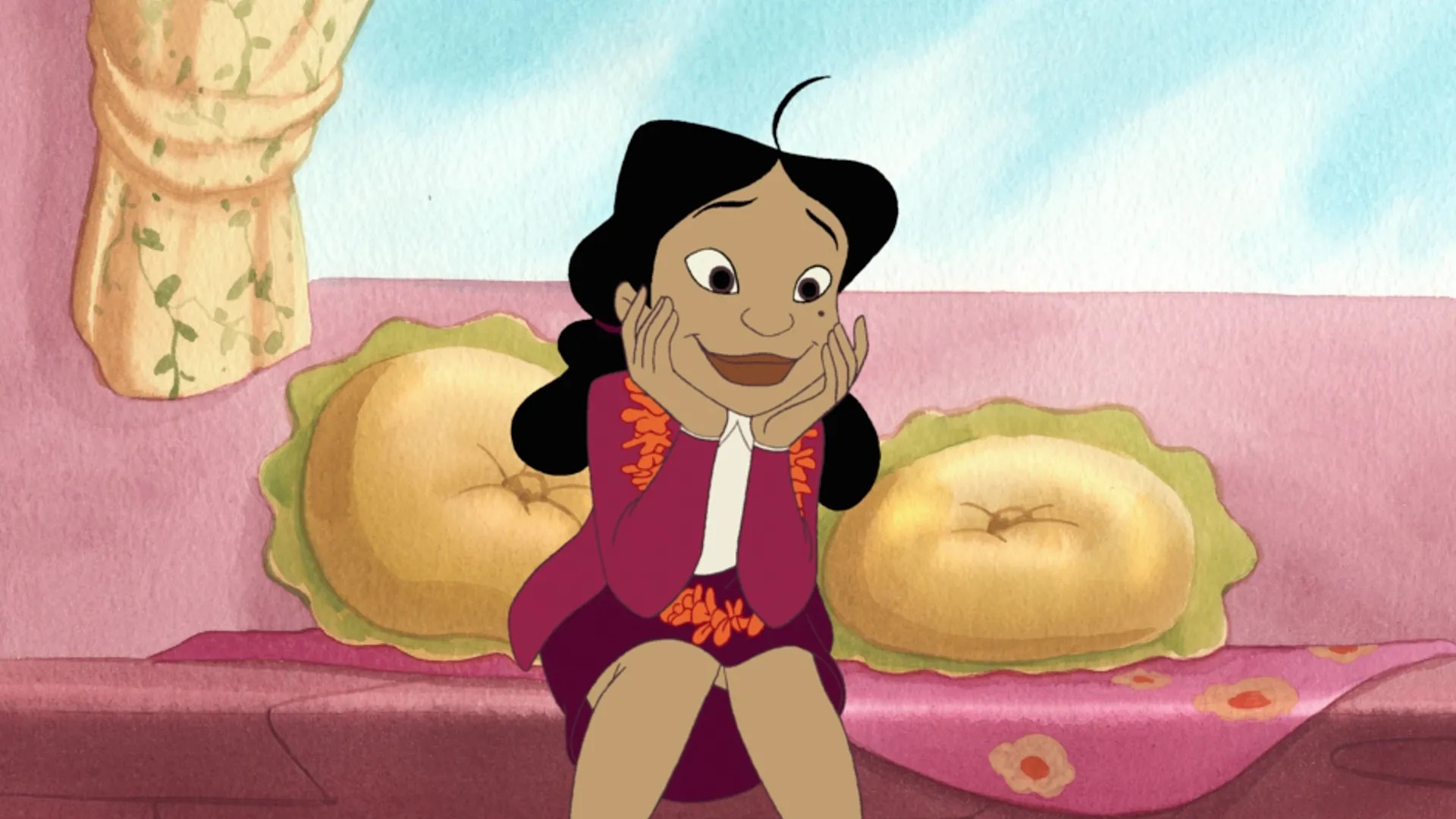
The Proud family checks into Jumba and Pleakley’s Bed Not Breakfast just as Experiment 397 begins forcing people into escalating arguments. Penny and Lilo must find the pattern while the adults turn every irritation into a fight.
The Bed Not Breakfast begins as another fragile family business
Jumba and Pleakley reopen their guesthouse while hoping for a favorable review. The Proud family arrives carrying ordinary vacation expectations, and every complaint threatens income, reputation, and the household’s confidence. Hospitality becomes performance before Experiment 397 fires a single beam.
That pressure explains why small frustrations feel enormous, but it also means the hosts need clear policies, realistic amenities, and a way to handle criticism without panic. A review cannot become more important than guest safety or honest communication.
Oscar’s complaints are irritating before they are chemically amplified
Oscar Proud does not need alien influence to notice poor accommodations or express himself badly. Spats intensifies conflict, but the episode should preserve the difference between a real grievance and an engineered inability to regulate it. Otherwise every uncomfortable truth can be dismissed as the experiment talking.
The cure must be followed by a calm review of what remains true. If a room was unclean, a service was misrepresented, or a guest behaved disrespectfully, those issues still require repair. Counting to ten removes the compulsion, not the history.
Suga Mama activates Spats through an unsafe guest environment
A dehydrated experiment pod reaches a bowl of bath products and is mistaken for something harmless. That chain exposes weak storage, labeling, and inspection around a property accepting paying guests. Alien objects cannot share space with toiletries and food.
The family needs controlled storage, visual identifiers, and a protocol for any unknown pod. Guests should not become the activation mechanism because the hosts never separated household hazards from hospitality supplies.
Experiment 397 turns disagreement into captivity
Spats fires a tail beam that traps two people inside relentless argument. The victims may still use their own memories and grievances, but they lose the ability to pause, choose proportion, or leave the exchange. That is coercion even when the dialogue sounds funny.
The power can damage relationships because targets may say cruel things that cannot be unheard. A reversal should restore control and include an explanation that neither person consented to the escalation. Chemical influence does not erase impact, but it changes responsibility.
Counting to ten works because interruption creates a choice point
The cure is wonderfully simple: stop and count to ten. The action slows speech, regulates breathing, and breaks the feedback loop long enough for agency to return. The episode turns a familiar de-escalation tool into literal counterprogramming.
That simplicity should not become blame. A person under Spats’s beam may be unable to remember the cure without help. Bystanders need to prompt calmly, reduce stimulation, and separate unsafe pairs rather than shouting that they should control themselves.
Penny and Lilo become partners because adults are too busy fighting
Penny and Lilo recognize the pattern and move toward the source while adults spiral. Their teamwork is satisfying because both girls are observant, underestimated, and accustomed to family chaos. It is also another case where children inherit emergency work created by adults and alien technology.
They can contribute evidence without becoming the primary containment team. Stitch, Jumba, Pleakley, and available adults should establish safety while Penny and Lilo share what they saw. Competence should earn respect, not endless exposure to danger.
The crossover works when Penny remains more than a guest star
Penny brings judgment, empathy, and experience negotiating a loud multigenerational family. She can understand how love and irritation coexist without treating every argument as proof that a family is broken. That perspective complements Lilo’s fierce belief in ohana.
The story should give Penny choices that affect the solution rather than using her only to connect brands. Her ability to read Oscar, Suga Mama, and the twins can help identify behavior that is exaggerated beyond normal family conflict.
Lilo and Penny both know what public embarrassment costs
Lilo is routinely called weird, while Penny often manages parents and relatives who turn private chaos into public spectacle. Spats weaponizes the fear that someone you love will embarrass you beyond repair. Each girl can recognize the urge to distance herself from family.
Their alliance could hold a deeper conversation about loyalty without denial. Loving family does not require pretending every behavior is acceptable. It requires addressing harm without discarding the person, especially after an outside force has amplified the worst moment.
Suga Mama and Gantu in a wrestling ring is funny and wildly unsafe
The episode stages their conflict as spectacle, but Gantu is an armed alien operative and Suga Mama is a civilian guest. Spats removes restraint, and the ring gives everyone permission to cheer instead of evacuate. Entertainment framing does not reduce the medical risk.
Bystanders should clear the area, remove weapons, call for support, and use the counting cure. Suga Mama’s toughness does not make her expendable, and Gantu’s repeated aggression cannot excuse letting an altered civilian absorb the fight.
Gantu’s exposure does not absolve his underlying choices
Spats amplifies conflict after Gantu arrives pursuing the experiment. His armed capture mission predates the beam. The influence may explain disproportionate rage, but it does not transform him into an innocent visitor who wandered into the wrong hotel.
Accountability must separate baseline intent from altered behavior. Treat the exposure, document any injury, and then address the attempted abduction. Otherwise the experiment becomes a convenient excuse for conduct Gantu repeatedly chooses while fully himself.
The reviewer should evaluate recovery as well as failure
Mr. Cooper arrives ready to judge a hospitality business and instead witnesses an alien conflict event. A fair review cannot pretend the incident was ordinary service, yet it can evaluate whether hosts warned guests, responded honestly, provided care, and changed unsafe systems.
Crisis recovery reveals more than decorative polish. Jumba and Pleakley should not pressure him into praise, conceal the cause, or stage fake calm. A transparent account and documented corrections would serve future guests better than a flattering paragraph.
Spats can expose resentments without proving they are complete truths
Targets may reach for existing frustrations because those are available material. The beam encourages attack, certainty, and escalation. It does not turn every accusation into a secret confession that should define the relationship forever.
Afterward, families need to revisit statements with consent: which concern remains, which was distorted, and what apology is owed? Treating every cruel sentence as authentic would let Spats continue harming people after the neurological effect ends.
Children need permission to leave adult arguments
Penny and Lilo may feel responsible for stopping relatives because they understand the cause. Before the cure is available, the safest instruction is distance. They should not stand between physically escalating adults or negotiate with people who cannot regulate themselves.
A designated safe room, adult contact, and buddy system would reduce harm. Children can be brave without becoming emotional referees. The episode repeatedly admires their competence while forgetting to protect it.
Jumba owes everyone a conflict-experiment warning system
Experiment 397 was designed to destabilize populations so conquest could proceed unnoticed. Jumba therefore knows the social danger is the function, not an accident. His records should include range, pairing rules, duration, symptoms, cure, and containment requirements.
The family needs a card or alert that can be understood during an argument. “Count to ten” should appear visibly throughout the property because affected people may not process a long scientific explanation. Emergency information is useful only when people can access it under stress.
A wrestling placement reproduces the original weapon in softer packaging
Spats ends up with Wizard Kelly, making professional wrestlers fight more convincingly. If performers are secretly zapped, the placement is exploitation. Scripted conflict already asks athletes to create believable hostility without surrendering emotional control.
Any use would require informed performer consent, medical review, strict duration, an immediate cure, and a ban on affecting spectators or staff. Even then, a biological compulsion may create risks that choreography and acting avoid. More convincing is not automatically more ethical.
Spats deserves a life that does not require provoking pain
His engineered function may feel satisfying or instinctive, but the family can help him develop communication, play, and relationships outside conflict. A safe home should not reward him only when other people lose control.
He could participate in staged performance through signals, lighting, or harmless effects without firing the beam. Belonging means having choices beyond the purpose Hämsterviel funded, including the choice to rest and be cared for.
The Prouds deserve follow-up after leaving Kauaʻi
A vacation interrupted by coerced arguments and alien violence does not end when luggage is packed. Guests need injury checks, a clear account, corrected charges, replacement property, and contact information if symptoms or distress continue.
Penny also deserves acknowledgment for helping solve the crisis. Gratitude should not romanticize the danger. The best thank-you is proof that the next child visiting the property will not face the same unmanaged experiment.
Manufactured conflict is useful to anyone who benefits from distraction
Jumba designed Spats to make local populations fight while an invader took control. That purpose is bigger than a hotel argument. It is a political strategy built around exhausting people with interpersonal hostility until they stop watching whoever holds power. The targets believe the conflict belongs entirely to them, which makes the manipulation harder to identify.
The episode could have let Penny and Lilo notice who benefits while everyone is yelling. Gantu gains room to pursue the experiment, the reviewer loses the ability to evaluate conditions calmly, and the hosts stop examining their own safety failures. Conflict consumes attention that should be directed toward the person exploiting it.
That does not mean every disagreement is planted by an outside force. Spats succeeds because irritation, insecurity, and unequal power already exist. Responsible recovery must address both layers: remove the coercive influence and then return to the real concern without the demand to dominate. Otherwise the same argument is waiting for the next spark.
The counting cure matters because it creates time to ask a different question. Instead of “How do I win?” a target can ask “What is happening to us, and who benefits from keeping us here?” Ten seconds will not solve a marriage, business complaint, or family pattern, but it can interrupt the person who needs everybody too angry to look around.
The episode needs a consent-centered recovery scene
After the cure, victims should be told what Spats did before being asked to reconcile. Some may feel embarrassed, frightened, or unsure which statements reflected their beliefs. They need privacy and the right to delay a conversation instead of performing instant harmony for the reviewer.
A useful recovery process would document exposure time, injuries, damaged property, threats, and witnesses. People could identify statements they retract, concerns they still want heard, and boundaries needed before contact resumes. Children should have a trusted adult present, especially if they were targeted by relatives.
The family also owes an apology for preventable exposure. Jumba created the experiment, the pod entered a guest area, and the hosts lacked a warning system. Saying Spats caused everything would hide the operational failures that allowed his beam to reach so many people.
Repair is slower than counting to ten because agency returns before trust does. That slower truth would give the crossover an emotional ending instead of using a cure as an eraser.
A professional wrestling show already knows how to stage conflict
Wizard Kelly’s performers do not need involuntary anger to make a match convincing. Wrestling depends on choreography, timing, character work, physical training, trust, and the ability to protect an opponent while appearing hostile. Spats’s beam can destroy the cooperation that keeps performers safe.
A wrestler who cannot regulate may ignore a cue, strike too hard, refuse a planned finish, or carry the hostility backstage. Counting to ten after an injury does not make the risk acceptable. The experiment’s effect attacks the exact professional discipline the show requires beneath the spectacle.
If Spats participates, the safest role is a visible fictional character whose power is represented through lights and sound. He can enjoy the crowd without altering anybody’s mind. That arrangement preserves the joke and gives him community while respecting the performers as workers rather than biological props.
The one true place succeeds only when Spats is wanted as a person and not rented as a shortcut. Wizard Kelly should be prepared to care for him when the beam stays off, the audience goes home, and there is no profitable fight to sell.
What I would keep and what I would repair
I would keep Penny and Lilo’s partnership, Suga Mama refusing to be intimidated, the chaotic guesthouse, and counting to ten as a cure. The crossover finds real comedy in two loud families meeting an experiment built to make everybody louder.
I would repair the hotel’s hazard controls, protect the children from adult fights, separate genuine complaints from compelled cruelty, and replace the wrestling placement with a consent-based life chosen by Spats.
RaeRae’s final verdict
“Spats” drops the Proud family into Jumba and Pleakley’s least regulated business venture, then gives Experiment 397 permission to turn every irritation into a bell-ringing grudge match. Penny and Lilo carry the episode because they notice the pattern while grown people are busy winning arguments nobody chose.
My verdict: count to ten, clear the room, treat the victims, refund the vacation, and stop calling involuntary rage a wrestling enhancement. Spats deserves ohana, but nobody owes him their nervous system as a workplace.
Where to watch
Watch “Spats” through Lilo & Stitch: The Series on Disney+. Disney+ labels it Season 2, Episode 14. CVM Sekai records it as overall Episode 53. Availability can change by region.
Keep exploring
Return to the episode directory or return to the Lilo & Stitch hub.