
EPISODE 49 · APPLE SEASON 2, EPISODE 11 · SNOOTY · RAE RAE REACTS
Lilo & Stitch: The Series Episode 49: Snooty
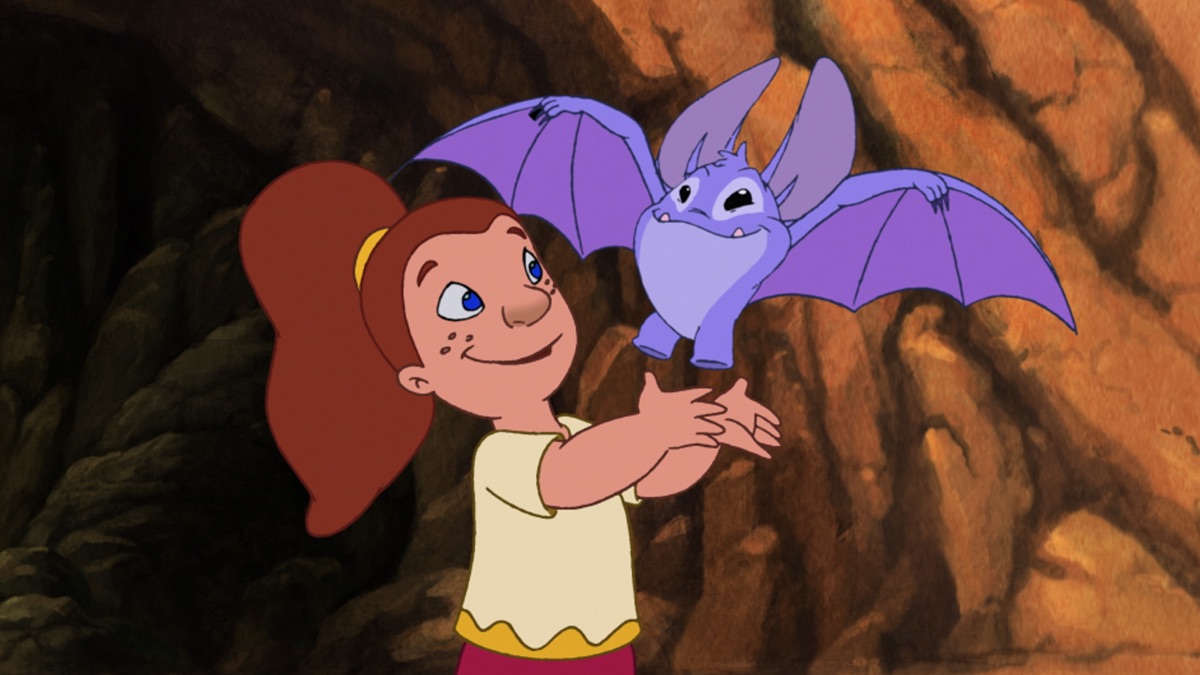
Victoria’s allergies attract a bat-like experiment she mistakes for a vampire. Snooty drains Stitch, Gantu weaponizes Victoria’s fear, and Jumba reveals that Stitch is somehow 62.7 percent mucus after most of it is already missing.
Victoria’s hay fever is a health condition, not a personality joke
Victoria spends the episode congested and uncomfortable. Allergies can interrupt sleep, school, exercise, concentration, and ordinary conversation. A child who constantly sneezes may also be teased or treated as inconvenient when her immune system is reacting to the environment.
She needs an adult assessment, known triggers, medication guidance, and a plan for severe symptoms. An alien experiment discovering her mucus should never be the first time somebody takes the condition seriously.
Snooty looks like a vampire because the episode wants fear to arrive first
Experiment 277 has wings, fangs, nocturnal movement, and a habit of aiming directly for noses. Victoria reaches for the story she already knows and decides he is a vampire. The label organizes fear quickly while replacing observation with a complete monster narrative.
Fear can be protective, especially when a creature is pursuing a child. The safe correction is not “stop being scared.” It is “keep your distance while we identify what he does.” Facts and caution can coexist.
The official listing gets his number wrong
Apple’s synopsis calls Snooty Experiment 477, but the established franchise number is 277. CVM Sekai records 277 and preserves the listing error as an editorial note rather than repeating it through metadata.
Numbering matters because experiment functions, appearances, and safety records depend on reliable identification. One wrong digit can point responders toward the wrong power and countermeasure.
Snooty was designed to mine Snootonium, not provide allergy care
Jumba created Experiment 277 to find and enrich a rare intergalactic energy source. Earth has no Snootonium, but mucus resembles it chemically, so the original drive redirects toward congested people. A planetary mining function becomes a deeply personal medical invasion.
That adaptation shows why Jumba cannot declare a cousin harmless because the intended material is absent. Similar substances can activate the same behavior, and Earth biology may become the substitute resource.
Approaching Victoria’s face without consent is still an assault
Snooty may be responding to programming and may ultimately relieve her symptoms, but Victoria experiences a flying, fanged creature trying to attach to her nose. She has no explanation, control, or reason to believe the contact will be safe.
A beneficial outcome does not retroactively create consent. Future care must begin with Victoria agreeing, knowing what Snooty will do, and having a way to stop the procedure immediately.
Lilo recognizes an experiment where Victoria sees a monster
Lilo has caught and rehabilitated many cousins, so she knows appearance and original function do not determine a permanent moral identity. Her instinct to prevent Snooty from being killed is grounded in experience and compassion.
Experience can also make Lilo underestimate how frightening the encounter is for somebody new. She should validate Victoria’s fear, create distance, and explain the evidence instead of expecting instant trust.
Friendship does not require Victoria to copy Lilo’s risk tolerance
Lilo is comfortable chasing experiments because danger has become part of her routine. Victoria has not agreed to that routine. She can care about Lilo and still refuse to approach a cousin who repeatedly targets her body.
A healthy friendship lets each child set boundaries. Lilo can ask for help without making bravery the price of belonging.
Hiding in Officer Kahiko’s car is an emergency choice
Victoria seeks the nearest protected space when Snooty pursues her. A police vehicle may feel safe, but entering or hiding around it creates other risks if the officer drives, uses equipment, or mistakes the situation. Children need obvious public places where they can request help without improvising.
Officer Kahiko should receive an accurate warning about the creature, protect Victoria, and avoid escalating toward lethal force before the threat is understood. The child’s immediate safety comes first.
Stitch intervenes and becomes the next exposure
Stitch challenges Snooty to protect Victoria. His courage gives her time, but the fight places him directly in range of the cousin’s extraction ability. Protectors can become patients, and the team should plan for that possibility before sending the same person into every confrontation.
Lilo needs backup beyond Stitch. The Federation owes the island trained responders who understand experiment powers and can protect civilians without relying on a child’s best friend.
Removing 62.7 percent of Stitch’s mucus is a medical emergency
Jumba explains that mucus makes up a startling portion of Stitch’s body and that Snooty drains it. Whatever alien physiology makes that number possible, the result is severe weakness. Mucus protects tissue, traps particles, lubricates surfaces, and supports normal function.
Stitch needs airway assessment, hydration, infection precautions, monitoring, and a verified recovery process. The household should not wait for him to look energetic before deciding he is stable.
The word mucus is funny until somebody loses most of it
The episode uses bodily fluid for gross-out comedy, but the biology gives the joke stakes. People often dismiss symptoms involving noses, digestion, skin, or other embarrassing functions because the topic feels impolite. That can delay care.
Health information should be factual and shame-free. Victoria and Stitch deserve explanations without being mocked for what their bodies produce.
Victoria’s fear hardens after Stitch is harmed
Seeing Snooty drain Stitch confirms the worst story in Victoria’s mind. Lilo’s reassurance now sounds naive because the cousin has visibly injured someone. Victoria decides that stopping him may require killing him.
Her reaction comes from fear and protective anger, but a child should not be asked to decide whether a sentient being lives. Adults need to take over containment and give her a safe role outside the confrontation.
Gantu offers certainty when Lilo cannot
Victoria allies with Gantu because he promises direct action against the creature. Predators and authoritarian adults often become attractive during fear because they speak without doubt. Gantu does not need her long-term wellbeing; he needs access to Experiment 277.
Lilo should avoid shaming Victoria for accepting help. The better response is to reveal Gantu’s goal, offer a safer plan, and restore the child’s choices before he turns her fear into cooperation.
Gantu has no right to recruit a child into experiment capture
He is an armed adult operating for Hämsterviel. Using Victoria as bait, guide, or moral cover would expose her to injury and manipulation. Her agreement cannot legitimize his mission.
The Federation should investigate every time Gantu involves minors. Nani and Victoria’s guardian need notification and support, while Victoria needs reassurance that responsibility belongs with the adult who exploited the situation.
Lilo saves Victoria without requiring agreement first
When Gantu’s plan threatens Victoria, Lilo protects her even though the friends disagree about Snooty. That is what care looks like under conflict: safety does not depend on winning the argument.
Afterward, Lilo can explain why she defended Snooty and listen to why Victoria felt abandoned by the earlier reassurance. Mutual repair is stronger than forcing one child to admit the other was completely right.
Victoria changes course when she sees Gantu’s real intention
She helps save Snooty from capture after recognizing that Gantu is not protecting her. The shift is meaningful because it comes from new evidence rather than hypnosis or pressure. Victoria can revise a belief without being humiliated for having been afraid.
Adults should praise the correction while still acknowledging the danger she faced. Learning is the ability to update, not proof that the original fear was foolish.
Snooty relieving congestion is not the same as curing allergies
Removing mucus may open Victoria’s sinuses temporarily, but allergies involve an immune response to triggers. Calling the extraction a cure risks teaching that symptom removal resolves the underlying condition. It may also damage protective tissue if done too aggressively.
A clinician should assess whether the effect is safe, how often it can occur, and whether standard treatment is still needed. Snooty cannot become the entire care plan because the first result looked convenient.
A medical procedure needs dose, frequency, and stop rules
Snooty can drain a large amount quickly, as Stitch’s collapse demonstrates. Victoria’s smaller human body may tolerate far less. Caregivers need limits on duration, amount, symptoms, positioning, infection control, and emergency reversal.
Victoria must be able to say no on any day. Owning or housing Snooty never turns her body into his automatic resource.
Snooty needs protection from contaminated exposure too
If he consumes mucus from multiple people, he may encounter pathogens, medication residue, allergens, and biological differences his design never anticipated. He could become ill or transmit material between hosts.
Any therapeutic role requires hygiene, health monitoring, and restrictions during contagious illness. Snooty is a caregiver and a patient, not disposable suction equipment.
Calling Snooty Victoria’s pet understates the relationship
The series uses pet language to help human communities accept experiments, but Snooty is a genetically engineered person with preferences and specialized abilities. Victoria can be his companion and caretaker without owning his body or labor.
Her household needs adult consent, Federation protection, housing guidance, veterinary or medical support, and a plan for school and travel. A child cannot carry sole legal responsibility for an alien cousin.
Victoria’s guardians need to know what moved into the house
Bringing Snooty home changes safety, privacy, expenses, and medical decisions for everyone living there. Adults need truthful information about his power, feeding needs, flight, triggers, and history. Secret adoption would leave both child and experiment vulnerable.
Disclosure can protect the wider alien secret while giving responsible caregivers enough knowledge to act. The Federation already allows Lilo’s family to host Stitch; it needs a repeatable process for other homes.
Snooty’s one true place should be voluntary care, not permanent extraction
Helping Victoria breathe may give him purpose and connection. It works only when he chooses the role, she chooses each interaction, and both receive medical supervision. Neither being should depend on the other in a way that makes refusal feel like abandonment.
His life also needs rest, play, relationships with cousins, and activities unrelated to mucus. A useful power is part of identity, not the whole person.
Victoria needs an allergy plan that travels beyond home
Even if Snooty helps at home, Victoria still attends school, hula, outdoor events, and friends’ houses. Her symptoms may appear where he is absent or where bringing an alien companion is unsafe. She needs ordinary medication access, trigger information, emergency contacts, and adults who know what worsening symptoms look like.
The school should avoid isolating her from flowers, animals, or outdoor lessons without medical reason. Accommodations can include seating, air quality changes, time to wash after exposure, water, tissues, and permission to use prescribed treatment privately. Care should expand participation rather than reduce her life to avoidance.
Snooty can be one support inside a broader plan. He should never become the reason adults stop providing healthcare.
The friendship needs rules for future experiment encounters
Lilo and Victoria will meet more cousins if they keep spending time together. They need a shared plan before the next one flies at somebody’s face. Stop, create distance, contact Lilo’s adults, identify the number, and avoid touching or attacking unless immediate protection requires it.
Victoria should be allowed to leave without Lilo interpreting departure as rejection. Lilo should be allowed to advocate against killing a cousin without approaching alone. Both girls can choose a safe meeting point and a trusted adult who understands the experiment secret.
Planning turns their disagreement into useful knowledge. Friendship becomes safer when nobody has to invent the rules while afraid.
The episode gives Lilo a friendship built through disagreement
Victoria does not simply become another child who agrees with Lilo about everything. She is scared, makes a dangerous alliance, changes her mind, and still remains connected. That messiness makes the friendship more believable than a perfect new-best-friend story.
Lilo also learns that being the experiment expert does not exempt her from explaining risk. Trust grows when knowledge is shared with humility.
What I would keep from Snooty
I would keep the vampire misunderstanding, Victoria’s fear, Stitch becoming medically vulnerable, Gantu exploiting the conflict, and Snooty finding companionship with the child whose symptoms attracted him. The episode allows a frightening appearance to become something more complicated without pretending no harm occurred.
I would correct both number errors on every directory card, replace “cure” with accurate symptom language, and add adult oversight to the placement. I would also make Jumba write down why Stitch is apparently 62.7 percent mucus before anybody in that house eats breakfast.
RaeRae’s final verdict
“Snooty” gives Victoria hay fever, a flying alien aimed at her nostrils, a vampire theory, Gantu as the worst possible emergency contact, and one very dehydrated Stitch. Lilo is right that Experiment 277 can be rehabilitated. Victoria is right that being chased by fangs is terrifying. Both truths belong in the same room.
My verdict: protect the child, contain the cousin, treat Stitch, correct the record from 477 to 277, and never call mucus extraction an allergy cure without medical evidence. Snooty can live with Victoria and help when both agree. He cannot become a household appliance with wings. Also, Jumba’s experiment files need anatomy notes because “Stitch is mostly mucus” should not be discovered after the mucus is gone.
Where to watch
Watch “Snooty” through Lilo & Stitch: The Series on Disney+. Apple labels the story Season 2, Episode 11. CVM Sekai records it as overall Episode 49 in the complete aired-order directory. Apple’s synopsis calls Snooty Experiment 477, but the established franchise number is 277. Availability can change by region.
Keep exploring
Return to the episode directory or return to the Lilo & Stitch hub.