
EPISODE 47 · SEASON 2, EPISODE 8 · PJ · RAE RAE REACTS
Lilo & Stitch: The Series Episode 47: PJ
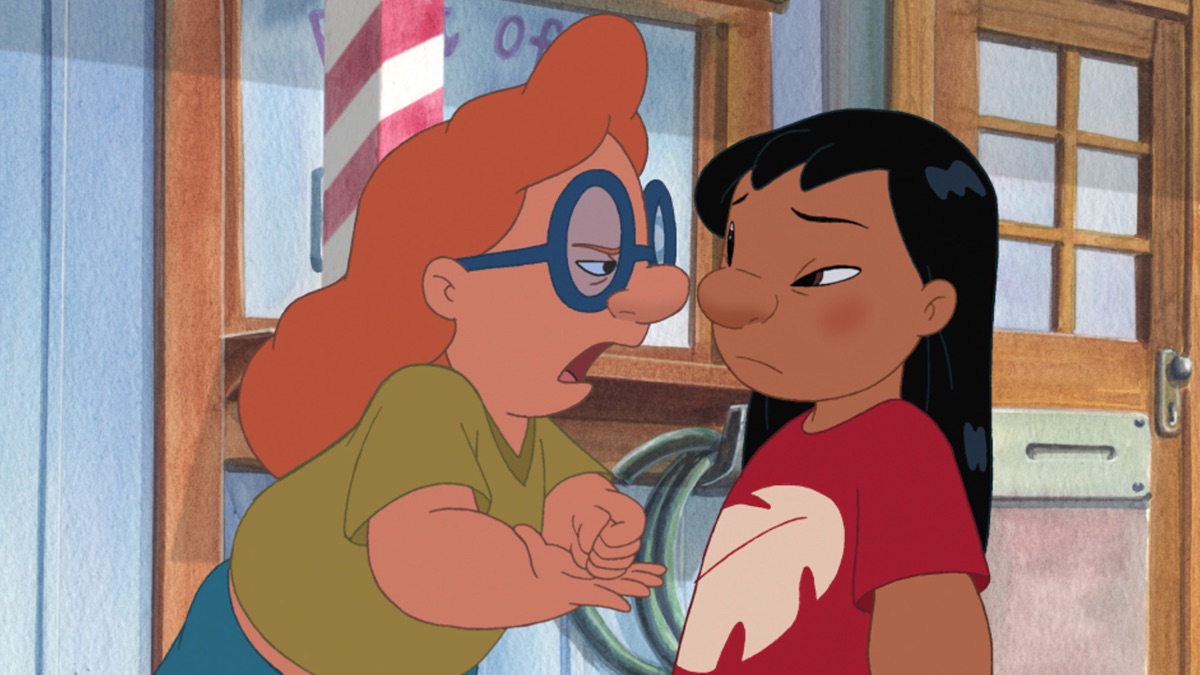
A strict substitute blames Lilo for Experiment 133’s pranks. Lilo chooses revenge, Stitch says no, and she responds by putting Stitch to sleep because apparently the prank was not already making enough bad decisions.
A substitute teacher enters a class with no relationship yet
Moses is away, and a strict substitute takes over hula class. She inherits responsibility for children she does not know, routines she did not build, and a cultural learning space that depends on trust. Firm expectations can help a new teacher, but authority without relationship often feels like control arriving before understanding.
The school should provide lesson plans, student needs, behavior history, emergency contacts, and a clear route for support. A substitute should not be abandoned to manage alone, and children should not be expected to accept every change without explanation.
Lilo is blamed for pranks she did not commit
PJ begins joking around the class while Lilo receives the consequences. Her reputation makes the accusation easy: adults already expect unusual behavior from her, so evidence becomes optional. That pattern teaches a child that innocence will not protect her when people have decided who she is.
The teacher should pause, ask what happened, check witnesses, inspect the setup, and let Lilo respond privately. Discipline without investigation is faster than fairness and far more damaging.
Experiment 133 turns a joke into an attribution problem
PJ creates practical jokes from ordinary objects and disappears behind the reaction. The victim sees the result, while blame attaches to whoever happens to be nearby. His power is less about one whoopee cushion than the ability to manipulate relationships through hidden causation.
A safety response needs photographs, preserved materials, timelines, and a known inventory of PJ’s methods. Nobody should punish a child because the prank resembles something she might have done.
Strictness can become humiliation when correction has an audience
A teacher may need to stop disruption, but public scolding turns instruction into spectacle. Lilo already feels watched by Mertle and the other girls. Being blamed in front of them gives the social group new material long after class ends.
Correction should be specific, calm, and private when possible. The goal is safer behavior, not making one child an example whose embarrassment keeps everyone else quiet.
Lilo’s anger is rooted in injustice before it becomes revenge
She knows she was blamed unfairly and sees no adult process likely to clear her name. The desire to strike back grows from a real wound. Revenge promises to restore balance by making the teacher feel exposed and powerless too.
Validation matters here. An adult can agree that the accusation was wrong while refusing the revenge plan. Children listen better to boundaries when somebody first acknowledges what happened to them.
Impressing Mertle makes the prank more dangerous
Lilo also wants social approval from the girls who often ridicule her. A dramatic prank could reverse the room for one moment: Mertle laughs with Lilo instead of at her. That imagined payoff makes escalation feel worth the risk.
Peer approval is especially powerful when belonging is scarce. Adults should create safer opportunities where Lilo’s creativity, humor, and courage receive recognition without requiring someone else’s humiliation.
Stitch refuses because he understands the plan has crossed a line
Stitch has already been PJ’s target and knows the cousin’s jokes can escalate. He tries to stop Lilo from using PJ against the substitute. The former destruction machine is now the person asking for restraint, which is both funny and evidence of growth.
His boundary deserves respect. Lilo can be angry without recruiting Stitch into retaliation. Ohana does not require helping a loved one harm somebody.
Containment protects people, but PJ still needs humane treatment
Stitch places PJ in an orb to stop further pranks. Immediate containment may be necessary when hidden traps are multiplying, but the orb cannot become punishment without communication, review, or care. PJ needs to know why he is contained and what behavior would make release safe.
He also needs food, rest, stimulation, and a way to communicate through his horn or another tool. Safety and dignity must travel together.
Lilo uses Drowsy on Stitch to remove his refusal
When Stitch will not cooperate, Lilo brings in Experiment 360 and puts him to sleep. This is an enormous consent violation. She does not persuade him, accept his no, or wait. She chemically or neurologically incapacitates the person standing between her and revenge.
The episode should treat that choice as more than clever problem-solving. Stitch deserves medical monitoring, an apology, and assurance that Drowsy will never be used to override his boundaries again.
Sleep induced without consent creates medical risk
Drowsy’s effect may look gentle, but nobody checks dose, duration, breathing, interaction with Stitch’s biology, or whether he can wake in an emergency. Sedation removes the ability to protect oneself and can conceal injury.
Jumba needs protocols for exposure, supervision, recovery position, warning signs, and reversal. Lilo should never have unsupervised access to a cousin whose power can incapacitate people.
Releasing PJ makes Lilo responsible for foreseeable escalation
Jumba has warned that PJ’s jokes can grow from nuisance to dangerous sabotage. Lilo releases him specifically to target another person. She may not design every component, but she sets the purpose and provides access.
Accountability should consider her age and emotional state while still naming the risk. A child can make a harmful decision and deserve both consequences and continued care.
PJ is creative, but creativity without consent becomes a trap
The cousin can read a space, assemble props, anticipate movement, and time a payoff. Those are real performance skills. The problem is that his audience has not agreed to participate and may be injured, exposed, or frightened for someone else’s entertainment.
Ethical comedy requires boundaries: approved targets, safe materials, rehearsed effects, accessible exits, and the ability to opt out. Surprise can exist without stealing control.
The ultimate prank is designed around humiliation
Lilo wants the substitute embarrassed in front of the class. The teacher’s earlier unfairness becomes justification for a public reversal where everyone watches her lose dignity. Humiliation rarely teaches the lesson the planner imagines. It usually creates defensiveness, fear, or retaliation.
A complaint process, witnessed conversation, or meeting with Moses would address the original injustice more directly. Revenge copies the same public-shame structure that hurt Lilo.
Stitch wakes and returns even after Lilo violated his trust
Once freed, Stitch rushes to prevent harm. He does not abandon Lilo because she ignored his boundary. His loyalty is active and difficult: protect the target, protect Lilo from the consequences, and protect PJ from his own trap.
The family should never treat that loyalty as automatic forgiveness. Stitch gets to be angry and decide what repair he needs after the crisis.
A booby trap does not know who deserves it
PJ’s setup catches Stitch and later backfires on PJ. Mechanical traps follow movement, weight, timing, and chance. They cannot evaluate guilt, innocence, or changed circumstances. Once armed, the prank may strike a child, teacher, custodian, visitor, or the experiment who built it.
That unpredictability turns sabotage into a public hazard. The room should be evacuated and searched before normal activity resumes.
PJ being repeatedly kicked is still harm
The backfire gives PJ a cartoon punishment, and the comedy relies on him receiving the physical consequence he planned for someone else. Accountability does not require celebrating pain. He is a sentient cousin caught in a machine built through his own compulsive programming.
Stitch’s decision to free him is the right response. Rescue comes first; discussion of responsibility comes after everyone is safe.
The substitute deserves accountability and protection at once
She appears authoritarian, blames Lilo without sufficient evidence, and contributes to the conflict. She also does not consent to being targeted by a dangerous trap. Criticizing her teaching does not make violence an acceptable corrective.
The school should review her actions, hear student accounts, and provide coaching or consequences as warranted. It should also disclose the prank, offer medical support, and ensure she can report harm without being told she brought it on herself.
Mertle’s laughter is not the verdict Lilo needs
If Mertle approves of the prank, that approval reflects entertainment and rivalry rather than justice. Lilo cannot build self-worth around whether a bully enjoys watching another person suffer. The reward disappears the next time Mertle needs a target.
A better social win would come from Lilo speaking clearly, being believed, and keeping her values while angry. That may look less dramatic, but it leaves her with something Mertle cannot take away.
The school needs a complaint route children can actually use
Telling children to report unfair treatment means little if the process is confusing, public, or controlled by the same adult. Lilo needs access to Moses, Nani, or another trusted person who can document the accusation and request review.
The route should protect her from retaliation and provide an answer. Silence teaches children that revenge is the only system that responds quickly.
PJ’s one true place as an opening act fits with consent
Performing before Moses’s hula gig gives PJ an audience that expects comedy. The stage creates a boundary, the event can approve material, and people may leave if the act is not for them. His creativity becomes entertainment instead of ambush.
The placement still needs rehearsal, safety review, pay, and clear limits on audience participation. A ticket to a show is not permission to be injured or publicly exposed.
PJ communicates through a horn, so care must listen differently
He does not use ordinary speech in this episode. Adults may assume silence means agreement or incapacity. His horn, gestures, expression, and behavior are communication that caregivers must learn rather than dismiss.
A picture board, signals for yes and no, and time to respond would let PJ participate in plans about performance and containment. Communication access is part of consent.
Jumba’s warnings cannot remain theatrical jokes
Jumba describes PJ as a practical joke that escalates toward sabotage, then admits some of the warning was itself a prank. Mixing safety information with comedy makes it impossible for the family to know which danger is real.
Experiment briefings need plain facts first. Jumba may joke after everyone understands triggers, risks, limits, and countermeasures. Emergency communication is not another stage for his evil-genius routine.
Repair requires Lilo to address Stitch directly
The deepest betrayal is not the failed teacher prank. It is Lilo using Drowsy because Stitch said no. She should acknowledge that she treated his body and consciousness as obstacles, apologize without defending revenge, and ask what boundary will restore safety.
Stitch may want Drowsy secured, supervision around PJ, or time before trusting Lilo with experiment decisions. Forgiveness should not be demanded because the episode is ending.
Prank materials need the same safety review as stage equipment
PJ uses whatever the room provides, which means ordinary classroom objects can become trip hazards, projectiles, restraints, or concealed mechanisms. A joke that works once in rehearsal may fail when a child enters from another direction or a prop shifts. Intent cannot predict every body that crosses the setup.
For his stage work, an adult technician should inspect load, tension, edges, liquids, electricity, exits, cleanup, and accessibility. Nothing should target a face, mobility aid, medical device, cultural item, or personal vulnerability. Audience volunteers need a clear explanation and the freedom to decline without becoming the joke.
The performance can still feel spontaneous. Safety planning protects the surprise from becoming an injury report.
The class needs a debrief before anybody resumes hula
Children watched an adult accuse Lilo, saw hidden pranks escalate, and nearly witnessed a targeted humiliation. Some laughed, some may feel guilty, and others may worry the next trap will choose them. Returning immediately to practice would leave the social damage unspoken.
Moses or another trusted educator should explain what is known, correct the false accusation, reinforce that reporting concerns is safe, and let students ask questions without spreading private details. The substitute can acknowledge her mistake and still receive protection from retaliation.
A debrief also prevents Mertle from controlling the story afterward. Facts belong to the whole class, not the loudest child in the room.
What I would keep from PJ
I would keep the strict substitute, hidden pranks framing Lilo, Stitch becoming the voice of restraint, the elaborate trap, and PJ finding a stage where people expect jokes. The episode has a strong idea about context changing the same talent from harm into art.
I would make Lilo’s use of Drowsy a central repair point, give the teacher an evidence-based review, and let PJ communicate consent about his new job. I would also ban Jumba from turning the safety briefing into a prank until everyone signs that they heard the real one.
RaeRae’s final verdict
“PJ” begins with Lilo being blamed for somebody else’s joke and ends with her planning a bigger joke, sedating Stitch, freeing the prank expert, and nearly letting a hula classroom become a cartoon injury claim. Her anger is understandable. Her method is a mess. Stitch has somehow become the responsible sibling, which should concern every adult in the house.
My verdict: believe children after checking evidence, give them a real complaint process, keep revenge out of lesson planning, and put PJ on a stage with a safety rehearsal. Comedy works when the audience can laugh without losing dignity or bodily control. Also, if your best friend says no and you respond by deploying a sleep experiment, the prank is no longer your biggest problem.
Where to watch
Watch “PJ” through Lilo & Stitch: The Series on Disney+. Apple labels the story Season 2, Episode 8. CVM Sekai also records it as overall Episode 47 in the complete aired-order directory. Availability can change by region.
Keep exploring
Return to the episode directory or return to the Lilo & Stitch hub.