
EPISODE 43 · SEASON 2, EPISODE 4 · SHOE · RAE RAE REACTS
Lilo & Stitch: The Series Episode 43: Shoe
Nani is short on cash, Lilo opens a Bed and Not Breakfast inside Jumba’s spaceship, and Experiment 113 proves that “bad luck” is a safety incident, not a business plan.
Nani’s bills are not homework, and that joke hurts
Nani finds herself short on cash while the household treats the pile of bills like ordinary paper. The gag is fast, but the pressure underneath it is familiar: one young guardian is responsible for keeping a home, feeding a child, and absorbing every expense created by two aliens and hundreds of escaped experiments. Nobody else carries the same consequences when the numbers stop working.
Financial stress is not a personal flaw. Rent, utilities, repairs, food, transportation, school costs, and lost work hours can overwhelm a careful person. Nani needs shared responsibility and reliable support, not another emergency business assembled by people who will vanish when the invoices arrive.
Lilo tries to help because children notice money even when adults hide it
Lilo recognizes that Nani is worried and immediately searches for a way to earn money. That impulse comes from love, but it also shows how household anxiety reaches children. A child may not understand every bill and still understand that the adult looks frightened when the mail arrives.
Nani can reassure Lilo that the finances are an adult responsibility while accepting age-appropriate help. Lilo may choose decorations, welcome guests, or make a sign. She should never believe the family loses housing if her project fails. Care means letting her contribute without making her responsible for survival.
The Bed and Not Breakfast is funny because hospitality is labor
The family converts Jumba’s spaceship into a lodging business and cheerfully removes breakfast from the promise. Even without breakfast, guests require cleaning, linens, registration, maintenance, safety information, customer service, payment systems, and somebody awake when a toilet or alien panel stops cooperating.
A cute name does not erase the work. Nani already has a job, and Lilo is a child. Jumba and Pleakley need assigned shifts, written duties, and responsibility for repairing their own ship. Otherwise the business earns money by converting unpaid family labor into a product.
A spaceship is not automatically legal lodging
Jumba’s ship may have rooms, but a room does not become a hotel because Pleakley puts a towel on the bed. Guests need fire exits, ventilation, safe wiring, sanitation, accessible routes, occupancy limits, secure doors, and instructions for every object that might launch them into orbit.
The family should obtain inspection, insurance, and permission before accepting payment. Alien technology creates risks no local form anticipates, which means the answer is more disclosure and planning rather than pretending the ship is an eccentric cottage.
Tourists deserve to know where they are sleeping
A guest cannot consent to lodging inside extraterrestrial machinery when the listing hides that fact. The family may worry that honesty will scare customers away, but secrecy transfers risk to people who cannot evaluate it. A renter should know whether the walls can move, the doors can seal, or Jumba can accidentally start an engine beneath the mattress.
Disclosure does not require giving the public coordinates to every Federation secret. It requires a truthful description of unusual hazards, emergency procedures, and limits on access. If the property cannot be explained safely, it should not be rented.
Experiment 113 turns probability into a weapon
Shoe generates bad luck, which sounds less concrete than fire, sound, or earthquakes. The harm appears through chains of unlikely failure: objects break, plans collapse, accidents arrive together, and nobody can identify a single ordinary cause. Probability becomes the attack surface.
That makes documentation difficult. Each incident may look minor until the pattern is visible. The family needs timestamps, locations, witnesses, and a map of Shoe’s proximity. “Bad luck” should not become an excuse to stop investigating mechanical defects or unsafe practices, but repeated clustering deserves attention.
Bad luck does not make Shoe bad
Shoe’s power causes harm, yet the effect was built into him before he could choose a life. Calling him useless collapses person and function into one judgment. He hears that judgment and runs away because he believes the family has already decided what he is worth.
An experiment can be dangerous and still deserve dignity. Safety plans should describe behaviors, triggers, distance, and mitigation without declaring the individual defective. The household has learned this lesson with other cousins, but financial panic makes compassion easier to forget.
Overhearing “useless” turns a safety problem into abandonment
Shoe does not receive the full conversation about risk, reversal, or the possibility of a different use. He receives one word that sounds like a verdict on his existence. Children and vulnerable family members often hear adult frustration without the context adults assume will soften it.
Repair requires more than saying the comment was not meant for him. Lilo and the adults should name the harm, apologize without conditions, explain the actual concern, and show how Shoe will be included in decisions about his future.
Running away creates exposure because the home did not feel safe enough for truth
Shoe leaves while Gantu is hunting experiments. His departure is risky, but it is also communication: staying felt more painful than the unknown outside. A family cannot rely on locked doors or loyalty when a member believes they are unwanted.
The response should focus on locating him safely, not punishing him for leaving. Once found, the household needs a return plan where he can express anger, ask questions, and hear exactly what protections will prevent another careless judgment from becoming exile.
Gantu treats vulnerability as an acquisition opportunity
Gantu does not need to understand Shoe’s feelings. He only needs to notice that the experiment is separated from support. Predatory systems work the same way: isolation lowers resistance and makes capture easier. The person who believes nobody wants them is more vulnerable to anyone offering certainty.
Experiment recovery teams should monitor likely routes, provide safe contact points, and make sure cousins know whom to call before a crisis. Belonging becomes a security measure when it gives someone a place to return.
Reuben knows the power has another setting
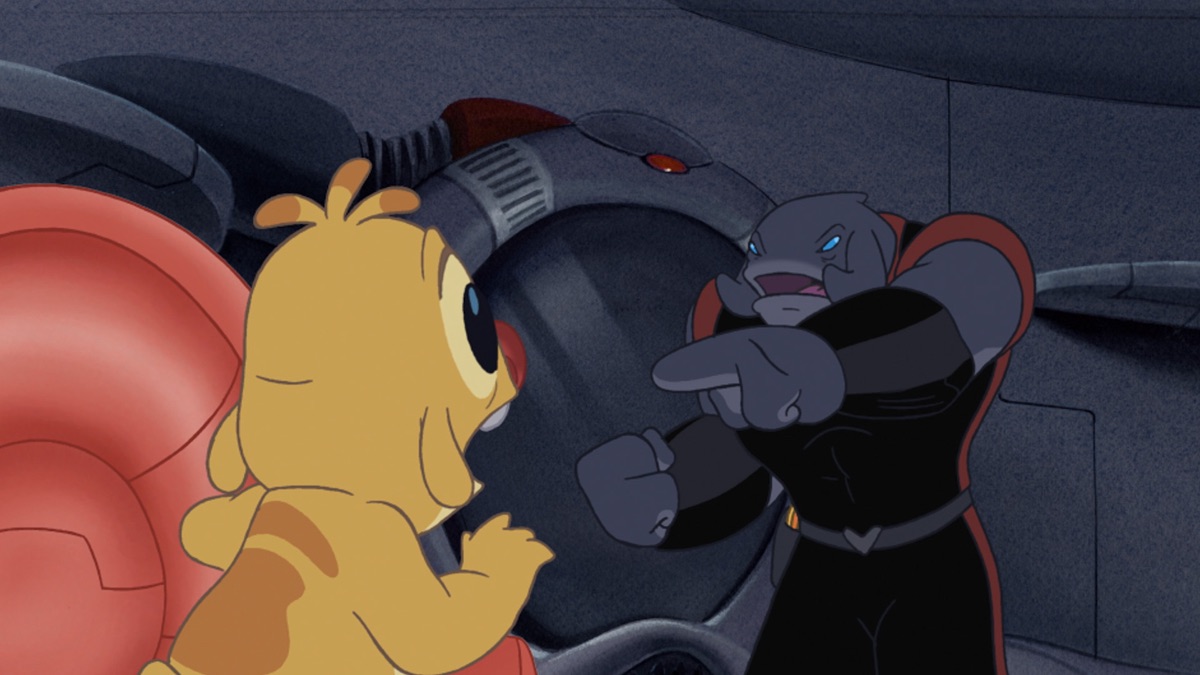
Reuben tries to explain that Shoe’s bad luck can become good luck when the horns are reversed. His knowledge could solve the crisis, but Gantu dismisses him. The scene repeats a pattern where the person closest to the operation sees the problem while the authority figure refuses to listen.
Organizations need a way for lower-ranking members to raise urgent information without begging for attention. Reuben should be able to document the warning, stop unsafe action, and receive credit when his expertise prevents harm. Sandwich enthusiasm does not cancel competence.
Reversing the horns changes the output, not Shoe’s worth
When Jumba remembers that Shoe can generate good luck, the household suddenly sees value where it previously saw inconvenience. That reversal solves the plot but risks teaching that acceptance must be earned through usefulness. Shoe deserved safety and belonging before anyone discovered the profitable setting.
Good luck can be a gift he chooses to share, not rent he pays for a place in the family. If his power is used in the business, he needs consent, rest, recognition, and protection from becoming a permanent probability machine.
Good luck can cause ethical problems too
A business that secretly manipulates probability may attract guests, prevent accidents, or generate glowing reviews without customers knowing why. The benefit feels harmless, but it can distort competition and create dependence. Other local lodging owners do not have an alien adjusting chance beside the front desk.
The family should use Shoe first for safety rather than guaranteed profit and disclose unusual assistance where appropriate. He should never be placed near gambling, lotteries, elections, insurance claims, or any system where manipulated odds harm people who cannot see the intervention.
The hotel should not run on a sentient being’s involuntary labor
Shoe’s good-luck field becomes economically useful, which makes exploitation tempting. If the business needs him present every hour to function, then he is working. A bed, affection, and the phrase “one true place” do not replace wages or the right to refuse a shift.
His arrangement needs a schedule, compensation held for his benefit, training, and a way to leave the job without losing the family. Work can be meaningful while remaining separate from personhood.
Guests need remedies when improbable harm occurs
Before the reversal, customers encounter a cascade of bad outcomes. Even if nobody intended each accident, the business invited people into the risk and accepted payment. Refunds, medical costs, damaged property, transportation, and honest incident reports belong in the response.
Calling it bad luck does not release the operator from responsibility. The family knew an experiment was affecting the premises and had a duty to pause bookings. Financial pressure never excuses keeping guests inside an active hazard.
Nani should not be the only licensed adult by default
Nani is repeatedly expected to legalize, supervise, and emotionally stabilize plans created while she is at work. A household business makes that imbalance more dangerous because liability will find the adult whose name is on the address. Jumba and Pleakley cannot enjoy autonomy while leaving every earthly consequence to her.
They should contribute money, obtain identification, complete training, and accept formal responsibility. If the Federation expects Nani to host its citizens and weapons, it owes her a contract, insurance, and compensation.
Tourism is not free money on Kauaʻi
The episode treats visitors as quick revenue, but lodging affects housing, water, waste, traffic, labor, and neighborhood life. A family under financial stress should not be blamed for considering tourism income. The larger system still needs rules that prevent every spare room from becoming more valuable to visitors than residents.
The Bed and Not Breakfast can remain small, permitted, and accountable to its community. Guests should receive cultural and environmental guidance instead of treating the island as a themed backdrop for an alien adventure.
The experiments already do enough unpaid public service
The family routinely places cousins into jobs that use their powers: powering equipment, cutting hair, managing traffic, or entertaining crowds. These placements are sweet when chosen and exploitative when the experiment is simply assigned. Shoe’s story makes the economic question impossible to ignore because his power directly affects revenue.
Every placement should be reviewed for consent, pay, working conditions, safety, and an option unrelated to the original design. Rehabilitation cannot become a labor pipeline for beings society refuses to house otherwise.
Shoe needs control over horn position
If horn orientation changes the power, other people can manipulate Shoe by touching his body. The family needs to know whether adjustment hurts, whether he can do it himself, how long effects last, and whether switching repeatedly causes exhaustion or distress.
Consent must be explicit every time. A removable protective device could prevent accidental changes while leaving Shoe able to communicate and move comfortably. Nobody should flip his horns like a light switch because a guest wants a better vacation.
Probability powers need boundaries beyond the house
Good luck for one person can mean an unlikely loss for someone else if probability is redistributed rather than created. The episode never measures the wider effect. A guest finding money might coincide with a neighbor losing it; a prevented accident may shift risk down the road.
Jumba should test range, conservation, duration, and side effects before commercial use. Until those answers exist, the family should limit exposure and avoid claims that everything is safe merely because their own day improved.
The apology should happen before the profitable discovery
The family wants Shoe back once they understand the good-luck setting, but he needs proof that the rescue is about him rather than what he can do. The order matters. Apologize, affirm his place, secure his safety, and only then discuss whether he wants to help the business.
If affection appears after profitability, Shoe may learn that love depends on output. That is exactly the wound created by the word useless. Repair must separate belonging from performance.
A one true place can include family and work without confusing them
Shoe may genuinely enjoy the lodging business. He can welcome guests, prevent mishaps, and feel proud of a shared project. The placement works when the hotel is one part of his life rather than the condition of his residence.
He also needs play, rest, relationships with other experiments, healthcare, and choices about future work. A job title is not a complete identity, even for a cousin whose body resembles a horseshoe.
What I would keep from Shoe
I would keep Lilo trying to help Nani, the ridiculous Bed and Not Breakfast, Reuben being correct while Gantu refuses to listen, and the discovery that a frightening power has another expression. The episode understands that perceived flaws may contain possibilities nobody bothered to investigate.
I would add a direct apology to Shoe, a real guest-safety response, and one sentence making his participation voluntary. I would also hand Nani an invoice addressed to the Galactic Federation. Her home has been an unpaid containment facility long enough.
RaeRae’s final verdict
“Shoe” takes Nani’s overdue bills, puts a hotel inside a spaceship, and lets probability start throwing furniture. Under the slapstick is a painful little story about a cousin who hears one cruel word and believes it explains his whole value. The good-luck reveal is fun, but Shoe never needed a profitable setting to deserve rescue.
My verdict: keep the hotel tiny, inspect the spaceship, refund the injured guests, pay everybody who works, and ask before touching those horns. Lilo’s instinct to help is beautiful. The adults’ instinct to open a lodging business before checking whether the floor is licensed for Earth gravity is why this family needs forms. Shoe belongs because he is Shoe, not because he can make the reviews five stars.
Where to watch
Watch “Shoe” through Lilo & Stitch: The Series on Disney+. Apple labels the story Season 2, Episode 4. CVM Sekai also records it as overall Episode 43 in the complete aired-order directory. Availability can change by region.
Keep exploring
Return to the episode directory or return to the Lilo & Stitch hub.