
EPISODE 41 · SEASON 2, EPISODE 2 · FRENCHFRY · RAE RAE REACTS
Lilo & Stitch: The Series Episode 41: Frenchfry
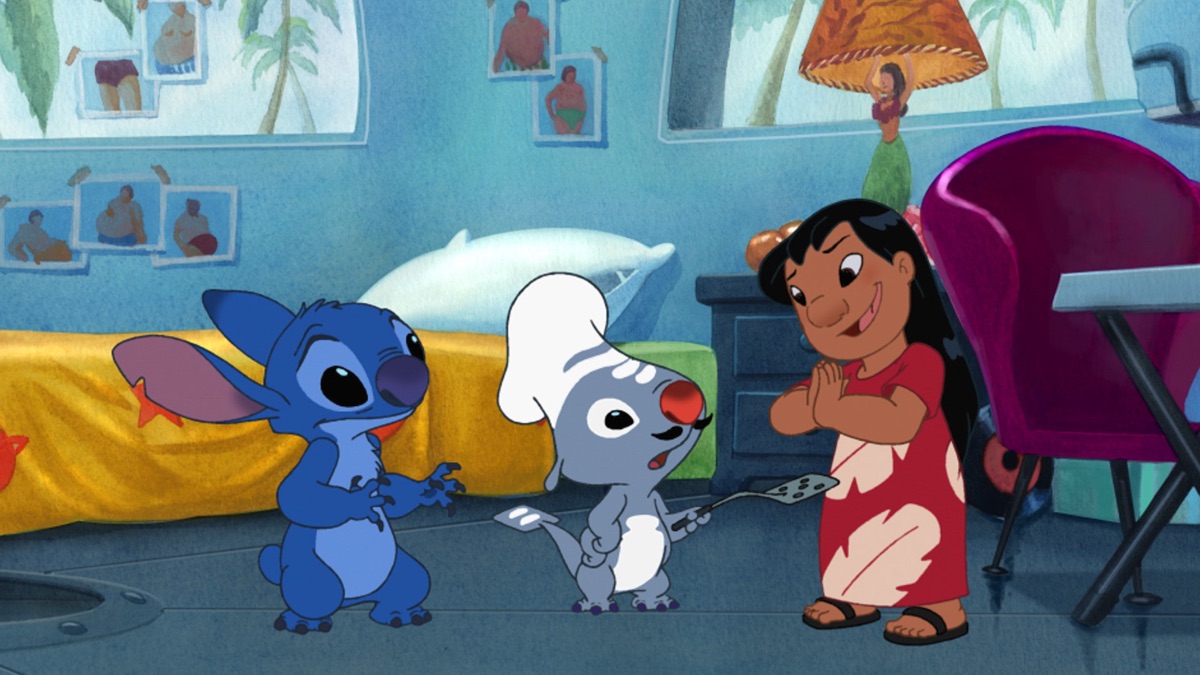
Nani asks for more balanced meals. Experiment 062 answers with an irresistible feast, a hidden cannibalism plan, and proof that Jumba should never be allowed to say “I forgot to mention” near a kitchen.
Nani asks for vegetables and accidentally summons a cannibal chef
The episode begins with a problem that belongs to ordinary family life. Nani is tired of watching Lilo, Stitch, Jumba, and Pleakley live on food that arrives fried, sugared, packaged, or carried home in a paper bag. She wants the household to eat with more balance. That is not cruelty, vanity, or an attack on anybody’s body. It is a guardian looking at the people she loves and realizing that nobody in this house has made a vegetable part of the plan.
Then Experiment 062 enters the kitchen and turns one reasonable concern into a fairy-tale trap. Frenchfry can produce food that tastes impossible to refuse, but the pleasure is bait. His purpose is to fatten diners until he considers them ready to eat. Jumba made a chef who sees a full dining room and thinks somebody has already done the grocery shopping for him. I need the Galactic Federation to explain why that pod reached Kauaʻi without a warning label the size of the rental shack.
A nutrition conversation should never begin with humiliation
Nani is allowed to care about nutrition, but the family needs a conversation rather than a public inventory of who ate what. Food carries appetite, culture, money, time, sensory comfort, celebration, and the simple fact that tired people still need dinner. If every discussion starts with disgust, the household learns to hide food instead of learning how to feed itself.
Bodies also change for many reasons that cannot be diagnosed from across a kitchen table. Sleep, medication, hormones, disability, stress, grief, genetics, access, and poverty all shape health. A larger body is not evidence of laziness, and a smaller body is not proof of virtue. Frenchfry’s magic exaggerates physical change for comedy and horror, but viewers deserve language that separates the villain’s coercion from real people’s bodies.
The household’s food problem is partly a labor problem
Nani is the wage earner, guardian, scheduler, cook, cleaner, driver, and person who gets blamed when any of the aliens demolish another room. Healthy meals require money, planning, shopping, storage, preparation, cleanup, and enough time to do all of that after work. Telling her to provide perfect dinners without redistributing the labor would be one more demand placed on the youngest adult in the house.
Jumba and Pleakley are adults living under her roof. They can learn safe recipes, contribute grocery money, wash dishes, prepare lunches, and keep Stitch from treating the refrigerator like a private buffet. Lilo can help in age-appropriate ways without becoming another parent. Nutrition becomes sustainable when care work belongs to the household instead of disappearing into Nani’s already crowded day.
Restriction makes secrecy more likely
Lilo and Stitch do not hear Nani’s concern as an invitation to build a better menu. They hear that the foods they love are being taken away. Frenchfry arrives at exactly that emotional opening and offers abundance without rules, questions, or waiting. The appeal is not mysterious. A child who expects a hard no may stop asking and start hiding.
Rigid deprivation can make a desired food feel more powerful than it was before. A safer plan would keep pleasure inside the family menu while adding variety, regular meals, water, fruit, vegetables, protein, and food that actually satisfies them. Nobody has to pretend fries taste terrible. The goal is a relationship with food that does not require deception, panic, or an alien predator standing over the stove.
Frenchfry does not serve food; he engineers consent out of the room
Experiment 062 creates meals that override ordinary judgment and satiety. The family keeps eating even when the situation becomes visibly dangerous. That makes his cooking a delivery system for control. Enjoying the first bite does not mean agreeing to every later course, and accepting dinner does not mean consenting to be physically altered for someone else’s purpose.
The episode gives the trap a comic rhythm, but the ethical line is sharp. Frenchfry withholds his real goal, manipulates appetite, and makes stopping difficult. Informed consent would require knowing the ingredients, risks, intended effects, and the identity of the person preparing the meal. He provides none of that because an informed diner would leave.
Secret ingredients are not a cute kitchen mystery
Nobody knows what Frenchfry puts into the food, whether the substances are terrestrial, or how they interact with a human child, an alien experiment, and two extraterrestrial adults. The household cannot identify allergens, stimulants, sedatives, toxins, or ingredients that may interfere with medicine. A beautiful plate does not become safe because it photographs well.
After the rescue, everyone needs medical evaluation and a documented exposure history. Clinicians should know what was eaten, how much, when symptoms began, and whether the effects continue after Frenchfry is contained. The Federation should analyze samples and publish the results. Jumba does not get to shrug and call the recipe secret when his creation nearly turned a family into dinner.
Lilo is a child, and children cannot hire an unsupervised alien caterer
Lilo understands experiments better than most adults ever will, but expertise in cousins does not make her legally or developmentally responsible for running a commercial kitchen. She cannot verify sanitation, negotiate employment terms, assess a biological weapon, or consent to unknown bodily effects on behalf of everyone in the house.
The adults should build a rule that still respects her competence: new experiments are welcomed, fed, and evaluated before they use specialized powers around other people. That is not a ban on cousins or a claim that every experiment is dangerous forever. It is a pause long enough to understand what a power does and what support makes it safe.
Stitch recognizes pleasure before he recognizes the trap
Stitch loves the feast because it is immediate, sensory, and apparently limitless. He was designed around appetite, destruction, and impulse, then asked to become a family member through experience rather than instruction. Frenchfry offers everything his old programming understands and hides the consequence until his body can no longer respond normally.
Blaming Stitch for being manipulated would excuse the person who designed the manipulation. He still needs boundaries and help noticing when a pleasurable experience becomes unsafe. That can include regular meals, shared portions, check-ins, and the freedom to stop without having the food removed as punishment. Regulation grows through practice, not shame.
Pleakley’s excitement makes sense because food is belonging
Pleakley often approaches Earth through rituals, clothing, domestic performance, and the hope that somebody will finally recognize his expertise. A lavish meal lets him participate in the household and be cared for instead of serving as the nervous assistant. He is vulnerable because Frenchfry makes the table feel welcoming.
That emotional need matters. People accept risk more easily when the offer also promises inclusion. The answer is not to ridicule Pleakley for enjoying dinner. It is to create ordinary moments where he receives care without earning it, and to teach everyone that hospitality can be withdrawn the instant a host ignores a boundary.
Jumba has prior knowledge and an enormous duty to warn
Jumba created Frenchfry. He knows experiments were built for conquest and that their charming talents often conceal military functions. The moment Experiment 062 appears near a stove, Jumba should disclose the design, evacuate the kitchen, and help contain him. Waiting until the family is incapacitated converts old negligence into a new emergency.
The inventor also holds records that could guide treatment. Those records belong with the people exposed and the professionals caring for them, not locked inside Jumba’s memory. Rehabilitation does not erase the obligation to preserve safety data, identify every remaining pod, and warn the community before another purpose activates.
The Hansel and Gretel structure is doing real work
Frenchfry follows the old shape of a child lured by abundant food into a home where the host plans to eat the guest. The difference is that Lilo already lives in the house and the danger walks into her kitchen. Home becomes the oven-side trap, which makes Nani’s return feel like a guardian breaking into a corrupted version of her own domestic space.
Fairy tales often turn hunger into discipline: children desire too much, enter the wrong house, and suffer for appetite. This episode is more interesting when blame stays with the adult predator who weaponizes scarcity and pleasure. Wanting delicious food does not make Lilo responsible for attempted cannibalism.
The body horror lands because mobility and agency disappear together
The family’s physical changes are presented with cartoon elasticity, yet the frightening part is not size by itself. They lose the ability to move, leave, defend one another, or refuse the next step. Frenchfry creates dependence and then uses that dependence to prepare them for harm.
Coverage should describe that loss without turning fatness into the monster. Real people in large bodies retain intelligence, dignity, desire, and agency. The villainous act is forced transformation paired with confinement and predation. If the joke becomes “being fat is disgusting,” the story punches viewers whose bodies were never the threat.
Nani’s rescue restores choice before it restores order
Nani returns to a home that no longer recognizes her authority or anyone else’s safety. She sees past Frenchfry’s performance and understands that the feast is preparation. Her intervention matters because she names the danger and interrupts the process when the others cannot physically protect themselves.
The rescue should be followed by care rather than scolding. Lilo and Stitch already experienced fear, loss of control, and the knowledge that somebody they trusted planned to consume them. They need reassurance, medical attention, rest, and a later conversation about decisions. Discipline delivered during panic would teach them to conceal the next emergency.
Nani also deserves support after finding her family in danger
Guardian competence often hides guardian trauma. Nani has to act while frightened, then will probably clean the kitchen, arrange treatment, manage costs, and comfort everyone else. She may replay the moment and wonder whether asking for healthier food caused the crisis. It did not. Frenchfry chose predation, and Jumba failed to prevent access.
Someone else should take the night shift. David, Cobra Bubbles, the Federation, or a properly trained responder can help with transport, documentation, food replacement, and supervision. Ohana should mean Nani is part of the family receiving care, not the permanent emergency department.
A commercial kitchen requires more than talent
Frenchfry can cook, but technical skill is only one qualification. A food worker needs sanitation practices, safe storage, allergen procedures, temperature controls, truthful menus, clean equipment, and a commitment not to harm customers. He fails the most basic condition by treating customers as ingredients.
Any future placement must involve inspection and continued monitoring. His ability could become meaningful work only when recipes no longer manipulate appetite, diners can refuse, and another responsible person can stop service. A magical chef is still accountable to public-health rules.
His one true place cannot be a punishment disguised as employment
The episode assigns Frenchfry to a french-fry stand, which has the neat irony the series loves. Placement can redirect an experiment’s talent, but the job must be voluntary, paid, safe, and supported. “You were made to cook, so cook forever” repeats the logic that an experiment exists only for function.
Frenchfry should have choices about hours, training, housing, coworkers, and whether he wants a different future. Customers need protection, and he needs personhood. Rehabilitation works only when both sides of that sentence remain true.
The fry stand needs a plan for relapse and temptation
A crowded counter gives Frenchfry constant access to food and people. If predatory programming remains active, proximity alone will not cure it. He needs a written plan for warning signs, supervision, safe interruption, clinical support, and temporary removal from food preparation when risk increases.
That plan should be created with him rather than imposed as a secret file. He must know what behavior triggers intervention and how to ask for help before harm occurs. Coworkers should receive training without being turned into unpaid guards. The Federation owes the resources because the Federation failed to contain Jumba’s experiments.
Menus need truth, not appetite hacking
If Frenchfry sells food, the menu must identify ingredients and ordinary portions without promising that one bite will change a customer’s life. Marketing cannot exploit children, conceal alien additives, or use aroma and compulsion as weapons. Pleasure belongs in food; deception does not.
Customers should be able to order fries, enjoy them, and leave with the same freedom they had when they arrived. That sounds obvious until an experiment was literally designed to prevent it. Ethical cooking feeds a person’s hunger without manufacturing a new hunger for the chef’s benefit.
The household can build health without turning dinner into surveillance
A repair plan could start with meals that everybody helps choose. Keep familiar foods, add options, allow seconds, and avoid commenting on bodies at the table. Let Lilo learn a few recipes, Stitch practice waiting while food cooks, Pleakley contribute something he loves, and Jumba do enough dishes to understand consequences.
Health also includes sleep, movement, dental care, medical access, emotional safety, and enough food. Nani cannot solve every risk by replacing one plate. The family will do better with routines that fit their actual life than with a perfect menu nobody can afford or sustain.
The episode should have given Nani a grocery budget
The story treats better eating as a matter of will, but the Pelekai household lives under financial pressure. Fresh ingredients can be affordable, expensive, available, spoiled, culturally familiar, or impossible to prepare between shifts depending on the week. Advice that ignores those conditions becomes another way to blame the caregiver.
Cobra Bubbles and the Federation have both brought danger into this home. They can fund groceries, replace contaminated appliances, and provide practical support without monitoring every purchase. Assistance should expand Nani’s choices rather than convert her kitchen into another inspection site.
Food culture in Hawaiʻi is more than a generic health lesson
The household lives in a place with specific local foods, migration histories, agricultural systems, and family traditions. A nutrition plan imported as bland universal wisdom would erase the very context the franchise claims to value. Balance can include rice, noodles, fish, fruit, vegetables, Spam, plate lunch, desserts, and the foods people actually gather around.
The point is not to create one approved Hawaiian plate. It is to let culture, access, pleasure, and health remain in conversation. Frenchfry’s endless anonymous feast has spectacle but no relationship to the people eating it. Real family food carries memory and choice.
The experiments need a safety registry that Lilo can actually use
Lilo’s catalog is often the best record on the island, but a child’s notebook cannot be the only barrier between civilians and military experiments. Each cousin needs a verified number, known function, activation trigger, emergency precautions, medical risks, and current placement. Frenchfry’s entry should say plainly that he manipulates appetite and attempts predation.
The registry must protect privacy while giving exposed communities what they need. It should never become a public list inviting harassment of rehabilitated experiments. Access can be tiered for families, clinicians, responders, and placement supervisors. Safety and dignity can coexist when the system is designed for both.
Accountability belongs to the creator and the institutions too
Frenchfry is responsible for the choices he makes after activation, but his story begins before he chooses anything. Jumba built a sentient being around hunger, deception, and cannibalism. The Galactic Federation allowed the pods to scatter and left a child-led household to find them. Those facts do not remove Frenchfry’s agency. They expand the circle of accountability.
A just response would combine immediate protection, treatment, restitution, creator oversight, and a path for the experiment to develop beyond original programming. Simply catching him and finding a cute job gives the episode closure, but it does not answer who pays for the danger or prevents the design from recurring.
What I would keep from Frenchfry
I would keep the fairy-tale menace, Nani recognizing the trap, and the idea that a power can be redirected toward community. I would also keep the ridiculous terror of Jumba casually remembering that one cousin was designed to cook the people he feeds. That is exactly the kind of family information one shares before brunch.
I would change the body jokes, give the family a recovery scene, and make Frenchfry’s placement conditional on consent and safety. The episode can remain funny while refusing to treat weight as moral failure. The strongest version is about appetite being exploited, not about certain bodies becoming punch lines.
RaeRae’s final verdict
“Frenchfry” takes a household argument about vegetables and drags it through Hansel and Gretel, alien food science, coercive feeding, and attempted cannibalism in twenty-one minutes. Nani remains the only person in the house whose common sense survives contact with a buffet. She asked for balance and came home to four relatives being marinated by a former weapons designer’s sous-chef.
My verdict is that the episode works best as a warning about anyone who offers unlimited pleasure while hiding the price. Food should nourish, comfort, and sometimes make a bad day less rude. It should never erase consent. Frenchfry can earn a place at the fryer, but he needs wages, inspections, honest recipes, therapy, and a permanent rule that customers are customers. Ohana means nobody becomes the special of the day.
Where to watch
Watch “Frenchfry” through Lilo & Stitch: The Series on Disney+. Apple labels the story Season 2, Episode 2. CVM Sekai also records it as overall Episode 41 in the complete aired-order directory. Availability can change by region.
Keep exploring
Return to the episode directory or return to the Lilo & Stitch hub.