
EPISODE 40 · SEASON 2, EPISODE 1 · SPIKE · RAE RAE REACTS
Lilo & Stitch: The Series Episode 40: Spike
Experiment 319 takes away ninety-nine percent of a victim’s cleverness. Mertle cheats at trivia, Lilo retaliates with a quill, and Pleakley discovers that one protected hug can reach the person inside the weapon.
The Ohana-Rama turns knowledge into public belonging
Lilo prepares for a trivia championship against Mertle, and the contest carries more than questions. Public knowledge becomes evidence of intelligence, worth, and whether Lilo can compete inside a social world that often treats her as strange.
A quiz can celebrate curiosity without converting one wrong answer into a judgment about the whole child. The event should reward learning, teamwork, and transparent rules rather than humiliation.
Mertle’s confidence is not proof of fair preparation
Mertle answers question after question correctly, making Lilo’s team feel outmatched. Performance can be genuine, coached, guessed, or assisted. The audience sees the result before anyone sees the system producing it.
Fair competition requires proctors, separated teams, controlled communication, and a process for challenging irregularities. Children should not have to investigate cheating while standing at the podium.
Experiment 319 turns cognition into a battlefield target
Spike fires quills that increase silliness by 99 percent and leave a victim with only one percent of ordinary cleverness for forty-eight hours. Jumba designed him to disable populations by altering thought rather than injuring visible tissue.
The episode’s language is comic, but the mechanism is cognitive assault. Memory, judgment, communication, consent, work, and self-protection can all be impaired during the effect.
A public lecture becomes the first exposure site
Spike activates near an outdoor stage and quills a speaker, an assistant, and members of the audience. People attend expecting information and leave with altered cognitive capacity. Nobody has warnings, medical support, or a way to recognize the cause.
The Federation owes the event an exposure registry, private notification, transportation help, medical monitoring, and compensation for forty-eight hours of disrupted life.
The museum is an especially dangerous place for impaired judgment
Spike continues through a museum where visitors move near stairs, glass, valuable objects, crowds, and exits. A sudden loss of judgment can cause injury even if the quill itself leaves no major wound.
Staff need an evacuation plan that avoids shaming affected visitors. Confusion should be treated as a health and safety condition, not entertainment for bystanders.
Stitch captures Spike and is struck during the rescue
Stitch successfully contains Experiment 319 but receives a quill. The rescuer becomes a patient, which changes what he can safely do next. Hero status does not make him immune to cognitive impairment.
The team should remove him from driving, weapons, unsupervised care, and hazardous decisions until the effect clears. Protection is not punishment.
Jumba’s genius leaves enough capacity to hide his own impairment
Jumba is also struck but appears less affected because one percent of his baseline intelligence remains unusually high. That explanation creates a dangerous assumption that high ability cancels disability. Judgment, emotional regulation, and specialized skills may still change.
He needs evaluation and independent oversight before diagnosing anyone or managing Spike. A person cannot self-certify safety merely because he can still finish a complicated sentence.
Lilo wants Stitch restored because the contest feels impossible alone
She depends on Stitch as a teammate, researcher, protector, and source of confidence. His sudden impairment arrives just before the Ohana-Rama, making the loss feel personal and competitive at once.
Lilo is allowed to grieve the help she expected. Stitch should never be pressured to perform intelligence for her while recovering from an involuntary neurological change.
Calling affected Stitch stupid would repeat Spike’s weapon
The quill changes what Stitch can access for a limited period. Mockery would turn a medical effect into identity and teach that cognitive ability determines dignity. He remains Stitch with relationships, preferences, and rights.
The family should use simple communication, supervision, familiar routines, and reassurance without speaking about him as if he has disappeared.
The forty-eight-hour limit still requires a care plan
A known duration helps, but two days is long enough for dehydration, wandering, unsafe eating, impulsive behavior, falls, conflict, and exploitation. Someone must monitor him without removing every choice.
The plan should document onset, expected recovery, warning signs, rest, food, medication risks, and who may make emergency decisions.
Trivia measures recall under rules, not the whole of intelligence
The Ohana-Rama rewards fast access to facts inside a public format. That can be fun and demanding, but it does not measure creativity, emotional insight, practical judgment, spatial skill, persistence, cultural knowledge outside the question bank, or the ability to care for somebody in a crisis.
Mertle’s apparent mastery and Stitch’s temporary impairment sit at opposite ends of the scoreboard, yet neither position defines the complete person. The contest should avoid language that calls winners smart and everyone else stupid. It can celebrate preparation and correct answers without turning one performance into a hierarchy of human worth.
Accessible competition could provide repeated questions, clear audio, visual text, processing time, breaks, and a private route to request accommodations. Those supports do not supply answers. They make sure the format measures knowledge rather than who can best tolerate the room.
Pleakley’s support group is full of cousins with different risks
The E.A.R.W.A.X. gathering brings multiple experiments together for rehabilitation. Community can reduce isolation and let cousins learn from one another. It also concentrates fire, ice, sound, lies, theft, and cognition-altering quills in one room.
Group care needs trained staff, individual safety plans, protected exits, compatible seating, and limits on powers. A folding chair circle cannot carry the whole clinical load.
Boredom is information about the therapy design
Pleakley lectures from Dr. Okra’s material while participants disengage. When a group built around embodied, high-energy experiments receives passive instruction, restlessness is predictable. Boredom does not excuse violence, but it reveals a mismatch.
Sessions should use movement, role-play, visual tools, short segments, and participant goals. Therapy cannot be something done at people until they become compliant.
A fight destroys Spike’s container because containment was fragile
Slushy and Splodyhead fight, a fireball breaks the enclosure, and Spike escapes. The chain shows why one person’s safety cannot depend on every other participant maintaining perfect regulation.
Containment materials should withstand known powers and allow Spike comfort, communication, and an emergency release that trained staff control. A cage that fails under expected conditions is institutional negligence.
Spike chases Nosy because conflict spreads through the whole group
Once free, Spike targets other experiments and finally Pleakley. Participants who came for support become victims or witnesses. They may fear returning even after the immediate danger ends.
The group needs debriefing, private injury checks, replacement care, and a chance to choose whether future sessions include Spike.
Pleakley’s armor is improvised courage, not a clinical protocol
Pleakley searches a closet, builds makeshift protection, and approaches Spike. His willingness to act protects the group, but a household costume should not be the official barrier against neurological quills.
The Federation should provide tested puncture-resistant equipment, face protection, removal tools, and training. Pleakley deserves praise and safer resources.
Hugging therapy works because contact reaches emotion
Pleakley embraces Spike through the armor, and the experiment breaks down crying. The scene suggests aggression may protect fear, loneliness, or overwhelming arousal. Warmth changes the encounter when lectures and confinement could not.
One successful hug does not authorize future touch. Spike must be able to accept, decline, or request contact, and staff need alternatives for moments when hugging is unsafe.
Protective armor changes who can offer and receive touch
Spike’s quills can harm someone even when he intends affection. Armor gives him access to connection without requiring his body to stop being dangerous. That is accommodation rather than punishment when he participates in the choice.
The gear should fit comfortably, allow movement and temperature regulation, and never become permanent restraint for other people’s convenience.
Mertle’s team uses Teresa as a hidden answer line
Lilo discovers Teresa feeding answers backstage. The scheme violates the contest and uses one child’s knowledge to manufacture another child’s public superiority. Teresa also carries the risk while Mertle receives the applause.
Officials should stop the round, preserve evidence, hear both children, and apply published consequences. Lilo should not have to enforce fairness through an experiment’s quills.
Lilo weaponizes Spike after proving the cheating
She persuades Spike to hug Teresa so a quill will make the hidden answers nonsensical. The tactic exposes Mertle, but it deliberately alters Teresa’s cognition without consent for forty-eight hours. Winning does not make that proportional.
The fair response was disclosure to the judges. Retaliatory impairment creates a second victim and contaminates Lilo’s victory.
Teresa’s cheating does not erase her bodily rights
Teresa participates in deception and should face consequences appropriate for a child. She still deserves medical care, privacy, and protection from deliberate neurological harm. Punishment cannot be administered through an alien body.
After recovery, accountability might include admitting the assistance, returning awards, apologizing, and learning why the arrangement was unfair.
Spike pricking Mertle out of sympathy is still not consent
After Mertle loses and storms away, Spike feels sorry for her and offers a hug that results in another quill exposure. His intention appears comforting, which makes the safety problem clearer. Friendly contact can harm when the quills remain uncovered.
Rehabilitation needs consent signals and protective equipment before public affection. Sympathy does not permit changing someone’s mind or cognition.
Lilo’s win needs an honest asterisk
Mertle’s team cheated first. Lilo then used Spike against the person supplying answers. The final score may favor Lilo, but the contest did not return to clean conditions. Both sides bypassed the rules in different ways.
A fair outcome would void the compromised round and schedule a supervised rematch after Teresa and Mertle recover and consequences are addressed.
Spike’s one true place should not make him an unpaid therapist
He remains with Pleakley’s group and uses protected hugs to help other experiments regulate. The role recognizes empathy beneath his aggression and gives him community. It also risks turning his successful rehabilitation into a job he never chose.
Spike needs training, consent, pay, rest, supervision, and a life outside other people’s crises. Peer support is strongest when the peer can say no.
The group needs real clinical governance
E.A.R.W.A.X. should have participant agreements, confidentiality, incident reporting, emergency response, independent complaints, and separate clinical supervision for Pleakley. Family affection cannot replace professional standards when powers can alter bodies and minds.
The experiments should help design the program. Rehabilitation done with them is more credible than rehabilitation imposed on them.
What made me laugh
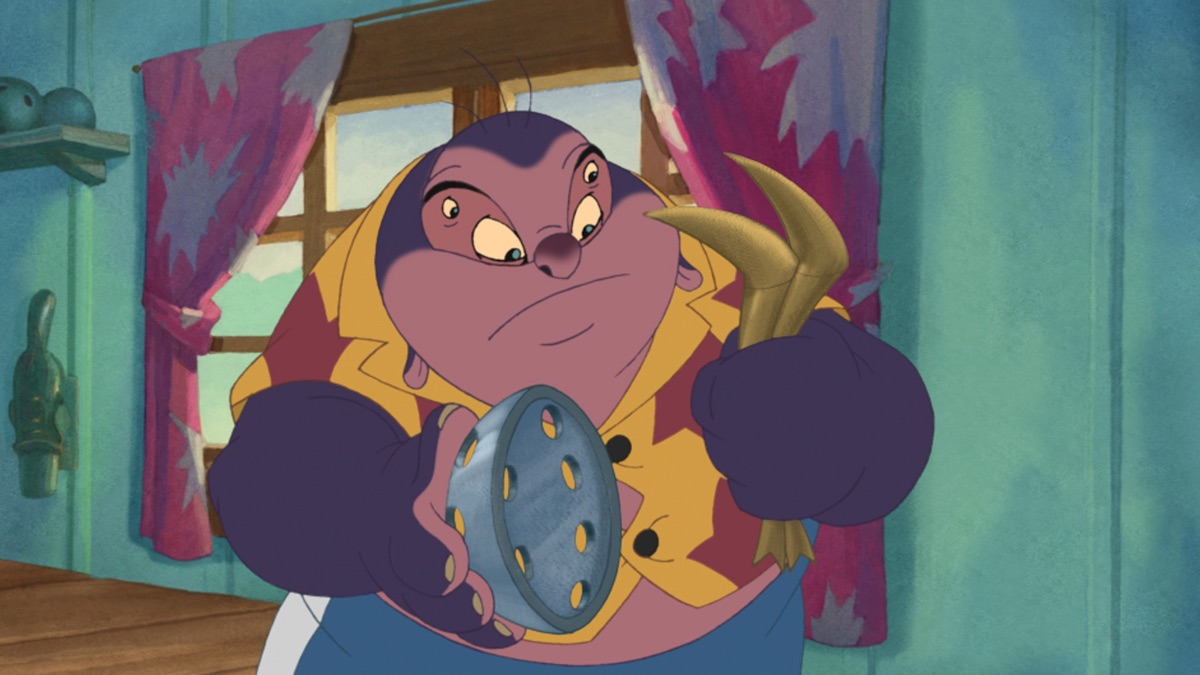
Jumba explaining that one percent of his intelligence is still plenty has the exact confidence of a man who got quilled and immediately appointed himself the control group. Sir, nobody asked for the self-reviewed paper.
The trivia cheating collapsing into ridiculous answers also works because Mertle’s perfect performance depends on an earpiece-sized conspiracy that cannot survive one confused backstage helper.
What made me mad
I get mad when Teresa is deliberately quilled. The contest has judges, witnesses, and evidence. Lilo chooses a neurological shortcut because it feels satisfying, which copies Jumba’s habit of treating powers as tools before people.
I also get mad that Spike’s therapy career appears immediately after one emotional breakthrough. Let him cry, recover, and decide who he is before assigning a caseload.
The response plan I wanted
Stitch and Jumba receive medical monitoring for forty-eight hours, while Spike moves to a puncture-safe, comfortable space with an advocate. The Ohana-Rama officials investigate Teresa’s assistance and suspend the compromised round.
Pleakley rebuilds the group with trained support, consent-based contact, tested armor, and participant input. Spike chooses whether peer work belongs in his future.
The episode order needs two labels
CVM Sekai lists “Spike” as overall Episode 40 and the first episode of the second aired season. Apple labels it Season 2, Episode 1, which matches the season boundary even though Apple does not display the site’s overall sequence.
The title and Experiment 319 identify the story. Both labels belong in the record so readers can navigate by season or complete-series order.
The quiet scene I wanted
After Stitch recovers, I wanted Lilo to admit that she missed his help and also used Spike to win. Stitch could recognize her fear without approving the choice. They both know what it means to have an experiment function used against another person.
Spike could join only if he wanted, wearing armor he helped select. Repair would begin with Teresa receiving care and the contest result being reconsidered.
The Episode 40 verdict
“Spike” is a sharp season opener because it places intelligence, competition, therapy, and coercion in the same room. Mertle cheats, Lilo retaliates, Stitch becomes dependent, and Pleakley discovers that emotional connection can reach an experiment more effectively than a lecture.
My verdict is invalidate the compromised quiz, protect every quill victim, build Spike comfortable armor, and let his first hug be a breakthrough rather than an employment contract. Cleverness is useful. It is never the price of dignity.
Where to watch
Watch “Spike” through Lilo & Stitch: The Series on Disney+. Apple labels the story Season 2, Episode 1. CVM Sekai also records it as overall Episode 40 in the complete aired-order directory. Availability can change by region.
Keep exploring
Return to the episode directory or return to the Lilo & Stitch hub.