
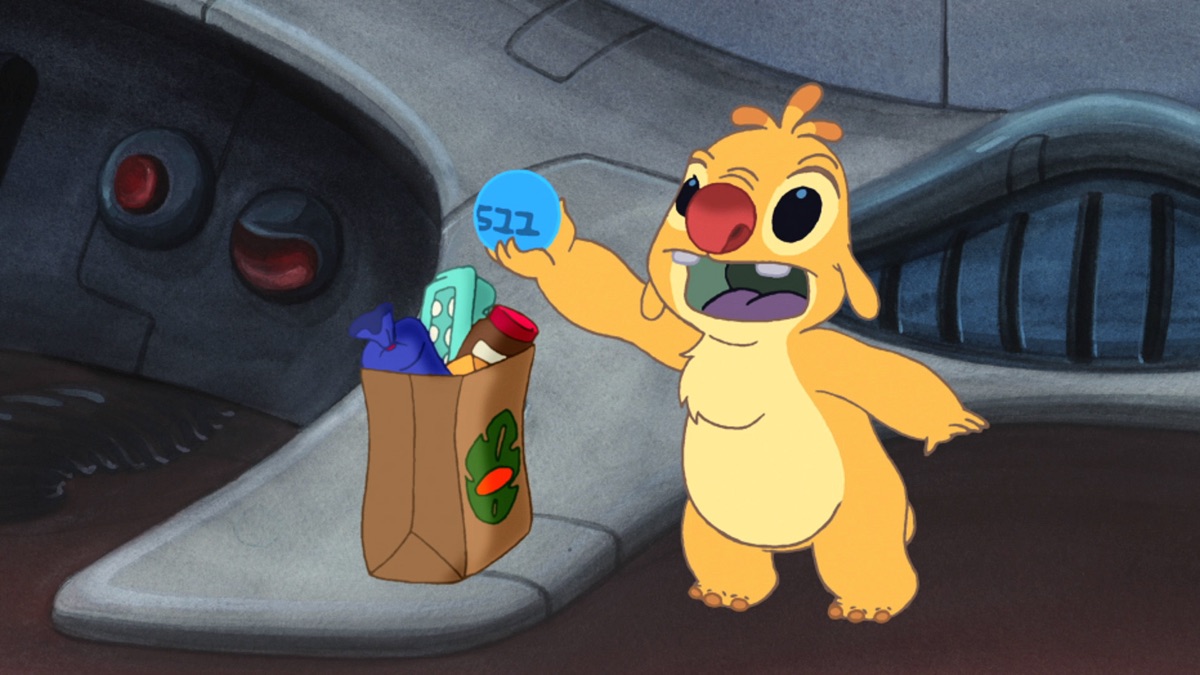
EPISODE 23 · SEASON 1 · HOUDINI · RAE RAE REACTS
Lilo & Stitch: The Series Episode 23: Houdini
Experiment 604 can disappear. Privacy, accountability, and personhood become much harder to hide.
Houdini disappears and everybody reveals who they are
“Houdini” gives Experiment 604 the power of invisibility, then lets every character expose a private theory about what an unseen person is allowed to do. Disappearance looks like freedom at first. Nobody can stare, capture, mock, or assign a purpose to a body they cannot locate. The same freedom can become frightening when consent, privacy, and accountability disappear with the outline.
The episode works best when Houdini remains a person rather than a magic trick. Invisibility changes access, risk, and social power. Houdini still needs friendship, boundaries, housing, care, and a life that does not depend on entertaining visible people.
RaeRae check-in: privacy is not permission
An invisible character can enter bedrooms, overhear conversations, and move through spaces where nobody agreed to be observed. Comedy often treats that access like a harmless prank. The people being watched do not experience harmlessness when they learn someone crossed a boundary they could not defend.
Houdini needs rules stated without shame. Knock. Announce your presence. Leave when asked. Never use invisibility to obtain private information. Those expectations do not make him bad. Clear boundaries give him a way to build trust without guessing what visible people consider obvious.
The power answers a lonely wish
A child who feels mocked or excluded may fantasize about disappearing. No more judgment. No more social tests. No more faces changing when she enters a room. Lilo understands that temptation because visibility has often brought correction instead of welcome.
Houdini can make the fantasy literal, which lets the episode ask whether safety through absence is really safety. Being unseen protects a person from attention while also preventing recognition, comfort, and honest connection. The goal should be chosen privacy, not permanent erasure.
Lilo must separate companionship from possession
Lilo loves experiments fiercely and sometimes moves from rescue to decision before the cousin has spoken. She wants every placement to succeed. That urgency can make her choose a role based on power instead of listening for preference.
Houdini may enjoy performance, quiet work, security, art, games, or ordinary family life. Lilo can offer possibilities without declaring destiny. A true place begins when the experiment participates in the definition of “true.”
Stitch knows how mischief becomes a permanent record
Stitch has committed enough chaos that adults may assume every unexplained noise belongs to him. Houdini creates the perfect framing device. An invisible cousin can move objects while Stitch receives the blame because his reputation already lives in the room.
That dynamic should make Stitch more careful about evidence. He deserves accountability for his actions, not every action adults can imagine. Houdini also needs to understand that hiding behind somebody else’s bad reputation converts play into harm.
Nani needs a home where the residents announce themselves
Nani works, manages bills, protects custody, and returns to a house full of beings whose capabilities change weekly. An invisible resident adds another layer of vigilance. She cannot relax if doors open, food moves, and private conversations may have an audience.
House rules protect Nani’s nervous system as much as anyone’s privacy. Houdini can wear a bell, bracelet, colored scarf, or other visible marker indoors when comfortable. The marker should be negotiated rather than imposed as a leash. Rest requires predictability.
Jumba designed surveillance and calls the result amusing
An invisible experiment could infiltrate secure facilities, collect intelligence, sabotage equipment, or escape detection. Jumba understands those military uses because he built capabilities around conquest. His casual explanation hides the political purpose inside a joke.
He owes Houdini the truth about design goals and known limitations. Does invisibility affect heat, sound, footprints, scent, cameras, or clothing? Which conditions cause involuntary disappearance? A person cannot consent to risk without complete information.
The Federation would absolutely classify this child
Governments love turning unusual bodies into secret programs. Houdini could become surveillance equipment with a personnel number, restricted movement, and no ability to refuse assignments. Security language makes captivity sound responsible.
Independent representation matters immediately. Houdini needs legal identity, privacy rights, and protection against compulsory service. Creation for espionage does not create a lifetime debt to the institution that finds espionage convenient.
Gantu sees an asset, not a frightened cousin
For Hämsterviel, invisibility means access. Houdini can bypass locks, gather information, and make capture operations easier. Personality becomes irrelevant once the ability enters the plan. That is the clearest difference between placement and exploitation.
Gantu may understand the danger of being valued only for function, yet he still repeats the system downward. His own employment depends on results and humiliation. Context explains the pattern. Houdini should not pay for Gantu’s inability to leave an abusive boss.
A magic show could become a good placement with protections
Performance offers Houdini control over when invisibility becomes public. A theater can turn surprise into art while giving the experiment applause, routine, and community. The setting fits if Houdini actually enjoys rehearsal and attention.
A contract should cover pay, hours, billing, image rights, safety, and cancellation. The audience must understand that Houdini is a performer, not an effect owned by the venue. Backstage privacy applies to invisible workers too.
Do not build the entire act around involuntary exposure
Stories about invisibility often create laughs by splashing paint, powder, water, or food across the unseen body. The visual reveal may be useful during an emergency. Repeated exposure can also become humiliating, messy, and physically unsafe.
Houdini should choose stage cues and reveal methods. Lighting, controlled mist, costume pieces, footprints, and sound can create theatrical presence without strangers throwing substances at him. A good act respects the performer while preserving wonder.
Consent has to include the audience
A theater audience agrees to watch a performance. They do not automatically agree to have an invisible performer sit beside them, touch belongings, or enter personal space. Surprise should remain onstage unless participation is clearly announced.
The same rule applies to hidden cameras and recordings. Houdini’s ability cannot become an excuse for capturing people during vulnerable moments. Spectacle ends where private life begins.
Being invisible does not erase accessibility needs
Houdini may communicate visually through expression and gesture when visible. Those signals disappear during the act. Coworkers need reliable alternatives such as sound cues, tactile controls, wearable lights, or agreed movement patterns.
Emergency responders must know how to locate him without creating panic. Accessible planning benefits everybody backstage. The safest show is one where the team can communicate before the trick fails.
Children will test the boundary adults leave vague
If Houdini visits school, classmates will ask for pranks, dares, spying, and stolen answers. Social acceptance may appear conditional on doing the most dangerous or invasive version of his ability. A lonely child can mistake that demand for friendship.
Adults need to teach specific consent rules and protect him from coercion. “Use your power for us or you are boring” is exploitation in playground language. Real friends survive a no.
The episode needs a conversation about bodily autonomy
Other people may demand that Houdini stay visible so they feel safe. Constant visibility can become surveillance directed at the person most feared. Houdini should retain control over his own body while accepting reasonable communication rules in shared spaces.
The balance requires negotiation rather than a permanent command. Private rooms allow disappearance. Public work uses agreed markers. Emergencies follow a clear protocol. Autonomy and community safety can coexist when both receive serious design.
What made me laugh
Stitch attempting to catch an invisible cousin turns every curtain, prop, and suspicious breeze into an enemy. Confidence collapses quickly when he realizes a glare works poorly against someone who cannot see the glare.
Jumba’s delayed technical warning deserves its own recurring alarm. If the sentence begins with “small possibility,” everybody should move three steps back and protect the furniture.
What made me mad
I get angry when invisible characters are treated as public tools. Adults want security. Children want pranks. Villains want espionage. Almost nobody starts by asking whether disappearing feels peaceful, frightening, painful, or fun to Houdini.
I also need Lilo protected from another live capture operation. The federal government of space can send trained adults. A little girl should not conduct counterintelligence between homework assignments.
Accountability needs evidence instead of suspicion
When an unseen person lives nearby, every missing object can become an accusation. Houdini may receive blame for ordinary mistakes because invisibility makes him the easiest explanation. That atmosphere destroys belonging even when nobody uses openly cruel language.
The household needs calm investigation: ask questions, check timelines, and avoid public shaming. Houdini should repair harm when responsible. He should also receive an apology when suspicion outruns facts.
A true place must exist offstage
Applause can feel like belonging until the curtain closes. Houdini still needs a home, healthcare, recreation, education, and relationships that do not require a trick. The theater cannot become his entire identity.
Coworkers should know him during rehearsal, cleanup, lunch, and bad moods. A person loved only while performing has an audience, not a family. Offstage care proves the placement is real.
Payment should not disappear with the performer
Invisible labor has an uncomfortable real-world echo. People clean, prepare, repair, translate, organize, and support experiences while customers barely notice them. Houdini’s literal invisibility could make wage theft especially easy.
Written records, transparent accounting, and an advocate protect his earnings. Credit belongs in programs and advertising. The name should remain visible even when the body does not.
Privacy includes Houdini too
Everyone worries about being watched by him, but an invisible body can also invite invasive curiosity. Scientists may want continuous tracking. Audiences may try to touch the empty-looking space. Reporters may demand proof.
Houdini deserves dressing-room privacy, medical confidentiality, and the right to decline demonstrations. Being difficult to see does not make a body public property.
The quiet scene I wanted
After the show, I wanted Lilo sitting alone in the empty theater while Houdini remained invisible by choice. She could speak without demanding a reveal and admit that sometimes she wishes people would stop looking at her like a problem.
Houdini could answer through one soft footprint beside hers. No spectacle. No forced visibility. Companionship can exist without demanding performance, and that small trust would say more than another successful trick.
Houdini needs a safe way to be found
Disappearance becomes dangerous during illness, injury, fire, or panic. A voluntary locator device could help trusted caregivers find him without broadcasting his location to everyone. Control should remain with Houdini whenever possible.
The device needs strong limits. No employer should track him after work. No government should keep permanent movement records. Safety technology turns into surveillance when access expands without consent.
The family needs repair after the prank
A funny reveal does not automatically restore trust. Anyone whose privacy was crossed deserves an honest apology naming the behavior, impact, and future boundary. Houdini should participate without being forced into a shame performance.
The family can forgive while changing routines. Trust is not a reset button. Trust is a series of choices that make the next incident less likely.
Invisibility changes who gets believed
Imagine Nani hearing an object move while everyone else insists the room was empty. Repeated experiences without visible proof can make a person doubt memory or feel ridiculous for reporting a boundary violation. Houdini may never intend that psychological harm, but the power creates conditions where harm can hide easily.
The household needs a reporting culture that takes discomfort seriously before evidence becomes perfect. Listening does not require immediate punishment. Listening means documenting patterns, checking what can be checked, and refusing to mock somebody for noticing what others missed. That approach protects both the person reporting and Houdini from reckless accusation.
The theater must protect workers behind the curtain
Stage crews change clothes, handle equipment, discuss mistakes, and move through tight spaces where an unexpected invisible presence can create danger. Houdini should follow the same backstage access rules as every other performer. Special ability does not create special entitlement to private areas.
Management should train the whole company without inviting gossip about his body. A simple call-and-response cue can announce movement. Floor markings can keep clear routes. Dressing rooms remain off limits. Safety becomes ordinary when procedure replaces fascination.
Fame can make disappearance harder
A successful invisible performer may attract reporters, tourists, amateur investigators, and people determined to expose the trick. Attention can follow Houdini home even though the act depends on vanishing. The irony is cruel: public fascination may erase private life more effectively than visibility ever did.
The theater needs security, limits on photography, and a rule against publishing his address. Houdini should control interviews and promotional appearances. Popularity is not consent renewed at scale. Fans can love the performance without demanding access to the performer every hour.
Friendship should survive visible days
If Houdini becomes fully visible unexpectedly, friends should not act disappointed because the magic paused. A body is not a broken special effect. Visible days may bring vulnerability after everybody grew accustomed to mystery and control.
Lilo and Stitch can make those days ordinary through games, food, errands, and conversation. Belonging becomes believable when no one asks for a trick. Houdini deserves relationships sturdy enough to survive every version of his outline.
The Episode 23 verdict
“Houdini” turns invisibility into playful chaos and a promising theater placement. Beneath the trick sits a strong argument about privacy, surveillance, consent, reputation, labor, and the loneliness hidden inside disappearance.
My verdict is applause with a contract, backstage rules, and absolutely no invisible nonsense in Nani’s bedroom. Let Houdini choose when to vanish. Make the magic visible without making the person public property.
Where to watch
Watch “Houdini” through Lilo & Stitch: The Series on Disney+. Availability can change by region.
Keep exploring
Return to the episode directory or return to the Lilo & Stitch hub.