
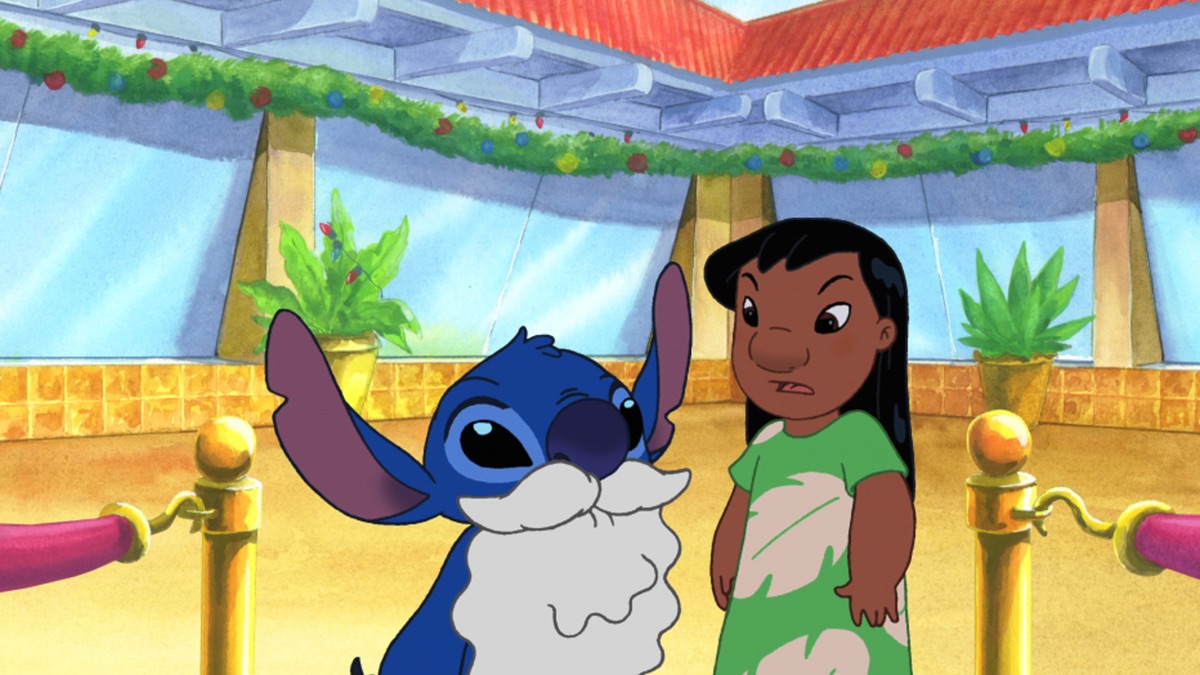
EPISODE 21 · SEASON 1 · TOPPER · RAE RAE REACTS
Lilo & Stitch: The Series Episode 21: Topper
Topper becomes the perfect Christmas star, while the Pelekais build a holiday around grief, consent, money, and the family still standing.
Christmas arrives warm, loud, and carrying grief
“Topper” gives the series a holiday episode without pretending Hawaiʻi needs snow to make Christmas recognizable. Lights wrap palms. Families build traditions from climate, culture, money, memory, and whatever survived the year. Lilo and Nani enter the season carrying the absence of their parents beside every celebration.
Experiment 025 becomes a literal star for the family’s display. The image is sweet. The emotional question is harder: what does a holiday symbol mean when a household is rebuilding tradition after loss and expanding family across planets?
RaeRae check-in: Christmas does not erase the grocery bill
Holiday stories love transforming scarcity into atmosphere. Handmade gifts glow warmer, dinner stretches magically, and the struggling family proves love matters more than money. Love matters. Money still buys food, electricity, transportation, and the time required to create magic after work.
Nani should not carry holiday wonder as another unpaid job. Jumba and Pleakley live in the house. They can contribute money, cooking, cleanup, and planning. ʻOhana means distributing labor before the sentimental speech begins.
Topper becomes a symbol before becoming a person
A glowing star-shaped experiment fits the tree so perfectly that everybody may skip the consent question. Does Topper enjoy the height, brightness, attention, and tradition? A person should not become decoration because the body matches a holiday object.
Lilo’s best instinct is relationship. Ask first. Create a safe perch. Allow Topper to come down. The display can celebrate him without owning him. Beauty becomes ethical when participation remains chosen.
The holiday intensifies missing parents
Traditions store memory through repeated food, music, ornaments, jokes, and routines. When parents die, the calendar keeps returning to days shaped around their presence. Lilo and Nani may remember different details and feel pressure to recreate something nobody can restore exactly.
Grief during celebration does not mean the family is ungrateful. Joy and absence can share the table. A strong holiday episode should allow both without forcing sadness to resolve before the lights turn on.
Nani is building tradition while still becoming an adult
Nani has to decide which rituals continue, which change, and what the new household can afford. She performs parental authority while carrying memories as a daughter. The role shift makes every holiday choice feel larger than decorations.
Lilo may want the old version. Stitch and the aliens introduce new customs. Nani needs permission to create a Christmas that honors their parents without becoming a museum of the life they lost.
Stitch learns gifts are not proof of rank
A former experiment may read presents as evidence of who matters most. Number, size, and attention can become another competition. Family insecurity does not take holidays off. Stitch needs reassurance that affection cannot be measured by wrapping paper.
Giving offers another lesson. A thoughtful gift requires noticing somebody else rather than displaying power. Stitch’s growth appears when he chooses something connected to Lilo’s needs instead of something impressive enough to win.
Pleakley and Jumba bring immigrant holiday energy
The aliens enter a human tradition without the same childhood memories. They may imitate, misunderstand, combine customs, or invent rituals that make no historical sense. That process is familiar to immigrant and mixed-culture households building celebration across different backgrounds.
There is no single authentic family Christmas. Meaning develops through repetition and consent. If everybody remembers the year Jumba nearly cooked the centerpiece with laboratory equipment, the disaster becomes tradition eventually.
Hawaiian Christmas should not be a tropical costume
A holiday set in Hawaiʻi needs more than palm trees wearing lights. Local food, music, family networks, language, church traditions, labor, and histories of imported Christianity all shape the season. The island is not a novelty version of a mainland Christmas card.
The episode can remain playful while respecting place. Snow jokes are fine. The story should avoid suggesting warmth makes the holiday incomplete. Hawaiʻi does not need to imitate somewhere colder to create wonder.
The star carries religious and secular meanings at once
A Christmas star may reference the Star of Bethlehem, navigation, hope, spectacle, or the familiar object placed above a tree. Topper enters a symbol already crowded with meaning. Different family members may connect to different layers.
The experiment does not need to represent one approved theology. Topper can become part of the household’s story while neighbors maintain their own beliefs. Shared celebration works when symbols invite connection without demanding sameness.
Holiday charity can hide structural inequality
Stories often solve poverty through one generous gift. The emotional relief is real. The conditions producing insecurity remain. Nani needs stable wages, affordable housing, childcare, and institutional support after December ends.
A community meal or gift drive should build relationship rather than turn struggling families into inspirational recipients. Dignity means asking what people need and supporting them beyond the camera-ready moment.
Topper’s light could become unpaid labor
A living star can attract events, businesses, photographers, and visitors. Everyone may call participation festive while others profit from the glow. Topper needs limits on public appearances and compensation when the body generates revenue.
The right to dim matters. Rest should not disappoint the community into anger. A true place values Topper during daylight when no one needs a holiday display.
Lilo wants magic because reality has asked too much
Lilo has survived parental loss, social isolation, custody fear, and alien danger. Wanting Christmas magic is not childish excess. Ritual can create a temporary world where care feels visible and promises become easier to believe.
The episode should protect that desire without asking Nani to manufacture perfection. Magic can come from community participation, Topper’s chosen glow, and the family allowing an imperfect night to count.
Mertle turns holiday display into competition
If Mertle measures lights, gifts, or decorations, she repeats the status games available all year. Holidays provide more objects through which children compare family money and social approval. Lilo may feel pressure to produce a display nobody can mock.
Topper offers an unbeatable spectacle, which makes the temptation obvious. Lilo has to choose whether the experiment exists for belonging or victory. The right answer matters more than the neighborhood ranking.
Gantu sees the star as another capture target
Even Christmas cannot suspend Hämsterviel’s demands. Topper’s visibility makes hiding difficult. A public celebration creates crowds and predictable timing, allowing Gantu to turn family ritual into a work assignment.
The contrast is bleak beneath the comedy. One household builds belonging while another hierarchy demands extraction. Gantu’s employer has no holiday because domination never takes leave.
What made me laugh
Aliens learning Christmas through decorations, food, and incomplete explanations creates excellent confusion. Jumba can understand interstellar engineering and still misread a stocking. Pleakley will absolutely commit to an outfit before understanding the event.
Stitch treating gift wrapping as a combat problem also feels inevitable. Tape has defeated stronger creatures. The household should respect the enemy.
What made me mad
Holiday episodes often ask exhausted women to create everyone else’s memories. Nani deserves rest and a gift that is not another household appliance. The aliens can clean the kitchen without receiving a parade.
I also want Topper’s agency stated. A glowing body is convenient. Convenience should never replace consent, even when the result looks beautiful above the tree.
Chosen family changes the holiday table
The Pelekai household now includes people who did not share childhood traditions. That expansion may make old rituals feel different or even disloyal. New joy does not erase the parents who are missing. The table can grow around grief.
Stitch, Jumba, and Pleakley bring interruptions, noise, and care. Their presence proves family history can continue without remaining frozen. Tradition survives by changing enough to hold the people who are here.
Children deserve holidays without gratitude performances
A child receiving help may feel expected to display perfect happiness. Lilo should not have to prove generosity worked by hiding sadness, disappointment, or overwhelm. Gifts cannot dictate emotion.
Adults can offer care without demanding a reaction. Let her open something later. Let her miss her parents. Let joy arrive unevenly. Emotional freedom is part of dignity.
Community celebrations need accessibility
Lights, music, crowds, religious language, food, and late schedules affect people differently. A welcoming event includes quiet areas, seating, clear timing, dietary information, and space for people who do not celebrate Christmas.
Topper’s brightness needs limits too. Wonder should not create sensory pain. Inclusion is more festive than forcing everyone into one version of cheer.
A true place for Topper must continue after January
The tree comes down. Visitors leave. Decorations enter boxes. Topper still needs housing, companionship, purpose, and affection. Seasonal usefulness cannot become seasonal abandonment.
A lasting placement might involve navigation, theater, safety lighting, art, or simply family life. The experiment should choose activities across the year. January is the real test of whether the star became a person.
The Federation owes the family holiday leave
Experiment recovery has consumed evenings, weekends, school time, and household resources. The family deserves a season without another assignment. If Topper needs protection, the Federation should supply trained adults instead of relying on Lilo again.
Nani should receive compensation and paid leave. Lilo should receive time to be a child. Stitch should experience celebration without turning every cousin into a mission.
Holiday nostalgia can become a demand nobody can satisfy
Families often chase the exact feeling of an earlier Christmas. The food must taste the same. The ornaments must hang in the same places. Everyone must recreate happiness from a year when different people were alive. Nostalgia promises continuity while setting the present up to fail.
Nani and Lilo can honor old rituals without requiring emotional duplication. A changed Christmas is not evidence that the family forgot. Change proves life kept moving around the memory.
Gift giving can reveal how well the family listens
The best gift in this household does not need to be expensive. A useful, funny, or deeply specific object can say, “I noticed who you are now.” That attention matters to people who have spent years being misread by institutions and relatives.
A gift can also carry pressure when the giver expects transformation or gratitude. Stitch should not receive something meant to make him easier. Nani should not receive a cleaning tool disguised as care. Pleakley deserves whatever dramatic object he has already been hinting about for three weeks.
Celebration should include the cousins placed elsewhere
The experiment family extends beyond the house. Some cousins live across the island in jobs and homes chosen during earlier episodes. A holiday offers a chance to show that placement did not mean disappearance. Cards, visits, shared food, or messages would make ʻohana visible across distance.
Lilo cannot host everyone safely at once. Connection can happen in smaller routes. The important part is remembering people after their episode ends. Family directories should exist in the story as well as the fandom.
Topper needs protection from seasonal ownership
Someone may argue that the star belongs to the family or neighborhood because Topper completed the display. Tradition can turn one voluntary act into an annual obligation. Next year, refusal may be treated as betrayal.
Consent must renew. Topper can choose the tree once, every year, or never again. The holiday belongs to the community, but the body does not. A tradition worth keeping can survive one person changing their mind.
January reveals whether care was real
When decorations disappear, the family still needs routines for Topper. Where does he sleep? What does he eat? Who checks health? Which activities feel joyful after the attention fades? Those questions are less photogenic and more important than the tree.
Lilo’s placement succeeds when Topper remains known in ordinary time. A person celebrated only during usefulness has not found home. He has found seasonal employment without a contract. The family should learn his moods, favorite corners, fears, and boring habits when nobody needs light. January care carries more truth than December applause because January offers no audience, no perfect photograph, and no applause waiting for another beautiful performance from the little glowing star.
The Episode 21 verdict
“Topper” uses a perfect holiday image to explore grief, tradition, consent, immigrant family-making, money, and the labor hidden beneath Christmas magic. The star glows because the family chooses meaning around him, not because a symbol automatically fixes loss.
My verdict is golden holiday chaos with Nani off duty. Ask Topper before decorating. Let Lilo miss her parents. Make Jumba wash dishes. Then keep loving the little star after every light comes down.
The quiet aftermath I wanted
After the celebration, I wanted Nani and Lilo sitting under the dimmed tree with no guests. They could name one memory of their parents and one new tradition they want to keep. Stitch could listen without trying to repair grief.
Topper could climb down by choice and sleep among the family instead of remaining on display. The room would be messy, tired, warm, and unfinished. That sounds like a real holiday to me.
Where to watch
Watch “Topper” through Lilo & Stitch: The Series on Disney+. Availability can change by region.
Keep exploring
Return to the episode directory or return to the Lilo & Stitch hub.