
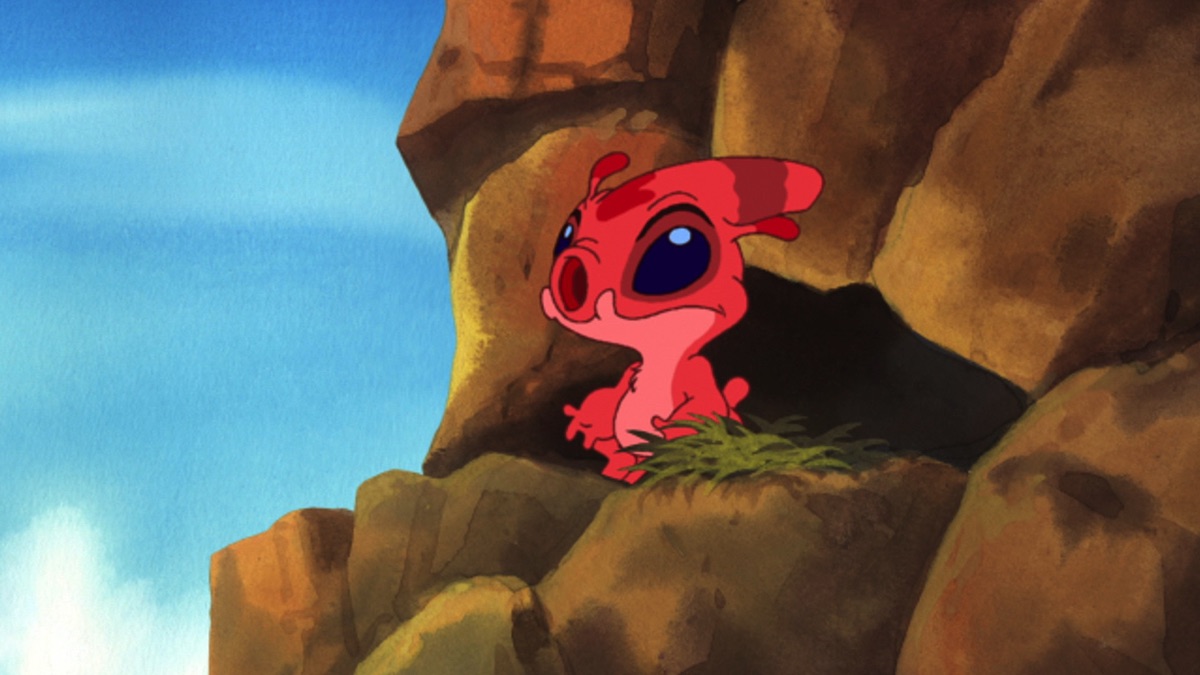
EPISODE 15 · SEASON 1 · TANK · RAE RAE REACTS
Lilo & Stitch: The Series Episode 15: Tank
Tank eats metal, grows larger, and turns one alien appetite into a working family’s repair bill and an entire environmental policy problem.
Tank is an appetite with consequences everybody can measure
“Tank” releases Experiment 586 with a power that makes consumption visible. He eats metal, grows larger, and increases the danger with every object swallowed. A bicycle, tool, gate, car part, or appliance disappears from somebody’s life and becomes more body for the experiment. Hunger changes the landscape.
The premise looks like monster comedy until the missing metal belongs to a working family. Nani cannot replace a vehicle or repair equipment with cartoon logic. Tank turns appetite into an economic crisis, and the episode becomes stronger when we remember every funny bite has an owner.
RaeRae check-in: Jumba made consumption scale itself
Experiment 586 grows more powerful through the exact behavior he was designed to perform. Jumba created an appetite without a stopping mechanism, packed the experiment into a pod, and lost the pod over an inhabited island. The inventor now acts surprised when infrastructure becomes lunch.
Lilo should not have to improvise feeding limits while protecting homes and transportation. Jumba owes the family nutritional data, safe metal sources, growth thresholds, reversal conditions, and containment equipment. “He eats metal” is an observation, not a response plan.
Hunger is not a moral failure
Tank follows a bodily demand. Calling him greedy would confuse design with character. The appetite may feel compulsory, painful, or impossible to interpret after waking in a strange world. Punishment cannot teach regulation if nobody first provides safety and understanding.
Harm still counts. A creature can lack cruel intent while destroying resources people need. Ethical care has to feed Tank without pretending every available object is fair game. Compassion and limits belong together.
Scarcity changes the meaning of one missing car part
A wealthy household may treat damaged property as an inconvenience. Nani’s family lives close enough to financial instability that transportation can determine employment, groceries, school, and custody. Tank eating the wrong piece of metal can trigger consequences far beyond repair cost.
The episode’s comedy needs that class context. Nani is not materialistic for protecting the car. The vehicle represents time, wages, access, and the ability to keep the household functioning. Survival objects carry emotional weight because replacement is not guaranteed.
Lilo sees a person before she sees a bill
Lilo’s first instinct is to understand Tank, which protects the experiment from becoming an enemy defined by damage. Her compassion comes naturally because she knows how quickly adults reduce difficult behavior to bad character. She searches for the need beneath the destruction.
Nani may see the bill first, and that response is equally valid. Family empathy has to include the caregiver who pays for consequences. Loving Tank cannot require pretending Nani’s fear is shallow.
Stitch meets a cousin who grows past intimidation
Stitch usually controls physical encounters through strength and confidence. Tank’s growth turns every consumed object into a larger mismatch. Brute force becomes less effective as the crisis continues. Stitch must protect the family while resisting the impulse to prove dominance.
The matchup reflects his own history. Stitch once treated destruction as evidence of power. Tank makes accumulation visible until size becomes burden. Strength without regulation can trap the person carrying strength as easily as everyone nearby.
Consumption culture is hiding inside the scrapyard
Tank eats discarded metal, but the island produces that material through human buying, breaking, replacing, and dumping. A salvage yard is evidence of an economy that treats objects as temporary. The experiment turns waste into food and accidentally reveals how much waste already exists.
That does not make every metal object available. Recycling requires sorting, safety, labor, and consent. Tank could become part of a circular system without being used as a magical garbage disposal that allows humans to keep consuming without limits.
Growth is not always progress
Tank becomes bigger each time he eats, and visual scale usually signals advancement in action stories. Here growth increases instability. More body means more hunger, damage, and difficulty finding a safe place. Expansion without purpose becomes crisis.
The metaphor fits economies and institutions that treat size as success. More revenue, more property, more reach, more consumption. Nobody asks whether the system can stop or whom the growth displaces. Tank’s body makes the question impossible to hide.
A feeding plan is not a true place
Providing safe scrap solves immediate hunger. Tank also needs companionship, shelter, healthcare, play, and protection from businesses that would exploit his appetite. A recycling company may call the arrangement efficient while treating the experiment as unpaid machinery.
Lilo’s placement standard should include consent and rest. Tank can enjoy metal processing without being required to eat every day for human profit. Utility may open a door. Personhood decides whether the space becomes home.
Gantu wants the largest possible prize
Tank’s growing body makes capture harder and more valuable. Gantu sees another chance to impress Hämsterviel. The mission rewards escalation because a dramatic target can produce dramatic proof of competence. Civilian property becomes secondary.
Gantu’s own identity depends on size and rank. Tank mirrors that insecurity. Both characters are treated as valuable when physically useful to authority. Neither has learned how to build worth outside power, but only Tank receives Lilo’s patient alternative.
Nani deserves restitution before a family speech
If Tank damages the car, house, workplace equipment, or neighborhood infrastructure, the Federation owes full repair. Nani should not receive a lesson about generosity while absorbing the cost of a galactic containment failure. Compassion funded by the poorest person in the room is exploitation.
Restitution would let the family welcome Tank without turning welcome into sacrifice. Jumba can provide technical labor. The Federation can provide money. Local residents can decide repair priorities. Lilo should not have to choose between a cousin and household stability.
Appetite regulation requires dignity
Tank needs predictable access to safe material before desperation grows. Withholding food until obedience appears would create fear and worsen impulsive behavior. Structure should reduce panic, not weaponize hunger.
He also needs ways to signal fullness, discomfort, and preference. Jumba’s design notes may describe capacity while missing lived experience. Tank should participate in building the plan for his own body.
What made me laugh
A metal-eating experiment makes every ordinary object look nervous. Stitch guarding the family vehicle like a tiny furious security system is exactly right. Jumba explaining which appliance is most nutritionally dangerous adds the correct level of absurdity.
Tank’s growth also lets the animation escalate a simple appetite into increasingly ridiculous logistics. One snack becomes a relocation problem. Somewhere, Nani is calculating repair costs while everybody else calls the situation cute.
What made me mad
The adults let Lilo approach another creature whose size and behavior can become dangerous quickly. Her empathy is valuable. Her body remains small. Jumba and the Federation should take the first physical risk.
I also reject any ending that treats Tank as a convenient disposal service without examining exploitation. The ability can benefit a community, but benefits must flow toward Tank too. Food, rest, choice, and relationships are not employee perks.
Environmental justice belongs in the placement
Waste facilities are often located near communities with less political power. If Tank’s home becomes a salvage site, local residents should control safety decisions and receive benefits. The island should not become a dumping ground because an alien can eat metal.
A responsible program would reduce imported waste, reclaim useful materials first, and feed only what cannot be repaired. Tank could support that work without becoming an excuse for more disposal. Environmental care starts before the mouth opens.
The Federation needs a material-damage fund
Every experiment with destructive capacity creates predictable costs. The Federation should maintain an automatic fund for homes, businesses, roads, vehicles, and medical needs affected by pod recovery. Residents should not prove negligence they did not cause.
Nani deserves immediate payment, not paperwork designed to discourage claims. Jumba’s records can establish power and exposure. Local authorities can verify damage. Accountability becomes real when institutions pay for consequences.
Tank deserves an identity beyond appetite
The episode names him through size and consumption. Those traits create the plot but cannot complete the person. What sounds calm to him? Who does he trust? Does he like building, swimming, sleeping in sunlight, or being read to after feeding?
Lilo’s family philosophy asks the story to keep looking after the useful answer appears. A home should discover interests nobody designed. Tank becomes a cousin when curiosity continues beyond crisis.
Hunger makes consent complicated
A starving person may agree to labor, confinement, or experimentation because food is controlled by somebody else. If Tank depends on humans for safe metal, providers hold enormous power. A placement contract means little when refusal could produce hunger and dangerous growth.
Food access must be guaranteed before anyone asks Tank to work. Then choices about recycling, cleanup, or research can become meaningful. Basic survival should never function as payment. The family understands that feeding someone comes before measuring usefulness.
The island should not become everybody else’s waste solution
Hawaiʻi already faces the logistical and environmental costs of imported goods and limited disposal space. An alien who eats metal could tempt outside companies to ship waste toward the island. Tank’s presence would become justification for expanding the very stream of consumption his appetite appears to solve.
Local residents must control volume, safety, and source. Hazardous materials need screening. Repairable goods should remain available. Tank cannot become a loophole that lets distant corporations avoid reducing waste at home.
Body size changes how strangers assign morality
A small creature eating a spoon may look cute. A giant creature eating a vehicle looks threatening. The appetite remains related, but public sympathy changes with scale. People often treat larger bodies as more intentional, aggressive, or responsible for taking up space.
Tank needs boundaries because the damage grows. He also needs protection from shame attached to size. Regulation should focus on behavior, health, and safety rather than treating a smaller body as the only acceptable body.
Jumba’s design created dependence without care
Building a creature with a specialized diet creates responsibility for supply. Jumba did not only create appetite. He created dependence on an environment containing processed metal. If safe food is scarce, destructive foraging becomes predictable rather than surprising.
The inventor owes lifelong support. That obligation includes testing materials for toxicity, monitoring growth, and ensuring Tank never has to damage property to eat. Creation is not finished when the laboratory celebrates successful function. Care begins there.
Repair can become part of belonging
Tank should not be forced to repay every cost through labor, especially when Jumba and the Federation caused the exposure. Voluntary participation in repair could still help rebuild trust. He might sort safe scrap, recover metal from damaged structures, or help clear debris after receiving food and rest.
The order matters. Belonging comes before debt. Community service becomes meaningful when Tank chooses to contribute as a resident rather than working off the price of being allowed to exist. Repair should connect him to neighbors, not place him under permanent obligation.
Nani’s anger should remain in the room
Family stories often ask the practical caregiver to forgive quickly because another character has learned a lesson. Nani may understand Tank’s innocence and still feel furious about damage, risk, and one more expense she cannot absorb. Those feelings do not make her less compassionate.
Let her name the cost before everybody celebrates the placement. Let Jumba apologize without defending the design. Let Lilo hear that loving an experiment includes advocating for restitution. Emotional honesty prevents generosity from becoming another demand placed on the woman keeping the household alive. Nani should not have to smile while calculating which bill will wait because somebody else’s invention ate the transportation she needs for work. Care for Tank and care for Nani can coexist, but only when the adults with resources pay what they owe promptly, completely, and without making her beg for basic fairness.
The Episode 15 verdict
“Tank” turns a simple eating gimmick into a story about hunger, growth, property, scarcity, and the ethics of useful placement. The experiment is dangerous because appetite scales, yet punishment cannot solve a body following design.
My verdict is one giant metal lunch with a restitution claim attached. Feed Tank safely. Protect Nani’s car. Stop Gantu from turning size into property. Then make Jumba and the Federation pay every repair bill before praising the Pelekais for generosity.
The quiet aftermath I wanted
After Tank returns to a manageable size, I wanted Lilo to offer several safe metal choices and watch which one he selects. Choice would make feeding a relationship instead of containment. Stitch could sit nearby without guarding every spoon.
Nani should receive a repaired vehicle and a written guarantee before dinner. Tank could curl beside the salvage pile, full and unafraid, while Jumba labels the feeding chart. That would make the placement feel sustainable instead of temporarily clever.
Where to watch
Watch “Tank” through Lilo & Stitch: The Series on Disney+. Availability can change by region.
Keep exploring
Return to the episode directory or return to the Lilo & Stitch hub.