
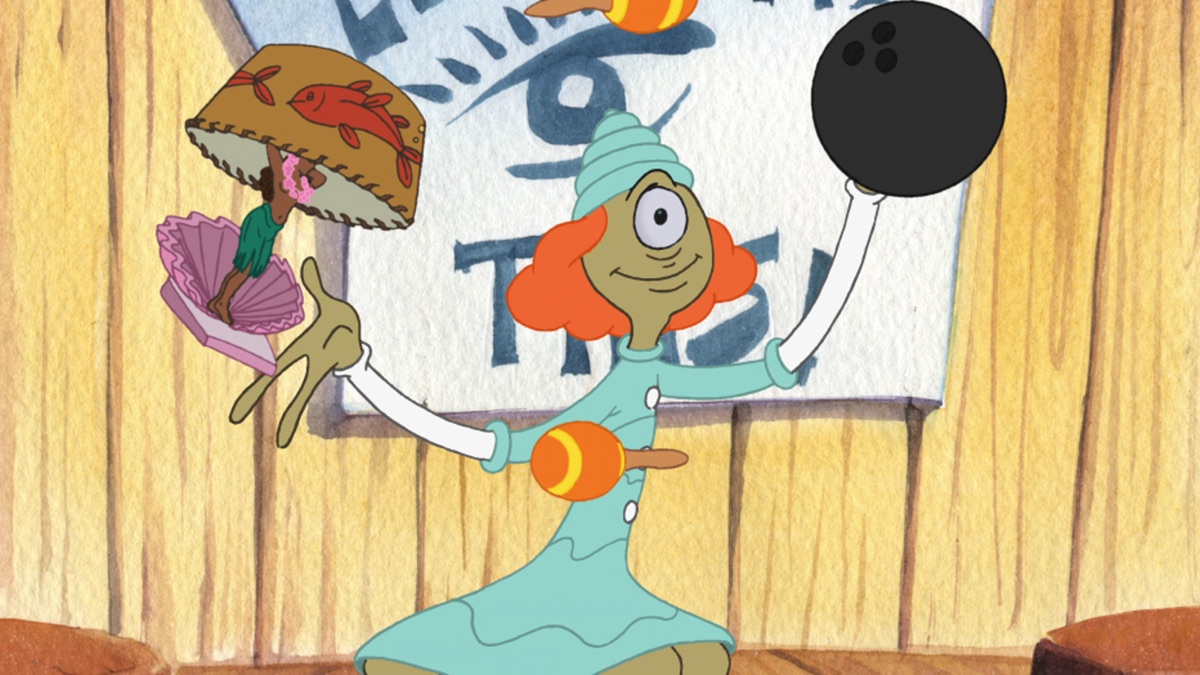
EPISODE 13 · SEASON 1 · SWIRLY · RAE RAE REACTS
Lilo & Stitch: The Series Episode 13: Swirly
A pair of glowing spiral eyes turns obedience into a consent crisis, and Lilo’s chosen family has to recognize her beneath somebody else’s commands.
Hypnosis turns a funny spiral into a consent crisis
“Swirly” gives Experiment 383 the ability to override choice, which makes the danger quieter than a blast and more invasive than a fight. A hypnotized person may move, speak, and appear cooperative while agency has been removed. The body remains visible. Consent disappears behind behavior that looks voluntary.
That premise deserves more than a chase. Lilo and Stitch built family through chosen attachment. Swirly can counterfeit agreement and make trust unreliable. The episode becomes an argument about whether obedience has value when the person obeying cannot refuse.
RaeRae check-in: Jumba invented coercion with cute eyes
Experiment 383 did not accidentally develop hypnosis. Jumba designed a living being capable of entering another person’s decision-making process. Then the pod was lost over an inhabited island. I need the Federation’s ethics committee, data-protection office, and criminal attorney in the same room.
Lilo should not encounter mind control without protective guidance. The household needs visual barriers, exposure limits, reversal protocols, and medical follow-up. Jumba’s late explanation cannot substitute for preparation when one glance can remove somebody’s ability to protect herself.
Obedience is not evidence of agreement
Hypnosis exposes a mistake people make without alien powers. A person can comply because of fear, pressure, dependency, exhaustion, manipulation, or social punishment. Visible cooperation does not automatically reveal free choice. Swirly makes the gap impossible to ignore.
That lesson belongs in family animation. Children are often praised for obedience before adults ask whether the instruction was safe or respectful. A trustworthy authority should tolerate questions and refusal. Control that cannot survive consent was never care.
Lilo’s will matters because Lilo is already overruled constantly
Adults decide where Lilo goes, what behavior counts as normal, and whether her family is stable enough to remain together. Some authority is necessary because she is a child. Much of the scrutiny also treats her grief and difference as problems other people can define from outside.
Swirly intensifies that history by taking choice completely. The horror is not abstract. Lilo already fights to be heard. Mind control removes even the possibility of argument. Restoring her agency should matter more than restoring convenient behavior.
Stitch has to recognize Lilo without her choices
A hypnotized Lilo may look and sound familiar while acting against the bond they built. Stitch has to separate her body from imposed commands. That task requires emotional knowledge deeper than surface behavior. He knows which choices belong to the person he loves.
The episode gives loyalty a difficult form. Stitch cannot treat harmful actions as proof that Lilo stopped loving him. He must protect himself and others while preserving faith in her underlying agency. Love becomes interpretation under pressure.
Swirly is a person with a power built for abuse
Experiment 383 should not carry moral blame for Jumba’s design. Swirly wakes with an ability that other people immediately want to use. The most dangerous future may come from handlers, employers, governments, or family members who decide hypnosis is efficient.
A safe placement must protect Swirly from being weaponized. Training should focus on consent signals and control without teaching shame. The experiment deserves relationships unrelated to utility. Nobody should become a permanent remote control for other people.
Gantu sees consent as an obstacle to the assignment
Gantu already treats experiments as property. Swirly offers a shortcut that can make witnesses, opponents, and civilians cooperate. The power fits Hämsterviel’s management style perfectly because coercive bosses prefer obedience without negotiation.
Gantu’s employment desperation does not excuse using another being to override minds. The assignment reveals how hierarchy trains people to pass coercion downward. Hämsterviel controls Gantu through humiliation. Gantu seeks control over everyone below him.
Hämsterviel would turn hypnosis into infrastructure
A villain does not need spectacular destruction when memory and choice can be manipulated. Swirly could influence guards, officials, workers, and communities without leaving visible damage. That power threatens every institution built on testimony and consent.
The episode keeps stakes accessible for children, but the implication is ugly. A hypnotized vote, confession, contract, or order may look legitimate. Systems need verification because appearance alone cannot prove agency survived.
Nani should be the first person told
Nani is responsible for Lilo’s safety and has the clearest need for advance warning. A hypnotized child could leave home, reveal private information, enter danger, or appear to reject family protections. Nani cannot respond correctly if Jumba withholds the experiment file.
Respecting her role means more than asking for forgiveness afterward. Give her protective lenses, emergency signals, and the reversal method. Family authority should include information before the crisis, not only blame after damage occurs.
The eyes become a battleground
Eye contact usually communicates attention, honesty, and intimacy. Swirly turns that social gesture into risk. Characters must choose between connection and protection. The visual premise works because trust normally asks people to look at one another.
A barrier can prevent hypnosis, but barriers also change communication. The family needs methods that let Swirly participate without exposing others accidentally. Accommodation should create safe contact rather than permanent avoidance.
Mind control destroys accountability records
When a hypnotized person causes harm, responsibility becomes distributed. The person performed the action. Swirly transmitted influence. Whoever directed or exploited the power may carry the greatest intent. Jumba created the conditions. The Federation failed containment.
A simple punishment cannot capture that chain. Repair should protect victims without pretending coerced behavior reflects character. Evidence about exposure matters. So does preventing powerful people from blaming the easiest target.
The cure needs consent too
Reversing hypnosis may require touch, restraint, sound, or another exposure. Urgency does not erase the affected person’s dignity. Explain the process whenever awareness allows. Use the least frightening method. Limit spectators.
Restoration should return choice rather than becoming another exercise of control. Nani can authorize emergency care for Lilo while still insisting on respectful treatment. The goal is agency, not mere compliance with the family’s preferred state.
What made me laugh
Hypnotized behavior lets the cast perform familiar personalities slightly wrong, which creates comedy and unease at once. Stitch recognizes the wrongness before adults finish debating the obvious. Pleakley treats every glance like an incoming missile, and honestly, correct.
Jumba explaining hypnotic design with inventor pride remains outrageous. A household cannot keep receiving catastrophic revelations from a man standing near the snacks. Somebody confiscate his presentation voice.
What made me mad
A child again absorbs the direct consequence of adult negligence. Lilo’s strong will makes her an interesting target, but strength does not make violation less serious. The aftermath should include her anger, confusion, and right to know what happened.
I also dislike any resolution that treats Swirly as safe only when serving somebody’s convenient purpose. Controlled coercion remains coercion. The true place must not turn a dangerous ability into a profitable service.
Consent education belongs before the emergency
The family can establish rules while everybody is calm. Swirly should learn a clear request-and-response system. Other experiments should know how to identify influence. Nani should decide which spaces require barriers. Jumba should document every known trigger.
Preparation makes consent practical. Vague promises to “be careful” place the whole burden on the person with unusual power. Shared tools turn safety into a household responsibility.
A true place needs protection from clients
People will ask Swirly to fix relationships, force apologies, improve workers, control children, erase resistance, or manufacture confidence. Some requests will sound benevolent. Every request treats another person’s mind as available for editing.
The right home needs guardians willing to refuse access and laws recognizing hypnotic coercion as harm. Swirly also needs the freedom to say no. Protection should extend to the experiment as well as potential targets.
Agency is the emotional center of the franchise
Stitch becomes family because he chooses care after being designed for destruction. Lilo chooses him when authorities call him dangerous. Nani chooses guardianship every exhausting day. Jumba and Pleakley choose the household over old institutional roles.
Swirly threatens the mechanism that makes those transformations meaningful. A good action produced through hypnosis cannot equal moral growth. Choice gives love, repair, and loyalty their weight.
The Federation needs coercion safeguards
A mind-influencing experiment requires exposure tracking, medical support, legal review, witness protection, and strict limits on official use. The Federation supplies none of those protections to Kauaʻi. Institutional absence leaves one family creating policy during a crisis.
Every affected person deserves documentation and privacy. Swirly deserves freedom from forced research. Jumba owes technical disclosure. The public deserves a response designed before another spiral appears.
Hypnosis makes emotional abuse visible
Most coercion does not arrive with glowing eyes. A controlling person isolates, repeats a story, punishes disagreement, rewards compliance, and slowly makes resistance feel impossible. Swirly condenses that process into one visual effect. The exaggeration can help younger viewers recognize that behavior which looks voluntary may still be shaped by pressure.
The lesson should never become suspicion of every influence. People persuade one another constantly. Ethical persuasion leaves room for reflection and refusal. Abuse narrows choices until agreement becomes the only safe response. Swirly’s power removes the room completely, which clarifies why consent needs freedom around the yes.
Trust needs a verification method after mind control
Once the family knows hypnosis exists, ordinary reassurance may stop feeling sufficient. Is Lilo choosing her words? Is Stitch acting from loyalty? Did somebody receive a hidden command? Suspicion can damage relationships even after the direct effect ends.
The household needs shared signals established while everyone is free. A private question, gesture, or memory can help confirm identity without becoming a perfect surveillance system. Verification should restore confidence, not turn every family interaction into an interrogation. Trust survives through transparent safeguards and the willingness to pause when behavior suddenly changes.
Swirly cannot be responsible for everybody’s temptation
A power that can manufacture obedience will attract people who believe their goal is important enough to override consent. Parents may want compliant children. Employers may want compliant workers. Officials may want compliant communities. Lovers may call control devotion.
Swirly needs protectors who place responsibility on the requester. The experiment should never have to defend personhood alone against adults offering money, praise, or threats. A refusal protocol, secure home, and legal advocate would keep the true place from becoming an appointment book for coercion.
Nani’s guardianship depends on authentic choice
Social services judge Nani’s household through interviews and observable behavior. Hypnosis could make testimony unreliable in either direction. A coerced statement might threaten custody, while a hypnotized performance of family harmony could conceal actual danger. Both outcomes undermine the process meant to protect Lilo.
Nani therefore needs formal documentation of exposure and medical confirmation afterward. She should not be forced to prove that sudden behavior came from an alien power nobody warned her about. The Federation’s negligence could become evidence against the person doing the most consistent caregiving.
The family should let Lilo be angry
Restored agency does not require immediate gratitude. Lilo may feel embarrassed, violated, frightened, or furious at everyone who witnessed behavior she did not choose. Family members may want a hug because they were scared too. Her recovery should not become emotional reassurance work for them.
Give her privacy. Answer questions honestly. Apologize for any restraint or exposure that could have been prevented. Let her decide when the episode becomes a story everybody can laugh about. Respect after hypnosis means returning control in small practical ways, not announcing that everything is normal again. Lilo chooses who enters her room, who touches her, which photographs remain visible, and when Stitch can sit close. Those decisions may look tiny beside intergalactic danger. Tiny decisions are exactly how agency becomes real again after somebody else occupied the steering wheel. Nani can protect that process by making the household follow Lilo’s pace, even when everybody else wants relief immediately. Recovery belongs fully to the person who was controlled.
The Episode 13 verdict
“Swirly” uses a bright visual gimmick to raise one of the series’ darkest ethical questions. Obedience without refusal is not consent. Lilo’s family only matters because its members keep choosing one another after fear, conflict, and mistakes.
My verdict is violet spiral chaos with an immediate civil-rights hearing. Restore Lilo’s agency. Protect Swirly from Hämsterviel. Give Nani the safety file. Then make the Federation explain why a child had to invent consent policy for a living mind-control experiment.
The quiet aftermath I wanted
After the hypnosis breaks, I wanted Lilo to hear what happened privately from Nani. Stitch could wait nearby without demanding reassurance. Lilo should decide when she wants contact and which memories of the event she wants explained.
Swirly could practice asking before using even a harmless version of the power. A clear yes, a clear no, and an immediate stop would show that agency has entered the experiment’s future. That would be a true place worth trusting.
Where to watch
Watch “Swirly” through Lilo & Stitch: The Series on Disney+. Availability can change by region.
Keep exploring
Return to the episode directory or return to the Lilo & Stitch hub.