
EPISODE 9 · SEASON 1 · YIN-YANG · RAE RAE REACTS
Lilo & Stitch: The Series Episode 9: Yin-Yang
Fire meets water, the island pays the bill, and Lilo has to prove that opposite powers are still people before they are a solution.
Two powers wake up looking for an argument
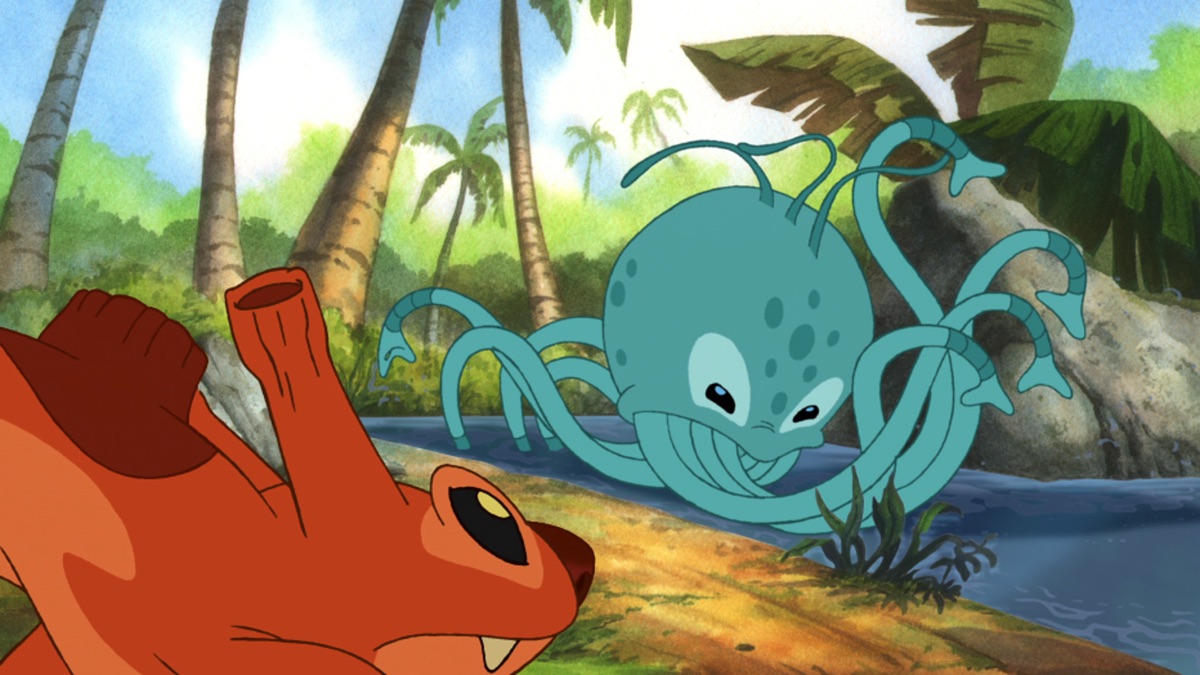
“Yin-Yang” releases Experiments 501 and 502 into the same story, then lets water and fire behave like personalities before anybody has learned the people carrying those powers. One experiment can drown a landscape. The other can burn what remains. Their abilities are opposites, but the danger comes from similarity: both were designed to overwhelm environments instead of inhabit them.
The episode moves with disaster-movie urgency because neither force stays politely contained. Steam, flooding, heat, and panic turn the island into a laboratory Jumba never had permission to use. Lilo and Stitch have to interrupt the conflict without treating either experiment as disposable. That ethical problem gives the spectacle a reason to matter.
RaeRae check-in: Jumba built climate warfare and lost the filing cabinet
I need everybody to pause on the fact that Jumba created portable fire and water catastrophes, stored them in tiny pods, and allowed those pods to scatter across Hawaiʻi. A child now performs field identification while the inventor announces abilities after activation. No emergency map. No protective equipment. No evacuation authority. Just vibes, numbers, and Pleakley screaming beside somebody’s flooded property.
The show treats Jumba’s history as comic excess because he has become lovable inside the household. Love does not cancel engineering responsibility. If a scientist builds life-forms capable of environmental devastation, redemption should include disclosure, containment plans, and repair money. Pancakes and family banter are not an ethics department.
Opposites do not automatically create balance
The title invokes complementary forces, but balance is not achieved by placing two dangerous beings in the same room and hoping symmetry solves the problem. Water can extinguish fire. Fire can evaporate water. Both interactions can create new hazards. Complementarity requires timing, consent, proportion, and a shared purpose.
That matters emotionally too. People often romanticize opposites as if conflict guarantees completion. Difference can produce growth, but only when each person remains more than a corrective tool for the other. Yin and Yang deserve identities beyond neutralizing one another. Their true places should support individual needs as well as coordinated power.
The island carries the cost of Jumba’s metaphor
Fire and water look gorgeous in animation. Residents experience lost homes, damaged roads, smoke, contaminated water, frightened animals, and interrupted work. The episode uses the landscape to stage elemental conflict, yet Hawaiʻi cannot be treated as an empty arena waiting for alien meaning.
I wanted the community to participate in the response. Local knowledge about wind, terrain, drainage, surf, and evacuation could stand beside Jumba’s technical information. Lilo should not be the only island resident with useful judgment. A place becomes real when the people living there can act, remember, and demand accountability.
Lilo refuses to call design destiny
Jumba names what each experiment was made to do. Lilo asks what each experiment might choose next. That difference defines the franchise’s moral center. Design explains capacity. Design does not establish obligation. Stitch already proved a creature built for destruction can build attachment, routines, jokes, and responsibility.
Her faith is not naive because Lilo also recognizes danger. She does not need to pretend fire cannot burn or water cannot drown. She searches for a context where power can serve life instead of erasing life. Compassion becomes practical when compassion includes boundaries and a future.
Stitch sees two versions of his old programming
Yin and Yang externalize forces Stitch has learned to regulate. Destruction once gave him purpose and certainty. Family introduced reasons to pause. Watching two cousins follow catastrophic design lets him see what might have happened without Lilo. Protection becomes personal because their danger resembles his history.
He cannot lecture them into change. Stitch communicates through action, loyalty, and shared alien experience. His role works best when he stands beside Lilo rather than replacing her emotional intelligence. She identifies the person. He proves another life is possible.
Water is not automatically gentle
Stories often code water as healing and fire as destructive. “Yin-Yang” complicates that shortcut because uncontrolled water carries enormous force. Flooding suffocates, displaces, erodes, and destroys. A cool color palette does not make the threat morally softer.
Experiment 501 deserves freedom from the expectation that appearance predicts temperament. Water can nurture crops or remove the ground beneath them. The ethical question concerns control, context, and choice. Power gains meaning through use.
Fire is not automatically evil
Fire cooks food, provides warmth, supports ecosystems, and carries ceremonial meaning. Fire also consumes faster than frightened people can respond. Experiment 502 should not be reduced to the scary half of a tidy binary. The ability needs education and an environment suited to responsible expression.
Lilo’s one-true-place method works when the placement transforms a feared trait into community value without exploiting the person. Yang should not spend a lifetime functioning as equipment. Purpose must include rest, relationship, and the freedom to exist beyond usefulness.
Steam is the consequence nobody puts on the poster
When fire and water meet, the result is not nothing. Steam burns, obscures vision, changes pressure, and carries energy somewhere else. The episode’s central pair reminds us that opposing harms do not always cancel. Sometimes collision creates a third problem.
That idea travels beyond the action plot. Two people can be wrong in different directions and still produce damage together. Institutions love simple binaries because binaries make responsibility easy to assign. Reality often arrives as hot fog after both sides insist their force is the solution.
Gantu turns environmental danger into a performance review
Gantu pursues the experiments because capture offers approval from Hämsterviel. Civilian safety becomes background noise. He approaches elemental beings with weapons and urgency, then acts surprised when escalation follows. The job has trained him to confuse possession with competence.
His humiliation explains the desperation without excusing the decisions. Gantu needs a life beyond rank, but every mission tightens the bond between self-worth and obedience. Hämsterviel keeps that wound open because an insecure employee is easier to control.
Nani deserves the truth before the sirens
A flood or fire could erase Nani’s housing, employment, transportation, and custody stability in one afternoon. She cannot protect the family when alien information reaches her after the crisis. Secrecy turns her into cleanup labor without decision-making power.
The family needs an emergency plan built with Nani, not around her. She should know the experiment numbers, likely hazards, evacuation routes, and responsible contacts. Respect means sharing risk information before the sky changes color.
The Federation owes Hawaiʻi more than an apology
Galactic authorities lost dangerous experiments over an inhabited island and left recovery to a grieving child’s household. Every damaged wall, flooded shop, medical expense, and missed shift belongs on a Federation invoice. The absence of financial consequences keeps institutional failure invisible.
Repair should include local leadership. Money without authority can reproduce the same disrespect. Residents should decide priorities, demand environmental review, and refuse unsafe placements. Hawaiʻi is not an off-world storage solution.
What made me laugh
Jumba describing world-altering powers with professional pride while everybody else runs for safety remains reliable comedy. Stitch trying to meet elemental catastrophe with physical confidence also feels perfectly in character. He has never encountered a scale large enough to discourage an opening tackle.
Pleakley’s panic works because panic is the only emotionally honest response to learning two missing pods contain portable natural disasters. Somebody should scream. The surprising part is how few adults join him.
What made me mad
Lilo stands closest to danger again because she has the best relationship skills. Emotional competence becomes an excuse to expose a child to risks adults created. Jumba should lead containment. The Federation should provide specialists. Nani should possess veto power.
I also dislike any solution that treats Yin and Yang as tools whose value comes from canceling each other. Partnership can be beautiful. Forced mutual regulation is another form of confinement. Each experiment needs independent safety and agency.
A true place requires more than a clever job
The franchise often resolves experiment stories by matching a power to useful work. Practical purpose helps, especially for beings who wake without community. Employment alone cannot equal belonging. A workplace can exploit the exact trait everybody praises.
Yin and Yang need housing, companionship, consent, play, and protection from weaponization. Their powers may help people. Their lives should not become permanent emergency services. Personhood continues after the useful task ends.
The title carries cultural baggage the script barely touches
Yin and yang come from Chinese philosophical traditions concerned with interdependence, change, and relational balance. The symbols are not shorthand for a simplistic fight between good and evil. Naming the experiments through that concept creates an expectation that the episode will understand more than color-coded opposition. The story reaches part of the idea when each force affects the other, but the cultural reference remains mostly decorative.
A stronger script would avoid treating Chinese thought as an exotic label for elemental combat. Balance involves movement, context, and the presence of each tendency within the other. Yin and Yang could learn that neither identity is complete when reduced to one power. That version would deepen the experiments without turning a children’s episode into homework.
Environmental power attracts political power
Any institution learning that living beings can create firestorms or floods would see military and economic value. Hämsterviel wants possession because possession offers leverage. The Federation wants containment because uncontrolled weapons threaten authority. Lilo is nearly alone in asking what the experiments want.
That conflict deserves attention. A safe placement must protect Yin and Yang from recruitment, research without consent, and permanent surveillance. Their abilities make privacy difficult, but danger cannot erase civil rights. The more useful a body appears to powerful institutions, the more urgently personhood needs legal protection.
Children understand fairness when adults stop hiding the stakes
The episode can speak honestly about risk without teaching children to fear difference. Lilo models the necessary distinction. She does not say every action is safe. She says unsafe power belongs to a person who still deserves help. Boundaries and dignity can occupy the same sentence.
Adults often flatten that lesson into either tolerance without limits or safety without compassion. Both approaches fail. Children already negotiate classmates, siblings, pets, and their own overwhelming feelings. Stories like “Yin-Yang” can give them language for care that does not require denial.
Nani and the economics of evacuation
Leaving danger costs money. Transportation, missed shifts, temporary lodging, replacement food, and damaged belongings turn evacuation into a financial crisis. Nani cannot simply relocate the household every time Jumba remembers another dangerous number. Her job may punish the same absence that keeps Lilo alive.
That pressure makes the Federation’s silence worse. Emergency planning should include wage replacement and housing guarantees. Otherwise institutional advice assumes every family owns resources the Pelekais do not have. Safety plans written for wealthy households are not universal plans.
Why the pairing still works emotionally
Despite the script’s shortcuts, Yin and Yang create a memorable image of connection without sameness. Neither experiment has to surrender the defining power. Cooperation asks both to regulate intensity and notice impact. Difference remains visible after conflict ends.
That visual lesson fits Lilo’s family. Nani, Lilo, Stitch, Jumba, and Pleakley do not become alike. They learn enough about one another to share space, distribute care, and repair harm. Balance is active household labor, not a magical state that arrives once everybody hugs. Some days Nani carries more. Some days Stitch provides protection. Some days Lilo supplies the only moral clarity in the room. Fairness changes with need, which makes family balance closer to choreography than arithmetic. Everybody must keep watching, adjusting, apologizing, and returning. Nobody gets to declare the work finished because one crisis ended. The next experiment, rent payment, school conflict, or grief wave will rearrange the household again. Their strength comes from practicing repair without demanding perfect stability first, every single day.
The Episode 9 verdict
“Yin-Yang” delivers one of the series’ clearest visual concepts and uses the paired experiments to revisit design, choice, and accommodation. Fire and water create immediate stakes, but Lilo’s refusal to reduce either cousin to a hazard gives the story emotional shape.
My verdict is elemental chaos with a mandatory ethics hearing. Protect Yin. Protect Yang. Protect the island from Jumba’s missing inventory. Then make the Federation fund containment, repairs, and a future where neither experiment has to earn family by functioning as disaster equipment.
The quiet aftermath I wanted
After the steam clears, I wanted Lilo to meet each experiment separately. Ask what feels safe. Ask whether they want to work together. Let Stitch demonstrate control without pretending control is easy. Choice should enter before placement becomes permanent.
Then Nani should walk through the damage with Jumba and a clipboard. Every scorched board and flooded room receives a number. Jumba can explain the science after signing the repair agreement. That would be balance I could believe in.
Where to watch
Watch “Yin-Yang” through Lilo & Stitch: The Series on Disney+. Availability can change by region.
Keep exploring
Return to the episode directory or return to the Lilo & Stitch hub.