
EPISODE 5 · SEASON 1 · SPOOKY · RAE RAE REACTS
Lilo & Stitch: The Series Episode 5: Spooky
Experiment 300 turns private fear into public spectacle, and Halloween does not come with a trauma-release form.
Halloween gives fear permission to perform
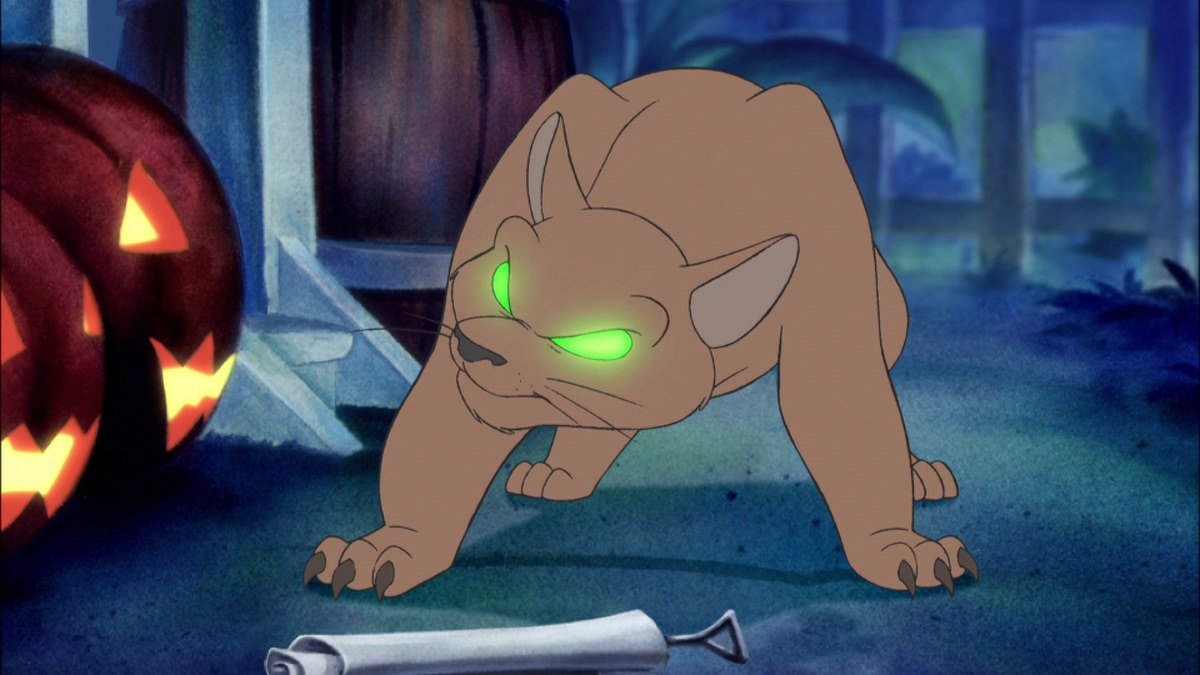
“Spooky” activates Experiment 300 on the one night when everybody expects masks, monsters, jump scares, and strangers testing the boundary between fun and panic. Halloween gives the episode visual freedom. A fear can appear in public without immediately exposing an alien secret because residents already agreed to treat the street as a stage.
That camouflage also makes danger harder to identify. A person screaming may be playing. A creature may be a costume. A house designed to frighten visitors can hide an actual threat. Spooky enters a community where fear has become entertainment and turns private terror back into something nobody controls.
Experiment 300 does not merely look scary
Spooky transforms into the worst fear of the person being targeted. The power requires access to information people may never choose to share. A face, object, situation, or memory becomes visible without consent. The attack therefore violates privacy before physical danger even begins.
Jumba designed a being around involuntary psychological exposure. Nobody receives a warning, a shield, or a way to decide which memories remain private. The experiment ledger keeps getting darker. Destruction can damage a building. Fear manipulation can make somebody’s inner life feel unsafe.
A worst fear is not always a monster
The episode can produce large, readable shapes for animation, but the most painful fear may be ordinary. A phone call. An empty chair. A social worker at the door. A family member choosing somebody else. A cage closing. A house suddenly quiet. Fear gains power from meaning rather than size.
Lilo and Stitch carry histories that make abandonment more terrifying than any generic creature. The Halloween framing lets the series approach those wounds without naming every layer. A React can notice the grief under the costume.
Lilo already lives beside her worst fear
Lilo has lost her parents and knows another authority can separate her from Nani. She may act fearless because fear has become part of daily life. The possibility of being left behind is not an abstract nightmare. The custody threat, peer rejection, and unstable household resources keep giving the fear practical forms.
Spooky’s power can externalize what Lilo usually manages through rituals, photographs, stories, and stubborn control. That exposure is cruel because she did not volunteer for emotional demonstration. Courage should not require a grieving child to perform trauma for everybody watching.
Stitch fears the cage and the empty family
Stitch remembers containment, sentencing, pursuit, and the possibility that nobody will claim him. His physical power does not protect against rejection. A cage can hold his body, but abandonment attacks the relationship that made freedom meaningful.
The episode benefits from letting a nearly indestructible creature experience fear he cannot punch away. Strength becomes emotionally irrelevant. He needs trust, memory, and another person standing beside him. That is character development the laboratory never anticipated.
Fear reveals without explaining
Seeing somebody’s worst fear does not automatically tell us the history behind the image. An observer can misread the symbol, laugh, judge, or use the information later. Spooky produces evidence without context. That makes the power especially dangerous in a social group already willing to turn Lilo’s differences into entertainment.
Privacy remains important even after the image appears. Nobody becomes entitled to the full story because a cousin forced one fragment into public view. The compassionate response asks what support is wanted instead of demanding explanation.
Mertle’s fear deserves protection too
Mertle has caused real harm to Lilo, and Halloween may tempt the narrative to punish her through humiliation. Spooky does not become ethical when targeting a bully. Forced exposure can injure somebody we dislike as easily as somebody we love.
Protecting Mertle’s privacy does not excuse her behavior. Rights matter most when we refuse to distribute them according to popularity. Lilo can seek accountability for bullying without turning Mertle’s deepest fear into community gossip.
Jumba built a trauma detector and called the result a weapon
Experiment 300 can identify what frightens a person most. In another context, such sensitivity could support communication, therapy, emergency response, or protective planning if the person consented and control belonged to the subject. Jumba instead designed terror delivery.
The ability shows how technology inherits purpose from power. Knowing fear can help somebody or dominate somebody. Spooky needs a chance to understand the difference and choose a relationship to the gift beyond the original function.
Courage is not the absence of reaction
Characters may shake, run, freeze, cry, or lose control when the worst fear appears. Those responses do not prove weakness. A nervous system reacts before a polished speech arrives. Courage begins when somebody makes the next choice while the body still remembers danger.
The episode works when Lilo and Stitch stop competing with fear and begin moving through fear together. Relationship changes what each person can tolerate. Neither becomes magically fearless. They become less alone.
Naming Spooky makes fear addressable
Lilo names Experiment 300 according to the effect. “Spooky” turns an overwhelming phenomenon into somebody the family can call and talk about. Naming can reduce chaos because the threat gains boundaries and a place in the cousin network.
The name can also trap the experiment inside the scary role. A person able to transform according to fear may have playful, curious, shy, or gentle qualities nobody sees during the crisis. The profile needs to move beyond the Halloween label.
The chase risks becoming exposure tourism
Every transformation creates spectacle. Viewers are invited to wonder what comes next and how the target will respond. That pleasure is part of horror storytelling. The ethical tension comes from enjoying somebody’s involuntary fear while the story insists the fear matters.
A strong React can hold both. I enjoy the inventive shapes and the Halloween energy. I also want the narrative to protect characters from becoming exhibits. Entertainment should not erase the violation built into the power.
Stitch cannot fight information
Punching a fear form may interrupt one manifestation, but the underlying knowledge remains. Spooky can become another target because the experiment reads the person rather than defending one stable body. The problem asks Stitch to regulate himself and understand the cousin instead of escalating strength.
Those episodes usually reveal more growth than another battle. Stitch was designed to destroy physical systems. Family keeps forcing him to learn emotional systems, where victory may mean staying present long enough for somebody else to regain choice.
Lilo needs adult support after the fear ends
A frightening image disappearing does not return the nervous system to normal immediately. Lilo may need reassurance, sleep support, honest conversation with Nani, and space to decide what she wants shared. The adventure ending cannot substitute for aftercare.
The series often moves from crisis to placement before Nani receives the full story. That structure keeps pace quick and leaves a child carrying experiences the household should process together. Somebody needs to ask Lilo how the night felt after everybody stops chasing the cousin.
Spooky needs support after becoming everybody’s nightmare
Experiment 300 also experiences the night through repeated fear forms. Does Spooky absorb emotional intensity? Does the experiment understand why targets panic? Does changing shape blur personal identity? A power based on other people’s terror could overwhelm the person using the power.
Rehabilitation should include boundaries, recovery, and a stable sense of self. Spooky needs relationships where nobody demands a frightening performance. Otherwise the new placement keeps the cousin dependent on producing fear for approval.
The one true place at an attraction is complicated
A haunted attraction seems like an obvious placement. Visitors choose to be frightened, the environment expects transformation, and Spooky can use the ability creatively. Consent and context improve the ethical picture dramatically compared with attacking strangers.
The placement still needs limits. Visitors consent to staged fear, not necessarily involuntary extraction of their deepest trauma. Spooky could use invented forms, agreed themes, or adjustable intensity instead of reading private memories. A ticket to a haunted house is not a waiver for psychological invasion.
Fear can become art without becoming exploitation
Horror artists transform shared anxieties into stories people enter voluntarily. Spooky could design characters, stage illusions, perform, or collaborate with audiences who choose the experience. The power becomes expressive when imagination replaces forced disclosure.
That path also gives Experiment 300 creative authorship. Jumba programmed a function. Spooky can develop taste. Which shapes feel interesting? Which stories matter? What kind of fright produces laughter rather than harm? Art begins when the cousin gets to answer.
The family promise gets tested in the dark
ʻOhana sounds easiest during daylight when everybody is fed and the house is quiet. Spooky forces Lilo and Stitch to see the fears that make belonging feel temporary. Staying close during that exposure gives the promise substance.
Family should not demand disclosure as proof of closeness. The power removes choice, so repair means restoring control. Lilo and Stitch can say what they want, keep what they want private, and still believe the other will remain.
What made me laugh
Halloween lets the animation play with visual exaggeration, costume confusion, and characters trying to act brave while their bodies disagree. Jumba describing a nightmare engine with scientific pride remains absurd in the reliable way only Jumba can manage. Stitch facing a problem that changes every time he reacts creates good physical frustration.
The comedy lands when fear and dignity coexist. Somebody can scream and still be brave. Somebody can wear a ridiculous costume and still recognize danger. The episode knows panic makes people funny without making every fear meaningless.
What made me mad
The experiment system again begins with no privacy protection, no activation protocol, and no trauma support. A child has to confront her worst fear so the adults can recover another item from Jumba’s inventory. Then the placement risks making fear performance the cousin’s permanent job.
RaeRae wants one Federation employee to arrive with resources instead of a sentence. Fund counseling. Secure the pods. Train the household. Give Spooky control over transformation. Stop calling a child brave when “unsupported” would be more accurate.
The episode accidentally understands trauma
Trauma can make the past feel present. Spooky turns inner fear into visible environment, collapsing memory, possibility, and current danger. The target knows the image may be constructed while the body reacts as though the threat has arrived again.
Connection helps because another person can anchor the present. Lilo and Stitch do not erase what happened. They remind each other that the feared image is not the only reality in the street. Courage becomes relational orientation.
The Episode 5 verdict
“Spooky” uses Halloween beautifully because costumes and real transformation blur together. The premise gives Lilo and Stitch emotional stakes beyond capture. Experiment 300 exposes private terror, and the family has to choose trust after seeing what fear tries to hide.
My verdict is dark purple affection with a consent form attached. Keep the haunted attraction if Spooky chooses the work. Ban involuntary trauma mining. Give Lilo aftercare. Give Stitch reassurance. Give Jumba a mandatory ethics course taught inside a room that becomes his worst fear every time he says “perfectly safe.”
The quiet aftermath I wanted
Lilo and Stitch should sit on the porch after Halloween and agree that neither will repeat what Spooky showed without permission. Nani should join them with something warm and no demand for a full explanation. Privacy can survive even inside a close family.
Spooky should receive a calm shape chosen for comfort rather than impact. One night of being everybody’s nightmare is enough. Somebody should ask what Experiment 300 wants to see when nobody else’s fear controls the room.
A fear response is not a confession
Spooky can make somebody react to an image without proving what the image means. A cage may represent past confinement, future punishment, loss of control, or concern for somebody else. Observers should not build a diagnosis from one involuntary moment. Bodies communicate alarm more quickly than people can explain context.
The episode’s characters deserve the right to interpret their own experience later, privately, and with support. Curiosity from friends does not become entitlement. A family can say “I saw you were scared” without demanding “tell me everything now.”
Jumba owes the family a psychological hazard file
Physical powers receive obvious warnings because explosions and earthquakes are visible. Mind, memory, emotion, and fear experiments require an equally serious protocol. The household should know how effects spread, how long exposure lasts, what interrupts the ability, and what recovery may require.
Jumba treating psychological harm like colorful mischief reflects his creator bias. If a machine functions according to design, he calls the result success. The people living through the function need a different definition.
Courage can include leaving the haunted house
The placement should never shame visitors who decide they do not want the experience. Horror culture sometimes treats endurance as status. Spooky’s ethical workplace needs clear exits, intensity choices, accessibility information, and staff trained to respond when fun becomes distress.
Choosing not to confront a fear during entertainment is not cowardice. People decide when, where, and with whom vulnerability becomes manageable. Consent includes changing your mind halfway through the maze.
Where to watch
Watch “Spooky” through Lilo & Stitch: The Series on Disney+. Availability can change by region.
Keep exploring
Return to the episode directory or return to the Lilo & Stitch hub.