
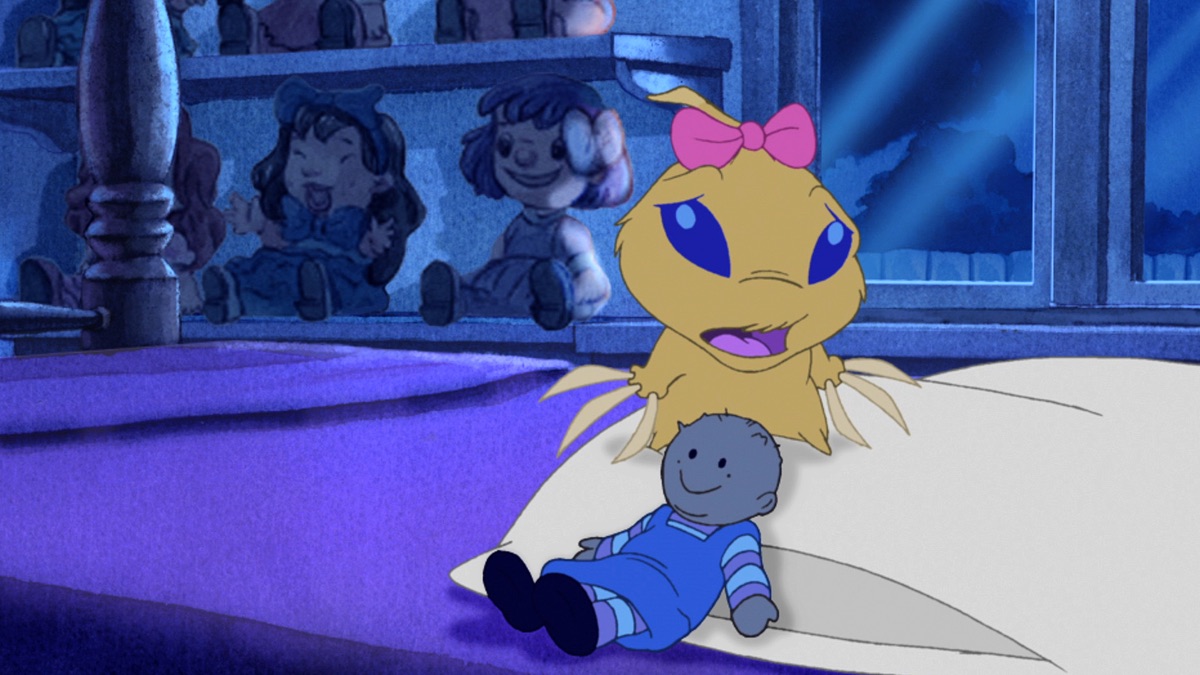
EPISODE 3 · SEASON 1 · CLIP · RAE RAE REACTS
Lilo & Stitch: The Series Episode 3: Clip
Mertle hurts Lilo, Lilo points a cousin at Mertle, and revenge turns a salon into the least regulated workplace on Kauaʻi.
The salon opens with a body becoming public property
“Clip” builds the episode around hair, which sounds wonderfully ridiculous until every character starts treating somebody else’s body as a canvas for judgment, revenge, or appetite. A beauty salon can be a place of care, creativity, community, and chosen transformation. The same room can intensify the idea that appearance determines whether people deserve respect.
Experiment 177 enters that environment with a designed compulsion to eat hair. The salon sees a pest. Jumba sees a technical problem. Lilo eventually sees a weapon she can point toward Mertle. Almost nobody begins by seeing a newly activated person who needs orientation and boundaries.
Jumba’s baldness is funny and also evidence
Jumba reveals that Clip once ate his hair, giving the experiment a personal history before the current chase. The visual joke works because his vanity collides with his own invention. The story also confirms that he knew exactly what Experiment 177 could do and still failed to secure the pod population or warn the household in advance.
Every episode adds another page to the creator ledger. Jumba can be loving, funny, brilliant, and catastrophically negligent in the same scene. Affection after the fact does not erase the responsibility attached to designing compulsions that harm bodies.
Mertle knows where Lilo is tender
Mertle’s insults are not random playground noise. She understands that Lilo already feels outside the group and uses appearance, behavior, family circumstances, and social approval to keep that exclusion visible. The cruelty works through repetition. One remark joins all the earlier moments where the group agreed Lilo was the strange girl who could be laughed at safely.
The episode lets viewers feel why revenge becomes tempting. Lilo does not invent her anger from nowhere. She wants one moment where the person controlling the social room experiences vulnerability instead. Understanding that desire is not the same as approving the choice that follows.
Hair carries identity far beyond vanity
Hair can express culture, gender, faith, age, profession, rebellion, grief, health, and belonging. Losing hair without consent can feel exposing even when hair grows back. A children’s cartoon can use the fear for comedy while a React remembers that forced alteration is bodily harm.
Mertle’s vanity does not make her consent less important. A character can be cruel and still retain bodily autonomy. Revenge becomes morally revealing when the target’s bad behavior tempts everybody to suspend rights they would defend for somebody nicer.
Lilo crosses a line because the audience understands her
Lilo chooses to use Clip against Mertle after being hurt. The show needs that decision to create escalation, and the choice fits a child who reacts intensely when humiliation overwhelms restraint. Her anger is human. Weaponizing a sentient cousin is wrong.
Both truths need room. Flattening Lilo into a villain ignores bullying, grief, age, and the absence of adults helping her navigate conflict. Excusing the act because Mertle deserved consequences teaches that empathy only protects likable people. The episode becomes worth discussing because Lilo can be wounded and harmful at once.
Clip gets recruited before getting a name
The experiment’s first social role becomes revenge instrument. Clip follows design, opportunity, or encouragement without receiving any explanation of the conflict. Lilo supplies direction while carrying emotional heat the newly activated cousin cannot evaluate. The power imbalance is enormous despite Lilo being a child.
Created-person stories keep asking who gets to decide purpose. Jumba programmed hair consumption. Lilo redirects the compulsion toward a target. Rehabilitation should interrupt imposed purpose, not swap one commander for a more sympathetic commander.
Stitch should recognize this pattern
Stitch knows what being used as a weapon feels like because Jumba built him for destruction and the Federation judged him according to that design. Watching Lilo point Clip toward Mertle should activate more than tactical concern. He is seeing his own origin repeated inside the family that taught him choice.
His loyalty to Lilo can make correction difficult. Real friendship includes stopping somebody before anger becomes harm. Stitch’s growth shows when protection means protecting Lilo from the consequences of her own decision as well as protecting her from outside danger.
The episode turns beauty into a battlefield
Salon tools, mirrors, hair products, hairstyles, and social attention become part of the chase. Appearance is not background decoration. Everybody understands that losing hair changes how a person will be seen. The threat works because beauty standards already carry power before Clip enters the room.
The clever part is that Clip does not create the hierarchy. The experiment exposes and exploits a hierarchy people built. Mertle gains status partly through polished conformity. Lilo gets punished for refusing or failing that performance. Clip makes the social stakes physically visible.
Jumba’s afro is vanity and vulnerability
Jumba regrowing an extravagant afro gives the episode a broad visual joke and puts the creator inside the same appearance anxiety affecting everyone else. He wants hair because losing hair bothered him. That memory should make him especially alert to the harm Clip can cause.
Instead, technical fascination often outruns empathy. Jumba describes function with pride even when function damaged him. He treats suffering as evidence that the invention worked. Creator ego can make a design’s success look more important than the person carrying the consequence.
Gantu dancing at a luau is distraction with a purpose
The side plot places Gantu inside public performance and physical comedy while the family handles Clip. His discomfort keeps the episode light and prevents the salon story from carrying every joke. The detour also shows how easily the series uses Hawaiʻi as a comic event backdrop.
A cultural-context reading should distinguish hula and community practice from a generic “luau” gag assembled for outsider expectations. The scene can be funny while still prompting questions about what the production thinks viewers recognize as Hawaiian entertainment.
Mertle is a bully and still a child
Mertle causes real emotional harm. She recruits peers into exclusion and enjoys the safety of group approval. She is also a child learning that cruelty produces social reward. Adults around the hula group should notice the pattern and intervene before Lilo has to invent alien retaliation.
Accountability for Mertle should include consequences, repair, and limits. Forced hair loss does not teach empathy reliably. Humiliation usually teaches people to fear losing power, then encourages them to regain power by targeting somebody else.
Where are the adults during the bullying?
The franchise repeatedly gives Lilo adult-sized emotional problems and child-sized support. Hula class provides structure, but the peer cruelty continues across stories. Nani manages survival crises at home. Teachers and community adults rarely build a sustained response around the social isolation shaping Lilo’s behavior.
That absence does not remove Lilo’s responsibility. The absence explains why revenge feels like her available tool. Children reach for power they can access when protective systems feel unreliable. Lilo happens to have access to genetic experiments.
Catching Clip is not the same as helping Clip
Once the hair-eating crisis expands, everybody focuses on capture. Immediate containment protects people and belongs in the plan. The plan remains incomplete without helping Experiment 177 understand hunger, consent, public space, and alternatives. A locked pod would postpone the problem. A job assignment could redirect the problem without teaching choice.
The cousin needs safe materials, communication, and a way to signal urges before harm. Rehabilitation should make self-control more possible. Otherwise the community simply waits for a placement where the same compulsion becomes profitable.
The one true place at a salon can work
Clip’s ability can support creative styling, rapid cutting, wig work, textile preparation, or cleanup when clients choose the service and safety rules protect everybody. A salon also offers community, routine, and aesthetic play. The placement has more potential for collaboration than a role built around isolation.
Consent must remain explicit. Nobody should sit in a chair without understanding what Clip does. The experiment should receive pay, breaks, training, and freedom to choose another interest. A cute montage cannot replace workplace rights, especially when the worker’s body performs the equipment function.
Lilo owes two apologies
Lilo owes Mertle an apology for directing bodily harm, even if Mertle never apologizes first for bullying. Repair should not become a transaction where one child’s accountability waits for the other child to earn decency. Lilo can name the injury against her and still own the choice she made.
She also owes Clip an apology for treating the cousin as a revenge device. That second apology matters because the experiment often disappears from the moral conversation once the human conflict resolves. Family language requires recognizing harm done to the newest family member.
Mertle owes more than a temporary ceasefire
If the episode ends with Mertle frightened but unchanged, the original social problem remains. She can avoid Clip and continue organizing exclusion. A better resolution would require her to acknowledge the insult, face a boundary from the hula group, and experience a relationship that does not reward cruelty.
Redemption does not require sudden friendship. Lilo and Mertle can remain incompatible. The community should still refuse a social order where one child’s entertainment depends on another child’s humiliation.
What made me laugh
Jumba’s hair history, the escalating salon panic, and Gantu getting dragged into performance chaos give the episode excellent physical comedy. Clip’s tiny size against the enormous social power of hair makes every chase visually absurd. Stitch trying to manage a creature built around scissors has the correct amount of panic.
The jokes land best when vanity belongs to everybody. Jumba, clients, Mertle, and the villains all become vulnerable to appearance. Lilo is not the only strange person in the room once everybody starts screaming over follicles.
What made me mad
The episode understands Lilo’s pain and then nearly converts that pain into permission. Mertle’s cruelty deserves intervention. Mertle’s body does not become available for punishment. Clip’s body does not become available as Lilo’s tool. Two violated children and one exploited experiment cannot add up to justice.
I am mad at the adults more than the kids. Jumba created the danger. The peer group rewards bullying. Nani has too much on her plate. School and community structures remain mostly invisible. Lilo makes the choice, but she makes the choice inside an abandoned conflict.
The episode accidentally understands revenge
Revenge promises to reverse the power relationship. For one moment, the humiliated person controls what the humiliator fears. The satisfaction arrives quickly. The cost spreads outward. Clip escapes, strangers become targets, Stitch must repair the danger, and Lilo has to face herself after anger cools.
That chain is the strongest lesson “Clip” offers. Harm does not stay neatly attached to the person we decided deserved pain. A weapon follows its own design, and the community pays for a private punishment plan.
The Episode 3 verdict
“Clip” is funny, uncomfortable, and more morally complicated than a hair monster plot needs to be. Mertle’s bullying makes Lilo’s anger legible. Lilo’s retaliation crosses a real boundary. Clip becomes both danger and exploited newcomer. Stitch has to protect the people his family is angry with.
My verdict comes with purple salon receipts. Give Clip the creative job if Clip chooses the job. Give Lilo conflict support before she reaches for an alien weapon. Give Mertle consequences that teach something beyond fear. Give Jumba a bill for every haircut, repair, and therapy appointment created by Experiment 177.
The quiet scene I wanted after the chase
Lilo and Clip should sit beside a pile of cut hair while Lilo explains what she wanted and why the choice was wrong. Clip should get to react rather than simply accept a name and placement. Stitch should stay close enough to support both without erasing the damage.
Then Mertle should receive an apology that does not require instant forgiveness, followed by a separate adult conversation about bullying. Repair needs more than one group hug. The episode creates enough emotional material to deserve a few quiet minutes after the scissors stop.
Hair grows back and trust does not follow the same schedule
The episode can restore a hairstyle quickly because cartoon consequences need a clean ending. Emotional safety takes longer. Mertle may become crueler after public embarrassment. Lilo may feel ashamed and defensive at once. Clip may learn that affection can disappear when a power stops serving somebody’s anger.
A continuing series has room to carry those aftereffects. Even one later reference would tell viewers that repair is a process rather than a magic comb. Continuity makes accountability feel real without turning the comedy grim.
Beauty work deserves respect too
The salon should not become a disposable room full of screaming vanity. Stylists practice skilled labor, manage chemicals and tools, build client trust, and often provide intimate community care. Clip entering that workplace requires training and collaboration, not a cute assumption that eating hair automatically equals professional qualification.
A thoughtful placement could make Experiment 177 part of a creative team. The salon workers would teach consent, technique, hygiene, and client communication. Clip would bring an impossible ability while learning a craft larger than the ability. That version sounds like belonging.
Where to watch
Watch “Clip” through Lilo & Stitch: The Series on Disney+. Availability can change by region.
Keep exploring
Return to the episode directory or return to the Lilo & Stitch hub.