
EPISODE 2 · SEASON 1 · PHANTASMO · RAE RAE REACTS
Lilo & Stitch: The Series Episode 2: Phantasmo
Scrump is floating, the furniture has opinions, and everybody blames the one family member with a visible record.
The claw machine is already a containment failure
“Phantasmo” begins with an experiment pod sitting inside a restaurant crane game. Somebody loaded a dehydrated sentient weapon beside cheap prizes and allowed children to spend coins trying to grab the capsule. The franchise calls this accidental distribution. RaeRae calls this evidence that nobody inventoried Jumba’s luggage before letting the household return to normal life.
The location is perfect television comedy because a mundane game becomes the delivery system for alien chaos. The location also states the series premise brutally. Experiments can enter public circulation before anybody recognizes the object. Water can activate them anywhere. Every cup, sink, rainstorm, puddle, and restaurant spill becomes a security event.
Stitch brings the pod home because curiosity keeps winning
Stitch recognizes weirdness and still treats the object like a prize. His impulsiveness fits the character, especially this early in the series. He has learned family loyalty, but household risk assessment has not become a personality strength. Lilo’s enthusiasm usually rewards discovery before Jumba supplies the warning label.
That rhythm makes the family feel alive and keeps plots moving. The same rhythm places Nani one wet capsule away from another destroyed room. Stitch understands experiment danger better than any human in the house. His responsibility should include reporting every suspicious pod before somebody places the object beside Scrump.
Scrump was never an empty object to Lilo
Scrump looks homemade, asymmetrical, and unsettling to people who expect dolls to perform polished cuteness. Lilo loves Scrump through that judgment. The doll carries imagination, loneliness, repair, and the refusal to replace a strange companion with something socially approved. Phantasmo chooses a vessel already full of meaning.
Possession therefore changes more than furniture. The experiment enters a relationship object. When Scrump moves, Stitch sees evidence of chaos while Lilo may see a beloved companion behaving differently. The episode becomes sharper when we remember that children attach memory and safety to objects adults dismiss as clutter.
Phantasmo’s power makes evidence unreliable
Experiment 375 can possess inanimate objects and move through a household without presenting a stable body. Damage appears while the actual actor remains hidden. Stitch has a visible history of destruction and a face everybody already associates with trouble. The power exploits an existing credibility gap before Phantasmo understands or cares about the social result.
Invisible action creates a nasty little justice problem. People evaluate the scene according to prior belief. Broken objects point toward Stitch because Stitch has broken objects before. A person with a record can tell the truth and still lose against the story everybody finds easier.
Being blamed is not new for Stitch
Stitch began as a creature who caused real harm and manipulated Lilo’s adoption to escape capture. Suspicion did not appear from nowhere. Trust after harm grows through repeated behavior, accountability, and time. The episode respects that history by making innocence difficult to prove rather than demanding instant faith from everybody.
The painful part is how quickly old identity swallows new evidence. Stitch can change and remain permanently vulnerable to the sentence “of course he did.” Rehabilitation fails when every unexplained problem becomes proof that growth was fake. A family needs memory and room for surprise.
Lilo believing him is not automatic
Lilo loves Stitch, but love does not erase the damage she has watched him cause. She also lives inside a household where another disaster can threaten Nani’s job, finances, and custody stability. Believing the wrong explanation carries consequences. Her hesitation should not be flattened into betrayal.
Trust becomes meaningful when Lilo listens, observes, and adjusts rather than offering blind loyalty. Stitch needs somebody willing to consider his account. Lilo needs evidence strong enough to protect the household. Their relationship grows through that negotiation.
The doll possession makes weirdness look guilty
Scrump already appears creepy to outsiders. Once household objects move, the audience can accept supernatural chaos faster because visual design prepared us. The episode plays with the assumption that strange-looking things contain danger. Lilo’s attachment complicates that reflex because she sees beauty and companionship where other children see something embarrassing.
Phantasmo is another strange-looking being whose behavior will need context. The doll and the experiment mirror one another. Both can be reduced to the discomfort they create. Both become more interesting when somebody looks past first reaction.
A ghost experiment raises creation questions Jumba avoids
Jumba designed a being that functions through possession. Did Experiment 375 ever receive a stable body? Does the experiment experience an object’s senses? Can Phantasmo leave voluntarily, or does activation produce a compulsion to inhabit whatever is nearby? The episode uses ghost rules without explaining the biological engineering underneath.
That mystery works for comedy and leaves excellent lore behind. Jumba’s technical confidence often hides ethical absence. Creating consciousness around forced embodiment would demand care, communication tools, and safe vessels. He apparently supplied a pod and moved on to the next number.
Stitch has to investigate instead of overpower
A possessed object cannot be solved through one direct fight. Phantasmo can move, hide, redirect blame, and turn the household environment into a weapon. Stitch must watch patterns and catch the experiment in action. That shift gives his intelligence more room than a strength contest would.
The best episode plots make Stitch adapt beyond the abilities Jumba advertised. Protection requires patience. Proving innocence requires evidence. Family life keeps teaching him social skills no laboratory considered useful enough to program.
The household becomes a credibility test
Every moving chair and broken object asks who gets believed. Nani manages a house already stretched by money, work, grief, and alien secrecy. Jumba knows possession experiments exist and still lets confusion last. Pleakley can add panic faster than clarity. Stitch stands at the center because visible history makes him the convenient answer.
A functioning family system would pause accusation, secure the space, compare accounts, and ask the creator for a complete hazard list. The Pelekai system runs on urgency and affection. Sometimes that saves everybody. Sometimes urgency makes the easiest suspect carry the whole story.
Jumba’s missing disclosure keeps causing harm
Experiment 375 should not surprise Jumba. He built Phantasmo. He knows the designed function and likely knows which objects make useful vessels. Yet the household never begins an episode with a complete manual, a searchable database, or an emergency briefing. Information arrives after damage because exposition and negligence share a schedule.
The comedy depends on Jumba remembering one alarming fact at exactly the worst moment. The editorial consequence is larger. Withholding design knowledge shifts risk from creator to family. Nani and Lilo pay for every undocumented feature.
Proving innocence should not require catching the real culprit alone
Stitch faces a familiar burden: if nobody believes him, he must solve the case himself. That structure makes him active and gives the episode momentum. The structure also resembles the impossible standard placed on people whose credibility has been damaged. Innocence becomes insufficient without investigative labor.
Somebody trusted should help gather evidence. Lilo eventually becomes that partner because their relationship can survive uncertainty. The household grows strongest when belief means collaborative checking rather than either automatic accusation or automatic denial.
Phantasmo is causing harm and remains newly activated
The experiment’s mischief frightens people, damages property, and places Stitch at risk of punishment. Those consequences matter. Phantasmo also wakes in an unfamiliar world with a power designed around inhabiting objects. Nobody provides language, orientation, or boundaries before the first chase begins.
Accountability has to include origin. The right response stops the harm, helps the blamed person, and teaches the new arrival another way to exist. Capture alone solves the visible scene while leaving the created compulsion untouched.
Naming the cousin changes the genre
Before the name, the household appears haunted. After Lilo identifies Phantasmo as a cousin, supernatural threat becomes family intake. The genre shifts from ghost story to rehabilitation story without removing the eerie fun. Lilo’s naming habit keeps translating fear into relationship.
The name fits the ghostly performance and gives the experiment a memorable place in the catalog. A full profile should still ask whether Phantasmo accepts the theatrical label. Lilo’s names are affectionate acts and exercises of power at the same time.
The one true place finally matches preference better
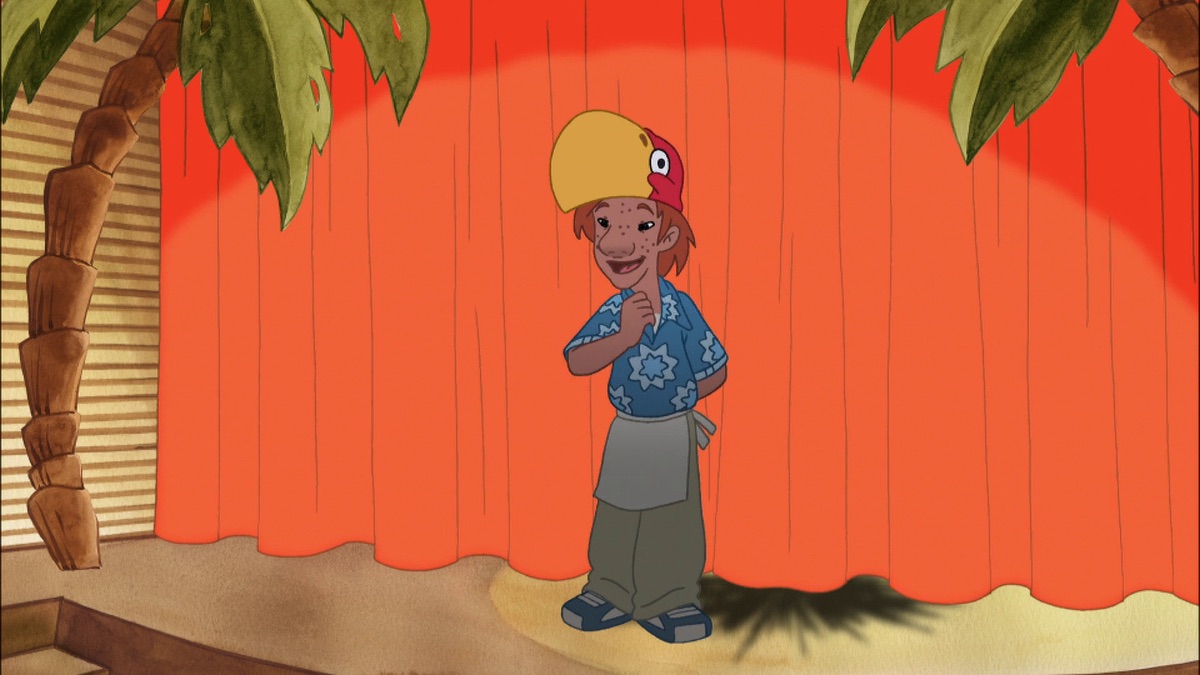
A theatrical setting, performance space, or environment that welcomes animated objects can offer Phantasmo room to use possession creatively. Unlike assigning Richter to hazardous demolition, this placement can resemble play and art more than extracted infrastructure. The power becomes storytelling instead of deception.
Consent still matters. A stage should be an option rather than a sentence. Phantasmo may enjoy performance today and want another vessel tomorrow. A chosen role can grow with the person. A “perfect place” should never freeze character development.
Scrump deserves repair and a quiet night
The doll survives as more than a prop because Lilo’s attachment gives every torn seam emotional weight. If Phantasmo damages Scrump, repair becomes part of accountability. Returning the object without acknowledging Lilo’s fear would treat possession as consequence-free comedy.
I want the tiny domestic aftermath. Lilo checks the stitches. Stitch apologizes for any panic he added. Phantasmo learns why some objects require permission. Nani looks at the room and sends an invoice to Jumba that includes emotional labor.
What made me laugh
A rag doll moving with supernatural confidence while Stitch desperately tries to prove he is the responsible one creates excellent character comedy. The more frantic he becomes, the guiltier he looks. Phantasmo does not need dialogue to manipulate the whole household narrative. One floating object can ruin his reputation before breakfast.
The episode also understands that Scrump is funny because Lilo never treats her as a joke. Everybody else may recoil. Lilo’s sincerity keeps the doll from becoming a cheap ugly-toy gag.
What irritated me
The adults know invisible or possession-based experiments exist and still default toward blaming the most visible former offender. Jumba’s documentation remains theoretical. Nani absorbs damage. Lilo becomes detective. Stitch has to risk himself for basic credibility. Nobody schedules a family meeting about evidence standards after the crisis.
Irritation does not cancel affection. The episode gives Stitch a chance to earn trust through investigation. I simply want the household to learn enough that Episode 3 does not begin with the same institutional amnesia wearing a different cousin.
The episode is secretly about a criminal record
Stitch’s past follows him into every unexplained mess. That continuity gives redemption weight because change does not magically rewrite memory. The same continuity can become unjust when past harm replaces present investigation. “Phantasmo” lives inside that tension better than the ghost premise initially suggests.
A person with a record needs accountability and fair evaluation. A family that claims rehabilitation must recognize new evidence. Otherwise the promise of change becomes a test nobody can pass because innocence will always look less plausible than history.
The Episode 2 verdict
“Phantasmo” is smaller than the premiere and sharper about trust. The stakes stay inside the household, which lets Scrump, Stitch’s reputation, and Lilo’s judgment carry the episode. Possession turns ordinary objects into unreliable witnesses and exposes how easily everybody reaches for the familiar suspect.
My verdict is delighted side-eye. The ghost-doll chaos works. Stitch using observation rather than brute force works. Lilo expanding cousinhood works. Jumba leaving a possession experiment in public circulation absolutely does not work, unless his goal was funding my rant section for the next decade.
A possession power needs consent rules
Phantasmo’s ability enters objects that may belong to somebody else, carry emotional value, perform a safety function, or contain private information. A harmless stage prop and Lilo’s beloved doll are not ethically identical vessels. Rehabilitation should teach how to ask, which objects remain off limits, and how to leave without damage.
Those rules would also give Phantasmo more agency. Consent is not merely a restriction placed on the experiment. Consent creates a relationship where another person can offer a vessel, collaborate on a performance, and recognize the intelligence inside the effect.
Trust needs a household memory longer than one episode
Stitch proves innocence and helps resolve the crisis. The next conflict should begin with that evidence still available. Family trust becomes believable through accumulation. One solved case cannot erase his destructive history, and one old history cannot erase every solved case afterward.
Serial television often resets interpersonal tension because reset makes plots reusable. Lilo & Stitch becomes emotionally stronger whenever consequences travel. Stitch should remember how false blame felt before accusing another cousin. Lilo should remember what careful listening changed.
The quiet ending I wanted
After the capture, I wanted Lilo to place Scrump beside Phantasmo and explain why the doll matters. Stitch could admit how frightened he felt when nobody believed him. Phantasmo could choose a harmless object for one final trick and return the vessel voluntarily. Three tiny actions would turn resolution into relationship.
Then Nani could enter, survey the room, and make Jumba clean every moving object before bedtime. Emotional repair matters. So does somebody picking up the chair.
Where to watch
Watch “Phantasmo” through Lilo & Stitch: The Series on Disney+. Availability can change by region.
Keep exploring
Return to the episode directory or return to the Lilo & Stitch hub.