
ICONIC BY MISTAKE · FULL MOVIE REVIEW · LILO & STITCH (2025) · ʻOHANA RECEIPTS
Lilo & Stitch (2025) Review: Cute Stitch, Real Grief, and the Ending That Broke the Family Contract
Stitch is adorable. Maia Kealoha is fearless. The remake understands loneliness until the ending treats Nani like a temporary problem the story can solve by moving her away.
The verdict before Stitch wrecks the house
The remake is warm, funny, beautifully cast in crucial places, and far more emotionally damaging than its cheerful marketing admits. And yes, I went back to Lilo’s isolation, Nani’s exhaustion, Stitch’s arrival, and the changed guardianship ending because I wanted to make sure I was not grading a memory instead of the movie sitting in front of me. Nope. The issue survived the replay. The movie succeeds whenever Lilo and Nani occupy the same emotional weather. Disney knew comparison came with the ticket. Nobody dragged the animated version into the room after the fact. The studio put the old songs, colors, names, poses, and emotional beats in every trailer because our memory was part of the marketing budget.
Here is where I start getting irritated. I laughed at Stitch and believed Maia Kealoha. I also left angry because the ending loosens the central promise and calls the loosened bond growth. That is not me insulting the crew. The crew clearly worked. Hair moved. Fabric moved. Digital light bounced off things that did not exist. Somebody probably spent three days fixing one ear. I respect that labor. I am judging the decision that all that labor was ordered to serve, because expensive and effective are not synonyms and Disney keeps acting surprised when we notice.
The receipt is Disney credits Dean Fleischer Camp and says the production was filmed in Hawaiʻi with returning artists from the animated film. I am putting that right here because I am not doing the thing where a strong opinion floats three pages away from the evidence. The record tells us who made the choice and what the production said the choice was supposed to accomplish. Then Lilo’s isolation, Nani’s exhaustion, Stitch’s arrival, and the changed guardianship ending tells us whether the promise reached the screen. Sometimes yes. Sometimes absolutely not. Both answers can exist inside the same movie without me pretending the average is automatically good.
Watch the bodies in that sequence. Watch who gets to hesitate, who gets a reaction shot, who gets interrupted, and who only exists to confirm that the lead is correct. That is where Lilo & Stitch (2025) quits talking about the update and accidentally shows what the update really values. A speech can say leadership all day. If nobody has a reason to follow, disagree, bargain, lose something, or change course, I am watching a slogan with costumes. Pretty costumes, probably. Still a slogan.
The sound gives away another problem. Disney knows exactly when the audience expects a melody, a swell, a joke, or the first three notes that will unlock somebody’s childhood. The easy move is pressing that button. The harder move is making the music belong to this performer in this version of this relationship. If the singer sounds scared of the score, if the arrangement does all the emoting, or if the camera cuts away from a face that should be carrying the number, I notice. I cannot unnotice.
I also refuse the fake choice between loving the original and allowing change. Change the whole thing if you have an idea. Move the point of view. Break the ending. Make the romance weirder. Let the villain be right about one uncomfortable fact. But do the work after the announcement. A modern line dropped into an old structure is not transformation. That is a sticky note. The story still has to absorb the idea until relationships and consequences look different.
Then we get to the image. Lilo’s isolation, Nani’s exhaustion, Stitch’s arrival, and the changed guardianship ending has to tell me where to look and what the character cannot say. Detail everywhere is not the same as meaning somewhere. A forest can have twelve thousand individually rendered leaves and still feel dead. A face can have perfect pores and no readable thought. A costume can be historically researched and emotionally wrong for the person wearing that costume. The camera is not a receipt by itself. The camera has to choose.
My little scorecard here is not complicated: did the character make a choice, did the choice cost anything, could the performer actually perform, did the song expose something, did the visual style help the emotion, and did the cultural material feel known instead of rented? Disney credits Dean Fleischer Camp and says the production was filmed in Hawaiʻi with returning artists from the animated film Those facts answer the production side. Lilo & Stitch (2025) still has to answer the human side, and brand recognition cannot take the exam for everybody.
Would this beat survive without the familiar title sitting above the poster? That is the rude question. Lilo’s isolation, Nani’s exhaustion, Stitch’s arrival, and the changed guardianship ending should create enough tension and personality to become somebody’s new memory. When the sequence only works because I remember how the drawing made me feel, the remake is charging itself for borrowed emotion and calling the loan revenue. I know the old movie. Disney made sure I knew. The new movie still has to show up.
So I landed where I landed: I laughed at Stitch and believed Maia Kealoha. Somebody else can love the scene. Fine. I am not raiding anybody’s Disney shelf. But “I liked the movie” cannot end a conversation that includes performance, culture, labor, technology, music, and a studio deliberately reselling its own history. I liked parts too. Then my ADHD kicked in, I opened the production notes, and now everybody has to look at the paperwork with me.
Maia Kealoha understands Lilo
Kealoha never treats Lilo as a cute delivery system. She gives the child odd timing, defensive imagination, sudden rage, and the watchfulness of somebody who knows adults are discussing her future nearby. I replayed the whole stretch to Lilo at hula, Lilo with Myrtle, the wish, the shelter, and the quiet attention she gives Stitch because I wanted to make sure I was not grading a memory instead of the movie sitting in front of me. A child performance this direct keeps the remake from becoming a mascot showcase.
Now I am annoyed. The camera can cut to a digital alien for the joke because Kealoha has already made the grief underneath the joke credible.
I checked the record, and the receipt is Disney identifies Kealoha as the lead and production coverage emphasizes a search rooted in Hawaiʻi. Then Lilo at hula, Lilo with Myrtle, the wish, the shelter, and the quiet attention she gives Stitch tells us whether the promise reached the screen.
Look at who the camera allows to react.
My ears caught the next problem before my notes did.
Nobody needs to protect the original from change.
Now look at the actual frame. Lilo at hula, Lilo with Myrtle, the wish, the shelter, and the quiet attention she gives Stitch has to tell me where to look and what the character cannot say.
I reduced the whole mess to six questions: did the character make a choice, did the choice cost anything, could the performer actually perform, did the song expose something, did the visual style help the emotion, and did the cultural material feel known instead of rented? Disney identifies Kealoha as the lead and production coverage emphasizes a search rooted in Hawaiʻi Those facts answer the production side.
Would anybody care about this beat without the logo? Lilo at hula, Lilo with Myrtle, the wish, the shelter, and the quiet attention she gives Stitch should create enough tension and personality to become somebody’s new memory.
My answer after all that is The camera can cut to a digital alien for the joke because Kealoha has already made the grief underneath the joke credible.
Sydney Agudong carries Nani’s impossible arithmetic
Nani has to be sister, parent, employee, case manager, driver, cook, and grieving young adult in the same body. I paused and backed up to the job hunt, home inspections, fights with Lilo, and the promise of marine biology because I wanted to make sure I was not grading a memory instead of the movie sitting in front of me. The remake gives her educational ambition, which could have enriched that burden if the final solution had not separated ambition from guardianship so cleanly.
This is the part that got on my nerves. Agudong communicates love through fatigue. Every sharp line lands beside the knowledge that Nani is improvising adulthood without money or time.
Here is the named source for that claim: official materials describe the expanded sister relationship and Agudong’s role as Nani. Then the job hunt, home inspections, fights with Lilo, and the promise of marine biology tells us whether the promise reached the screen.
Forget the press notes and watch the people.
Then the score starts doing emotional overtime.
I am not asking for a museum copy.
The picture has its own testimony. the job hunt, home inspections, fights with Lilo, and the promise of marine biology has to tell me where to look and what the character cannot say.
The test is embarrassingly simple: did the character make a choice, did the choice cost anything, could the performer actually perform, did the song expose something, did the visual style help the emotion, and did the cultural material feel known instead of rented? official materials describe the expanded sister relationship and Agudong’s role as Nani Those facts answer the production side.
Take away the old song and what remains? the job hunt, home inspections, fights with Lilo, and the promise of marine biology should create enough tension and personality to become somebody’s new memory.
My notes end with the same blunt ruling: Agudong communicates love through fatigue.
The ending changes the meaning of ʻohana
The animated film refuses the idea that a damaged household must become conventional before the state recognizes love. The remake moves Lilo into Tutu’s care while Nani leaves for school. I watched that scene again to Nani surrendering guardianship, leaving Hawaiʻi, and visiting through portals because I wanted to make sure I was not grading a memory instead of the movie sitting in front of me. Extended family care can be culturally grounded and loving. The dramatic problem is how this screenplay uses separation as the answer to the specific vow the story spent two hours rebuilding.
And here comes the expensive nonsense. The film says family means nobody gets left behind, then leaves the audience to write the footnote explaining why this departure counts differently.
Before anybody calls that nostalgia, the record says contemporaneous reviews by TIME and The Atlantic identified the ending as the remake’s sharpest thematic break. Then Nani surrendering guardianship, leaving Hawaiʻi, and visiting through portals tells us whether the promise reached the screen.
Now watch who actually gets a decision.
The music tells on the movie.
Change was never the crime.
The visual argument is sitting right there. Nani surrendering guardianship, leaving Hawaiʻi, and visiting through portals has to tell me where to look and what the character cannot say.
Here is my no-nonsense grading sheet: did the character make a choice, did the choice cost anything, could the performer actually perform, did the song expose something, did the visual style help the emotion, and did the cultural material feel known instead of rented? contemporaneous reviews by TIME and The Atlantic identified the ending as the remake’s sharpest thematic break Those facts answer the production side.
If the childhood memory leaves the room, does the scene stand up? Nani surrendering guardianship, leaving Hawaiʻi, and visiting through portals should create enough tension and personality to become somebody’s new memory.
So no, the polish did not change my mind: The film says family means nobody gets left behind, then leaves the audience to write the footnote explaining why this departure counts differently.
Hānai deserves more than a plot excuse
Hawaiian practices of kinship care make family larger than a nuclear household. Any critique that treats Nani as Lilo’s only legitimate family repeats a mainland assumption the story should challenge. I checked the sequence twice to Tutu’s interventions and the late transfer of care because I wanted to make sure I was not grading a memory instead of the movie sitting in front of me. The issue is not that Tutu and community care are lesser. The issue is that the film underdevelops those bonds before making them carry the ending.
This is where the pretty surface stops helping. If the remake wanted hānai to reshape the story, Tutu needed a full relationship with Lilo across the movie rather than a late structural assignment.
The production trail gives us Hawaiʻi Public Radio covered Native Hawaiian discussion of representation, casting, and the remake’s choices. Then Tutu’s interventions and the late transfer of care tells us whether the promise reached the screen.
Look past the dialogue and follow the reactions.
Now listen to what the arrangement is covering.
Please change the story if somebody has an actual idea.
Now the expensive pixels enter the chat. Tutu’s interventions and the late transfer of care has to tell me where to look and what the character cannot say.
I am not grading this on childhood loyalty: did the character make a choice, did the choice cost anything, could the performer actually perform, did the song expose something, did the visual style help the emotion, and did the cultural material feel known instead of rented? Hawaiʻi Public Radio covered Native Hawaiian discussion of representation, casting, and the remake’s choices Those facts answer the production side.
Can this moment breathe without borrowing the animated version’s oxygen? Tutu’s interventions and the late transfer of care should create enough tension and personality to become somebody’s new memory.
My final reaction is not complicated: If the remake wanted hānai to reshape the story, Tutu needed a full relationship with Lilo across the movie rather than a late structural assignment.
Stitch looks good because the design resists reality
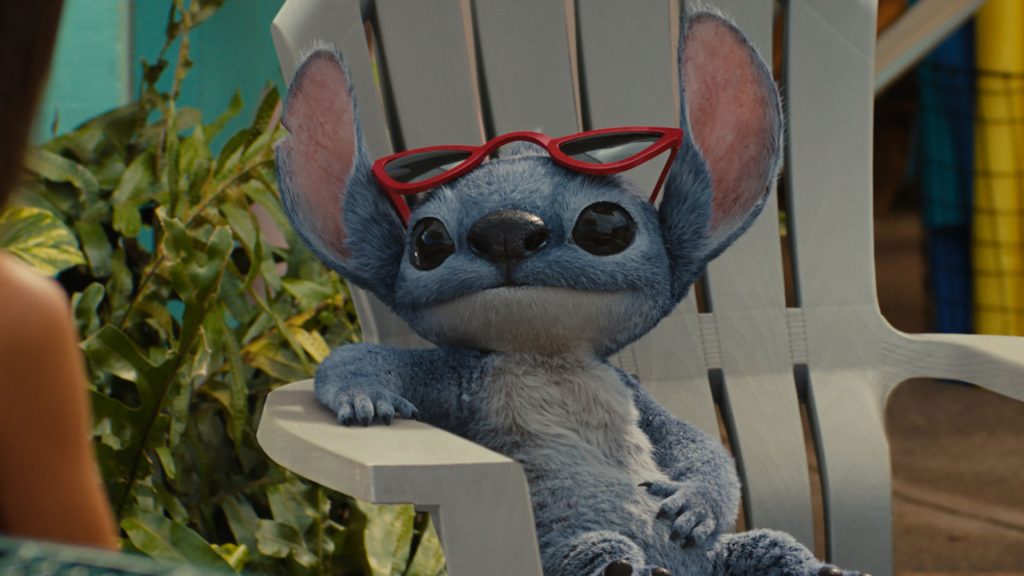
The digital Stitch keeps the broad face, huge ears, physical elasticity, and readable eyes that made the drawing work. I went back with the nostalgia turned down to Stitch in the shelter, the bedroom, the beach, the chair, and the household chaos because I wanted to make sure I was not grading a memory instead of the movie sitting in front of me. Photoreal integration succeeds when the creature remains graphic enough to perform.
Now the remake starts testing my patience. The design team understood a lesson The Lion King forgot. An animated character needs shapes capable of expression, even when fur, light, and texture become more realistic.
The paper trail matters here: Disney’s official stills and marketing preserve the recognizable animated proportions. Then Stitch in the shelter, the bedroom, the beach, the chair, and the household chaos tells us whether the promise reached the screen.
Pay attention to who owns the silence.
The vocal track creates a separate argument.
The old version is not holy scripture.
The camera cannot hide behind detail. Stitch in the shelter, the bedroom, the beach, the chair, and the household chaos has to tell me where to look and what the character cannot say.
My checklist fits on one sticky note: did the character make a choice, did the choice cost anything, could the performer actually perform, did the song expose something, did the visual style help the emotion, and did the cultural material feel known instead of rented? Disney’s official stills and marketing preserve the recognizable animated proportions Those facts answer the production side.
Would this scene create a memory from scratch? Stitch in the shelter, the bedroom, the beach, the chair, and the household chaos should create enough tension and personality to become somebody’s new memory.
After the replay and the receipts, I am here: The design team understood a lesson The Lion King forgot.
Jumba and Pleakley lose their delicious weirdness
The original pairing brought camp, disguise, domestic comedy, and outsider energy. The remake streamlines their roles and removes much of Pleakley’s gender play. I ran the scene one more time to the Earth pursuit and the reduced disguise comedy because I wanted to make sure I was not grading a memory instead of the movie sitting in front of me. Efficiency becomes cultural loss when the oddness was part of the emotional architecture.
Here is the part Disney cannot decorate away. The new pair move plot. The old pair disturbed normality in ways that helped the movie redefine family.
I did not pull that from fandom air. The record is official casting materials identify Zach Galifianakis and Billy Magnussen while the film omits several familiar disguise beats. Then the Earth pursuit and the reduced disguise comedy tells us whether the promise reached the screen.
Watch who moves and who merely agrees.
The song is where the remake has nowhere to hide.
I did not come here demanding the same movie twice.
The frame starts answering questions nobody asked aloud. the Earth pursuit and the reduced disguise comedy has to tell me where to look and what the character cannot say.
The movie has six jobs here: did the character make a choice, did the choice cost anything, could the performer actually perform, did the song expose something, did the visual style help the emotion, and did the cultural material feel known instead of rented? official casting materials identify Zach Galifianakis and Billy Magnussen while the film omits several familiar disguise beats Those facts answer the production side.
Remove the recognition. Does the drama still work? the Earth pursuit and the reduced disguise comedy should create enough tension and personality to become somebody’s new memory.
The verdict survived every rewatch: The new pair move plot.
Gantu is gone and the pressure changes
Removing Gantu consolidates the chase around Jumba and alters the scale of the climax. I looked again because the first reaction was loud to the capture and final pursuit because I wanted to make sure I was not grading a memory instead of the movie sitting in front of me. A remake can remove a villain, but the replacement pressure needs its own identity.
This choice bothered me more on replay. The change makes room for other relationships while also shrinking the galactic system that judged Stitch and threatened Lilo.
The credit and intent check gives us the released film does not include Gantu despite his major role in the animated feature. Then the capture and final pursuit tells us whether the promise reached the screen.
Look at the scene without the inspirational sentence.
Then the familiar melody walks in carrying everybody’s childhood.
A remake is allowed to break things.
The image either carries the feeling or drops the feeling. the capture and final pursuit has to tell me where to look and what the character cannot say.
I kept the standard basic on purpose: did the character make a choice, did the choice cost anything, could the performer actually perform, did the song expose something, did the visual style help the emotion, and did the cultural material feel known instead of rented? the released film does not include Gantu despite his major role in the animated feature Those facts answer the production side.
If the poster had a new title, would the sequence still matter? the capture and final pursuit should create enough tension and personality to become somebody’s new memory.
I kept trying to argue myself out of this conclusion: The change makes room for other relationships while also shrinking the galactic system that judged Stitch and threatened Lilo.
Hawaiʻi is a home, not a postcard
The production filmed across Oʻahu and carries textures of streets, homes, coast, weather, and local community that a soundstage could not imitate. I gave the scene another chance to the neighborhood, hula spaces, roads, coastline, and Nani’s work life because I wanted to make sure I was not grading a memory instead of the movie sitting in front of me. Location alone does not guarantee cultural depth, though. Who receives interiority and who remains atmosphere still matters.
Now we need to stop pretending the budget is an answer. The island feels materially present. The screenplay still has to resist turning presence into permission.
The official version of events is Disney reported forty-six filming days across Oʻahu and published sustainability details from the production. Then the neighborhood, hula spaces, roads, coastline, and Nani’s work life tells us whether the promise reached the screen.
Follow the power inside the blocking.
The soundtrack starts pressing the nostalgia button.
Nostalgia does not get veto power.
Now I need everybody to look at the composition. the neighborhood, hula spaces, roads, coastline, and Nani’s work life has to tell me where to look and what the character cannot say.
My rubric is less complicated than Disney’s publicity tour: did the character make a choice, did the choice cost anything, could the performer actually perform, did the song expose something, did the visual style help the emotion, and did the cultural material feel known instead of rented? Disney reported forty-six filming days across Oʻahu and published sustainability details from the production Those facts answer the production side.
Does the beat earn emotion or withdraw emotion from our old account? the neighborhood, hula spaces, roads, coastline, and Nani’s work life should create enough tension and personality to become somebody’s new memory.
The movie had every chance to change my mind: The island feels materially present.
Casting and the colorism conversation
The remake faced criticism about Native Hawaiian representation and the casting of Nani. That criticism cannot be reduced to a fandom fight because colorism and Indigenous visibility have real histories. I replayed the beat without the trailer in my head to Nani’s place in a Hawaiian family and the community built around the sisters because I wanted to make sure I was not grading a memory instead of the movie sitting in front of me. A review should name the issue without treating performers as disposable symbols.
This is where my notes got rude. Agudong gives a strong performance. Strong performance does not cancel the larger conversation, and the larger conversation does not require attacking her.
Here is what the production record actually gives us: Hawaiʻi Public Radio reported local perspectives on casting and representation. Then Nani’s place in a Hawaiian family and the community built around the sisters tells us whether the promise reached the screen.
Watch whose face receives time.
The number sounds prettier than the scene feels.
I am fine with a new ending, new politics, and new rules.
The design choice becomes impossible to ignore. Nani’s place in a Hawaiian family and the community built around the sisters has to tell me where to look and what the character cannot say.
I asked six blunt questions: did the character make a choice, did the choice cost anything, could the performer actually perform, did the song expose something, did the visual style help the emotion, and did the cultural material feel known instead of rented? Hawaiʻi Public Radio reported local perspectives on casting and representation Those facts answer the production side.
Can the scene survive without the audience finishing the feeling? Nani’s place in a Hawaiian family and the community built around the sisters should create enough tension and personality to become somebody’s new memory.
This is the ruling at the bottom of the page: Agudong gives a strong performance.
Chris Sanders returning as Stitch matters
Sanders gives Stitch a vocal identity built from sound, rhythm, and emotional transition rather than conventional speech. I checked whether I was being unfair to Stitch’s early destruction, emerging language, and final plea because I wanted to make sure I was not grading a memory instead of the movie sitting in front of me. Keeping that voice connects the remake to authorship rather than recognition alone.
Here is where the movie loses me. The continuity helps because the performance already knows how menace becomes mischief and mischief becomes attachment.
The claim has a source: Disney confirms that original co-director and Stitch voice Chris Sanders returned. Then Stitch’s early destruction, emerging language, and final plea tells us whether the promise reached the screen.
Look at who is allowed to be complicated.
Music exposes the gap fast.
The source can handle criticism.
The visual system tells the truth. Stitch’s early destruction, emerging language, and final plea has to tell me where to look and what the character cannot say.
The scorecard does not care how much the shot cost: did the character make a choice, did the choice cost anything, could the performer actually perform, did the song expose something, did the visual style help the emotion, and did the cultural material feel known instead of rented? Disney confirms that original co-director and Stitch voice Chris Sanders returned Those facts answer the production side.
What happens when nostalgia stops spotting the movie twenty points? Stitch’s early destruction, emerging language, and final plea should create enough tension and personality to become somebody’s new memory.
I can like pieces and still say this: The continuity helps because the performance already knows how menace becomes mischief and mischief becomes attachment.
The music remembers Elvis and forgets some silence
The songs bring buoyancy and recognition, but the remake sometimes fears the quiet after a joke or a wound. I returned after reading the production notes to the Elvis sequences, hula, surfing, and scenes after family conflict because I wanted to make sure I was not grading a memory instead of the movie sitting in front of me. Grief needs room where the soundtrack does not reassure us too quickly.
And now the corporate polish starts showing. The best musical moments feel lived inside the household. The weakest feel like a franchise pressing a familiar button.
I brought the receipt because this part is factual: official credits and soundtrack materials document returning musical touchstones. Then the Elvis sequences, hula, surfing, and scenes after family conflict tells us whether the promise reached the screen.
Now count the choices instead of the speeches.
Then the orchestra tries to do the acting.
I want the filmmakers to argue with the original.
The frame is where the sales pitch gets tested. the Elvis sequences, hula, surfing, and scenes after family conflict has to tell me where to look and what the character cannot say.
I am using the same test for every remake: did the character make a choice, did the choice cost anything, could the performer actually perform, did the song expose something, did the visual style help the emotion, and did the cultural material feel known instead of rented? official credits and soundtrack materials document returning musical touchstones Those facts answer the production side.
Would a first-time viewer receive the whole emotional equation? the Elvis sequences, hula, surfing, and scenes after family conflict should create enough tension and personality to become somebody’s new memory.
The receipts brought me back to one answer: The best musical moments feel lived inside the household.
A billion dollars does not repair the ending
The remake became an enormous commercial success and proved that audiences still want these characters. I watched again with the old movie out of reach to the contrast between joyful repeat viewing and the debate around Nani’s departure because I wanted to make sure I was not grading a memory instead of the movie sitting in front of me. Box office measures reach, not thematic coherence.
This is where I stopped being generous. The success makes the argument more important because this version will shape how a new generation understands the promise.
The file behind the opinion is Disney announced that the film crossed one billion dollars worldwide before its Disney+ release. Then the contrast between joyful repeat viewing and the debate around Nani’s departure tells us whether the promise reached the screen.
Watch where the camera places sympathy.
The vocal choices deserve their own side-eye.
A remake should make dangerous choices.
Now the lighting and faces have to do their jobs. the contrast between joyful repeat viewing and the debate around Nani’s departure has to tell me where to look and what the character cannot say.
Here is the test I refuse to soften: did the character make a choice, did the choice cost anything, could the performer actually perform, did the song expose something, did the visual style help the emotion, and did the cultural material feel known instead of rented? Disney announced that the film crossed one billion dollars worldwide before its Disney+ release Those facts answer the production side.
Does the new version own this moment yet? the contrast between joyful repeat viewing and the debate around Nani’s departure should create enough tension and personality to become somebody’s new memory.
My patience, nostalgia, and research all ended here: The success makes the argument more important because this version will shape how a new generation understands the promise.
Receipt ledger
- Comparison rule: recognition is part of Disney’s sales pitch, so the animated source belongs in the review.
- Craft rule: criticism of a finished movie does not erase the labor of performers, animators, designers, technicians, musicians, or crew.
- Evidence rule: production claims are linked to studio or trade reporting; interpretation is labeled as CVM Sekai analysis.
- Spoiler rule: the full film is discussed because endings, omissions, and rearranged relationships are central to the argument.
Sources and production credits
Release, cast, filmmaker, music, production, and distribution facts were checked against the linked official Disney pages, filmmaker interviews, guild or studio craft materials, and contemporaneous reporting. Box-office figures are contextual evidence rather than a substitute for criticism. All scene readings, comparisons, judgments, and conclusions are original CVM Sekai editorial analysis.
Keep exploring
Return to the Lilo & Stitch hub for characters, animation, franchise branches, reviews, rants, and guides.