
Volume 8 · Story arcs · Full spoilers
Eight movements because this book has eight movements.
The count comes from the source structure—not from whatever number happened to survive the last template.
The eight actual movements
Movement 1
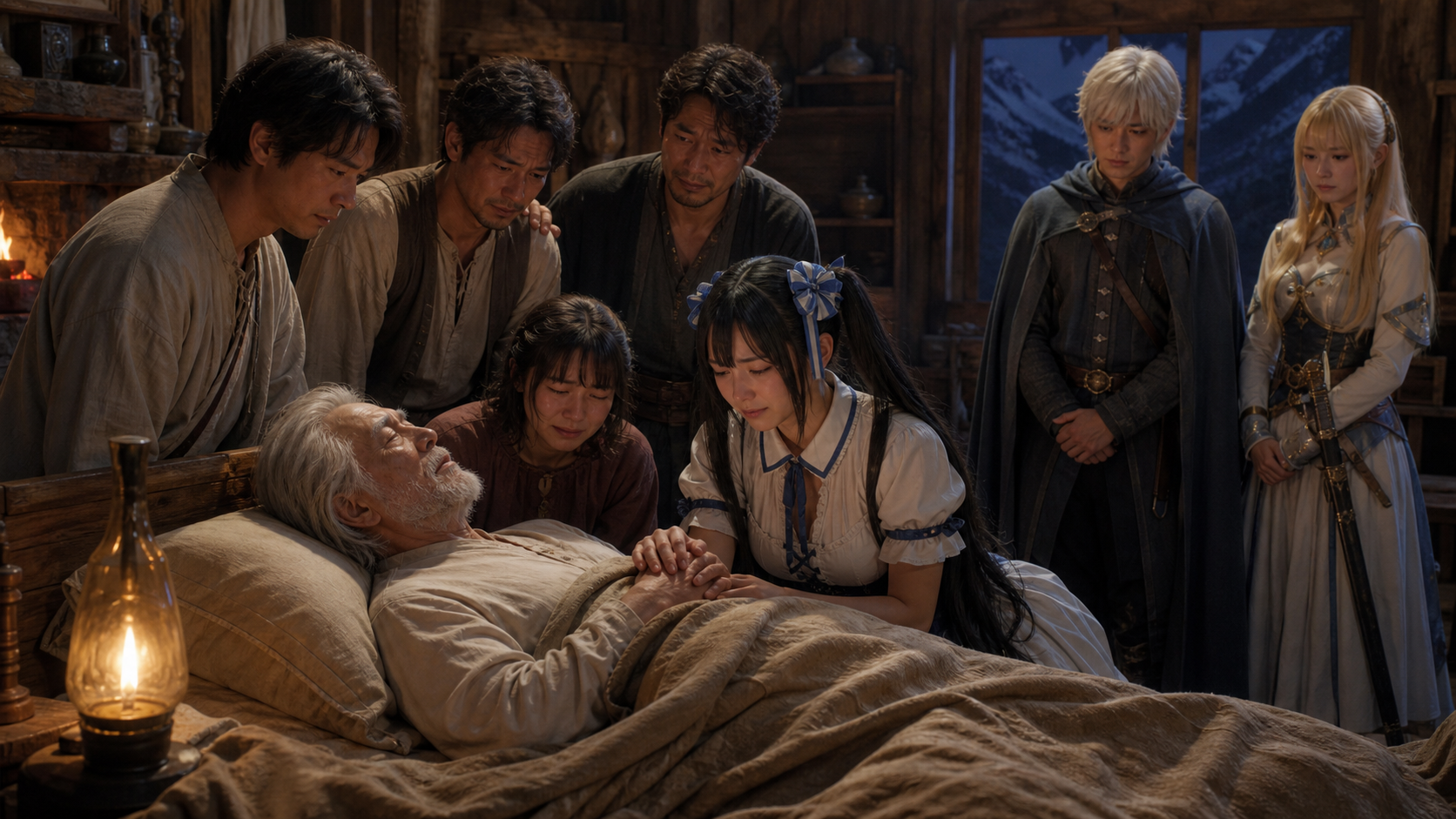
Conversion cannot cancel family
Mikoto, Takemikazuchi and Haruhime prove Falna is administration, not the whole relationship.
How the movements connect
Every file rewrites one definition before the mountain asks the final question.
Mikoto’s movement separates Familia from family. Lilly’s separates the future of a people from one woman’s obligation to marry for it. Welf’s separates inherited talent from chosen craft. Those are not detached side stories; they remove shortcuts the series could have used to define belonging.
Eina and Syr move the lens outside Hestia Familia. Competent women still have private confusion, invisible work and relationships the protagonist does not automatically understand. Their chapters make Orario inhabited rather than arranged around Bell’s next level-up.
Rakia converts those definitions into public pressure. Ares treats Hestia and Welf as assets, exactly the institutional claim the earlier chapters taught us to distrust. Edas answers with Kam and Brigit: mortal and deity can choose one another even when time makes the relationship unequal.
The final movement belongs to the Dungeon girl because birth breaks the anthology’s apparent closure. Everyone above spent the volume arguing about who counts as family, person or possession. The Dungeon produces somebody who will force the next books to answer under harsher conditions.
Movement 2
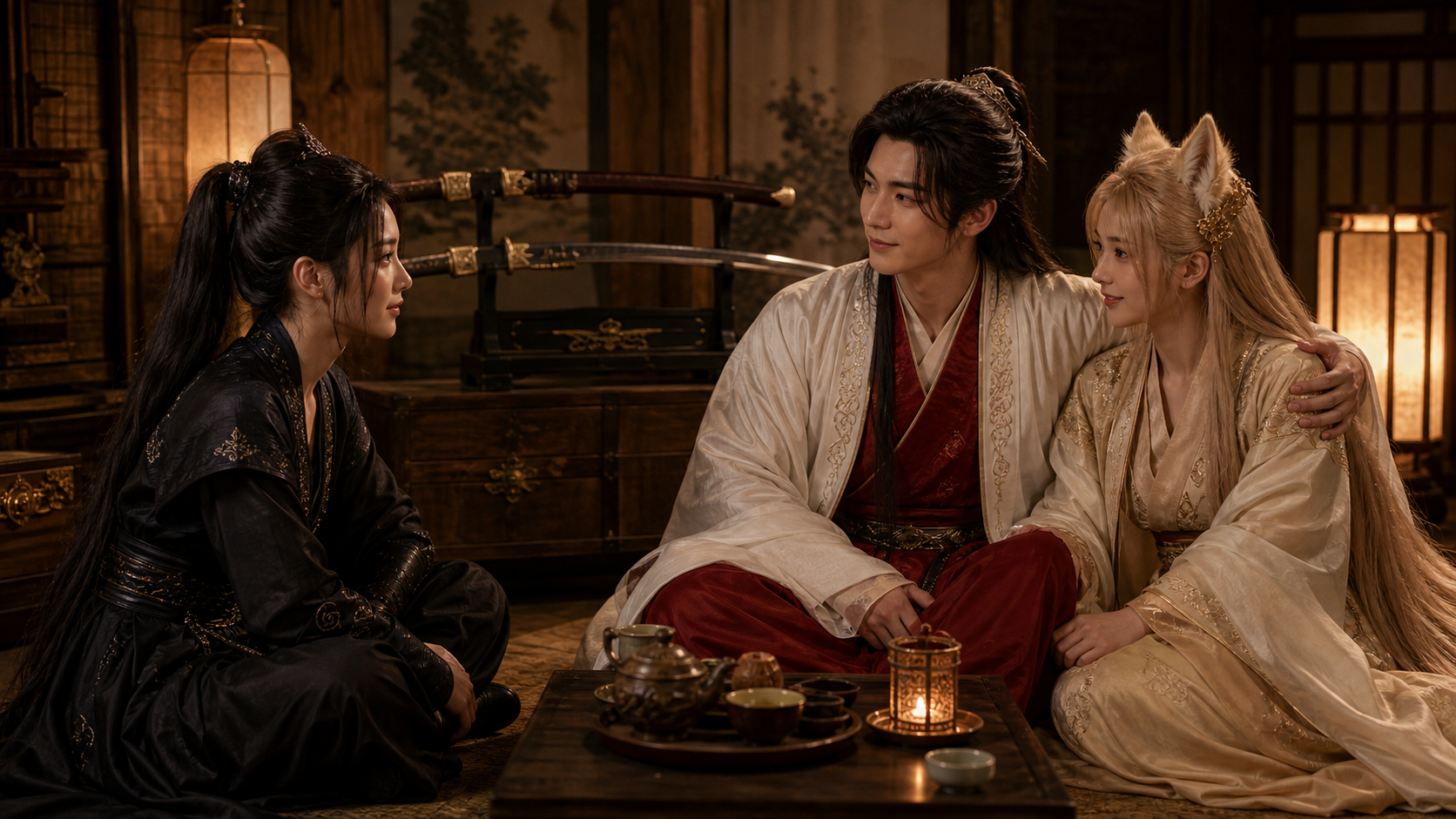
Lilly chooses her own succession
Finn’s plan treats marriage as a prum future. Lilly chooses the future she already fought to enter.
How the movements connect
Every file rewrites one definition before the mountain asks the final question.
Mikoto’s movement separates Familia from family. Lilly’s separates the future of a people from one woman’s obligation to marry for it. Welf’s separates inherited talent from chosen craft. Those are not detached side stories; they remove shortcuts the series could have used to define belonging.
Eina and Syr move the lens outside Hestia Familia. Competent women still have private confusion, invisible work and relationships the protagonist does not automatically understand. Their chapters make Orario inhabited rather than arranged around Bell’s next level-up.
Rakia converts those definitions into public pressure. Ares treats Hestia and Welf as assets, exactly the institutional claim the earlier chapters taught us to distrust. Edas answers with Kam and Brigit: mortal and deity can choose one another even when time makes the relationship unequal.
The final movement belongs to the Dungeon girl because birth breaks the anthology’s apparent closure. Everyone above spent the volume arguing about who counts as family, person or possession. The Dungeon produces somebody who will force the next books to answer under harsher conditions.
Movement 3
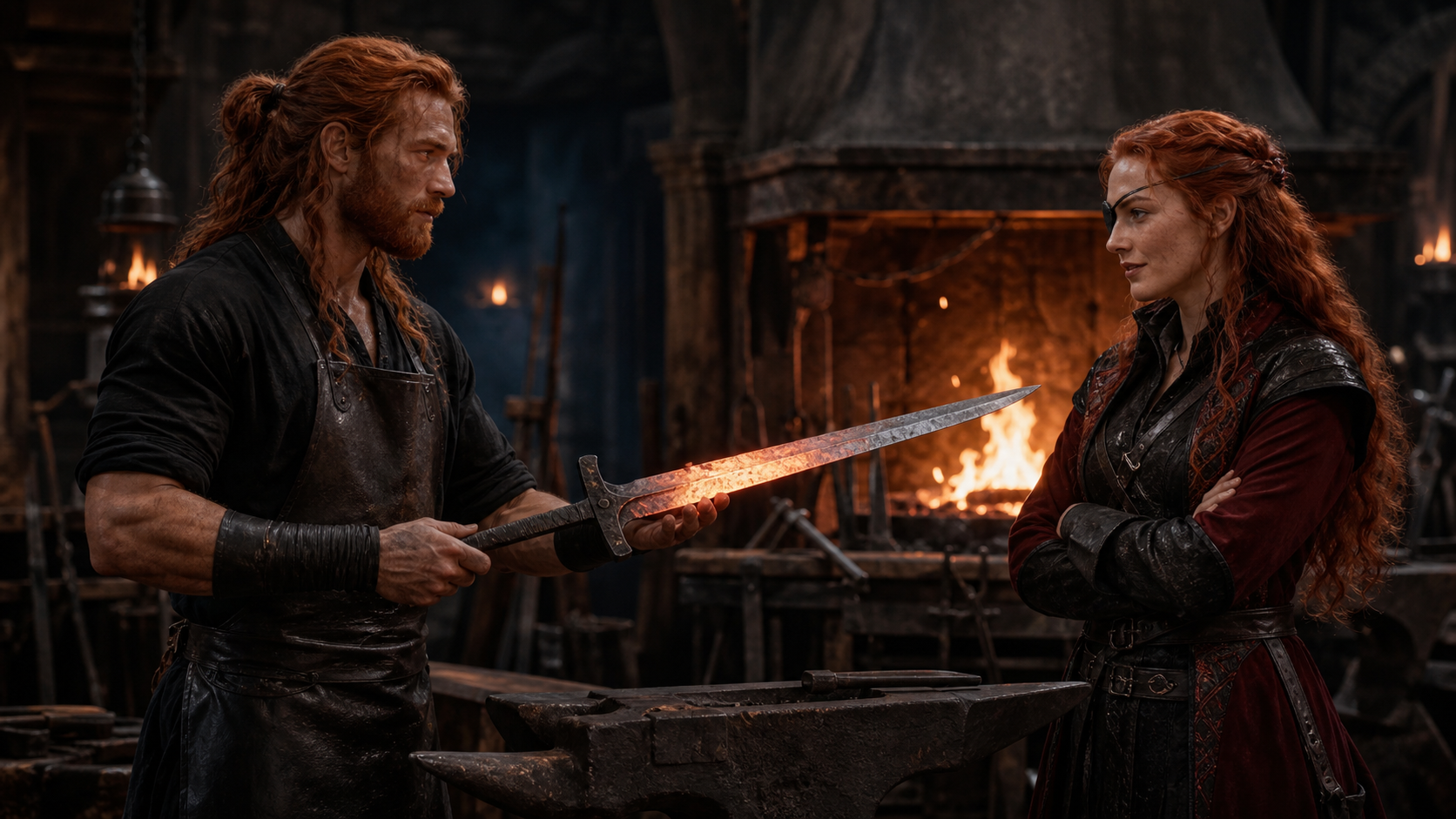
Love becomes a craft standard
Welf refuses inheritance, kingdom and easy confession; he puts the answer on the anvil.
How the movements connect
Every file rewrites one definition before the mountain asks the final question.
Mikoto’s movement separates Familia from family. Lilly’s separates the future of a people from one woman’s obligation to marry for it. Welf’s separates inherited talent from chosen craft. Those are not detached side stories; they remove shortcuts the series could have used to define belonging.
Eina and Syr move the lens outside Hestia Familia. Competent women still have private confusion, invisible work and relationships the protagonist does not automatically understand. Their chapters make Orario inhabited rather than arranged around Bell’s next level-up.
Rakia converts those definitions into public pressure. Ares treats Hestia and Welf as assets, exactly the institutional claim the earlier chapters taught us to distrust. Edas answers with Kam and Brigit: mortal and deity can choose one another even when time makes the relationship unequal.
The final movement belongs to the Dungeon girl because birth breaks the anthology’s apparent closure. Everyone above spent the volume arguing about who counts as family, person or possession. The Dungeon produces somebody who will force the next books to answer under harsher conditions.
Movement 4
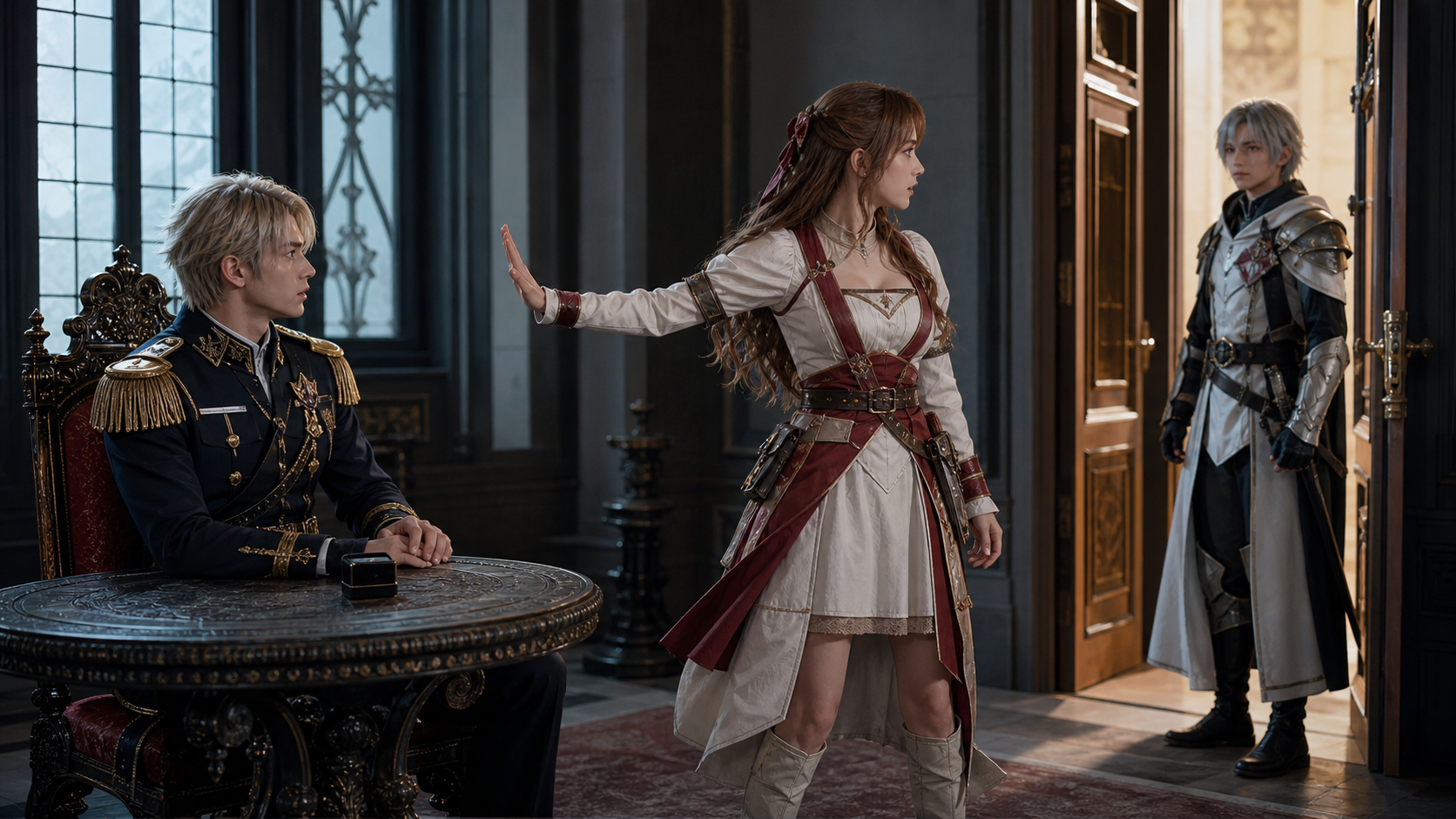
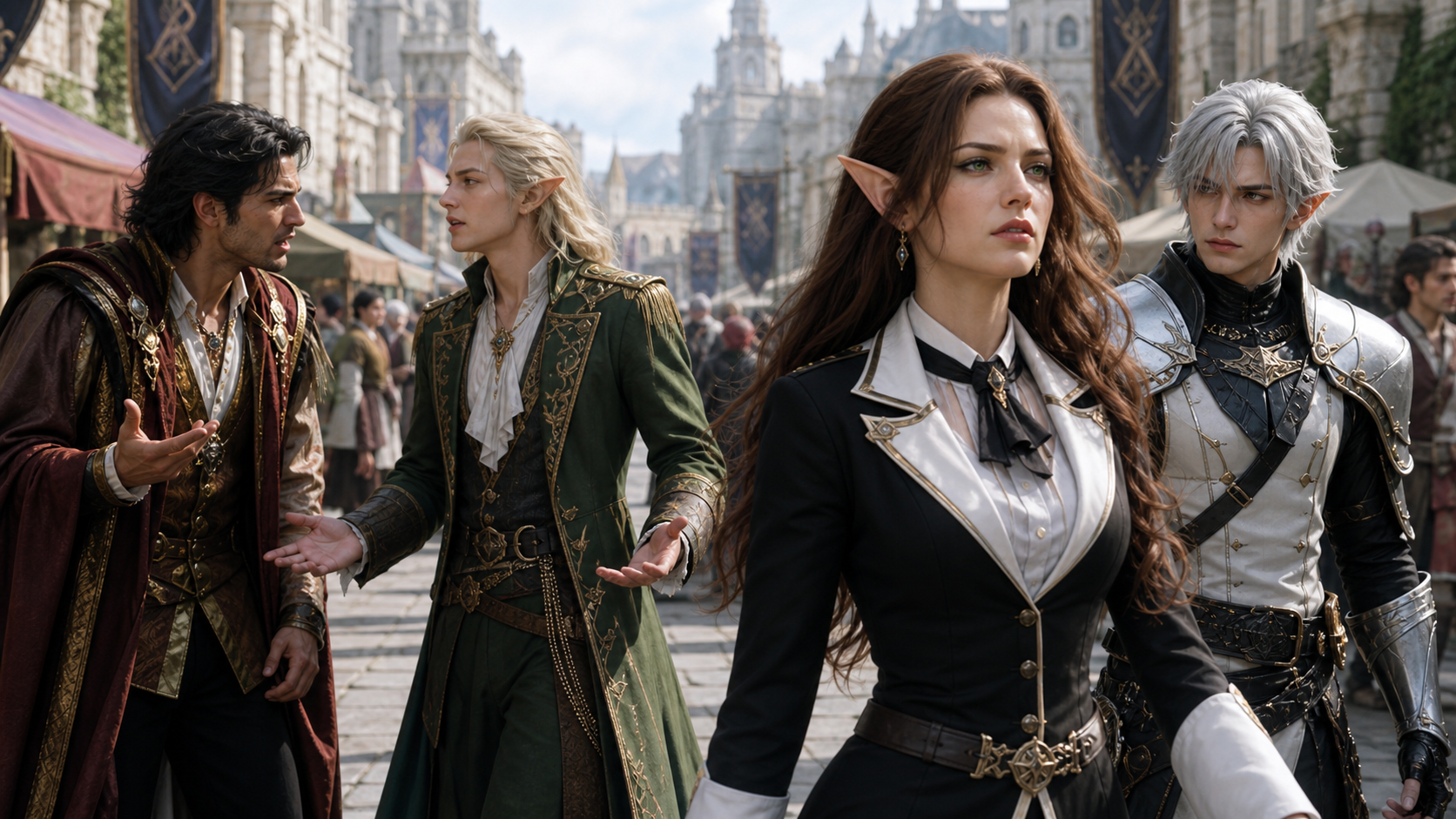
The Guild adviser loses control of the side quest
Eina’s chapter turns competence into comedy, then leaves a real bruise under the punch line.
How the movements connect
Every file rewrites one definition before the mountain asks the final question.
Mikoto’s movement separates Familia from family. Lilly’s separates the future of a people from one woman’s obligation to marry for it. Welf’s separates inherited talent from chosen craft. Those are not detached side stories; they remove shortcuts the series could have used to define belonging.
Eina and Syr move the lens outside Hestia Familia. Competent women still have private confusion, invisible work and relationships the protagonist does not automatically understand. Their chapters make Orario inhabited rather than arranged around Bell’s next level-up.
Rakia converts those definitions into public pressure. Ares treats Hestia and Welf as assets, exactly the institutional claim the earlier chapters taught us to distrust. Edas answers with Kam and Brigit: mortal and deity can choose one another even when time makes the relationship unequal.
The final movement belongs to the Dungeon girl because birth breaks the anthology’s apparent closure. Everyone above spent the volume arguing about who counts as family, person or possession. The Dungeon produces somebody who will force the next books to answer under harsher conditions.
Movement 5
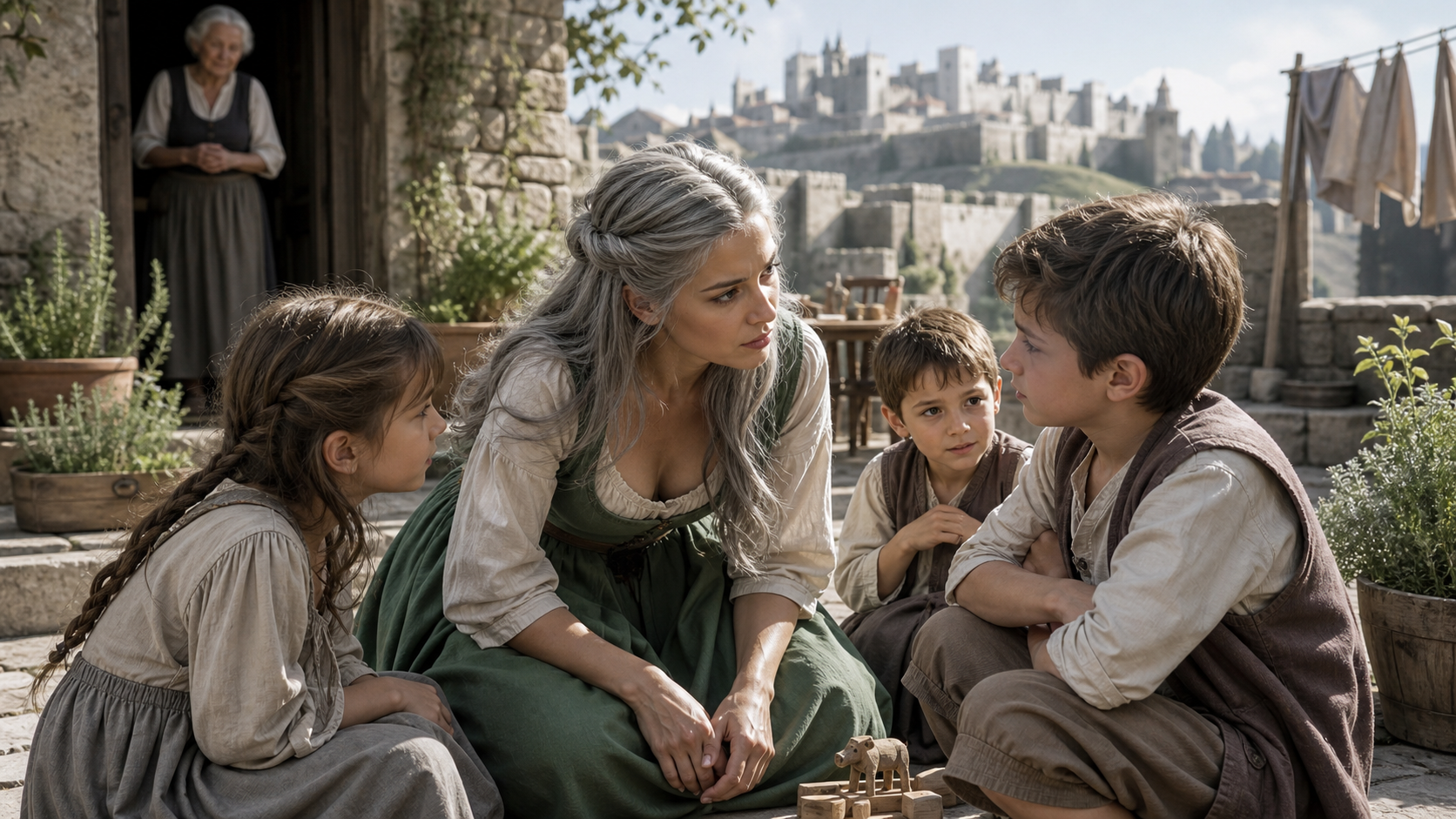
Syr’s ordinary life opens
The orphanage establishes children and responsibilities Bell does not see when he looks across a tavern table.
How the movements connect
Every file rewrites one definition before the mountain asks the final question.
Mikoto’s movement separates Familia from family. Lilly’s separates the future of a people from one woman’s obligation to marry for it. Welf’s separates inherited talent from chosen craft. Those are not detached side stories; they remove shortcuts the series could have used to define belonging.
Eina and Syr move the lens outside Hestia Familia. Competent women still have private confusion, invisible work and relationships the protagonist does not automatically understand. Their chapters make Orario inhabited rather than arranged around Bell’s next level-up.
Rakia converts those definitions into public pressure. Ares treats Hestia and Welf as assets, exactly the institutional claim the earlier chapters taught us to distrust. Edas answers with Kam and Brigit: mortal and deity can choose one another even when time makes the relationship unequal.
The final movement belongs to the Dungeon girl because birth breaks the anthology’s apparent closure. Everyone above spent the volume arguing about who counts as family, person or possession. The Dungeon produces somebody who will force the next books to answer under harsher conditions.

Movement 6
Rakia drags private love into public war
Ares uses Hestia to retrieve Welf and discovers Orario can organize a rescue faster than he can organize an army.
How the movements connect
Every file rewrites one definition before the mountain asks the final question.
Mikoto’s movement separates Familia from family. Lilly’s separates the future of a people from one woman’s obligation to marry for it. Welf’s separates inherited talent from chosen craft. Those are not detached side stories; they remove shortcuts the series could have used to define belonging.
Eina and Syr move the lens outside Hestia Familia. Competent women still have private confusion, invisible work and relationships the protagonist does not automatically understand. Their chapters make Orario inhabited rather than arranged around Bell’s next level-up.
Rakia converts those definitions into public pressure. Ares treats Hestia and Welf as assets, exactly the institutional claim the earlier chapters taught us to distrust. Edas answers with Kam and Brigit: mortal and deity can choose one another even when time makes the relationship unequal.
The final movement belongs to the Dungeon girl because birth breaks the anthology’s apparent closure. Everyone above spent the volume arguing about who counts as family, person or possession. The Dungeon produces somebody who will force the next books to answer under harsher conditions.
Movement 7
Edas answers the god-and-mortal problem
Kam and Brigit’s story turns Hestia’s promise from jealous comedy into the volume’s thesis.
How the movements connect
Every file rewrites one definition before the mountain asks the final question.
Mikoto’s movement separates Familia from family. Lilly’s separates the future of a people from one woman’s obligation to marry for it. Welf’s separates inherited talent from chosen craft. Those are not detached side stories; they remove shortcuts the series could have used to define belonging.
Eina and Syr move the lens outside Hestia Familia. Competent women still have private confusion, invisible work and relationships the protagonist does not automatically understand. Their chapters make Orario inhabited rather than arranged around Bell’s next level-up.
Rakia converts those definitions into public pressure. Ares treats Hestia and Welf as assets, exactly the institutional claim the earlier chapters taught us to distrust. Edas answers with Kam and Brigit: mortal and deity can choose one another even when time makes the relationship unequal.
The final movement belongs to the Dungeon girl because birth breaks the anthology’s apparent closure. Everyone above spent the volume arguing about who counts as family, person or possession. The Dungeon produces somebody who will force the next books to answer under harsher conditions.

Movement 8
Birthday opens the third arc
The war closes the second movement of the series; the Dungeon creates the question Volume 9 must answer.
How the movements connect
Every file rewrites one definition before the mountain asks the final question.
Mikoto’s movement separates Familia from family. Lilly’s separates the future of a people from one woman’s obligation to marry for it. Welf’s separates inherited talent from chosen craft. Those are not detached side stories; they remove shortcuts the series could have used to define belonging.
Eina and Syr move the lens outside Hestia Familia. Competent women still have private confusion, invisible work and relationships the protagonist does not automatically understand. Their chapters make Orario inhabited rather than arranged around Bell’s next level-up.
Rakia converts those definitions into public pressure. Ares treats Hestia and Welf as assets, exactly the institutional claim the earlier chapters taught us to distrust. Edas answers with Kam and Brigit: mortal and deity can choose one another even when time makes the relationship unequal.
The final movement belongs to the Dungeon girl because birth breaks the anthology’s apparent closure. Everyone above spent the volume arguing about who counts as family, person or possession. The Dungeon produces somebody who will force the next books to answer under harsher conditions.