
RAERAE REACTS · EXACT VIDEO FILE
I CAN’T STOP ME: TWICE Put Temptation on a Runaway Train and Removed the Brakes
TWICE drew a red line, stared directly at it and then built a synthwave train fast enough to make crossing the boundary feel inevitable before the first chorus finished warning anybody.
Release file
Released: October 26, 2020
Runtime: 03:41
Artist / channel: JYP Entertainment · TWICE
Exact-file focus: The exact official music video, not the choreography version, English version, stage, or later concert performance.
First watch: the warning sign is also an invitation
The video’s red line is clear enough to qualify as workplace signage, yet every visual choice makes crossing it attractive. That contradiction is the engine. TWICE know where the boundary is, know why it exists and still feel desire pulling harder than judgment. The film refuses to pretend temptation begins with ignorance.
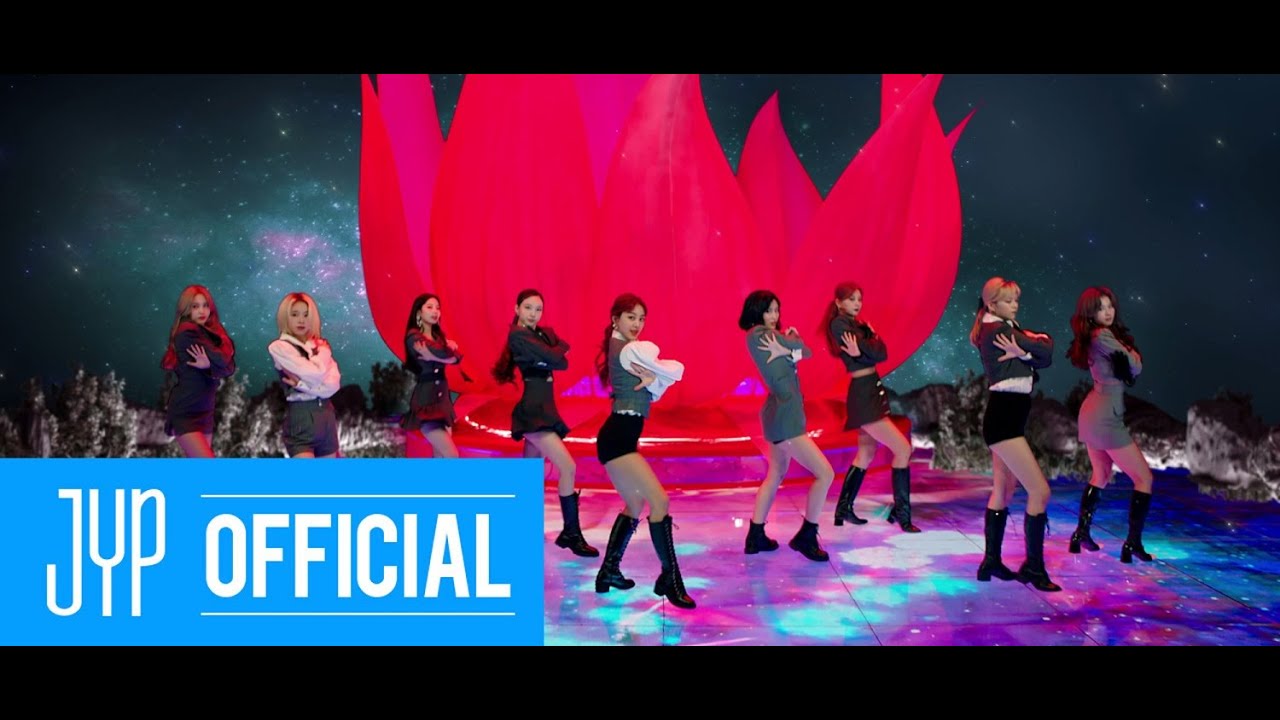
The opening symmetry suggests control, but movement keeps destabilizing it. Flowers open, spaces split and the train waits like momentum given metal. Every beautiful surface carries a small threat. The members are not wandering into danger by accident; they are watching themselves choose speed.
Synthwave turns self-control into velocity
The production draws from retro synth-pop without treating the 1980s as a costume box. Arpeggiated motion, bright electronic layers and driving percussion make the song feel incapable of standing still. The title is not only a confession. It is an arrangement instruction: once the pulse begins, stopping would require breaking the machine.
That speed gives the vocals useful resistance. Lines have to cut through forward motion, and the chorus lifts because the singers sound pressed by the track rather than floating above it. The instrumental makes desire physical. A listener does not merely understand loss of control; the rhythm rehearses it in the body.
Lyrics and meaning: knowing better does not cancel wanting
The lyric’s honesty lives in the gap between moral clarity and behavioral control. The speaker recognizes the forbidden direction, hears the internal warning and continues. Pop often turns temptation into proof that the rule was foolish. This song leaves the rule standing, which makes the conflict sharper.
That does not mean every boundary deserves obedience. The song is interested in the psychology of compulsion, not issuing a universal command. The important point is recognition: desire can remain powerful after a person has named the consequence. Knowledge helps, but knowledge is not a brake pedal by itself.
Day and night are not good twin and evil twin
The visual contrast between bright garden imagery and darker spaces tempts an easy moral split. I read it less as two personalities fighting and more as one person experiencing the same desire under different lighting. The polished self and the impulsive self share a body, memory and responsibility.
That reading gives the members more agency than a possession story. Nobody can blame a villainous double for every choice. The darker image is not an outside monster; it is the part that finds the red line beautiful. Self-control becomes negotiation among real desires rather than a battle against a fake intruder.
Choreography makes restraint look exhausting
The hand shapes, directional pulls and tight formation changes keep returning to tension between containment and release. Members appear held by the pattern, then drive it forward. Precision is essential because a sloppy performance would make loss of control look accidental. TWICE show the rules before showing how badly the body wants to exceed them.
The chorus point is memorable, but the transitions deserve equal attention. Watch how members clear paths, exchange center and maintain urgency outside the close-up. The group makes a psychological conflict legible at nine-person scale without turning each performer into an identical symbol.
Vocal color keeps temptation from sounding theoretical
The higher, brighter lines can sound like the warning trying to remain orderly, while stronger belts and lower textures bring the pull closer to the body. I do not need every voice assigned to a moral side. The value comes from hearing one conflict pass through different kinds of pressure.
Jeongyeon’s grounded color, Jihyo’s force, Nayeon’s lift and the quieter control in Mina and Tzuyu’s delivery create contrast without breaking the synth-pop surface. The song remains cohesive because difference is used as arrangement, not treated as a problem to correct.
The train ending is obvious and completely earned
A runaway train is not a delicate metaphor. By the time it arrives, delicacy would be dishonest. The production has spent three minutes accelerating, and the lyric has admitted the brakes are not winning. Giving that momentum a physical object lets the ending finish the argument instead of fading out politely.
The shot also complicates glamour. The members look controlled inside a situation defined by losing control. That gap is the K-pop machine at its most interesting: exact styling and choreography used to stage disorder. Craft does not reduce the emotion. Craft is how the danger becomes visible without becoming incoherent.
Where the video could trust one image longer
The film has enough strong symbols for several comebacks and sometimes cuts away before one can bruise. The red line, table, flowers, split spaces and train all compete. I wanted one visual sequence to remain uninterrupted long enough for the members’ performance to transform it instead of the edit supplying the transformation.
The bridge could also strip the instrumental further. A near-silent admission before the final acceleration would make the return feel more dangerous. The current version maintains momentum beautifully, but losing momentum for a breath can make speed feel faster when it resumes.
What changed every time I replayed it
The first replay belonged to the synth pulse. The second belonged to the choreography’s containment gestures. By the third, the brightest scenes looked more unsettling because the warning was already known. Beauty stops reading as innocence when the person inside it has announced the problem.
Audio-only, the song’s architecture feels almost ruthless. Muted, the visual symbols still map temptation from order to speed. The exact MV adds a moral texture that a performance video cannot: not simply how the dance executes the chorus, but what kind of choice the chorus represents.
RaeRae verdict
“I CAN’T STOP ME” is one of TWICE’s strongest marriages of sound and concept. Synthwave velocity, red-line imagery and choreography built around pressure all tell the same story: the speaker recognizes the boundary and feels herself crossing it anyway. Nothing needs a lore diagram.
I wanted fewer symbols, longer takes and a bridge with less protection from the beat. Those are requests made because the core is strong enough to carry more exposure. The train does not rescue the ending with spectacle. It arrives because the entire song has been laying track toward it.
Bottom line
TWICE put temptation on rails and let the synth pulse remove the brakes. “I CAN’T STOP ME” works because knowledge and desire remain in the same frame, arguing all the way to the train.
Credits and receipts
The exact file reviewed here is JYP Entertainment’s official “I CAN’T STOP ME” music video, video ID CM4CkVFmTds, released October 26, 2020. This React is dated October 28, two days later, with the playlist runtime of 03:41.
Continue with the TWICE group hub, all nine current member profiles and the exact official uploadDaily+62.7KTotal views575.8M. Choreography, English-language and stage versions remain separate objects.