
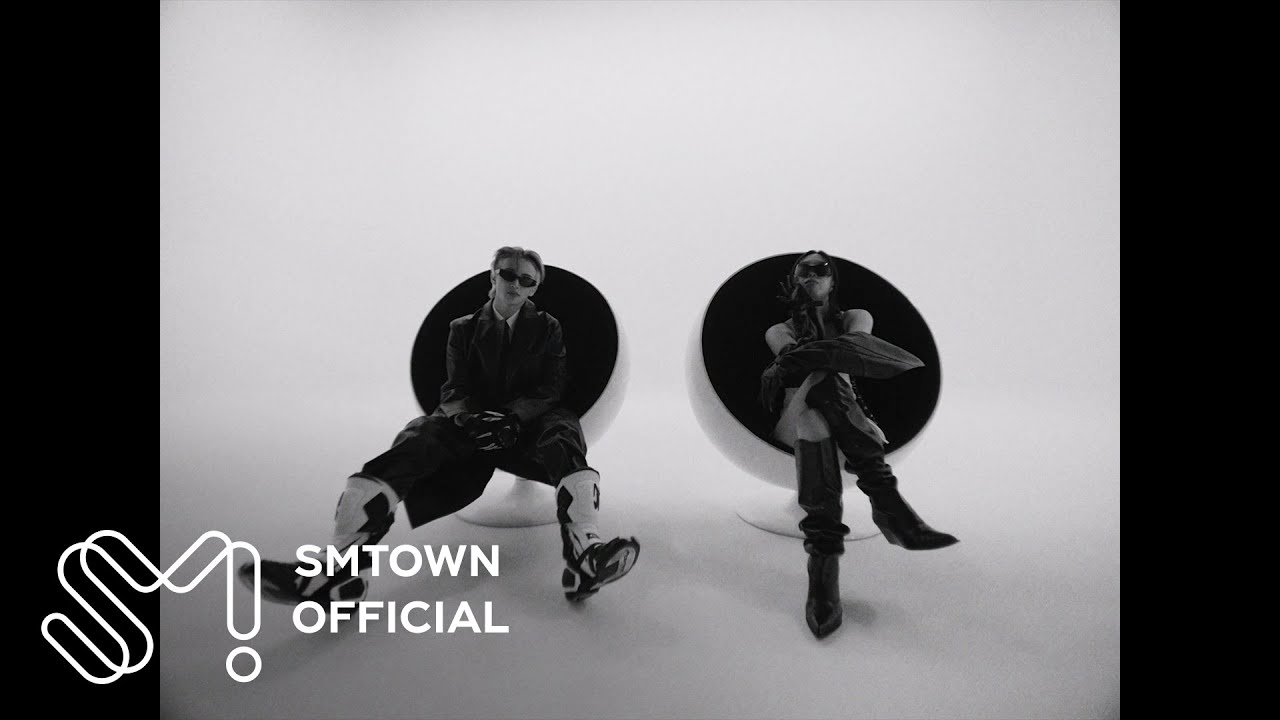
MARK Fraktsiya React: The Border Was Never Secure
MARK and Lee Young Ji crossed K-pop and hip-hop like the checkpoint had already lost the paperwork.
Release file
Released: December 16, 2024
Runtime: 3:19
Artist / channel: MARK featuring Lee Young Ji / SMTOWN
Exact-file focus: The exact official Fraktsiya music video, not a stage, short, fan edit or alternate upload.

MARK OF NCT | LEE YOUNG JI | RAERAE REACTS
Two rappers crossed the K-pop and hip-hop border, flashed fake credentials, and made the checkpoint look understaffed.
Bottom line
“Fraktsiya” works because MARK and Lee Young Ji do not treat the collaboration like a diplomatic visit. They sound like two people who already know how much trouble they can cause in each other’s territory. MARK brings the restless precision of an idol rapper who has spent years switching teams, concepts, languages, and expectations. Young Ji brings the weight of a hip-hop artist who can walk onto a pop record and change its center of gravity. The song calls them infiltrators, but the joke is that neither one is hiding.
Quick facts
MARK
Lee Young Ji
December 16, 2024
SM Entertainment
3:12
MARK, Lee Young Ji, ron, jane, dress, Raf Sandou, Jeffrey White
Watch the official video
First listen: this beat needs a security clearance
The first seconds feel less like an introduction and more like somebody opened the wrong door in a restricted building. The house-style chord loop gives the track a clean floor, but the 808 bass and UK drill details keep scraping dirt across it. The repeated synth creates pressure without announcing where the release will come. That makes the song feel watched even before the surveillance imagery appears.
MARK enters with the kind of clipped attack that makes every syllable sound processed through a turnstile. His strength is not just speed. He understands how to break one pocket into smaller pockets, then move between them without losing the sentence. Years inside NCT taught him how to change shape on command. “Fraktsiya” turns that labor into the concept instead of pretending versatility happens by magic.
Then Young Ji arrives and the room gets heavier. She does not sing a polite guest verse or copy MARK’s cadence. Her lower tone stretches the beat, her timing gets looser, and suddenly his tight control has something big to push against. That difference creates chemistry. They are not matching uniforms. They are two specialists assigned to the same breach.
Replay section
Second listen: I heard how much the synth loop is doing. It is irritating on purpose, like a scanner that keeps sweeping the same hallway. The repetition gives both rappers a fixed obstacle. Their flows have to create the movement that the instrumental refuses to provide.
Third listen: Young Ji’s verse stopped feeling like a feature and started feeling like the song’s structural turn. MARK establishes the mission. Young Ji makes the mission look fun. Her presence keeps the self-confidence from becoming one man reading his own performance review aloud.
Fourth listen: The title started carrying more history. The Korean word peurakchi is associated with an infiltrator or informant, while its root traces back to the Russian word for a faction. MARK explained the song as two artists moving between K-pop and hip-hop like spies. That metaphor fits, but it also exposes how weirdly strict fans and industries can be about musical borders that artists cross every day.
Fifth listen: My main complaint survived. The beat needs one larger mutation near the end. A sudden drop, chopped synth, or full rhythmic jailbreak would give the final exchange a stronger consequence. The rappers keep escalating while the instrumental remains committed to the same security protocol.
The lyrics turn overwork into espionage
MARK said he began the song by looking back at his position in K-pop and the different ways he has lived inside it. That is not abstract branding. He debuted across NCT units, promoted in different markets, wrote solo material, and spent years being treated like the employee every department could borrow. The spy metaphor makes that constant movement sound dangerous instead of exhausting. It is a swaggering rewrite of a schedule that would make most people hide under a desk.
The lyrics use infiltration as proof of range. MARK and Young Ji can enter K-pop, hip-hop, variety, performance, and commercial spaces without surrendering the traits that made them recognizable. They are not asking whether they belong. They are making everybody else explain why the borders were drawn so tightly in the first place.
There is a macro-level joke under all that confidence. K-pop companies love versatility when it increases output, but audiences often punish artists for moving too far from the box where they first became famous. Hip-hop credibility gets policed from the other direction. MARK and Young Ji turn that double inspection into the song’s costume. If every room is going to question their credentials, they might as well arrive dressed like infiltrators.
The confidence works because both rappers have visible labor behind it. MARK’s verse sounds sharp because he has spent years practicing fast switches under choreography and group arrangements. Young Ji’s verse sounds relaxed because she knows how to command dead air and live stages without filling every second. The song does not claim they can travel anywhere because they are special little chosen ones. It demonstrates the skills that let them travel.
Video deep dive: bureaucracy finally got a fun dress code
The video builds a world of offices, surveillance rooms, industrial corridors, uniforms, and screens. It is not subtle, and subtle would be the wrong choice. “Fraktsiya” is a concept song about people crossing controlled spaces. The camera turns every hallway into a checkpoint and every workstation into evidence that somebody is tracking the pair.
The sets also make corporate labor look absurd. People sit in systems designed to classify behavior while MARK and Young Ji keep changing how they move. That is the visual version of the song’s argument. Institutions prefer neat categories because neat categories are easier to manage. Artists build careers by learning when those categories are useful and when they are just somebody else’s filing cabinet.
Young Ji’s neon-green styling cuts through MARK’s colder visual territory. The color does not make her look like she joined NCT for an afternoon. It marks her as the second breach. That distinction matters because collaborations often flatten the guest into the lead artist’s established world. Here, Young Ji alters the palette and the energy. She arrives as herself, not as an accessory with a verse.
The strongest scenes put them side by side. Their chemistry comes from competitive agreement. Both know the mission, both think they are the smartest person in the room, and neither seems interested in reducing the performance so the other can look bigger. MARK later described filming together and exchanging raps as a new, enjoyable experience. You can see that pleasure. They look less like actors following spy instructions and more like two coworkers who discovered the security cameras are recording excellent content.
The repeated surveillance imagery also raises a fandom question. Idols live under constant observation, and fans can turn ordinary choices into evidence files within minutes. Young Ji has her own public scrutiny because her personality is big, direct, and difficult to edit into harmlessness. The video makes being watched look stylish, but the performers win by controlling what the cameras receive. They know the file is open. They fill it with exactly the version of themselves they chose.
Why this collaboration does not feel stapled together
MARK said he chose Young Ji because he saw a similar character in her. That makes sense beyond their ability to rap. Both built public identities around speed, honesty, humor, and the refusal to become quieter just because a format would find quiet easier. MARK is more controlled in presentation, Young Ji more likely to let the whole thought escape, but both can turn pressure into momentum.
The track also gives Young Ji enough space to change the record. That should be normal, yet K-pop features often feel like somebody rented eight bars and returned the song in the same condition. “Fraktsiya” lets the guest affect the pacing and visual language. MARK still owns the project, but ownership does not require shrinking everybody around him.
From an MRT lens, this is power expressed through position, access, and movement. Neither rapper wins by standing at the top of a static hierarchy. They win by crossing systems, reading the room, and using the system’s own attention against it. That is why the spy concept has more value than a random costume. The song understands mobility as power.
RaeRae verdict
What I like: The rap chemistry, the heavy low end, and the fact that Young Ji changes the track instead of visiting it.
What I do not like: The synth loop holds the same position for too long. One final production breach would have made the ending hit harder.
Best choice: Building the concept around their real ability to move between K-pop and hip-hop. The metaphor has evidence behind it.
Replay value: High. MARK’s pocket changes and Young Ji’s elastic timing keep revealing different pressure points.
Final call: “Fraktsiya” is cocky because it earned the right to be. MARK and Lee Young Ji do not sneak across the border. They walk through while the alarm is ringing and ask why nobody upgraded the security.
Credits and receipts
What changed every time I replayed it
The second replay exposes the surveillance-loop synth; the third makes Young Ji’s verse feel like the record’s structural turn; the fourth reveals how the spy metaphor carries MARK’s real border-crossing career; the fifth still leaves me wanting one final production jailbreak.
Lyrics and meaning
The larger argument is about artists whose work keeps crossing categories that companies and fans still police too tightly. MARK turns years of being moved between teams, markets and expectations into infiltration; Lee Young Ji answers as a guest who changes the room instead of renting eight bars. Their swagger works because the labor is audible.