
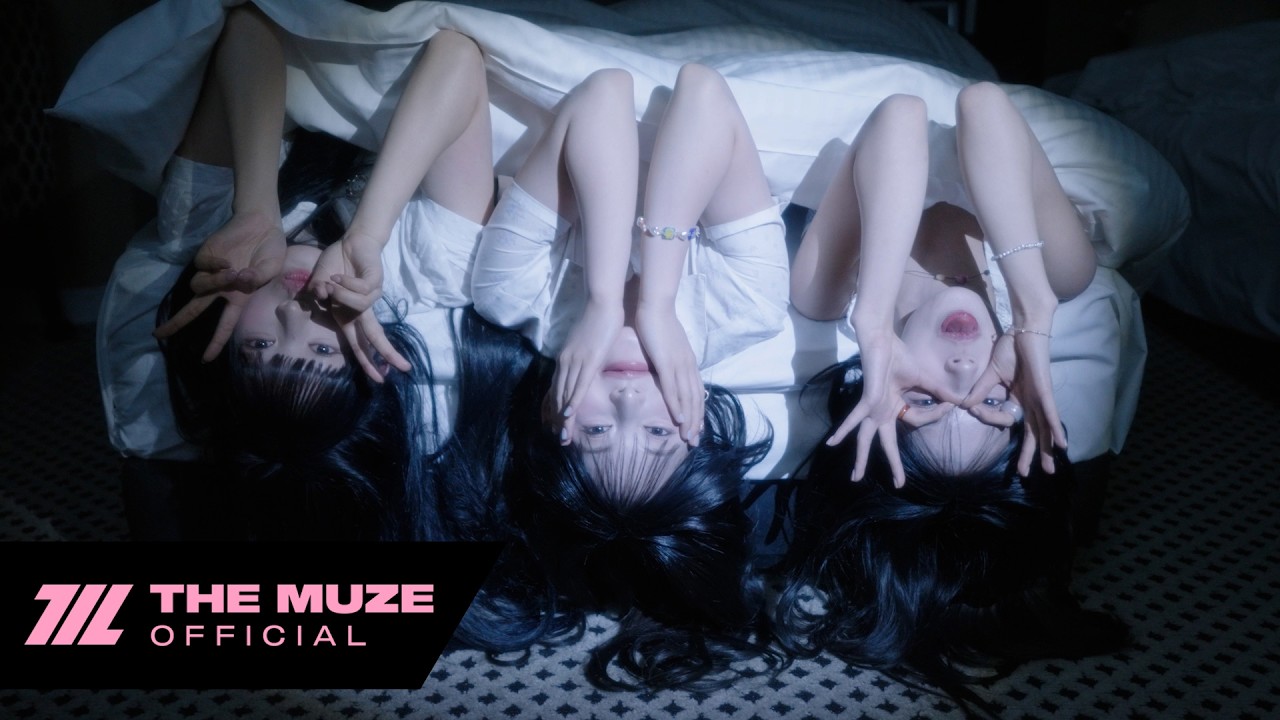
Deja Vu: RESCENE Found an Old-School Memory and Let the Rain Keep It
Deja Vu sounds like an old-school memory resurfacing in rain. RESCENE do not force the nostalgia to explain itself; they let repetition, wet light, and vocal ache make recognition feel unreliable.
Release file
Released: July 2, 2025
Runtime: 03:27
Artist / channel: RESCENE / RESCENE
Exact-file focus: Official Deja Vu music video.
Bottom line:
“Deja Vu” works because mOnSteR nO.9 gives nostalgia a pulse instead of drowning it in reverb. Lauren Aquilina, Marcus Andersson and Lara Andersson help shape a melody that circles back without standing still, while Woni, Liv, Minami, May and Zena trade breath, clarity and warmer lower color inside one recognizable RESCENE blend. The video turns wet grass, school-age memory and open Japanese landscapes into an atmosphere that feels remembered before the plot explains it.
I do miss the sharper oddness of “UhUh” and the immediate personality of “Love Attack.” Parts of “Deja Vu” drift close to the general dreamy-girl-group lane that became crowded very quickly. The difference is in the group’s vocal handoffs and the beat’s quiet insistence. RESCENE smell familiar without becoming anonymous, although I want the next record to make that distinction impossible to miss.
Release file
Released: July 2, 2025 as the title track of RESCENE’s second single album, Dearest.
Runtime: 3:04 song; the exact official video file runs longer with visual framing. Exact video ID: ZbO9PBdFRdc.
Artist: RESCENE’s five-member lineup: Woni, Liv, Minami, May and Zena.
Label / channel trail: THE MUZE Entertainment release under license to Kakao Entertainment, published through RESCENE’s official channel.
Sound: Dreamy dance-pop with a circling melody, layered voices, restrained percussion, bass and synth programmed by mOnSteR nO.9, and a hook built around sensory recognition.
Credits: Korean lyrics by Lee Ju-heon and The Pul Kim of The Muze, bay and Choi Bo-ra of 153/Joombas, and Darly, Jo Eun-sol and Choi Jae-yeon of Jamfactory. Composed by mOnSteR nO.9, Lauren Aquilina, Marcus Andersson and Lara Andersson; arranged by mOnSteR nO.9. Vocal direction by Lee Ju-heon and The Pul Kim; background vocals by Liv and The Pul Kim; bass, synth and drums by mOnSteR nO.9; recording by Jang Woo-young at Doobdoob Studio; mixing by Simon Bergseth at Stadion Studio; mastering by Kwon Nam-woo at 821 Sound.
Sources: The exact official MV, complete Korean album credits, platform release record and Hino location record are linked below.
The melody remembers before the lyric does
The hook circles into recognition instead of arriving like a billboard. A phrase returns with slightly different pressure, harmonies thicken around it, and the listener begins anticipating the shape before the words confirm déjà vu. That is the song’s smartest trick.
mOnSteR nO.9 keeps the rhythm present enough to prevent the dreaminess from becoming vapor. Bass, synth and drums create a soft forward pull. Memory may be looping, but the body is still moving through time.
Rain-soaked grass is more specific than “nostalgia”
THE MUZE gives each RESCENE release a scent frame, and Dearest is associated with grass wet by rain. Marketing language like that can disappear into expensive fog. Here, the green spaces, damp light and lyric references to scent make the idea physical enough to earn its place.
The Proust-effect concept works when a sensation reaches us before an explanation. A window, breeze or patch of wet ground should trigger recognition without a character announcing what the memory means. The MV is strongest when it trusts that delay.
Woni makes the familiar feel newly discovered
Woni’s clear tone gives the song a readable entrance point. She can sound curious without shrinking her presence, which matters in a concept built around half-recognized feeling. Her phrasing opens the memory instead of telling us how sentimental to become.
Visually, she handles the camera with the same balance. A glance can remain soft while still directing attention. RESCENE do not need to choose between delicacy and authority when a member understands focus this well.
Liv’s background-vocal credit explains the perfume trail
Liv is credited on background vocals, and that studio role is audible in the track’s lingering edges. Her voice does not only appear as a lead color; it helps build the residue after a phrase, the part that stays in the air long enough to trigger the next memory.
Her lower warmth also gives the five-member blend needed depth. Without it, the arrangement could become all pale light and no ground. Liv makes the softness feel inhabited.
Minami gives stillness an internal beat
Minami is good at holding a frame without becoming passive. Even when movement is small, her attention tracks the rhythm. The body remains musically alert, so stillness reads as anticipation rather than a pause while someone else performs.
That quality fits déjà vu beautifully. Recognition often happens before visible action. Minami lets the audience see thought arrive, then allows the choreography or edit to catch up.
May keeps sweetness from losing its bite
May’s brighter presence could have been used as simple decoration inside the pastoral imagery. Instead, her timing gives sweetness edges. She lands a look or movement exactly enough to remind us that soft focus is still choreographed power.
Her exchanges with the other members make the memory feel shared rather than assigned to one protagonist. The video becomes a group recollection whose details do not belong to only one person.
Zena lets the camera feel the thought change
Zena’s expression can pivot inside a close-up without a large gesture announcing the turn. That control helps the MV move between calm recognition and uncertainty. Déjà vu is comforting until you wonder why the moment feels familiar.
Her sharper visual focus also prevents the five-member chemistry from becoming uniformly gauzy. RESCENE’s blend works because individual edges remain available when the song needs contrast.
Japan is a location, not a borrowed personality
The official MV used locations around Hino, including the Tama River area and other city sites. The school-age slice-of-life texture and open landscape create a recognizable Japanese visual grammar, but the video does not ask RESCENE to imitate a different act.
The locations serve the memory story: paths, river edges and spaces that look ordinary enough to become precious later. A dramatic fantasy set would give us more spectacle and less déjà vu. The banality is part of the emotional design.
The camera knows when five faces are the special effect
Close-ups linger long enough for recognition to register, while group frames preserve relationships. The edit does not panic every time the beat adds detail. That restraint lets expressions and vocal handoffs share the same timing.
I wanted a few more visual disruptions when the lyric’s familiarity becomes strange. A repeated angle with one changed object, or a movement shown twice with altered timing, could turn the title into film grammar. The current MV illustrates memory beautifully but rarely makes us doubt it.
Dreamy is becoming a crowded address
By 2025, airy vocals, pastoral light and nostalgic synth detail were hardly empty territory. RESCENE helped establish their own sensory version of that world, but “Deja Vu” occasionally brushes against a broader fifth-generation aesthetic where several groups could exchange mood boards without anybody noticing immediately.
The answer is not louder production for its own sake. I want more of the strange melodic and rhythmic personality that made earlier RESCENE songs unmistakable within seconds. “Deja Vu” earns its identity through accumulated detail; the next step is making identity arrive before the evidence folder.
Five members keep the perfume from becoming one note
Woni, Liv, Minami, May and Zena share authority through handoffs rather than a center-plus-scenery structure. Each member changes the temperature slightly, then passes the phrase before the song loses motion. Blend does not require sameness.
That group construction is why the hook survives so many returns. We hear the same melodic idea through different weights, faces and relationships. Repetition becomes recognition with new evidence attached.
What changed every time I replayed it
First replay, the green landscape and rain-after scent concept did most of the work. Second replay, I followed the bass and drums and heard how firmly the song moves beneath its soft surface. Third replay, Liv’s background-vocal role and the five-member handoffs made the lingering quality feel constructed rather than merely pretty.
On the fourth pass, I wanted more visual distortion and more musical weirdness, but the hook had also become harder to shake. “Deja Vu” is not RESCENE’s loudest claim to individuality. It is the one that waits until you recognize it living in your head.
The exact-file rule
This React covers YouTube ID ZbO9PBdFRdc, the July 2 official MV. The Dream version, performance version, dance practice, relay dance and broadcast stages are separate files. Attachment 8596 remains unique to this upload across hero, featured image, landing card and social metadata.
Sources and official routes
- RESCENE exact “Deja Vu” official MVDaily+83.9KTotal views24.5M
- Dearest full recording credits
- Official platform release and composition record
- Hino Film Commission location record
- RESCENE group hub and member routes
Lyrics and meaning
The lyric uses deja vu as emotional evidence that a connection predates the current moment. That certainty may be projection, memory, or longing, but RESCENE treat the sensation as powerful enough to reorganize the present.
RaeRae verdict
RESCENE earn the replay because Woni, Liv, Minami, May, and Zena understand softness is not the same as vagueness. Their best files use delicate surfaces to hide firm rhythmic choices, odd visual pressure, and five distinct ways of occupying the same perfume cloud.