RaeRae Reacts · BABYMONSTER · Performance File
CHOOM (Performance Video)
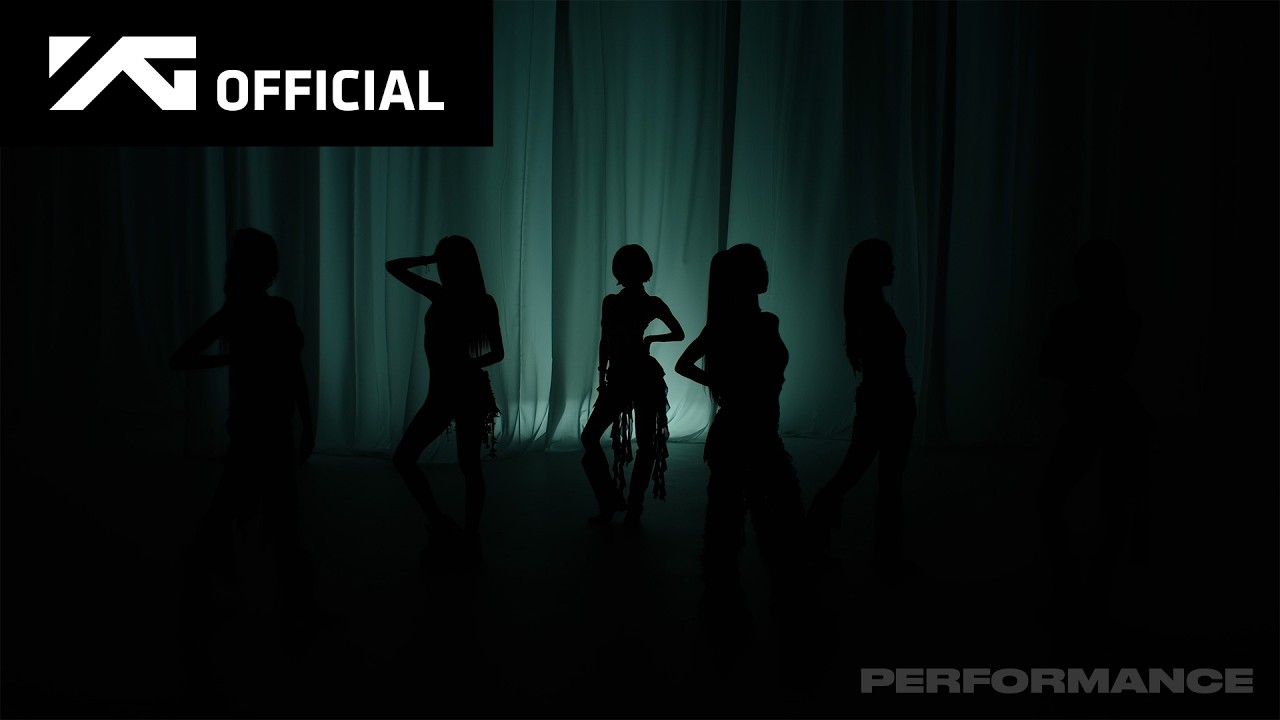
The main video introduced the command. This performance file shows how six members, thirty dancers, and one Korean word turn that command into a crowd response.
What changed every time I replayed it
First intake: The size hits first. Thirty dancers should make six idols disappear, yet the ensemble keeps drawing arrows toward the next center. I did not have to search for BABYMONSTER. The crowd told me where to look.
Second intake: I stopped watching faces and followed the pathways. Corridors open before a member enters. Circles close around a vocal hit. A wall of bodies drops so a smaller gesture can land. That is not random stage traffic. It is visual grammar.
Third intake: The chorus is built on pressure. The frame squeezes inward, the bass hits, and the formation releases. Once I saw that inhale and exhale pattern, the hook stopped sounding repetitive.
Later replay: I watched the edges. Backup dancers are not waiting politely for their turn. They keep the rhythm alive outside the center, which makes every handoff feel earned.
Fifth replay, camera ignored: I watched the routine as if the dancers were stage directions. Every lane, wall, drop, and opening tells the audience where the command travels next. The performance is not thirty people moving behind six idols. It is one idea passing through thirty-six bodies.
One Korean word carries the whole thesis
Chum (춤) means dance in Korean. “CHOOM” packages the sound for an international title, but the song is not hiding a secret paragraph inside one word. It keeps issuing the same instruction until standing still starts to feel silly.
That matters because K-pop often treats choreography as proof added after the song. Here, choreography is the missing half of the sentence. A command to dance needs a visible chain reaction. One member moves, the nearby bodies answer, and the answer spreads across the stage. The performance turns individual swagger into collective participation.
There is also a small cultural joke in how direct it is. Korean pop lyrics regularly move between Korean and English to widen the hook. CHOOM barely needs translation. The body translates it before the subtitle can clock in.
The beat works because the formation argues back
The track leans on weight, repetition, and a bass line that wants the body low. Ruka and Asa sit inside that pocket instead of sprinting over it. Ahyeon throws accents beyond the lens. Pharita and Rora stretch the lines so the routine does not become two minutes of clenched fists. Chiquita snaps from one expression to another as if her face received the count sheet too.
The choreography does not attack every beat. That restraint saves it. A member holds while the ensemble travels. A sharp hit melts into a longer line. Six bodies become punctuation inside a much larger sentence, then step forward again before the crowd can swallow the subject.
The low center of gravity explains why the track feels heavier here than in headphones. Knees stay loaded, shoulders answer the bass, and the ensemble delays release long enough for each hit to register. The dancers are not illustrating every sound. They select the sounds that define the groove, then let the remaining space create tension.
That selective approach also protects the vocal sections. Pharita and Rora receive longer shapes instead of being forced into the same attack used for the rap pockets. The movement changes texture when the voices do. A performance video should reveal arrangement choices with bodies, and this one usually does.
Why thirty dancers do not become expensive wallpaper
Big crews are an easy way to spend money and a difficult way to create meaning. Too many performances park dancers behind the idols like moving proof of budget. This team gives the ensemble a job. They build lanes, walls, waves, and pressure around the members.
The macro view is about scale. BABYMONSTER looks capable of moving a room. The micro view is about trust. Each center change depends on people at the edge preparing space for someone else. That is how groups work when they are actually groups. Leadership is not one person standing in front forever. It is a network that knows when to point, support, clear a path, and get out of the way.
That is also why the six-member image does not rewrite the official seven-member identity. Rami remained on health hiatus during this file. The performance works with the people present without pretending an absence never existed.
K-pop audiences often treat lineup geometry as emotional evidence. An empty position can become a rumor, a promise, or a grievance before anybody moves a foot. This choreography avoids both denial and memorial theater. Six performers receive complete formations for the work they actually filmed, while the group identity remains seven in the surrounding context.
The thirty-dancer scale also changes the power story. A small group normally proves precision by matching one another. Here, BABYMONSTER must project through a moving public. The ensemble behaves like a crowd catching the command, which turns charisma into something measurable: does motion spread after a member starts it?
The video direction helps, then gets greedy
What works
Wide frames prove the formations are real. Lower angles add weight without hiding the feet. The camera moves with the lanes instead of wandering through them like a lost tourist.
What I would change
Several edits leave the footwork at the exact moment the formation becomes interesting. I understand hero shots. I also understand that a performance video owes me the performance. Release a locked camera and let the pandas count.
The strongest shots hold long enough to show cause and effect. A corridor opens, a member enters, and the wall closes behind her. The weakest shots interrupt that sentence for a face close-up after the audience already knows who owns the moment. Good editing controls attention. Greedy editing keeps grabbing attention back from the choreography it commissioned.
Member texture: six people, six different jobs
- Ruka: makes grounded movement look settled rather than heavy. She does not chase the beat. She waits for it to meet her.
- Pharita: lengthens the shapes and gives the eye somewhere to breathe after the harder hits.
- Asa: treats rhythm like a private joke she already understood before the rest of us entered the room.
- Ahyeon: projects outward. Even when the formation grows, she performs past its edges.
- Rora: smooths the handoffs and keeps the routine from hardening into one texture.
- Chiquita: sells transitions. Her expression changes before the camera finishes asking the question.
- Rami: is absent from this performance during her health hiatus. BABYMONSTER remains a seven-member group.
Easter eggs and rewind points
- Watch the ensemble one count before each center change. The route appears before the member does.
- The chorus keeps moving from tight inward pressure to open release, which mirrors the production build.
- Level changes stop the crew from becoming one flat wall of heads and shoulders.
- Six-member symmetry appears, then breaks before the eye gets comfortable. The routine prefers motion over a neat class photo.
- The widest shots are the real flex. They show the group controlling space without editing smoke.
What this performance says about BABYMONSTER
The obvious reading is “powerful dancers perform powerful song.” Fine. That is the receipt, not the editorial. The deeper point is that BABYMONSTER is being framed as a group that can command infrastructure. The members are not merely inside a big production. The production reorganizes itself around them.
That image has industry value. Newer groups are often asked to prove individual charisma first and group authority later. CHOOM tries to prove both at once. Each member keeps a different texture, but the stage still behaves like one machine. That is a more useful identity than seven people competing to become the thumbnail.
The performance also exposes labor that music videos often crop into decoration. Thirty dancers have to learn spacing, traffic, level changes, camera timing, and the exact amount of force needed to amplify an idol without blocking her. Calling them “backup” can make that work sound passive. Nothing at the edge of this frame is passive. The center only looks inevitable because dozens of people build the route into it.
An East Asian hierarchy lens makes the handoffs more interesting. Formal stages usually place status at the center and supporting labor around it. CHOOM keeps that visual hierarchy, but the choreography shows how dependent the center remains on everybody outside it. Authority is not self-created. The group looks powerful because a larger collective agrees on timing, direction, and who needs space next.
That does not make the structure equal. BABYMONSTER keeps the names, close-ups, and commercial reward. The dancers still do essential work without receiving the same public attention. The honest reading holds both realities: the idols command the concept, and the ensemble makes that command visible. Pretending either side works alone would be fandom math with half the numbers erased.
RaeRae verdict
What I like: the ensemble earns its screen time, the formations explain the hook, and the members remain readable inside a crowd. The performance improves the song because it reveals the logic the audio could only suggest.
What I do not like: the camera occasionally treats a close-up as automatically more exciting than excellent footwork. It is not. Sometimes the best face card is a formation landing on time.
Final call: The main MV introduced CHOOM as a command. This file proves the command can travel. Thirty dancers do not decorate BABYMONSTER; they show the radius of the group’s influence. That is the artistic win, and it is why this “extra” video feels necessary.