
RaeRae Reacts · BABYMONSTER · Music Video
춤 (CHOOM)
BABYMONSTER says the word for dance until resistance becomes embarrassing, then brings enough bass, fabric, bodies, and attitude to turn a command into a full-contact sport.
Video presentation
What changed every time I replayed it
First intake: The fabric and silhouettes make the opening feel controlled. Then the bass kicks the door and the video stops pretending it came to whisper.
Second intake: I followed the production switches. The song changes pressure before repetition can turn lazy.
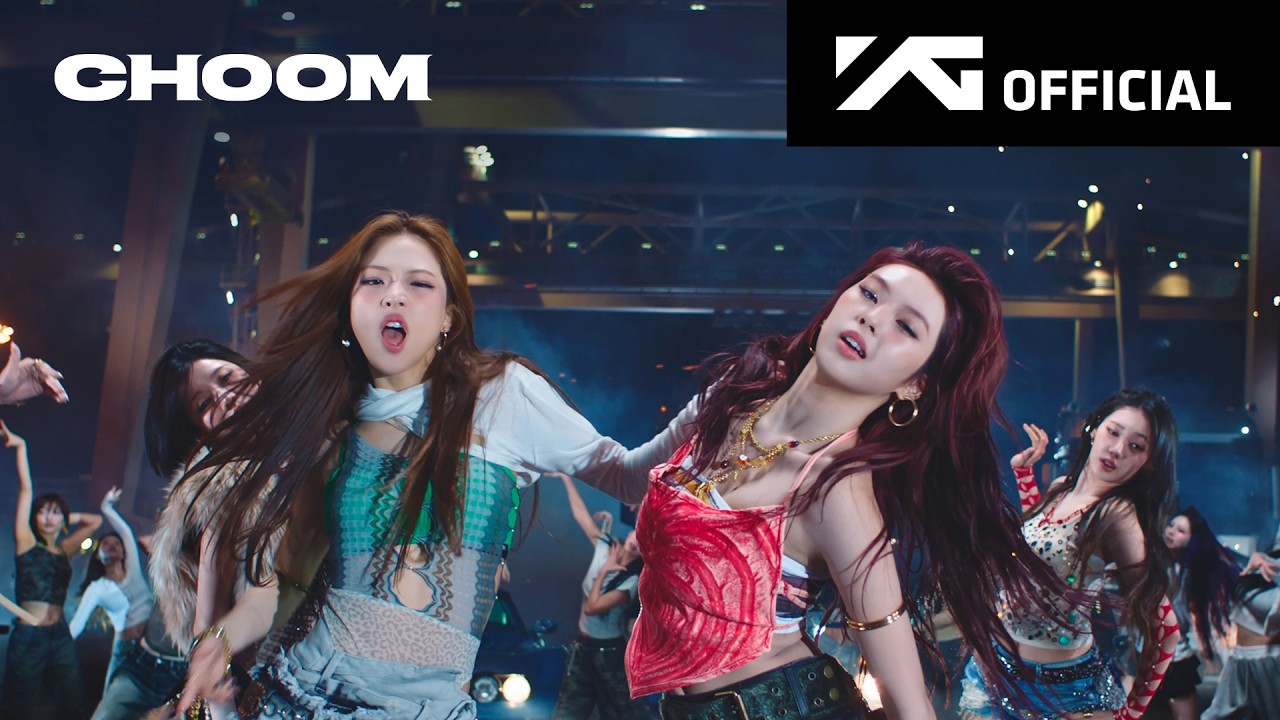
Third intake: I watched the crowd. The dancers are not background decoration; they show how one command spreads through a room.
Later replay: The lyric still looks thin on paper, but the members make rhythm, facial control, and formation changes carry the missing personality.
Fifth replay, audio before video: I finally heard how often the arrangement changes pressure under the repeated word. Percussion drops out, the synth line bounces into the empty space, and a new vocal texture takes the command. The hook stays simple, but the floor underneath it keeps moving.
Overall vibe
First thought: The song is called dance, the chorus says dance, and the video has decided the only acceptable response is to bury me under choreography.
Sound check: Bouncy synth, bass with steel-toed boots, percussion that keeps changing the floor under you, and a hook that is closer to an order than an invitation.
The moment I leaned in: The white fabric and silhouettes at the opening. For five seconds the video whispers. Then BABYMONSTER remembers who they are and starts kicking the doors.
The side-eye: The lyrics are not carrying hidden poetry. This is a body-first song. If the beat does not move you, the repeated title will not argue you into submission.
Current status: Not emotionally transformed. Physically unable to sit still. That counts.
Lyrics and meaning
There is no translation puzzle here. Choom is the Korean word 춤, meaning “dance.” YG kept the Korean pronunciation in the English title instead of translating it, which turns a basic word into a piece of the group’s global branding. International listeners learn the Korean word by shouting it back.
The song’s message is unity through movement. The members enter with individual swagger, but the chorus keeps pulling everybody toward the same physical response. Do not overthink it. Stop watching from the wall, stop worrying about whether you look cool, and join the floor.
That idea is especially useful for BABYMONSTER because they are a multilingual group selling Korean pop around the world. “Dance” does not need subtitles. The title stays Korean, the command travels anyway, and the choreography becomes the common language.
The hook vibe: a command built out of rhythm
CHOOM works from the bottom up. The bass and percussion establish authority before the melody gets a vote. A bouncing synth riff keeps the track from becoming completely brutal, but most of the excitement comes from changes in pressure: a clipped verse, a lifted pre-chorus, a chorus that lands like a stomp, then another switch before your body gets comfortable.
RUKA and ASA thrive in that structure because their rhythmic delivery can become part of the percussion. AHYEON supplies the vocal force that keeps the song from flattening into a dance challenge. PHARITA and RORA brighten the pre-chorus space, while CHIQUITA sells the hook with a face that says she has already decided you are joining.
This is another six-member era during RAMI’s health hiatus. The track is built to make the active lineup look massive, and the production uses layered voices and dancers to widen the frame. That solves the visual problem. It does not erase the historical fact that the official group remains seven.
My complaint is the lyric writing. “Everybody dance” is a useful command, not an interesting thought. The song depends on performance for its personality. Take away the members, choreography and video, and the words alone are a motivational sign over a nightclub exit. Luckily, nobody came here to read CHOOM in silence.
The producers understand that repetition needs changing ownership. Ruka and Asa sit against the beat instead of racing it. Ahyeon pushes through the top of the mix. Pharita and Rora create lift before the chorus drops the body lower again. Chiquita sells the command with expression. The same word changes because a different person changes its temperature.
The track would still benefit from one lyrical escalation. The final chorus could move from “everybody dance” toward why the room needs release in the first place. Celebration, defiance, exhaustion, and community can all live inside a dance command. The production hints at those possibilities, but the lyric never chooses one.
The music video: bodies make the world bigger
The opening gives us white fabric, silhouettes and controlled tension. Fabric behaves like a curtain, a screen and moving architecture. It hides the full image just long enough to make the first reveal feel earned. Once the beat takes control, the video replaces mystery with scale.
Scale is the central visual idea. BABYMONSTER does not simply dance in front of a few backup performers. Bodies multiply around them until the choreography looks like a crowd being organized by rhythm. The members remain readable because the styling and blocking give each entrance a clean shape, but the larger ensemble proves the song’s point: one command can pull separate people into one moving system.
The camera rarely treats dance as decoration. It changes distance and angle with the choreography, so a formation expanding outward feels like the room itself is opening. When the beat hits harder, the cuts tighten. When the dancers spread, the image breathes. That cooperation between camera and body is why the video works better than a pile of expensive sets would.
The fabric returns as more than pretty movement. It first hides bodies, then frames them, then loses control of the image as the crowd grows. The visual journey moves from concealment to participation. A command that begins behind a curtain ends with too many bodies to contain inside one neat silhouette.
The best wide shots make scale readable without shrinking the members. Color and lighting separate each center from the ensemble, while the surrounding motion shows the command spreading beyond her. The video proves that a person can remain distinct inside collective movement. Unity does not require everybody to become visually identical.
Easter eggs and surprises
- The title teaches Korean without a lesson: CHOOM preserves the pronunciation of 춤. By the end of the chorus, international fans know the word whether they planned to study or not.
- White fabric is a threshold: The opening curtain separates watchers from performers. Once it moves, the video pulls us onto the dance floor.
- The crowd is the message: The growing dancer count visualizes unity. The song begins with BABYMONSTER’s individual entrances and keeps widening into collective motion.
- There is a full performance version: YG released a separate CHOOM performance video on May 6 with thirty dancers and lighting synchronized to the arrangement. It deserves its own choreography-focused entry.
- CHOOM is both song and era: The four-track mini album also contains MOON, I LIKE IT and LOCKED IN, with a staggered music-video plan extending through the summer.
- Six-member timestamp: RAMI’s hiatus changes the vocal blend and formation geometry, but she remains an official member.
The cultural argument: the body translates before the subtitle
Chum (춤) is an ordinary Korean word for dance. The stylized “CHOOM” spelling turns the sound into a title international fans can read, but the video refuses to treat Korean as a decorative mystery box. It says the word, shows the action, and lets repetition teach the audience without pausing for a vocabulary lesson.
That is one reason the hook travels. Dance does not erase language; it gives language another route. A viewer who cannot read Hangul still watches the command move from one body to six, then through the larger cast and into the frame itself. The translation happens in knees, shoulders, spacing, and breath.
The danger is that a global hook can flatten culture into one export-ready sound. CHOOM avoids the worst version of that because the Korean word remains central. English does not arrive to rescue it. The production trusts viewers to learn one thing and keep moving.
What the song earns—and what the video has to cover
The record earns physical force. The bass gives the members something solid to push against, and the hook is easy to remember after one pass. It also earns humor because repeating “dance” with this much seriousness is a little ridiculous. BABYMONSTER knows. The faces and styling keep winking while the choreography continues filing official paperwork.
The lyrics still need the video. Without bodies, the command has limited emotional range. There is no detailed story, private confession, or complicated metaphor waiting in verse two. The arrangement keeps changing the pressure so the same word feels bigger, but performance supplies most of the development.
That is not automatically a failure. Pop music can be built for the body first. My complaint is narrower: if the song wants this much replay, one more lyrical turn could have given the final chorus a new reason to exist. The dancers make the world expand. The words remain in the same room.
Credits and receipts
| Lyrics | Lauren Aquilina, CHOICE37, Sandra Wikström, Malaynah and additional credited contributors including YG |
|---|---|
| Composition | YG, Kim Mingu (NiNE), Jonna Hall, DEE.P, 2K and additional credited collaborators |
| Arrangement | P.K, with production credits also listing YG, DEE.P and 2K |
| Official description | A hip-hop dance track driven by an addictive synth riff and powerful bass, encouraging listeners to surrender to rhythm and come together. |
| Performance version | Released May 6, 2026, featuring thirty dancers. |
What I love, what I side-eye, and the verdict
CHOOM is not the BABYMONSTER song I would hand somebody who wants lyric depth or a vocal showcase. It is the song I would play when the room has gone dead and everyone needs to stop pretending they came to stand beside the snacks. The production hits, the members understand the assignment, and the video turns a very simple word into a crowd. I wanted more to think about. My shoulders did not care.