
Back to the 1980s: Becoming the Villain’s Lucky Wife
Official Webnovel title: Back to the 1980s: Becoming the Villain’s Lucky Wife
Author: Yu Qi Jiu
Genres: Dual rebirth, 1980s, magical space, family restoration, business building, second-chance romance
Reading mood: A long family rebuild with revenge receipts, rural hustle, and one regretful man doing remedial husband training.
Read the official English release on Webnovel
What this story is actually about
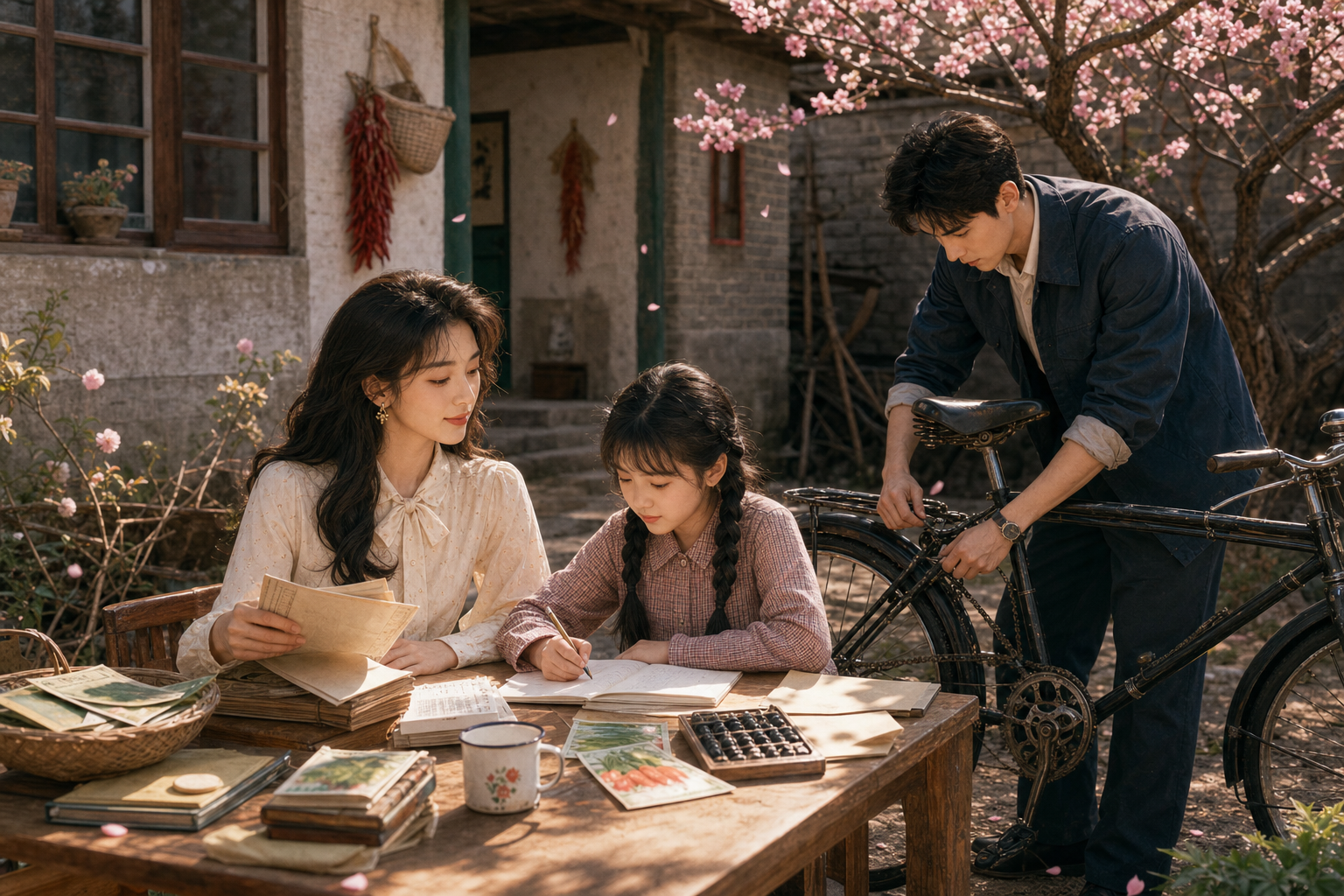
Qin Jiao and Shen Yi are both reborn, which immediately makes this more interesting than the usual one-sided second-chance setup. Qin Jiao remembers a marriage that hurt her and has no interest in rewarding late regret. Shen Yi remembers losing her and thinks devotion in this life can fix what he failed to protect in the last one.
The romance is only one pressure point. Qin Jiao returns to a rural 1980s family where money is tight, reputation travels faster than facts, and her little sister Qin Shi is already learning how easy it is for adults to overlook a quiet child. Qin Jiao has parents who need support, enemies who expect the old version of her, and a magical space with spirit spring water that makes survival considerably less polite.
She is not trying to become lovable. She is trying to become capable. That difference carries the book.
The tropes in the room
- Dual rebirth
- Marriage regret and second-chance romance
- Magical space and spirit spring
- 1980s rural family life
- Protective older sister
- School, exams, and changing social class
- Business-building
- Villains who remember only the old heroine
- Male lead chasing the wife he once failed
- Face-slapping and family reckoning
- Hidden resources
- Found strength without instant perfection
What worked
Dual rebirth gives the relationship teeth. Shen Yi cannot hide behind ignorance, and Qin Jiao does not owe him forgiveness because he feels worse now. Their shared history means every ordinary conversation has a second layer. He knows why she flinches. She knows exactly which promises arrived too late.
Qin Shi is also more than a cute younger sibling placed near the heroine for sympathy. She shows what Qin Jiao is fighting to change. Food, clothing, schooling, safety, and who gets believed all matter. When Qin Jiao protects her sister, the book makes rebirth feel practical rather than mystical.
The family scenes are strongest when nobody gives a speech. Qin Zhonghui and Su Yun feel like parents shaped by their time and circumstances. Their love is tangled with worry, money, reputation, and the limits of what they think is possible. Qin Jiao has to change the family’s expectations as much as its income.
What did not work
The villains can behave like humiliation is an unlimited subscription service. Lin Nian, Chen Feng, and assorted relatives sometimes repeat a bad plan with new accessories. After Qin Jiao wins publicly several times, I start wondering why anyone still volunteers to be next.
The space cheat is useful, fun, and occasionally shameless. Spirit spring water can improve health, resources can appear at exactly the right moment, and scarcity sometimes leaves through the side door before the characters finish worrying. I enjoy competence fantasy. I still want the competence to do more work than the storage room.
Shen Yi’s pursuit occasionally leans too heavily on persistence. Regret explains why he tries. It does not automatically make every attempt romantic. The book is at its best when he listens, changes his behavior, and accepts that Qin Jiao controls the pace.
Pacing and momentum
The opening is sharp. Two people return with incompatible plans, and the family situation gives Qin Jiao immediate work. The school and household arcs move quickly because even small wins change what the family can imagine.
The middle expands into business, relatives, reputation battles, and longer revenge chains. The chapters remain easy to consume, but the overall novel sometimes circles an emotional point after it has landed. A confrontation ends, then three people explain why Qin Jiao was correct. I believed her before the committee meeting.
This is a binge novel, not a compact one. Read it for accumulation. Qin Jiao’s life gets sturdier one decision at a time.
Ten things I liked
- Both leads remember. Nobody gets to rewrite the first life alone.
- Qin Jiao has boundaries. Regret does not earn instant access.
- Qin Shi matters. Protecting a nine-year-old gives the story a warm, human center.
- The parents feel grounded. Love does not erase period pressures.
- The rural setting affects choices. Money, gossip, transport, and schooling have weight.
- Qin Jiao acts. She plans before the next disaster arrives.
- Shen Yi has to prove change. Suffering beautifully is not enough.
- Domestic victories count. A safer home can feel as satisfying as revenge.
- The story understands reputation. Public opinion is treated like a real resource.
- The payoffs are generous. People who underestimate Qin Jiao usually receive educational materials.
Ten things I disliked
- Some villains have no survival instinct.
- The spirit spring can make consequences too soft.
- Repeated praise slows scenes. Qin Jiao does not need a fan club after every decision.
- Shen Yi’s persistence sometimes crowds her boundaries.
- Public confrontations become predictable.
- Secondary women are too often sorted into loyal or jealous.
- Business progress can feel suspiciously smooth.
- The story repeats emotional information.
- Some relatives arrive carrying plot trouble instead of personalities.
- The length needs a stricter editor. Several arcs could lose a third and gain momentum.
My rating
Overall: 8.3/10
Heroine: 8.9 Romance: 8.0 Family story: 8.7 Pacing: 7.1 Payoff: 8.5
I came for Qin Jiao refusing to repeat her old life. I stayed for the slow construction of a home where Qin Shi can grow up without becoming collateral damage. Shen Yi has work to do. Good. Let him work.