RaeRae Reacts
BABYMONSTER SHEESH Performance React
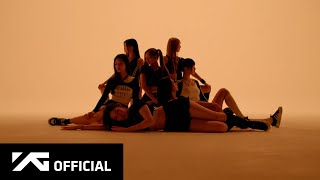
The music video sold the monster house. This version clears the furniture, turns on the lights, and proves the completed lineup can actually move as one.
Artist: BABYMONSTER
Song: SHEESH
Performance video: April 5, 2024
Main choreography: Bada Lee
Bottom line: The SHEESH performance video proves BABYMONSTER can hold a clean frame as seven without relying on the haunted mansion, close-up editing, or CGI to create impact. The point move is simple because it is a logo. The transitions, level changes, individual textures, and completed-lineup geometry are where the choreography earns its replay value.
The bare white horizon is not boring. It is evidence. When the set stops telling us where to look, the members have to build the picture themselves.
Overall vibe
First thought: Thank you for removing the haunted mansion. I needed to know whether the choreography was carrying the video or the video was carrying the choreography.
Formation check: Seven members finally makes the picture feel intentional. There is a center, two wings, and enough bodies for shapes without somebody being parked behind a column.
The moment I leaned in: The pre-chorus transitions. They do not merely swap centers; the formation seems to inhale and open around each vocalist.
The side-eye: The point move is built for instant recognition, not for being the hardest eight-count in the building. That is marketing wearing dance shoes.
Current status: The song review made me respect the lineup. The performance video made me understand it.
What changed every time I replayed it
The first replay was all geometry. Seven is a friendly formation number because one member can hold the true center while three bodies balance each side. Friendly does not mean automatic. A lazy seven-member routine still creates hidden members, awkward lines, and traffic jams during center changes. SHEESH keeps rotating the picture so the center feels earned instead of permanently assigned. AHYEON gets the obvious arrival moments, but the choreography does not turn the other six into backup dancers.
The second replay belonged to the pre-chorus. The formation opens around each vocalist as the melody climbs. Bodies pull away, angles lift, and the frame seems to inhale. That expansion gives the vocal line room before the chorus flattens the energy into a harder, repeated point move. The contrast is smart. The choreography translates the arrangement instead of stacking unrelated dance steps over it.
The third replay made the individual movement textures easier to read. RUKA settles deeper into the groove and gives the lower body more weight. ASA cuts details with quicker edges. CHIQUITA sends energy beyond the frame as if the camera is standing too close. AHYEON attacks center positions like she knows the entire debut conversation has been waiting for this shot. RAMI, RORA, and PHARITA keep the vocal sections from becoming a rest period by maintaining shape without stealing attention from the line.
The fourth replay made me appreciate the chorus more as choreography than as lyric writing. The arms and legs create a recognizable silhouette that reads in a full stage shot, a vertical clip, or a thumbnail. That is not technical difficulty. It is communication. Bada Lee understands that a point move needs to survive bad camera angles and fans attempting it beside a sofa. The routine treats the title word like a visual logo.
The fifth replay belonged to the ending. The controlled grid loosens, the energy spills forward, and the group looks larger than the empty set. That release works because the earlier sections established discipline. Chaos only feels like release when somebody first built a boundary worth breaking.
Why this version exists
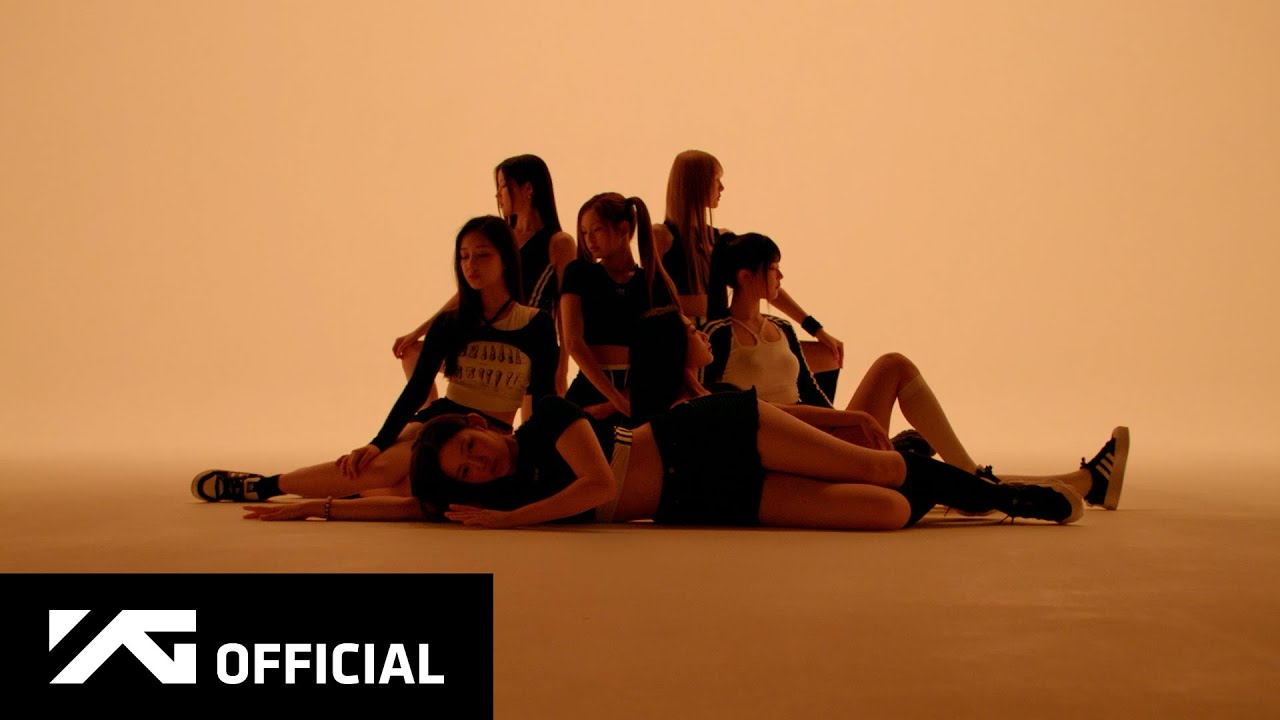
A performance video should not exist just because an official channel needs another upload. This one changes what we can judge. The music video cuts between rooms, faces and effects; the performance version uses a white horizon, controlled lighting and black-and-white sporty styling. There is no story prop to rescue a weak transition. We can see spacing, center changes, levels and the difference between seven talented people hitting steps and a group producing one picture.
The answer is not “perfectly synchronized robots,” and thank goodness. BABYMONSTER’s appeal depends on individual attack. RUKA sits deeper into hip-hop grooves. ASA clips details sharply. CHIQUITA performs past the edge of the frame. AHYEON attacks the center as if somebody might take it back. The choreography lets those differences survive while the formation keeps them from becoming seven separate fancams.
The point choreography is simple because it has a job
The signature “sheesh” move uses the arms and legs to build a shape people can recognize from a thumbnail. It is not the most technically complicated part of the routine. It is the logo. Bada Lee understands that a title-track chorus needs one piece of choreography that can cross the distance between a stage, a short-form clip and somebody trying it badly in a kitchen.
What I like more happens around that logo. The members change height, angle and spacing so the repeated hook does not look as empty as it can sound. Small head directions and weight shifts keep the chant cocky rather than mechanical. The choreography supplies texture the chorus itself withholds.
Seven-member geometry,and why AHYEON changes it
Seven is a friendly number for K-pop formations because it gives you a true center and balanced wings. But the math only works if every transition has a reason. This routine uses AHYEON as a high-impact center without turning the other six into scenery. During vocal peaks, the shape opens toward the singer; during rap sections, the front line can narrow and give RUKA or ASA a harder frame. When the full group returns, the width makes the final party feel larger than the set.
AHYEON’s presence also changes the workload. She can anchor a vocal climax and then stay visually active through a dance break. That lets the arrangement move more aggressively without exposing a gap between “singer time” and “performer time.” Her return was emotional news. Here it becomes practical stage architecture.
Seven performers, seven different jobs
AHYEON acts as a pressure center. She can sing through a climb, strike the next formation, and keep facial energy alive without the routine needing to pause for her. RUKA and ASA give the rap section two different physical accents. RUKA makes the groove feel grounded. ASA makes the rhythm look sharper and more nervous.
RAMI, RORA, and PHARITA have to preserve breath while remaining visually present. That is harder than it looks. A singer preparing for an exposed phrase cannot spend every previous count at maximum force. The choreography lets the vocalists control energy without making them look absent. CHIQUITA bridges the two sides because she performs with enough attack to sell hard choreography while keeping a younger, brighter expression.
The routine works because it does not demand identical bodies produce identical movement. Synchronization establishes shared timing. Texture keeps the members recognizable. BABYMONSTER looks like one group without looking like seven copies of one trainee.
The clean set exposes the labor
The white horizon removes excuses. Spacing mistakes become obvious. A late level change cannot hide behind a chandelier. A weak arm line cannot disappear inside smoke. The black-and-white clothing creates enough contrast to read each body while preserving one group palette. This is a performance-video decision, not a leftover wardrobe rack.
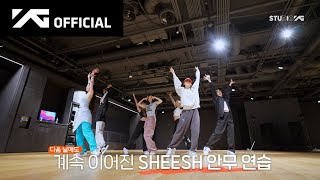
The dance-practice behind adds the part polished uploads usually erase: repetition, correction, fatigue, and negotiation. Members adjust force, timing, and angles because hitting the correct count is only the beginning. They have to agree on how large the movement should feel and where the audience should look. That shared judgment is what turns learned choreography into group performance.
There is also an industry lesson here. K-pop sells effort while hiding most labor. A behind film lets fans see enough rehearsal to appreciate the work, but it is still edited promotion. We are seeing selected struggle, not unrestricted access. That does not make it fake. It means the behind video has two jobs: document the craft and strengthen the group story.
Details the clean set finally lets us see
- The horizon line is doing quiet work. It makes every level change readable and turns silhouettes into part of the rhythm.
- Black-and-white styling separates bodies without splitting the group. The outfits share a palette but preserve enough shape for individual movement.
- The pre-chorus expands. Vocal sections use space and upward energy; the chorus compresses that drama into a harder, flatter point move.
- The rap frame tightens. RUKA and ASA benefit from less visual air, matching the denser delivery.
- The final section releases the grid. After so much controlled geometry, the ending feels like the group breaking out of its own formation.
What the dance-practice behind adds
The behind film shows the unglamorous part: repeating lines, checking angles, adjusting force and deciding when a move should look strong versus soft. That distinction matters. If every count is attacked at maximum power, the routine loses shape. The members are not only learning where to stand; they are learning how much energy each moment is supposed to contain.
YG’s notes credit Bada Lee as the main choreographer, with Chae Dasom and Jo Nain among additional contributors. The finished version feels like a team-built routine that has been edited toward clarity: recognizable chorus, member-specific pockets, and an ending designed to survive a large stage.
What works and what still needs work
The center changes work. The pre-chorus expansion works. The contrast between RUKA and ASA works. The final release works. Most importantly, the routine gives every member a visible reason to be in the completed lineup. Seven does not feel like six plus a returning guest.
The chorus remains the weakest creative bargain. The point move is recognizable, but the repeated hook asks choreography to supply complexity that the lyrics refuse to provide. The dancers succeed, yet I still want one chorus detail that belongs specifically to BABYMONSTER rather than any group with strong lines and expensive styling.
I also want more risk in the middle. The clean frame proves discipline, but one formation could break the expected symmetry or use stillness more aggressively. A group this confident does not need movement on every count. Sometimes the boldest center choice is letting everybody else stop.
What I love, what I side-eye, and the verdict
The SHEESH performance video does what the best companion upload should do: it answers a question the music video cannot. Yes, BABYMONSTER can hold the picture as seven. Yes, the chorus choreography is knowingly simple. And yes, there is more going on than the point move,the transitions, contrasting textures and use of the completed lineup give the routine its actual value.
I still prefer the song’s vocal sections to its chorus. But on a bare set, the choreography closes some of that gap. The hook may only say one word; the bodies around it finish the sentence.
Performance video versus dance practice
The performance video is built for impact. Lighting, styling, camera distance, and the white horizon turn rehearsal precision into a finished product. The dance-practice material is useful for a different reason. It shows how often the members have to repeat small transitions that viewers may barely notice. A hand arriving half a beat early can distort the whole silhouette. One person stepping too wide can force the next center to travel farther and arrive late.
Watching both versions also changes how I judge synchronization. The goal is not mechanical sameness. The members need shared timing, direction, and spacing while preserving different weights and personalities. RUKA should not have to move exactly like CHIQUITA to prove they rehearsed. The routine looks strongest when the beat is shared but the attack remains personal.
That is why this companion React belongs beside the main song React instead of replacing it. The music video explains the concept and the performance video explains the machinery. One sells the haunted house. The other turns on the work lights and shows who built it.