
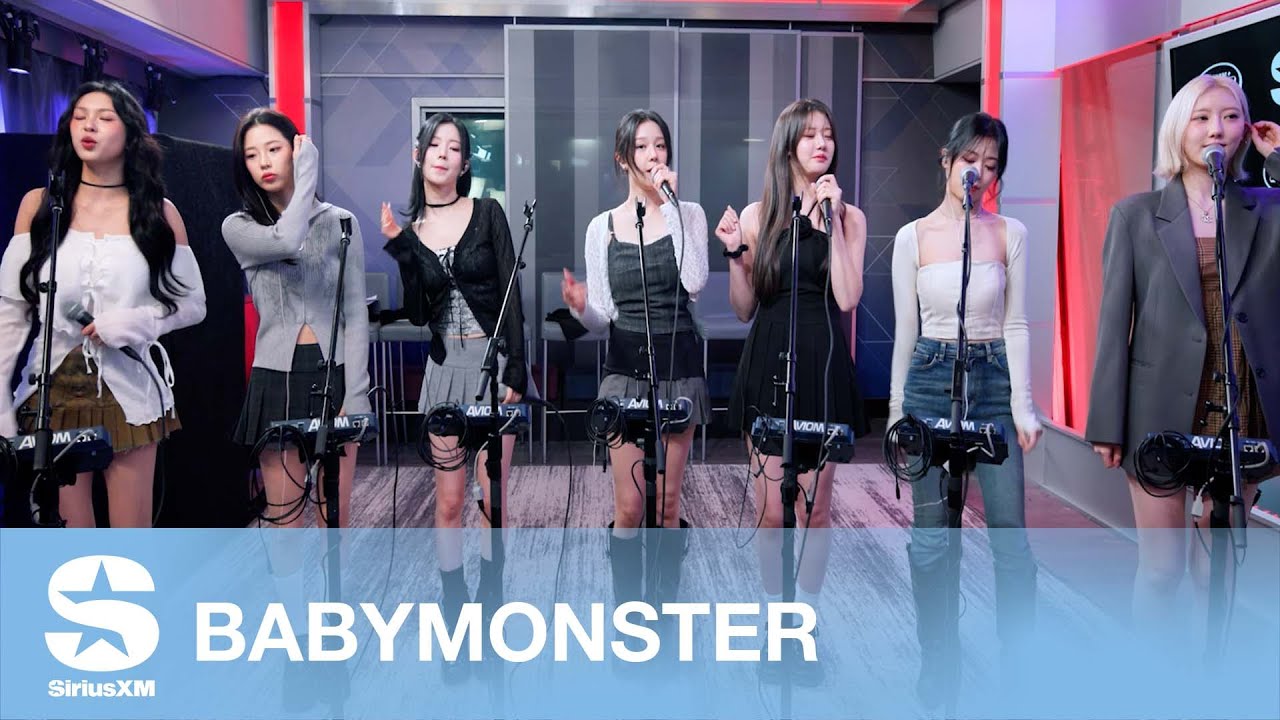
DRIP Live at SiriusXM: BABYMONSTER Left the Roof-Breaking to Their Voices
A radio-room performance strips away the DRIP spectacle and leaves BABYMONSTER with microphones, harmonies, and nowhere to send a weak note.
RAERAE REACTS · BABYMONSTER · LIVE AT SIRIUSXM
No ice-cream truck. No animated explosion. No dance-film smoke meeting. SiriusXM gives BABYMONSTER microphones, a compact room and nowhere for the last chorus to hide—which is exactly where “DRIP” starts sounding less like a YG event and more like seven singers passing a live wire.
Release file
Released: May 28, 2025
Runtime: 03:10
Artist: BABYMONSTER — Ruka, Pharita, Asa, Ahyeon, Rami, Rora and Chiquita
Platform / channel trail: SiriusXM K-Pop · SiriusXM official YouTube
Label / channel trail: YG Entertainment · SiriusXM
Exact-video distinction: This is the live SiriusXM studio performance, separate from the official MV, dedicated performance video and special dance film.
Sound: Danceable hip-hop co-composed by G-Dragon, built around swaggering verses, vocal lift and a final chorus that keeps increasing the bill.
Sources: Exact SiriusXM performanceDaily+3.5KTotal views5.1M · SiriusXM official feature.
First reaction: the room is smaller than the song
“DRIP” was designed to expand. Every section adds posture, the bridge opens vertical space and the last chorus behaves as if the building forgot to budget for a ceiling. A studio performance removes the crowd and spectacle that normally make that escalation easy to sell.
The seven have to create size through breath, tone and handoffs. They do. The room never becomes an arena, but the song stops needing one. Live sound lets the climb happen inside voices rather than production graphics.
The backing track is support, not an innocence test
K-pop live discourse loves pretending every performance is either pure unsupported vocal heroism or a criminal lip-sync conspiracy. SiriusXM uses a backing structure because the track has layered voices, doubles and production information. The useful question is whether live singing changes what we hear.
It does. Attacks vary, breath becomes audible, phrases carry individual grain and the members adjust energy to the room. A track can support them without doing all the expressive labor. “Live” is not proven by suffering; it is proven by responsive choices.
Rami is the texture this arrangement was built to use
Rami’s deeper, slightly rougher color gives the polished mix a surface to catch on. In the studio, that texture reads even more clearly because she is not competing with a dance camera or giant set. Her sound connects the lower pressure of the verse to the vocal climb ahead.
This performance also belongs to the period before her later health hiatus. Keeping that timeline correct matters. The seven-member “DRIP” recording and SiriusXM performance should not be rewritten by later six-member promotions.
Ahyeon brings the blast without making it a rescue mission
Ahyeon has the obvious power note and the stage instinct to make a climax register instantly. The risk is structuring every review as six people waiting for her to save the final minute. SiriusXM shows why that framing is lazy.
Her power works because previous voices build pressure and the group remains active after she releases it. She is a detonation inside the arrangement, not an emergency generator wheeled in because everyone else lost electricity.
Rora and Pharita make lift sound different
Rora’s fuller, grounded tone and Pharita’s clearer upper color prevent the melodic line from becoming one generic “vocal section.” Their handoffs change emotional temperature even when the notes continue the same upward argument.
The close room rewards that contrast. Small vowel choices and breath endings remain audible. Neither singer needs to oversell technique because the microphone is already close enough to report it.
Ruka and Asa keep rap attached to the groove
Ruka and Asa do not treat rap as the moment the song pauses for a tougher genre. Their timing continues the same forward current. Ruka’s lower placement gives weight; Asa’s sharper articulation increases velocity without turning the verse into a syllable race.
In a live studio, rhythmic confidence is exposed. A phrase arriving slightly behind or ahead changes the whole pocket. Both understand that cool is a timing decision, not a facial setting.
Chiquita keeps youth from becoming novelty
Chiquita brings brighter attack and playful confidence without being framed as the cute youngest member visiting a grown concept. Her voice and expression belong inside the song’s swagger.
She also watches the group. Reactions during other members’ lines keep the room alive and make the performance feel shared rather than edited from seven isolated microphone tests.
The microphones change the choreography
This is not the full dance routine, and it should not pretend to be. Hand microphones and close studio spacing redirect performance toward faces, shoulders, steps and interaction. The members still mark rhythm physically, but nobody sacrifices vocal setup to reproduce a formation designed for a larger floor.
That adaptation is evidence of performance intelligence. Live singing does not become more authentic when artists force every original move into a room that cannot hold it.
The last chorus has to earn the roof again
The MV’s final chorus benefits from cuts, spectacle and visual escalation. SiriusXM begins with none of those tools. The members build through vocal layers, ad-libs, stronger attacks and visible group response.
Ahyeon’s high power matters, Rami’s texture matters, Rora and Pharita’s lift matters, the rap line’s momentum matters and Chiquita’s brightness matters. The roof breaks because the whole structure pushes upward, not because one note files a demolition permit.
Where the session stays too tidy
The performance is polished enough that I occasionally want more risk: a freer ad-lib, a quieter entrance held longer or one member pushing the ending far enough that the others have to answer in real time.
Studio sessions can become premium proof-of-competence clips. BABYMONSTER are more interesting when technique turns into conversation. This performance reaches that point in flashes; it could live there longer.
Why this exact upload needs its own page
The official MV reviews cinematic chaos and the song’s structural escalation. Performance videos review formations and camera geometry. SiriusXM reviews microphone control, tonal contrast and how seven people share a small live room.
Calling them all “DRIP” and stacking players would hide the object under the song title. Exact-video Reacts let readers choose whether they want cinema, choreography or live vocal evidence.
What I kept replaying
- Rami’s lower texture: the polished mix finally has something tactile to catch.
- Ruka-to-Asa momentum: two different rap colors stay inside one groove.
- Rora and Pharita’s melodic handoff: lift changes color without losing direction.
- Chiquita watching the others: group response keeps a compact room alive.
- Ahyeon’s climax: power lands as culmination rather than rescue.
- The final group layer: seven separate contributions make the chorus expand without visual explosives.
RaeRae verdict
SiriusXM gives “DRIP” the test its giant MV cannot: can the song still climb when production spectacle stays outside? BABYMONSTER answer with seven distinct vocal textures, rhythmic confidence and enough group response to make a small studio feel structurally taller by the final chorus.
I wanted one messier, more spontaneous exchange. I did not need another explosion. The voices already understood the assignment.
Bottom line
BABYMONSTER left the roof-breaking to their voices. “DRIP” live at SiriusXM proves the final chorus belongs to seven people building pressure together, not one high note standing on a pile of special effects.
Sources and official context
- BABYMONSTER — “DRIP” exact live SiriusXM performanceDaily+3.5KTotal views5.1M
- SiriusXM — official interview and performance feature
- CVM Sekai separate official-MV React
- CVM Sekai group hub and exact-video tracker
What changed every time I replayed it
The first replay belonged to the lower harmony. The second followed breath choices. The third caught which members changed attack when the room offered no choreography to carry them. By the fourth, the performance felt less like promotion and more like a vocal receipt.
Lyrics and meaning: confidence without the costume rack
DRIP treats confidence as something visible and contagious. In this room, the lyrics cannot borrow luxury styling or a giant set. The voices have to make the self-belief sound earned.