
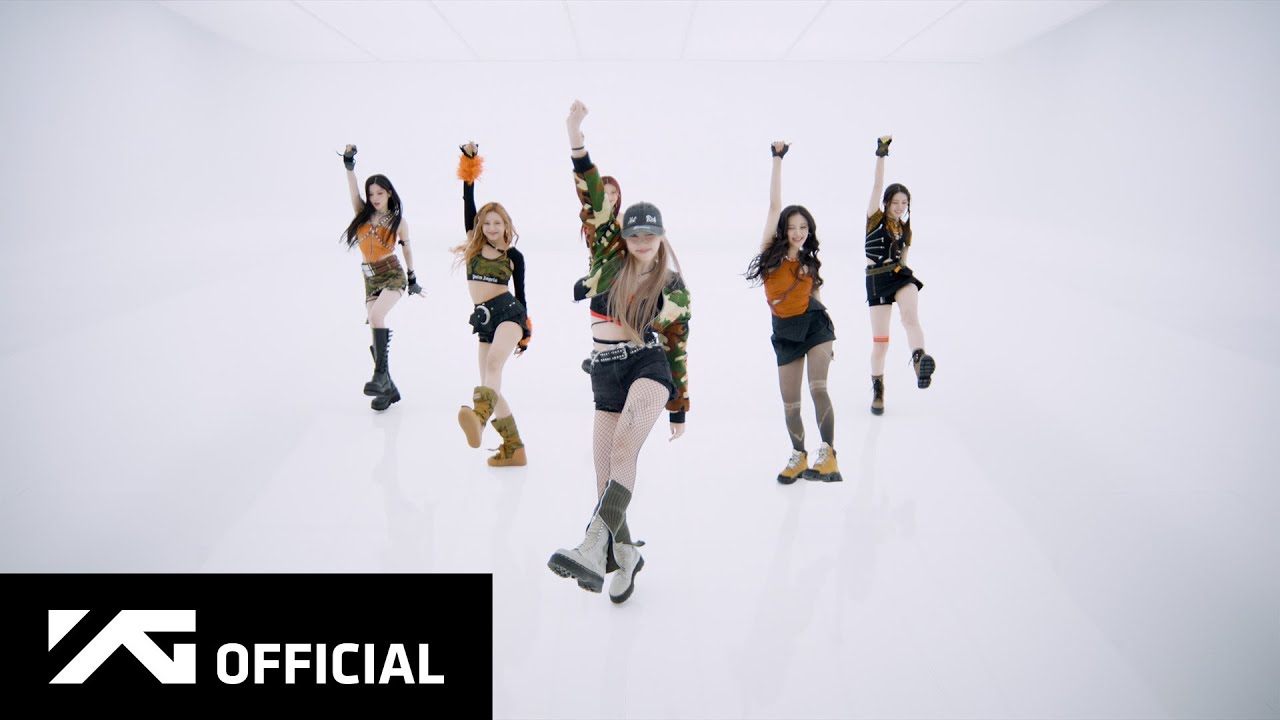
BABYMONSTER BATTER UP Dance Performance React: Six Rookies Make the Missing Stage Themselves
BABYMONSTER skipped the normal debut-stage circuit, so this exact dance performance had to work as choreography proof, lineup introduction, and miniature promotion campaign all at once.
Release file
Released: December 3, 2023
Runtime: 03:24
Artist / channel: BABYMONSTER / YG Entertainment
Exact-file focus: Official BATTER UP dance performance, debut special. Practice-room and stadium versions remain separate exact files.

First reaction: this is the stage the debut rollout forgot
BATTER UP arrived through an expensive MV, but a music video can cut away whenever the choreography gets difficult or a formation needs help. The debut-special dance performance removes that excuse. Six members have to travel, trade center, preserve lines, and sell a chorus designed for a crowd before they have an ordinary music-show stage to call their own.
The result feels less like bonus content and more like missing evidence. Ruka, Pharita, Asa, Rami, Rora, and Chiquita are not standing inside an announced seven-member picture here. They are the working group. The choreography has to make six look deliberate while Ahyeon recovers away from the rollout. That math becomes part of the performance whether YG names it or not.
Lyrics and meaning: swing first, certainty later
BATTER UP borrows baseball language to turn debut into a challenge. Clear the plate. Watch the rookies step forward. Treat arrival as victory before the first public inning has settled. The lyrics do not reveal deep personal stories, but they give choreography a clean command: move like the outcome is already decided.
That confidence becomes more interesting because the lineup is incomplete. Six performers announce a finished team while the public knows a seventh member was planned. The routine cannot solve the health situation, but it can make the available lineup look certain. Every wide formation and hard center handoff argues that these six women are not placeholders. They are carrying the debut now.
Performance: six-member geometry has no lazy answer
An even-number lineup cannot rely on one permanent center with balanced wings. Somebody gets hidden, the focus splits, a line offsets, or the group keeps moving before the imbalance becomes obvious. BATTER UP uses all four answers. Diagonals give members separate lanes. Pairs create short exchanges. Moving centers stop one woman from becoming permanent scenery.
Ruka makes the groove feel heavy and settled. Asa attacks faster details. Chiquita sends energy beyond the frame. Rami controls breath without turning vocal sections into rest periods. Rora and Pharita keep their lines clean on the edges, where a camera can easily forget them. The group does not have a dead corner, which matters more than one spectacular center shot.
The video: polished enough to guide, wide enough to prove
The debut-special set uses clear costume contrast and controlled lighting to teach viewers where to look. The camera moves, but it does not cut so aggressively that the choreography disappears. Wide shots arrive when formations need evidence. Closer shots sell faces and attitude without pretending a shoulder-up frame can prove footwork.
This is still a sales pitch. The production wants BABYMONSTER to look ready, expensive, and larger than the rookie calendar suggests. I do not mind a sales pitch when the file also shows the product doing the job. The members hit the spacing, keep individual texture, and carry the final chant without needing the MV’s mountain of props.
Member watch: the rap handoff changes the body language
Ruka and Asa do more than trade rap lines. They change the center of gravity. Ruka lets movement sit lower and heavier. Asa clips accents with a quicker nervous edge. Their contrast gives the middle of the routine a new texture without breaking the shared count.
Rami provides vocal power while staying physically present. Rora and Pharita make edge positions look intentional instead of temporary. Chiquita performs through the ends of gestures and never waits for the next close-up to switch on. Six members carry six visible jobs. That is how a group avoids looking like one center plus five pieces of furniture.
What changed every time I replayed it
The first replay made me watch the transitions instead of the chorus. The second belonged to the members on the outside lines, especially the moments when a diagonal could easily collapse. The third made the rap handoff feel like the routine’s real engine. The fourth exposed how often camera movement helps without covering weak spacing.
By the fifth replay, the final chant stopped feeling like extra song padding and started feeling like the routine’s release valve. The earlier sections keep six-member geometry controlled. The ending widens the picture and lets collective attack replace perfect symmetry. The song was always built for that physical payoff.
The side-eye: controlled uploads cannot replace public growth forever
YG turned the debut into an online product cycle: MV, dance performance, practice file, stadium version. Each upload gives fans another thumbnail and another proof point. The company also controls every camera, set, release time, and usable take. That protects rookies, but it limits the messy public growth that makes a debut era feel alive.
I want to see performers adjust when a broadcast camera misses them, a live crowd responds differently, or a stage has less room than rehearsal. Controlled files prove skill. Public stages prove adaptability. BABYMONSTER deserved both, not a rollout where the company could edit uncertainty out of every room.
RaeRae verdict
The BATTER UP debut-special dance performance earns its own React because it proves the six active members could carry choreography the MV only hinted at. The formation math is not invisible, and a few transitions still show the strain of building around an even number. That makes the performance more interesting, not less.
Ruka, Pharita, Asa, Rami, Rora, and Chiquita make the available lineup look intentional without pretending the wider seven-member story does not exist. The chorus swing remains obvious. The final chant remains classic YG machinery. The members put enough force and difference inside that machinery to make the file replayable.
Bottom line: the missing broadcast stage became its own evidence
The debut special cannot recreate the pressure of a weekly live broadcast, but it answers the first practical question left by the MV. Yes, six-member BABYMONSTER can move as a group when the edit lets formations finish. The members keep edge positions active, move centers with purpose, and make the final section feel larger than the set. That evidence deserves a page of its own.
What I refuse to do is treat the six-member period as disposable prehistory now that Ahyeon is back. These performers learned the debut choreography, filmed the rollout, and absorbed the first wave of public judgment. The later seven-member group has a different balance. Both chapters matter. This exact dance performance records the chapter where six rookies built a stage because the company did not give them the ordinary one.
Receipts and next stops
Start with the BATTER UP official MV React for the debut story and baseball imagery. The BABYMONSTER group hub connects this six-member era to Ahyeon’s later return and the seven individual member profiles. The choreography proves the debut was active labor, not a temporary rehearsal for the lineup that came later.