
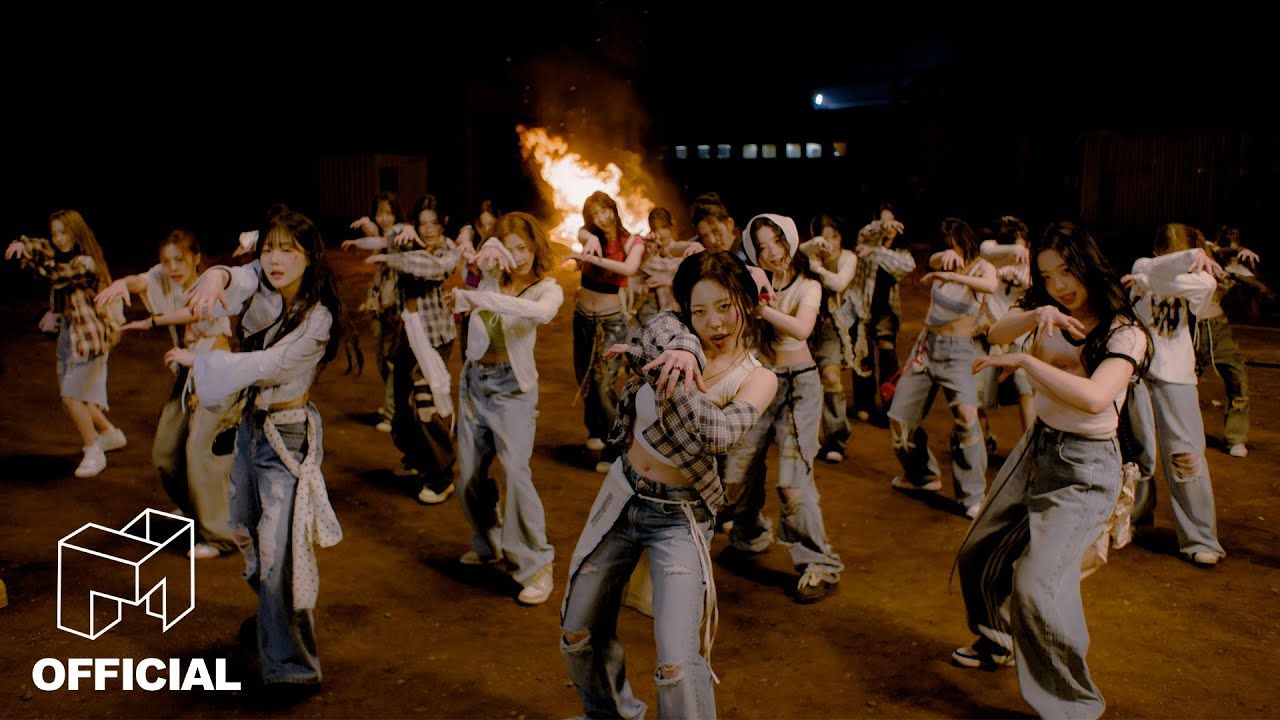
Are You Alive: tripleS Put 24 Women in One Dance Frame and Somehow Nobody Needed a Traffic Cop
The We So Alive dance file puts 24 women into one frame and trusts formation logic more than traffic control. tripleS make scale look intentional, then keep individual energy visible inside the moving architecture.
Release file
Released: May 19, 2025
Runtime: 03:15
Artist / channel: tripleS / tripleS official
Exact-file focus: Official Are You Alive dance file, We So Alive version.
The full-team dance works because spacing becomes personality. I still want the camera to hold the evidence longer instead of cutting away the moment the formation starts explaining itself.
The exact object
This React covers 4LSBTQOSqfg, one exact official tripleS upload. A narrative music video, dance performance, stage and relay are separate objects even when they share a song. Eleven-character identity keeps criticism attached to the camera, mix and formation it actually describes.
The lineup receipt
All twenty-four current members participate in the full-team era: Yoon SeoYeon, Jeong HyeRin, Lee JiWoo, Kim ChaeYeon, Kim YooYeon, Kim SooMin, Kim NaKyoung, Gong YuBin, Kaede, Seo DaHyun, Kotone, Kwak YeonJi, Nien, Park SoHyun, Xinyu, Mayu, Lynn, JooBin, Jeong HaYeon, Park ShiOn, Kim ChaeWon, Sullin, SeoAh and JiYeon.
First-watch reaction
Twenty-four people enter one object and the first response is scale, but scale is not the whole achievement. The direction has to make entries feel cumulative rather than administrative. I want the song to widen, tighten, breathe and finally arrive somewhere that required this many distinct voices.
The opening decision
The opening has to establish emotional pressure before the member count becomes visual noise. A good first entrance gives the next person something to answer. Watch whether the cut completes a musical thought or moves because another face is waiting in the queue.
Vocal architecture
The arrangement works when tones are assigned jobs: an intimate entry, a sharper answer, a lift, a bridge and an earned collective peak. A twenty-four-member recording does not need equal seconds in every bar. It needs enough structural clarity that difference remains audible.
Rap and rhythmic pressure
Rap passages change density and reset momentum. The useful question is not whether a section looks tougher; it is whether rhythm reorganizes the song. Tone, consonant attack and the space around a line matter more than inherited K-pop posture.
Choreography as traffic
Large choreography is traffic management. Members clear paths, rotate levels and prepare new pictures while the center carries the obvious phrase. Follow one person after her close-up ends. The work continues, and clean movement is why the next close-up can arrive without collision.
The center problem
A center is useful when the surrounding formation explains why that person is central. If every shot isolates a new face without preserving geometry, twenty-four becomes a slideshow. Wider frames must prove that the full-team premise exists outside editing.
Camera and edit
Cuts should clarify musical emphasis, not manufacture all momentum. Close-ups identify; medium shots connect; wide shots prove. When the camera refuses to hold one complete phrase, it asks the viewer to trust choreography the object has not actually shown.
Color and readability
Mood cannot excuse losing faces in a dark purple room or putting lavender type on a nearly matching header. Contrast must remain readable on mobile. Styling can be dreamy, grim or strange while still separating skin, clothing, subtitle text and the action the scene expects us to follow.
Individual identity
The direction cannot give every member a complete biography, but it can assign memorable visual or musical functions. One gesture, location, tone or transition is enough when it is specific. Generic beauty shots make the group look expensive and still leave new viewers unable to identify anyone.
Group identity
The strongest passages stop feeling like twenty-four introductions and become one collective decision. Synchronization matters, but unanimity is not the only route. Countermovement, staggered entrances and layered vocals can make scale expressive rather than merely impressive.
Production and low end
Listen to percussion, bass and the space left for voices. A dense mix can make a huge group feel oddly small if every tone is flattened into one bright surface. Strategic subtraction gives entrances consequence and lets the final expansion feel earned.
The bridge test
A bridge should change the emotional problem, not simply dim the lights before the same chorus returns. With twenty-four voices available, contrast is a resource. The arrangement can move from intimacy to threat, fatigue to resolve or fragmentation to collective force.
The final chorus
The last section has to justify assembly. Extra harmony, altered rhythm, broader formation or a changed emotional point of view can do it. More confetti and faster cuts are not automatically development. The ending should feel larger because the earlier sections built a reason.
What works
tripleS succeed when the member count becomes architecture: distinct tones, coordinated traffic and a chorus that feels social rather than crowded. Commitment remains visible in the background, which gives the chosen close-up a working world instead of an empty stage.
What I would change
Hold one wide phrase longer, allow one quieter voice to remain quiet in the mix, and stop treating every member change as a reason to cut. New viewers need landmarks. Existing fans deserve to see the choreography they already know is happening.
Audio-only replay
Remove the picture and mark every change in vocal color, density and pressure. Ask whether the song develops without faces labeling the entrances. Audio replay reveals whether twenty-four participants formed an arrangement or simply divided a fixed amount of material.
Visual replay
Mute the video and follow spacing, light and background expression. Choose a member you missed on the first pass and stay with her. A valuable replay discovers coordinated labor and narrative detail, not merely close-ups that were too short to process.
The second-member test
Choose the person standing beside the center and watch how she frames the phrase. Supporting angles, eye line and level changes often determine whether a center looks powerful. This test breaks the habit of treating every useful performance decision as a solo event.
The accessibility test
Try to identify the upload, lineup and release context using only official information. If the answer requires several fan threads, the promotional system has failed a basic international-access test. Complexity can be the art; confusion should not be the customer service.
The thumbnail test
The local featured image, hero, landing-page card, Open Graph share and Twitter share must all use this post’s same unique attachment. A related song or another review cannot borrow it. Visual identity is part of exact-object tracking, not decoration added after the writing.
The mobile test
On a narrow screen, the video must keep its 16:9 shape, headings must remain readable and no card or paragraph may push the page sideways. A cinematic frame that overflows the phone is not cinematic. It is a layout bug hiding part of the work.
Replay section
Watch once for impact, once following one member through every formation and once without the image. Compare alternate official versions only after the audited upload is clear. Then open the tripleS hub to place the exact object inside its correct full-team and unit chronology.
RaeRae verdict
I love the audacity because twenty-four women should be allowed to make something too large for the usual template. My complaint is infrastructure and patience: give viewers the receipts, the contrast and enough held frames to see the scale doing work instead of merely announcing itself.
Bottom line
This exact official tripleS upload earns replay because twenty-four distinct performers turn scale into vocal contrast, formation pressure and collective feeling. It is not beyond criticism. It is strong enough to survive criticism without a fake scandal, a ranking war or pretending the largest fact is the only fact.
Canonical relationships
Sources and receipts
- Official tripleS profile
- Official tripleS website
- Official ASSEMBLE24 page
- Official 2026 links and tour
- Official tripleS YouTube
- Exact official uploadDaily+2.2KTotal views2.2M
Verdict
The full-team dance works because spacing becomes personality. I still want the camera to hold the evidence longer instead of cutting away the moment the formation starts explaining itself.
What changed every time I replayed it
The first replay counted formation changes. The second stopped counting and followed how centers, diagonals, and negative space direct the eye. The third made the real achievement obvious: 24 performers can create scale without turning the back rows into wallpaper.
Lyrics and meaning
The lyric asks whether the listener is alive as a challenge to leave emotional autopilot. Aliveness is not mere survival; it is attention, risk, movement, and a willingness to answer the world before routine answers for you.