

MEMBER PROFILE
Yeju
Status: Active ICHILLIN member
Years active: 2021-present
Lead Dancer, Sub Vocalist, Visual, Center in ICHILLIN.
RaeRae take:
She understands the camera but does not chase it around the stage. That distinction matters. Yeju can make a center moment look natural, which is usually the result of a lot of very unnatural practice.
Profile
| Stage name | Yeju |
|---|---|
| Birth name | Kim Ye-ju |
| Born | September 1, 2004 |
| Birthplace | Wonju, Gangwon, South Korea |
| Height | 165 cm |
| Blood type | A |
| MBTI | ENFP |
| Group role | Lead dancer, sub vocalist, visual and center |
| Company | KM Entertainment |
| ICHILLIN debut | September 8, 2021 |
| Current status | Active ICHILLIN member |
Contents
Before debut
Yeju trained at Fantagio before joining KM Entertainment. She debuted with ICHILLIN in 2021 as one of the younger members, but she was already being used as a visual and center. Those positions sound glamorous until you remember that the center is where timing errors become public evidence.
Career with ICHILLIN
Yeju is often responsible for selling the concept at first glance. In brighter eras, she keeps the expression open without turning childish. In sharper concepts, she can narrow the performance without overacting. Her lead-dancer role gives the group a reliable visual line alongside E.Ji and Chowon.
Performance identity
She understands the camera but does not chase it around the stage. That distinction matters. Yeju can make a center moment look natural, which is usually the result of a lot of very unnatural practice.
ICHILLIN’s current lineup works because the members have different jobs without feeling sealed into separate departments. Yeju can be read most clearly beside the other members: Jiyoon, E.Ji, Jackie, Joonie, Chaerin, Chowon. The group profile keeps the full timeline and discography in one place.
Trivia and fandom notes
- She is a former Fantagio trainee.
- She is from Wonju, Gangwon Province.
- She uses the personal Instagram handle @welcometoyezoo.
- She is part of ICHILLIN’s dance line.
Official Socials and related links
Sources
Profile facts were checked against ICHILLIN’s official channels, KBS World, Kprofiles, Kpopping, Korean comeback coverage, and member-linked public social accounts. Positions reflect the current seven-member lineup.
The page cannot stop at “visual” or “center”
Yeju is one of ICHILLIN’s younger members, but age order is not a performance analysis. The useful questions are how she controls a transition, where her expression changes the tone and whether her responsibility grows across eras. A profile that stops at “visual” or “center” turns a working performer into a camera-position sticker.
Her growth is easiest to see by comparing early stages with “DEMIGOD,” “ON MY LIPS” and “XL.” The later work shows firmer commitment at the beginning of a gesture and more comfort holding an expression after the center shifts. Confidence becomes visible before line distribution changes.
“DEMIGOD” is especially useful because every member enters the rap experiment. Yeju does not need to imitate the group’s strongest rapper. The challenge is to locate a pocket that fits her tone and make the boast believable through timing. Difference is the point of giving seven people the same technical problem.
In brighter material, watch how she prevents enthusiasm from becoming blur. Clean stops and readable eye-lines make high-energy choreography easier for the camera to understand. The skill is not simply moving quickly; it is deciding which moment the viewer should retain.
The tracker stays participation-aware. ICHILLIN group videos link to this profile because Yeju appears in them. A solo library will be added when a release is individually credited, not because a member profile looks more impressive with borrowed group totals.
My replay route is “Got’ya,” “La Luna,” “Kick-Start,” “DEMIGOD,” “ON MY LIPS” and “XL.” That sequence shows the group’s changing concepts and gives Yeju enough time to be evaluated as a developing performer rather than one freeze-frame from one era.
Current status: Current RaeRae React trail
How to follow the work without losing the artist
Growth deserves dates, not adjectives
Calling Yeju improved means little unless the comparison is visible. Use debut-era stages as the first checkpoint, 2023 material as the middle, and Feelin’ Hot plus Wild Cherry as the current evidence. Look for earlier commitment to facial choices, cleaner landings after fast travel and whether she continues performing after her lyric ends. Those details turn “growth” from encouragement into observation.
The same method protects younger performers from two bad extremes: treating every mistake as proof they were never ready, or pretending age makes criticism cruel. Context and standards can coexist. Training conditions, concept difficulty and experience explain a performance; they do not require the viewer to lie about what happened.
Yeju’s strongest future profile will not be the one with the most trivia. It will be the one that records new responsibility accurately—an opening line, a dance break, a writing credit, a hosting role or an individual release—and then explains what she did with it. Until those moments arrive, the current work is enough to analyze honestly.
For the next comeback, the first audit will compare responsibility rather than styling: who opens the song, who owns the transition, whether Yeju receives a distinct rhythmic or melodic problem, and how consistently she solves it across official stages. Hair color can mark an era; work defines it.
The next update should compare Yeju’s responsibilities across studio recording, choreography video and live stage. Growth becomes clearest when the same phrase remains intentional after camera blocking, travel and breath demands change. One fancam can suggest a pattern; repeated stages are what establish it.
Evidence matters.
React image cards
Static cards route each exact official upload to its own in-depth React. Every card repeats that React’s featured and hero image so the archive stays visually traceable.

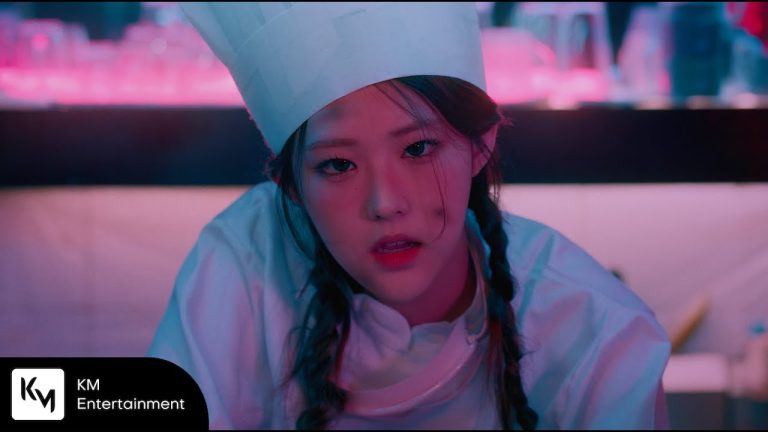
XL (Extra Love): ICHILLIN Ordered the Biggest Crush on the Menu and Added a Lemon
Exact-video React · Read the full review

Center is a responsibility, not proof of superiority
Yeju’s center designation means she is often asked to establish the first readable version of a concept. The camera may meet her face before a casual viewer knows the song, so timing, expression and posture have to communicate quickly. That does not make her the most important member, and it does not mean she owns every chorus. Center is one job inside a seven-person arrangement, not a ranking disguised as blocking.
The strongest center work gives attention somewhere to go next. Yeju can finish a close-up, redirect her eye-line and move into formation without making the handoff look like a demotion. When that transition is clean, the next member arrives with more impact because the stage has prepared the viewer. A center who only performs while centered leaves holes. Her better stages avoid them.
Camera awareness without camera chasing
Yeju’s original RaeRae note says she understands the camera without chasing it. The distinction can be made concrete. Camera chasing looks like an expression or head angle competing with the current focal point, even when the choreography asks the performer to support the frame. Camera awareness means knowing when a lens is likely to arrive, completing the phrase for it, then staying inside the group picture after it leaves.
That control is partly technical. An expression must begin early enough to read before the edit cuts away. A turn cannot finish after the lens has moved. At the same time, anticipation should not become visible calculation. Yeju’s current strength is making preparation look like part of the character. The viewer receives the moment without watching her wait for it.
Lead-dancer work is more than occupying the middle
Yeju’s dance role matters independently of center placement. Her movement has to remain clear from the side of a formation, where the camera offers less protection and spacing becomes easier to judge. She is effective when she commits to the beginning of a gesture, controls the travel between marks and lets the endpoint arrive with the music instead of rushing toward the next close-up.
Her best bright-concept work balances speed with retention. High energy can become a blur of correct counts that leaves no image behind. Yeju uses clean stops and readable eye-lines to decide what the viewer should remember. In sharper material, she can narrow the expression and reduce unnecessary bounce without turning the body stiff. The concept changes; the underlying timing remains identifiable.
A sub-vocal role still changes the arrangement
Yeju is not primarily presented as one of ICHILLIN’s main vocal anchors, but a shorter vocal phrase can still alter a song’s direction. Her lines often benefit from directness: a clear tone, a rhythmic ending and enough personality to make the transition feel chosen. The relevant measure is not whether she receives the longest sustained note. It is whether the section would lose color or momentum if her entrance were flattened.
Line distribution also needs context. A center can carry visual responsibility while another member carries the melodic peak. Those jobs should not be treated as compensation prizes traded between fandom camps. When the arrangement works, Yeju’s close-up or dance emphasis creates one kind of focus and Jiyoon’s or Chaerin’s vocal phrase creates another. The group gains shape from the contrast.
Before debut and the Fantagio training context
Yeju trained at Fantagio before joining KM Entertainment. That fact belongs in the timeline because it helps explain why camera and formation responsibilities appeared early, but it should not become a fictional biography of everything that happened in a training room. Public evidence supports the prior trainee connection; it does not reveal every evaluation, lesson or almost-debut story.
What can be seen is the result at ICHILLIN’s debut. She arrived already capable of holding a focal position while moving through a busy seven-member stage. The rookie version is less relaxed than the current performer, yet the basic habits are present: face aligned with concept, body prepared for the lens and a preference for readable movement rather than decorative flailing.
Got’Ya and Fresh: two ways to introduce a center
“Got’Ya” uses restless percussion and quick visual changes, so Yeju’s first task is orientation. She gives the viewer a stable face inside a debut designed to introduce many things at once. The performance is energetic, but the better moments are the ones where she makes one gesture or expression legible before the next edit arrives.
“Fresh” asks for a lighter kind of invitation. Brightness can expose calculation because a smile held one beat too long starts looking like a cue rather than an emotion. Yeju learns to let the expression move with the lyric while keeping the dance timing exact. Comparing the singles shows why “good with the camera” is a developing technique, not an unchanging physical trait.
La Luna and the discipline of atmosphere
“La Luna” is useful for Yeju because atmosphere cannot be sold through constant smiling or constant severity. The performer has to sustain a mood across longer movement lines and quieter transitions. Yeju’s eye-line becomes especially important. A small change in focus can make a phrase feel private, distant or suddenly direct without requiring the choreography to announce it.
The song also tests whether a center can support another member’s focal moment. Yeju remains engaged on the edge of the picture and builds pressure as the formation turns toward her. That makes the camera handoff feel like part of the music. The stage gains continuity rather than a sequence of individual portrait sessions.
Draw (My Time) and the revised seven-member geometry
Jiyoon’s arrival in 2022 required the established members to relearn spacing and handoffs. “Draw (My Time)” is part of Yeju’s history because a center helps define whether the new group shape looks intentional. She cannot protect the old geometry and expect the added member to solve every collision. The current lineup succeeds when all seven adjust.
The softer material makes that adjustment easy to observe. There is less visual noise to hide an awkward path. Yeju’s transitions remain direct, and her expression helps establish a gentler group character without monopolizing the song. The performance does not treat lineup integration as a dramatic reveal; it treats it as completed work.
Kick-Start is the bright-concept checkpoint
“Kick-Start” gives Yeju a concept that suits her ability to make energy readable. The song moves quickly, but she uses clear landings and an open expression to keep the chorus from becoming generic summer motion. Her center work acts as a visual exclamation point, then releases the frame so the group can keep traveling.
A full-stage view shows the difference between speed and momentum. Yeju does not merely arrive at her next mark. Her body carries the previous phrase into the travel and prepares the next one before the formation closes. That continuity is why the performance feels propelled rather than hurried.
DEMIGOD gives her a problem outside the obvious lane
The all-member rap premise of “DEMIGOD” removes the comfort of treating Yeju only as a bright center or visual. She must make rhythmic authority believable without copying Jackie’s established rap identity. The solution lies in timing and gaze. A phrase lands when she commits to the pocket and lets the expression hold through the end rather than decorating it with extra hardness.
The concept is a useful growth marker because it asks for a different relationship with the lens. Bright material invites the viewer in; “DEMIGOD” makes the member challenge the viewer to stay. Yeju’s later stages show more comfort holding that pressure after the lyric ends. Confidence becomes visible in duration, not merely intensity.
ON MY LIPS and the quieter close-up
“ON MY LIPS” offers a visual concept louder than its production. Yeju’s camera awareness helps in the smaller groove because she can create a close-up from detail rather than force: a controlled eye-line, a slight shift in expression and a line ending that leaves tension in the space. The song does not need her to pretend the instrumental exploded.
That restraint separates performer responsibility from production criticism. The React can argue that the track needed more heat while still crediting Yeju for serving the version that exists. Overacting would make the mismatch worse. Her job is to make low pressure intentional, and her best moments do.
XL lets scale become part of the joke
“XL (Extra Love)” gives Yeju permission to expand. The crush is deliberately too large, the lemon is absurd and the chorus wants a group picture that arrives all at once. Her center experience helps establish the tone: confident enough to sell the scale, playful enough to show that the song understands its own exaggeration.
The dance still needs boundaries. Yeju enlarges the gesture without losing its endpoint and carries the expression through the handoff. Her contribution is not simply looking appropriate in the middle. It is making the middle connect the bright vocal movement, the lower “XL” response and the next member’s entrance into one chorus.
What a fair next-era audit looks like
The next comeback should be checked across the official edit, choreography video and several live stages. The official video shows the intended character; the fixed dance view shows spacing and travel; live broadcasts show whether the same intention survives costumes, camera blocking and breath demands. One flattering cut can suggest a skill. Repetition across formats establishes it.
Future updates will also keep age order, roles and credits separate. Yeju is one of the younger members, not the maknae. Center and visual labels do not prove authorship or vocal priority. A group release links here through participation; an individually billed cover, collaboration, OST or solo song would expand this same canonical page. The profile should grow when her responsibility grows, not when a template needs another impressive noun.
Official video tracker
- ON MY LIPS: ICHILLIN Put Hot Sauce in a Hotel Room and Forgot to Turn Up the Heat exact official videoDaily+202Total views1.4M · React complete
- DEMIGOD: ICHILLIN Made Every Member Rap and Let the Boss Fight Wear Lip Gloss exact official videoDaily+115Total views823.9K · React complete
- XL (Extra Love): ICHILLIN Ordered the Biggest Crush on the Menu and Added a Lemon exact official videoDaily+1.8KTotal views1.2M · React complete