
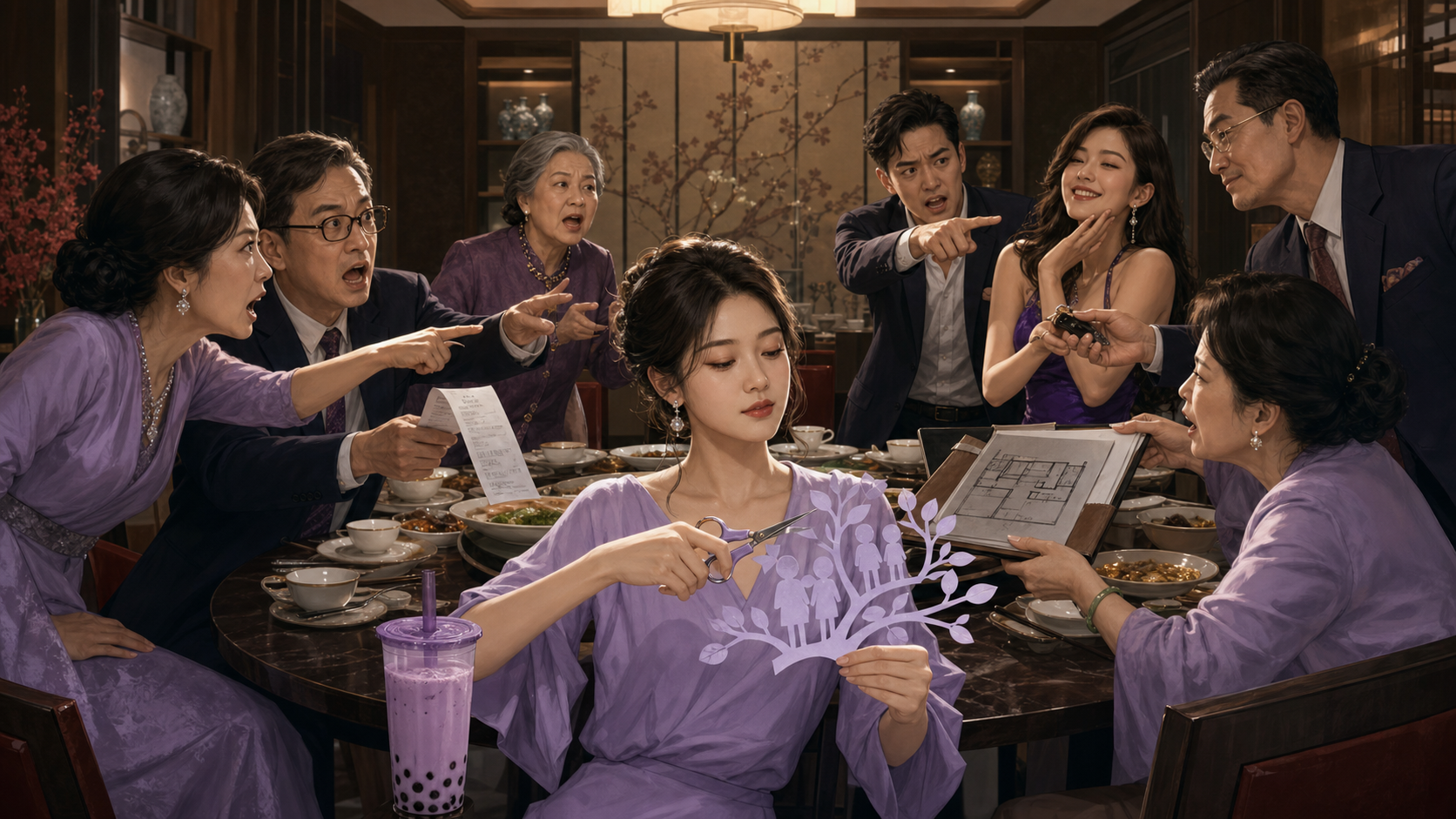
One terrible relative is drama. Twelve is a hostile takeover.
I understand why these stories begin with an abusive household. Rebirth and counterattack plots need pressure. A heroine who escapes an unfair family gives the reader something immediate to cheer for. But some novels keep adding villains until the family tree looks less like genealogy and more like an organized-crime chart.
The mother hates her. The aunt wants her room. The cousin wants her husband. The grandmother wants her salary. The uncle has somehow mortgaged land he does not own. Nobody has a hobby. Nobody folds laundry. Their only shared activity is ruining one woman’s life.
Filial duty cannot be a blank check
Family obligation carries real cultural weight, which is exactly why the trope can hit hard. Being disowned in a historical or tightly communal setting can mean losing shelter, reputation, work, and the rituals that connect a person to society. That is richer than “all relatives are evil.” The strongest novels let the heroine wrestle with love, guilt, memory, and survival. The weakest simply turn kinship into an endless villain dispenser.
- Let one relative be complicated. Cowardice, dependency, and divided loyalty are more believable than synchronized malice.
- Let boundaries cost something. Walking away should bring relief, grief, and practical consequences.
- Stop rewarding biology automatically. A shared ancestor is not a lifetime subscription to someone else’s money.
Readers recognize the difference
Novel readers regularly complain when “family first” becomes an excuse for abuse, while also pointing out that strong family networks can be protective and meaningful. That tension is the story. Erasing it leaves cartoon villains in matching surnames.
Receipt: NovelTranslations discussion of toxic families and the value of real family bonds
Receipt: readers discussing why family and disownment carry heavier stakes in historical settings
Sometimes the happy ending is a smaller guest list
I do not need every relative redeemed. Some branches are diseased. Cut them. What I need is enough humanity around the heroine that her eventual found family feels chosen, not merely the only group left without a criminal record.