
NOVEL WORLD 101 · STORY WORLD 101
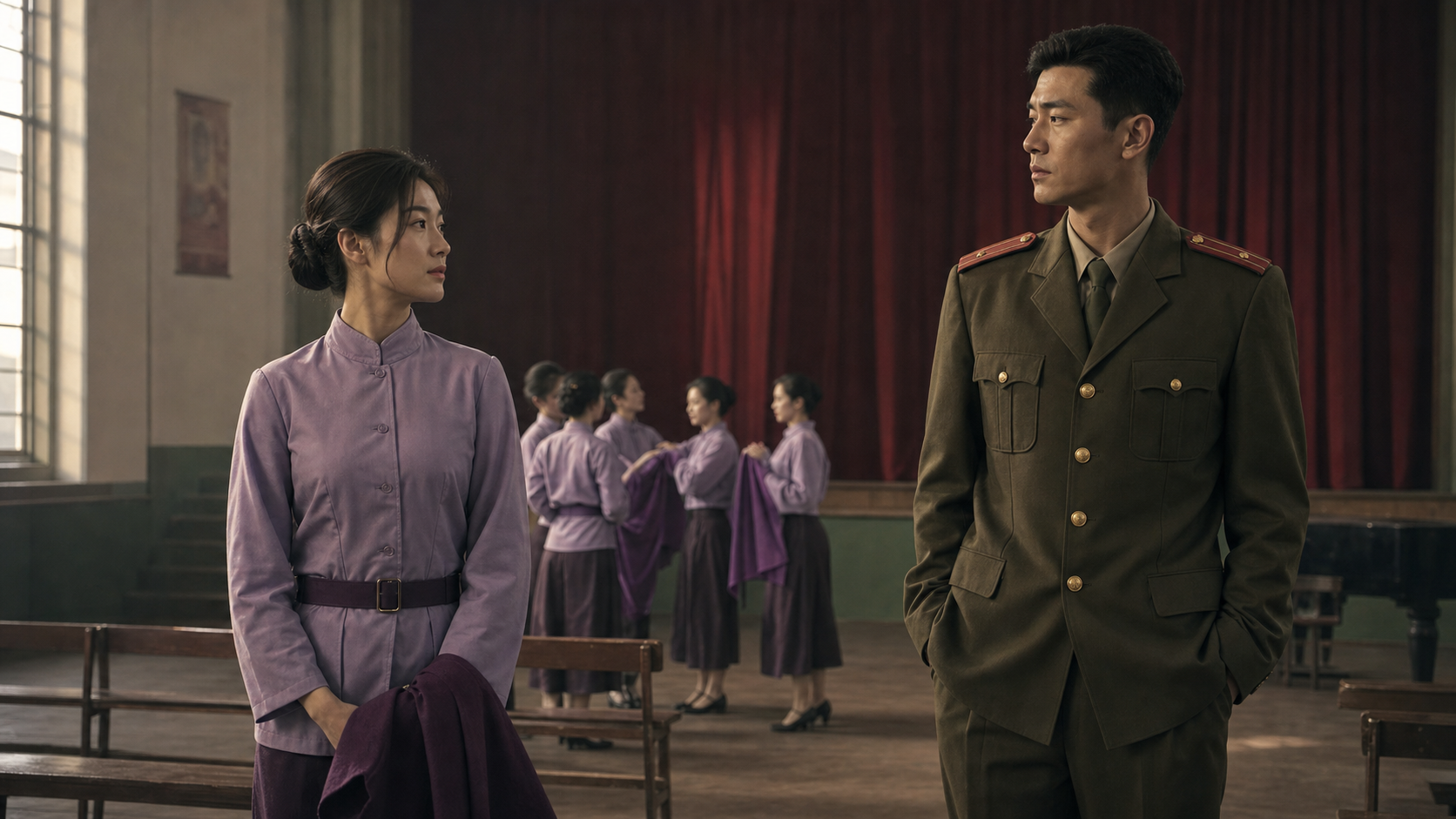
Military romance is not merely a handsome man in uniform entering from stage left. The institution changes the courtship, the marriage, the danger, the distance, and who is allowed to know everybody’s business.
What makes a romance military
A uniform does not create the genre by itself. Military romance becomes military romance when service shapes the relationship. Duty can decide where the couple lives, how often they meet, which information stays secret, and whether a personal crisis must wait because somebody is deployed, training, injured, or responsible for other people’s lives.
In period Chinese web novels, this often overlaps with rebirth, arranged introductions, cadre families, military compounds, cultural troupes, medical work, and the very specific terror of discovering that every auntie within three courtyards has already formed an opinion about your marriage.
Why the restraint matters
Many military romances are built on controlled behavior. Characters cannot always flirt openly. Rank, reputation, family approval, and workplace discipline matter. A man bringing medicine, repairing a bicycle, or arranging safe transportation may carry more romantic weight than a five-page confession.
That restraint can be delicious. It can also become emotional constipation in a pressed uniform. The story has to let readers see what the characters refuse to say.
The recurring ingredients
- Long separation: Letters, brief visits, missed calls, transfers, and entire emotional arcs conducted through waiting.
- Community scrutiny: Family members, commanding officers, coworkers, and neighbors may all affect the match.
- Practical love: Protection, logistics, food, housing, childcare, and reliability become romance language.
- Public duty versus private need: The relationship cannot always come first, even when the characters desperately want it to.
- Uneven knowledge: One partner may be unable to explain where they are going or why they disappeared.
Military cultural troupes are not decorative wallpaper
Period stories often place heroines in song-and-dance or cultural performance units. These troupes entertained troops, supported political education, and created legitimate performance careers inside a disciplined institution. Rehearsals, auditions, assignments, promotions, and reputation could shape a woman’s future.
That setting gives a romance two kinds of performance. The heroine performs onstage, then performs composure in a workplace where gossip can travel faster than official paperwork.
What works
The genre is strongest when competence is attractive. A reliable officer is appealing because he remains reliable when the situation is inconvenient. A heroine is compelling when she has work, judgment, and a life beyond waiting near a gate. The relationship grows through repeated proof instead of one dramatic rescue followed by three hundred chapters of possession.
It also works when the story respects cost. Service affects spouses, children, parents, careers, and housing. Love does not erase the institution around it.
What makes me side-eye the barracks
- Rank used as a substitute for personality.
- Jealous control presented as protection.
- A heroine whose career disappears as soon as the male lead notices her.
- Every other woman becoming a scheming rival because apparently friendship failed military screening.
- Trauma treated as proof of masculinity instead of something the character must actually survive.
Using it in anime and worldbuilding
Anime may move this structure into military science fiction, fantasy armies, historical warfare, or elite academies. The uniforms change. The central pressure remains: duty controls access to the person you love.
For original worldbuilding, define the system before writing the romance. How are officers assigned? Can partners live together? What happens after injury or discharge? Who approves transfers? What information is classified? A believable institution creates romantic obstacles without requiring a villain to jump from behind every filing cabinet.
RaeRae’s genre test
- Would the relationship change if neither character served?
- Does duty create real sacrifice?
- Does the heroine keep an identity outside the romance?
- Are ranks and institutions researched, or merely decorative?
- Does practical care feel earned instead of controlling?
Bottom line: Military romance works when the uniform comes with a life, not just shoulders. Give me duty, distance, competence, inconvenient tenderness, and two adults trying to build something while an institution keeps changing the floor plan.