
Rebirth in the 90s: Her Counterattack and Redemption
Official Webnovel title: Rebirth in the 90s: Her Counterattack and Redemption
Author: Zhao Nuannuan
Genres: Rebirth, military heroine, family protection, political drama, medical skill, romance, revenge, coming of age
Length mood: 1,479 chapters. Luo Ye has time to save her family, build a career, marry, have twins, and still attend somebody else’s family meeting.
Read the official English release on Webnovel
What this story is actually about
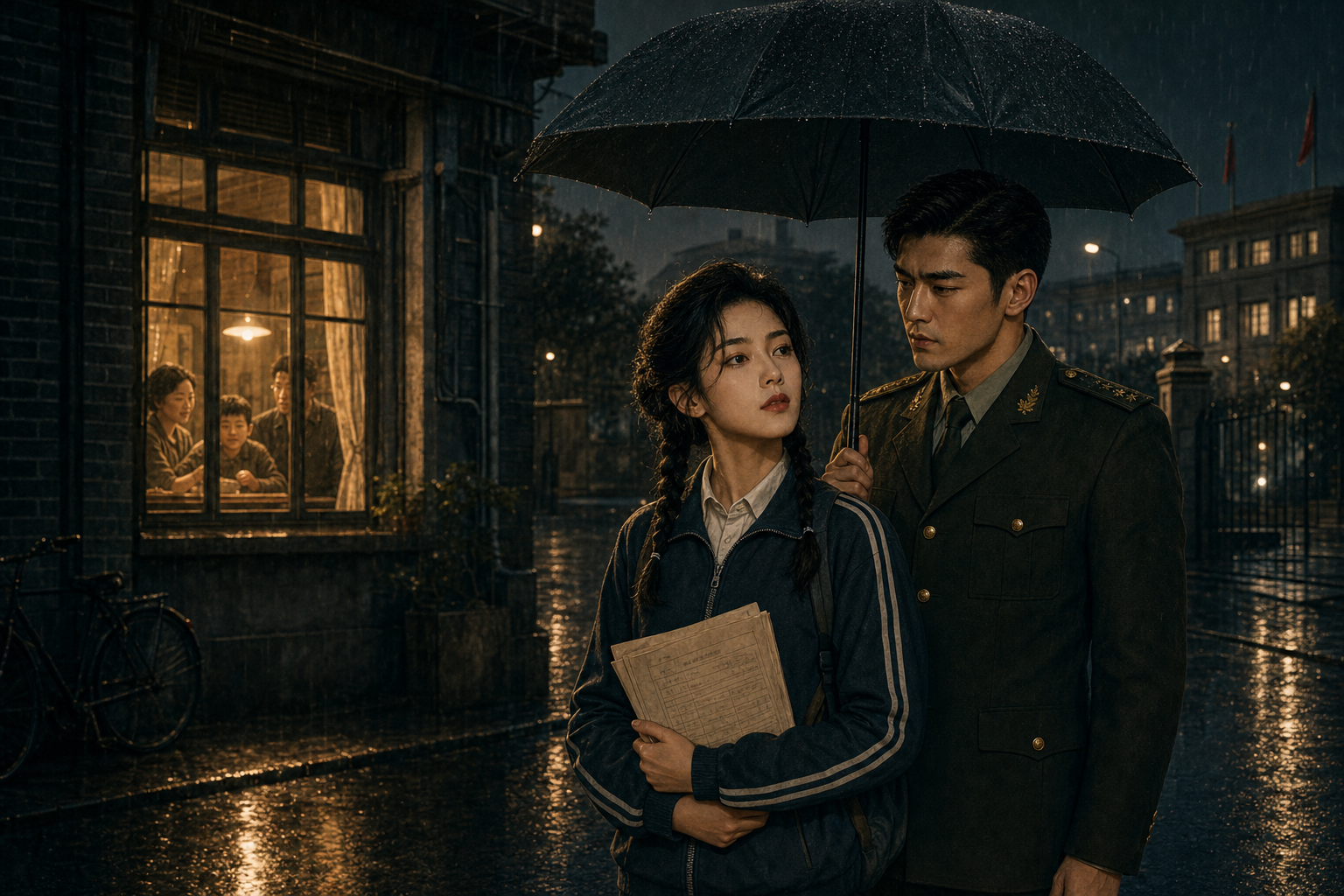
The first life gives Luo Ye a clear mission. Her father Luo Zhenggang was destroyed by political enemies. Her mother Wen Xin died by suicide. Her older brother Luo Feng was killed. Luo Ye spent the life that remained becoming capable enough to avenge people she could no longer save.
Then she gets the cruelest possible gift. She wakes at sixteen and sees all three of them alive.
The emotional engine is not revenge. It is prevention. Luo Ye has to live inside ordinary family days while remembering their graves. Every argument with her timid brother carries the memory of his death. Every political compromise made by her father looks like the first loose thread in a disaster only she can see.
That makes her intensity understandable. It does not always make her easy. Luo Ye can be controlling because she knows what happens when nobody acts. The novel is most interesting when saving her family requires her to change the habits that once made them vulnerable, including her own habit of swallowing humiliation until it becomes poison.
The tropes in the room
- Rebirth after revenge
- Sixteen-year-old body with an adult tactical brain
- Family rescue mission
- Military ambition and special operations
- Powerful political families
- Medical genius
- Cold heroine learning to live again
- Strong male lead who must become a partner
- Marriage and twins
- Hidden enemies and political factions
- Chosen family and alliance networks
- National recognition finale
Luo Ye is impressive, exhausting, and usually correct
Luo Ye is not warm in the easy way. She loves through action. She trains because weakness once cost lives. She investigates because trust without evidence buried her family. She pushes Luo Feng because she cannot bear to watch him remain helpless.
I like that her severity has a source. She was not born above everybody. She was made sharp by grief, policing, revenge, and the knowledge that the world did not care whether the Luo family deserved what happened.
The problem is scale. Luo Ye becomes exceptional at combat, medicine, leadership, strategy, politics, rescue work, and motherhood while building enough alliances to make a national faction nervous. By the finale, she is promoted directly to major general at twenty-seven. I was proud. I also laughed. At some point even excellence needs to wait in line.
Ye Xuan and the romance
Ye Xuan begins as a forceful man accustomed to command. That could have flattened the romance, especially beside a heroine who refuses to surrender control of her life. Instead, his better arc is learning partnership.
He does not rescue Luo Ye from being capable. He creates room for her capability to exist without costing her a home. Their relationship grows through conflict, mutual testing, danger, and the slow recognition that neither one needs a decorative spouse.
The later marriage and parenting material adds needed softness. Xiaonan and Xiaobei are not just proof that the romance succeeded. They expose the cost of two public careers. Luo Ye saved her family, but service keeps pulling her away from the family she saved. That is one of the book’s strongest late questions.
The family is the real victory
Luo Zhenggang, Wen Xin, and Luo Feng survive. That sounds like a spoiler because it is the result, but it is also the point. A rebirth novel promises correction. This one measures correction through living people at a crowded table.
Luo Feng’s growth matters because Luo Ye cannot protect him forever by standing in front of him. Wen Xin becomes more than the mother whose death motivates the heroine. Luo Zhenggang learns that integrity without protection can become negligence toward the people who depend on him.
The ending returns Luo Ye to that emotional center. Her unit relocates to the capital, Ye Xuan’s career stabilizes, and she can lead without remaining permanently absent from her children and parents. The military promotion is flashy. Going home together is the actual reward.
Political drama and the alliance problem
The book understands that powerful families create two truths at once. Connections can protect good people from corrupt systems. The same concentration of influence can look frightening from the outside. Luo, Ye, Wen, Qiao, Zhu, Wu, Qu, and Feng relationships become a shield, but also a reason rivals claim they are building a private power structure.
That tension is useful. The five-person faction’s repeated attacks sometimes feel repetitive, but the underlying question is fair. How does a network prove it serves the public when its members keep helping one another?
The seven-day isolation finale gives Luo Ye recognition without pretending the institution treated her kindly. National leaders protect her from blame, remove hostile officials, promote her, and ask her to keep serving. I accepted the logic. I still wanted someone to apologize before handing her another responsibility.
Pacing and momentum
The early rebirth material moves well because every change is urgent. School bullying, family habits, physical training, Wenxin Garden, and threats around Luo Zhenggang connect directly to the first-life catastrophe. Luo Ye knows too much, but she cannot fix everything in one afternoon.
The middle grows into education, military service, medicine, marriage, rescue work, friendships, and political alliances. It remains readable because Luo Ye keeps moving. The danger is accumulation. Each new skill and family connection makes her safer, so the story has to invent larger threats to preserve tension.
The late story spends considerable time on other couples, elders, Ye Jian’s studio, Chu family anxieties, and political maneuvering. Some of this broadens the world. Some of it feels like the finale asked every relative to submit paperwork before Luo Ye could go home.
What worked
The family rescue gives the entire novel a clean emotional spine. Even when the plot wanders into another household, Luo Ye’s original purpose remains understandable.
The romance matures. Ye Xuan’s early dominance becomes steadier partnership, and the children create consequences beyond jealousy and attraction.
The book lets public service complicate personal happiness. Luo Ye does not simply win power. She has to decide whether power is worth repeated absence from the people she came back to save.
What did not work
Luo Ye becomes too capable in too many fields. A heroine can be extraordinary without becoming the answer key to medicine, combat, politics, rescue, and family therapy.
Several political threats repeat the same suspicion in different rooms. The allied families are accused of seeking power. Luo Ye is tested. Leadership eventually confirms trust. The cycle loses bite.
The supporting cast is huge. Late relationship arcs sometimes receive more patience than core emotional conflicts needed. I liked Ye Jian and Lin Yang. I did not always need their administrative details while waiting for Luo Ye’s ending.
Ten things I liked
- The rebirth begins with family, not romance.
- Luo Ye’s coldness grows from grief instead of being treated as automatic sophistication.
- Luo Feng is expected to grow, not remain a permanent rescue assignment.
- Wen Xin and Luo Zhenggang survive as people, not motivational corpses.
- Ye Xuan learns partnership instead of merely finding a woman strong enough to tolerate him.
- The twins expose the emotional cost of Luo Ye’s career.
- Political connections are both useful and suspicious.
- Public service matters beyond uniforms and titles.
- The final promotion recognizes years of work across military, medical, and rescue service.
- The closing image is a family going home together.
Ten things I disliked
- Luo Ye collects skills like the plot is running a loyalty program.
- Major general at twenty-seven requires a very sturdy suspension of disbelief.
- Some enemies exist mainly to confirm that Luo Ye saw through them first.
- The alliance network becomes difficult to track without a seating chart.
- Political suspicion repeats after the theme is already clear.
- Late side couples slow the approach to the finale.
- Medical brilliance occasionally solves tension too quickly.
- Ye Xuan’s early dominance can feel romantic only because Luo Ye pushes back.
- The twins are perceptive enough to make several adults look underqualified.
- The novel ends cleanly, but takes a scenic route through every branch of the family tree first.
My rating
Overall: 8.4/10
Heroine: 8.7
Romance: 8.2
Family story: 9.2
Political drama: 8.0
Pacing: 7.0
Ending: 8.8
Luo Ye came back because revenge could not give her family back. The second life finally does. The novel occasionally mistakes more responsibility for more happiness, but it understands the final truth. Saving the world means very little if you never make it home for dinner.
Read the official English release: Rebirth in the 90s: Her Counterattack and Redemption on Webnovel.