
Reborn in the 90s with a Space: Winning Back My Husband
Official Webnovel title: Reborn in the 90s with a Space: Winning Back My Husband
Author: Yi Nian Yun Yan
Genres: Rebirth, 1990s, military marriage, magical space, family restoration, revenge, business and healing
Reading mood: Regret, rice, relatives, and a heroine trying to rebuild a marriage before the villains notice she stopped being easy to manipulate.
Read the official English release on Webnovel
What this story is actually about
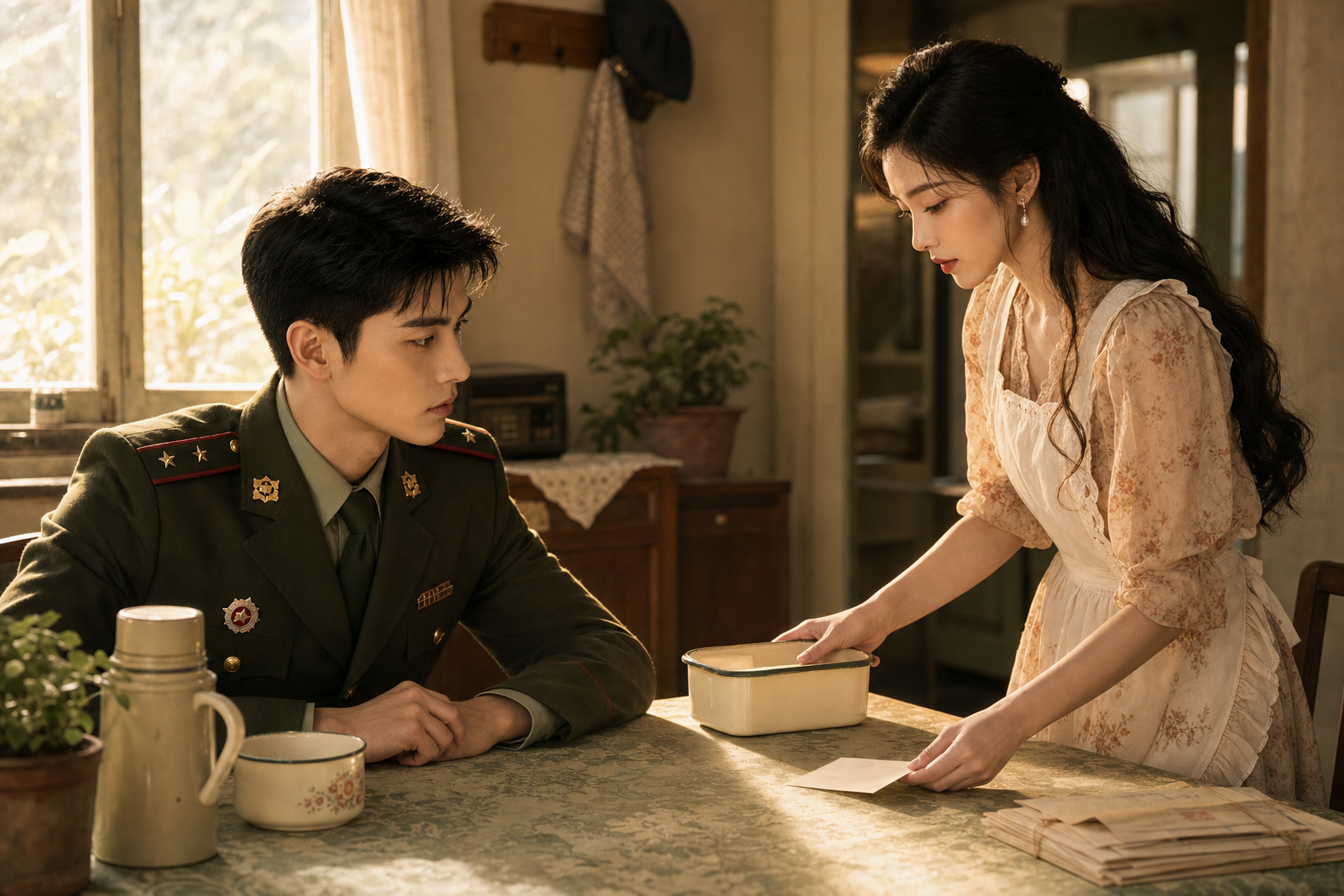
Shen Nian dies after discovering that the boyfriend and best friend she trusted used her for years. They did not merely cheat. They encouraged her to divorce Lu Cheng, separate from her family, and help destroy nearly every person who genuinely loved her. She dies knowing that her own terrible judgment helped make the damage possible. Then she sees Lu Cheng run into the explosion for her anyway.
Rebirth sends her back to the beginning of the marriage she once rejected. This time she does not need to be convinced that Lu Cheng is good. She needs to convince him that her sudden affection is real. That is the stronger hook. She remembers a lifetime he never lived. He remembers the woman who could barely stand him yesterday.
The magical space gives Shen Nian resources, but the emotional story is about restitution. She wants to protect her parents, repair her siblings’ futures, expose Qin Xuelian and Yin Yang, build financial security, and give Lu Cheng the marriage he deserved the first time. The novel keeps asking whether regret can become love or whether it only creates another kind of obligation.
The tropes in the room
- Rebirth and second chances
- Marriage first, love after
- Military husband
- Magical space and resource cheat
- Revenge and face-slapping
- Evil best friend and trash ex
- Family repair
- Business-building and prosperity
- Protective husband who was always in love
- Female lead correcting her own mistakes
- Historical slice of life
- Hidden opportunities remembered from the previous life
What worked
The book understands that apologizing is not the same thing as rebuilding trust. Shen Nian cannot simply wake up, hug Lu Cheng, and announce that she has completed character development. Her new behavior confuses him. That awkwardness gives the early romance real energy.
Lu Cheng works because his devotion is not decorative. It has consequences in both timelines. He paid for her choices before she understood what he was doing, and the second life gives her a chance to see the labor behind the romance. The domestic scenes often land better than the larger revenge scenes because a meal, a letter, or an ordinary act of consideration shows the relationship changing without a speech.
The family material also gives Shen Nian’s rebirth weight. Her regret is not limited to choosing the wrong man. She failed parents and siblings who kept loving her after she made it difficult. Repairing those bonds makes the second chance feel larger than romantic wish fulfillment.
What did not work
This novel is very long. It does not merely have side quests. It gives the side quests cousins, property, and their own neighborhood committee. Conflicts that could resolve cleanly are sometimes extended through another misunderstanding, another relative, or another villain who has apparently never heard that Shen Nian keeps winning.
The antagonists can be aggressively one-note. Qin Xuelian and Yin Yang begin with enough personal history to hurt, but repeated scheming can flatten them into plot-delivery systems. The magical space also reduces tension whenever resources appear exactly when the family needs them. I like watching Shen Nian use it intelligently. I like it less when it becomes a vending machine labeled “problem solved.”
The revenge rhythm becomes predictable. Someone underestimates Shen Nian. Shen Nian has information or resources they do not know about. The truth comes out publicly. The antagonist embarrasses themselves. This is satisfying until the book runs the same emotional software too many times.
Pacing and momentum
The opening moves quickly because death, betrayal, rebirth, family regret, and the marriage problem are all loaded before the story settles down. The middle is much more expansive. Domestic life, military assignments, business, relatives, future opportunities, and secondary romances stretch the timeline into a genuine saga.
Individual installments are easy to read because scenes usually end with a reveal, confrontation, decision, or emotional turn. That creates strong “one more” momentum. The danger is cumulative pacing. Short chapters can make a slow arc feel faster than it actually is. When several installments cover one argument from different angles, I noticed the machinery.
I would not recommend reading it like a tightly plotted standalone novel. Read it like a long-running family drama. Take breaks. Return when you want the people again.
Ten things I liked
- Shen Nian owns her mistakes. She was manipulated, but the story does not pretend she had no agency.
- Lu Cheng has emotional weight. His loyalty costs him something.
- The romance begins with distrust. Her sudden devotion is not treated as automatically believable.
- Family repair matters. Parents and siblings are not scenery around the love story.
- The period texture feels lived in. Money, housing, food, work, and reputation shape decisions.
- Domestic affection is allowed to count. Care appears through ordinary labor.
- Shen Nian becomes practical. Regret turns into planning instead of endless crying.
- The marriage has room to breathe. Attraction grows beside partnership.
- The prosperity arc is satisfying. Watching the family gain security gives the revenge a positive destination.
- The story is generous with payoff. If you are waiting for a villain to be exposed, the novel usually delivers.
Ten things I disliked
- The length needs discipline. Not every conflict deserves an extended family reunion.
- Villains repeat themselves. Some people keep touching the same hot stove because the plot needs smoke.
- The space cheat can erase scarcity too easily.
- Public humiliation becomes a formula.
- Secondary characters sometimes exist only to praise or oppose Shen Nian.
- Misunderstandings occasionally survive past their natural expiration date.
- Repetition dilutes good emotional scenes. I understood the pain the first time.
- Lu Cheng’s devotion can become too idealized. Let that man be unreasonable once in a while.
- The business progression sometimes feels easier than the period should allow.
- The book occasionally confuses more events with more development.
My rating
Overall: 8.1/10
Romance: 8.7 Family story: 8.5 Pacing: 6.8 Payoff: 8.4 Reread danger: High, but in selected arcs.
I like this book most when Shen Nian and Lu Cheng are doing something ordinary and both understand how extraordinary the second chance actually is. The villains bring the fireworks. The marriage gives the story a reason to exist.