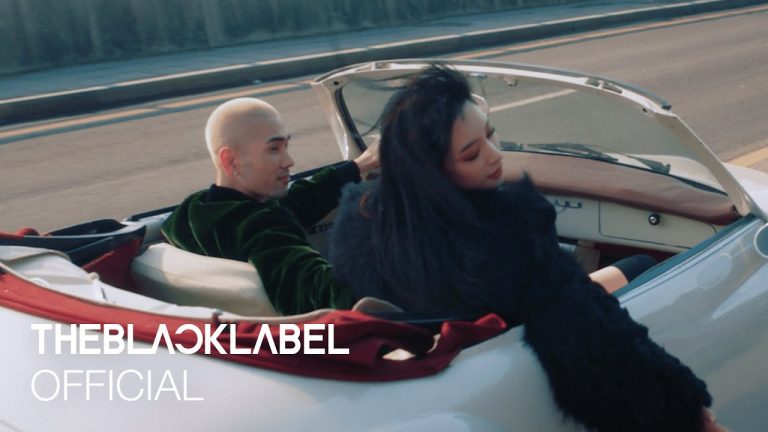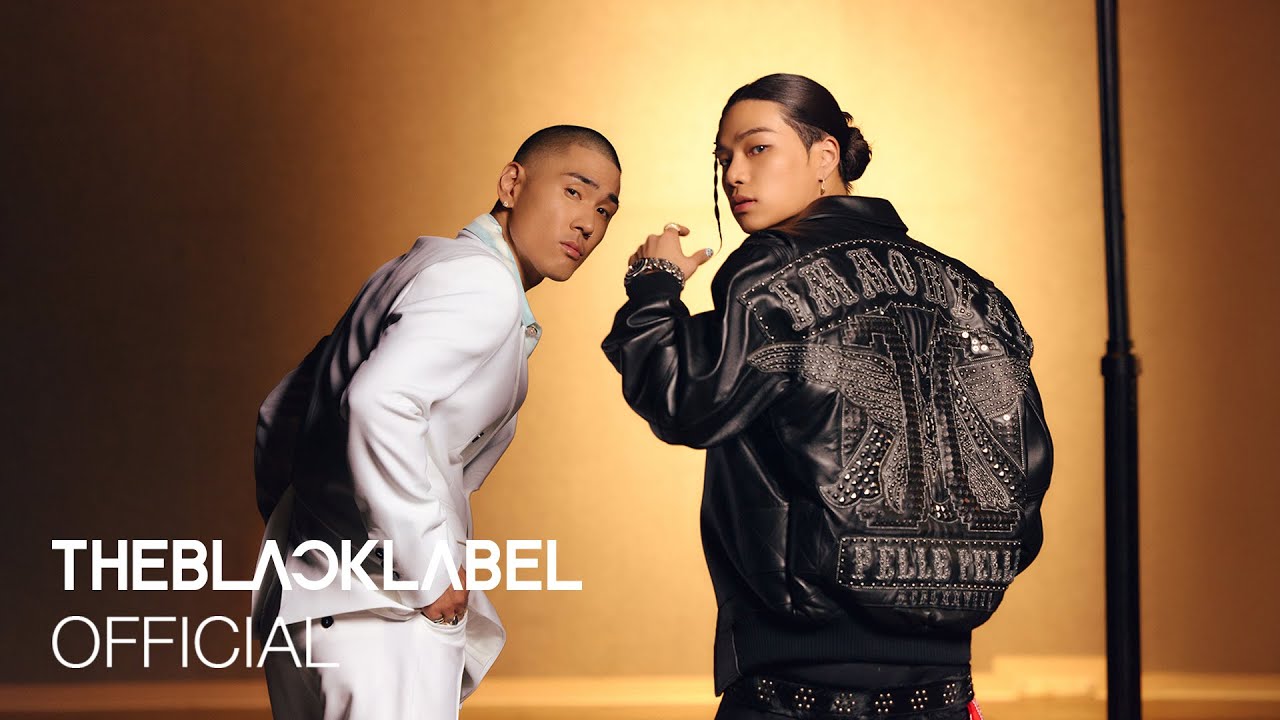
Vince Profile: THEBLACKLABEL Artist, Producer, Songs and Credits
Profile
| Stage name | Vince |
|---|---|
| Birth name | Lee Jun-seok |
| Production name | Joe Rhee |
| Work | Singer, songwriter, composer, arranger and producer |
| Company | THEBLACKLABEL |
| Solo debut | “MENNAL” (2019) |
| EP | The Drive (2023) |
| Current status | Active recording artist and producer |
The short version
Vince is Lee Jun-seok, a Korean singer, songwriter, and producer whose public solo career began with “MENNAL” in 2019 after years of making records for other voices. His work sits inside THEBLACKLABEL’s R&B, hip-hop, and pop ecosystem, but “inside” should not be mistaken for invisible. He has written, composed, arranged, or produced music connected to Taeyang, BLACKPINK, Jeon Somi, BIGBANG, ALLDAY PROJECT, and the KPop Demon Hunters soundtrack while building a smaller, carefully paced artist catalog of his own.
Quick file
His birth name is Lee Jun-seok, and older production credits may identify him as Joe Rhee. Vince is the stage name used for his solo releases. He works as a vocalist, lyricist, composer, arranger, and producer under THEBLACKLABEL. “MENNAL” introduced the artist in 2019; the 2023 EP The Drive gave that identity a fuller project; and 2025’s “CHA CHA CHA” featuring G-DRAGON moved him into a brighter summer frame after the global soundtrack success of “Soda Pop” and “Your Idol.”
Why name disambiguation matters
Search engines treat “Vince” like a communal coat rack. The Korean THEBLACKLABEL artist is not Vince Staples, country singer Vince Gill, techno producer Vince Watson, or every unrelated distributor page that has collected the same first name. CVM Sekai matches the artist through THEBLACKLABEL credits, official channel uploads, Lee Jun-seok and Joe Rhee identity history, and the connected production catalog. A title field by itself is never enough evidence to import a release.
The producer arrived before the frontman
Long before casual listeners recognized his face, Vince was learning how songs behave from the production side. That means arrangement is not scenery around his vocals. It is part of the performance. He understands when a bass line needs room, how a featured verse changes the center of gravity, and why an expensive mix can still feel emotionally cheap if every layer is competing to announce itself. His solo work often sounds restrained because he knows exactly what could have been added.
Working around the BIGBANG and Taeyang orbit
Vince’s producer history is tied to the creative network around Teddy, THEBLACKLABEL, BIGBANG, and Taeyang. He contributed to Taeyang’s White Night era and later worked across Down to Earth. That continuity matters more than celebrity proximity. Writing for a vocalist with Taeyang’s rhythmic precision requires leaving space for phrasing, breath, and grain. The resulting lesson appears in Vince’s own records: a groove should support the voice rather than smother it under proof of production labor.
BLACKPINK and the discipline of scale
Credits connected to BLACKPINK, including work around “Pretty Savage,” “Love to Hate Me,” “Shut Down,” and the wider producer network, placed Vince inside records expected to survive stadium systems, dance practice rooms, short-form clips, and microscopic fandom analysis. Scale does not automatically create subtlety, but it teaches economy. A small sonic gesture must remain recognizable after choreography, styling, and spectacle arrive. Vince’s own hooks benefit from that discipline without copying BLACKPINK’s public architecture.
Jeon Somi and flexible pop writing
Writing and production work around Jeon Somi demonstrates another part of his range: bright pop still needs structural control. Somi’s records move between punch-line attitude, melodic openness, dance-floor momentum, and emotional directness. A producer cannot treat those as unrelated costume changes. Vince’s strength is locating the rhythmic spine that lets different surfaces belong to the same performer. That skill later becomes important when his own catalog moves from dark R&B toward the sunlight of “CHA CHA CHA.”
MENNAL made the artist official
“MENNAL” marked Vince’s 2019 solo debut under the current name. The song introduced a moody R&B and hip-hop frame, but the real announcement was authorship becoming visible. Listeners who had encountered his work through credits could finally hear what happened when the producer controlled the vocal center, emotional temperature, and visual identity. Debuting after professional experience did not make the process easy; it made every choice look more deliberate.
Emergency with Zion.T
“Emergency” used Zion.T as an actual countervoice rather than a marketing sticker. Both artists know how to make unusual vocal color feel conversational. The collaboration works because the space between phrases remains active: tone, pause, and a slightly crooked melodic choice can do more than another percussion layer. It also placed Vince beside a singer whose entire career proves that polish and eccentricity do not have to cancel each other.
The Drive finally provided a project shape
The 2023 EP The Drive expanded Vince beyond isolated singles. A project matters because sequencing forces an artist to reveal whether a sound can hold more than one promotional idea. Across the EP, he handled production throughout and presented R&B, hip-hop, melody, and atmosphere as parts of the same nighttime world. “UUU” became the clearest entry point, but the full release shows how his restraint changes when songs must sit beside one another.
UUU and the architecture of smoothness
“UUU” sounds easy because the engineering hides its effort. The track lets vocal texture and pulse lead while details arrive at the edge of attention. Smooth R&B is often dismissed as mood music when listeners cannot see how carefully negative space has been arranged. Vince knows that seduction disappears when a producer begins shouting about every clever decision. The record trusts timing, timbre, and repetition to carry intimacy without turning the mix into a showroom demonstration.
A producer singing his own material
Producer-artists can fall into two traps. They may overdesign a solo record because nobody else is present to demand restraint, or underperform it because the demo mentality never becomes a public character. Vince usually avoids both. His vocals are placed with an arranger’s awareness of function, but they still carry enough grain to feel inhabited. He does not sing as though technical perfection is the plot. He sings as though the track and the voice negotiated a truce.
KPop Demon Hunters changed the size of the audience
The 2025 KPop Demon Hunters soundtrack placed Vince’s writing before a global audience that did not need to know THEBLACKLABEL’s producer roster. He received writing and production-related credit around the Saja Boys songs “Soda Pop” and “Your Idol.” Their success was not merely a fictional-group novelty. The songs had to establish character, advance story, function as plausible idol releases, and remain addictive outside the film. That is four jobs wearing one chorus.
Soda Pop began long before the movie
The history of “Soda Pop” is especially revealing. An early guitar-led demo idea existed years before the final film song, then moved through additional writers and producers until it became the Saja Boys’ deceptively sweet introduction. That development rejects the fantasy that hit songs arrive intact in one inspired afternoon. Vince’s contribution belongs to a collaborative chain where an old melodic instinct found the correct narrative, voices, arrangement, and cultural moment much later.
Your Idol turns polish into threat
“Your Idol” requires the opposite surface from “Soda Pop.” The Saja Boys’ appeal becomes coercive, and idol devotion is transformed into a story mechanism. Writing for that scene means maintaining pop pleasure while letting control leak through the arrangement and lyric. Vince’s producer background is useful here because danger does not need a horror-movie label stamped onto every bar. The most effective turn happens when a familiar performance grammar begins to feel predatory without ceasing to be catchy.
ALLDAY PROJECT and the main-producer role
Vince’s work as a central producer for ALLDAY PROJECT places him inside another difficult assignment: a co-ed group with five distinct performers, different vocal and rap weights, and enormous pre-debut attention. Production must create a group identity without sanding every member into one neutral instrument. The job is partly musical and partly architectural—deciding who opens a door, who changes the temperature, and who closes the argument so the track feels like a unit rather than a networking event.
The collaboration network is not the biography
G-DRAGON, Taeyang, BLACKPINK, Somi, Zion.T, and ALLDAY PROJECT are famous names, but listing them without analyzing Vince’s role would turn his profile into borrowed light. His career is interesting because he repeatedly works at the seam between artist and infrastructure. He can write the hook, shape the arrangement, guide another performer, then return to his own microphone. The collaborators help locate the work; they should not erase the person doing it.
CHA CHA CHA was a deliberate change in weather
Released in August 2025, “CHA CHA CHA” featuring G-DRAGON moved Vince away from the darker image attached to his earlier solo work. He described wanting something cheerful, light, and natural to his everyday personality. The song had been developing for years, which makes the brightness feel chosen rather than impulsive. A producer with an established brand decided that seriousness no longer needed dim lighting to prove it was real.
The Seol Woon-do connection
The track draws from the cultural memory of veteran trot singer Seol Woon-do’s “Everybody Cha Cha Cha,” folding a familiar Korean reference into contemporary R&B, hip-hop phrasing, and Latin rhythmic color. This is more than a sample-recognition game. Trot carries communal accessibility and intergenerational memory. Vince uses that association to make the hook feel immediately social, then lets the modern production prevent homage from hardening into retro-pageant imitation.
Why G-DRAGON fits the record
G-DRAGON’s feature was his first guest appearance in years and guaranteed headlines, but the musical logic matters more. He brings a voice capable of sounding casual, theatrical, and rhythmically disruptive in the same short passage. The collaboration came from an existing working relationship rather than an anonymous feature transaction. Vince does not ask him to take over the song. The verse changes the room, then returns it to the host.
Animation, performance, and the delayed live-action idea
Vince originally considered a live-action concept and reportedly approached Seol Woon-do about participating. The release ultimately used animation, while a later special video put Vince beside TARZZAN in a mock talk-show performance. That path accidentally suits the song. Animation handles the oversized summer fantasy; the special video proves the groove can survive human awkwardness, comic framing, and two performers enjoying the premise instead of treating homage like sacred restoration.
What his voice contributes
Vince’s voice carries a soft grain and measured attack that work especially well in R&B. He rarely needs to overpower the track because phrasing supplies authority. The interesting detail is how a producer’s ear shapes his restraint: endings are placed to leave room for the next texture, repetition is colored rather than merely repeated, and rap-adjacent rhythm appears without forcing every sentence into a display of technical aggression. He performs the arrangement from inside it.
What to listen for in the production
Follow the low end first. Vince often keeps bass and percussion clear enough that the song’s physical direction is obvious before the melody settles. Then listen for what disappears when a vocal enters. Good arrangement is subtraction timed to feel like arrival. Finally, notice feature placement. His collaborations tend to work when the guest supplies a new texture or perspective instead of duplicating the lead vocal at a more expensive price point.
The tension between visibility and service
Production rewards making another artist sound inevitable. A solo career requires claiming enough attention to become the subject. Vince has moved between those jobs slowly, perhaps because the instincts can conflict. His most successful artist material does not abandon service; it redirects it. The track still receives careful protection, but his face, voice, humor, and personal preference are no longer treated as replaceable components. “CHA CHA CHA” is the clearest moment when he lets pleasure become biography.
Current status
As of August 2026, Vince remains listed by THEBLACKLABEL as both a recording artist and producer. The latest verified solo era on this profile is “CHA CHA CHA” featuring G-DRAGON, following The Drive and the expanded visibility created by KPop Demon Hunters and ALLDAY PROJECT. New releases should be matched through official label uploads, credited distributor pages, and his verified social account because the single-word stage name produces constant false matches.
Where to start
Begin with “MENNAL” to hear the original solo framing, then “Emergency” for conversational collaboration and “UUU” for the controlled R&B center of The Drive. Play the Saja Boys’ “Soda Pop” and “Your Idol” with the film context in mind, then finish with “CHA CHA CHA.” That route moves from producer visibility to project identity, fictional-pop architecture, and finally the bright public persona Vince decided to place at the front.
Why this profile belongs beside the React
The credits explain competence; the React tests what the final video and song actually do. Vince’s profile holds the long production history, alias disambiguation, collaborators, soundtrack work, current status, and official sources. The “CHA CHA CHA” React can therefore spend its time on sound, feature chemistry, trot memory, animation, performance, and replay discoveries instead of rebuilding the entire résumé every time somebody presses play.
Producer credits need participation boundaries
A credit is evidence of work, not automatic ownership of every artistic decision around the release. Songwriting, composition, arrangement, and production can overlap, and public databases sometimes flatten those jobs into one vague line. This profile names representative projects to show Vince’s range without claiming he single-handedly created another artist’s identity. The distinction becomes especially important for collaborative works such as KPop Demon Hunters, where film directors, music supervisors, writers, producers, arrangers, vocalists, and performers shaped the final result together.
The artist catalog is small but not secondary
Vince releases less frequently than the size of his production résumé might suggest. That does not make the solo work a hobby tucked beneath the “real” job. Scarcity increases the need to read each era accurately. The Drive established a sustained R&B setting; “CHA CHA CHA” deliberately challenged the assumption that darkness was his natural personality. The catalog becomes a record of what the producer chooses when he is not solving somebody else’s brief, which is precisely why it deserves its own canonical route.
What would make the next era interesting
The obvious next step is not a longer list of superstar features. Vince has already proved that famous collaborators answer his calls. A fuller project could explore the distance between the controlled nighttime atmosphere of The Drive and the communal brightness of “CHA CHA CHA,” while letting his soundtrack and group-production instincts inform sequencing rather than dominate the credits conversation. The question is whether those worlds can share one album without treating versatility as a stack of unrelated playlists.
CVM Sekai React
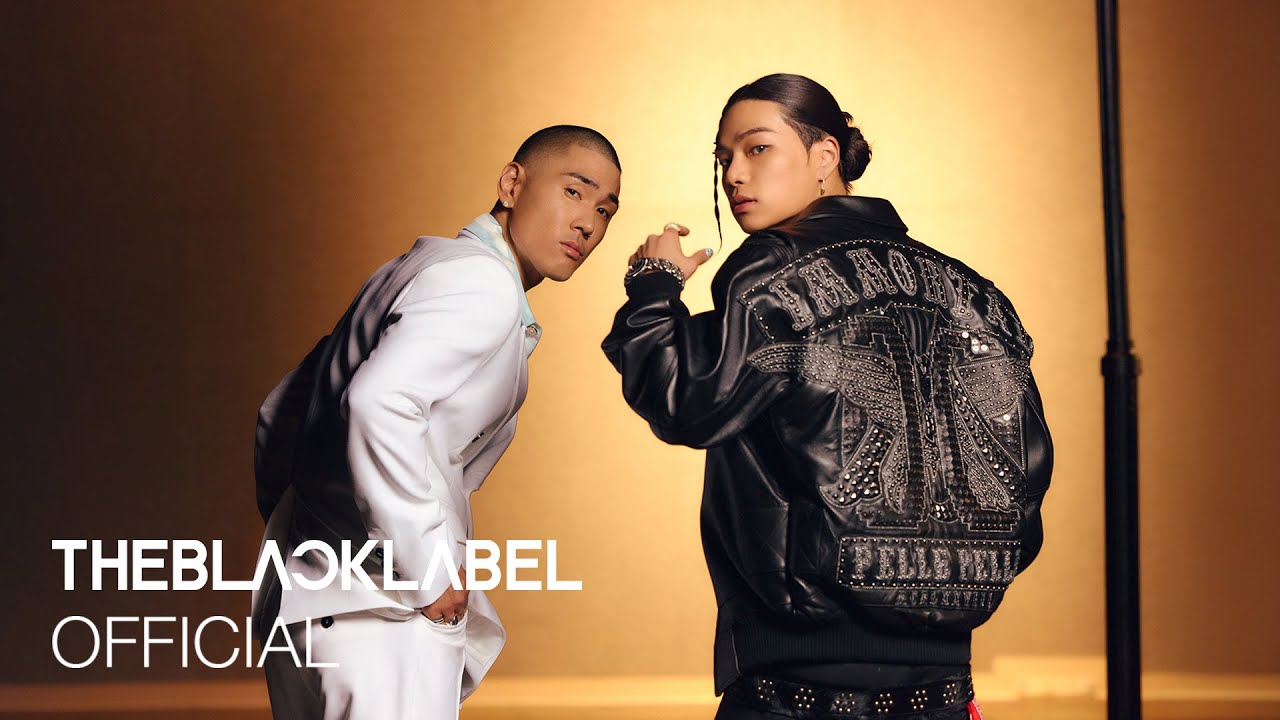
CHA CHA CHA — Vince featuring G-DRAGON React
The summer single reviewed through trot memory, Latin rhythm, feature chemistry, animation, TARZZAN’s special-video appearance, and replay details.
Official video tracker
- Vince “UUU” official music videoDaily+25Total views842.3K
- Vince “CHA CHA CHA” featuring G-DRAGON official videoDaily+210Total views1.4M
Official Socials and verified sources
- THEBLACKLABEL official artist roster and releases
- THEBLACKLABEL official YouTube
- Vince official Instagram
- YTN: Vince interview on CHA CHA CHA
- TenAsia: Vince on the brighter solo direction
RaeRae Reacts
GET OUT: Vince Put the Exit Sign Under a Disco Ball and Made It Sound Expensive — exact playlist upload o4YEKEERaYc.
React image cards
Static cards route each exact official upload to its own in-depth React. Every card repeats that React’s featured and hero image so the archive stays visually traceable.