
ICONIC BY MISTAKE · FULL MOVIE REVIEW · ALADDIN (2019) · WISHES WITH RECEIPTS
Aladdin (2019) Review: Will Smith Found a Pulse, Jasmine Found a Song, and Jafar Lost the Room
Will Smith wisely refused to impersonate Robin Williams. Naomi Scott can sing. Mena Massoud can charm. The movie still turns Agrabah into a glossy cultural blender and lets Jafar arrive with less danger than the cave.
The verdict before the first wish
Aladdin is one of the easier remakes to watch because performers occasionally outrun the corporate blueprint. And yes, I went back to the marketplace chase, Cave of Wonders, Prince Ali arrival, and final wish because I wanted to make sure I was not grading a memory instead of the movie sitting in front of me. Nope. The issue survived the replay. The movie has color, movement, romance, and enough comic personality to create pleasure between its compromises. Disney knew comparison came with the ticket. Nobody dragged the animated version into the room after the fact. The studio put the old songs, colors, names, poses, and emotional beats in every trailer because our memory was part of the marketing budget.
Here is where I start getting irritated. The movie is not empty. The movie is crowded with competing ideas about what audiences loved and which risks executives feared. That is not me insulting the crew. The crew clearly worked. Hair moved. Fabric moved. Digital light bounced off things that did not exist. Somebody probably spent three days fixing one ear. I respect that labor. I am judging the decision that all that labor was ordered to serve, because expensive and effective are not synonyms and Disney keeps acting surprised when we notice.
The receipt is Disney credits Guy Ritchie, screenwriters John August and Ritchie, Alan Menken, and new songs by Pasek and Paul. I am putting that right here because I am not doing the thing where a strong opinion floats three pages away from the evidence. The record tells us who made the choice and what the production said the choice was supposed to accomplish. Then the marketplace chase, Cave of Wonders, Prince Ali arrival, and final wish tells us whether the promise reached the screen. Sometimes yes. Sometimes absolutely not. Both answers can exist inside the same movie without me pretending the average is automatically good.
Watch the bodies in that sequence. Watch who gets to hesitate, who gets a reaction shot, who gets interrupted, and who only exists to confirm that the lead is correct. That is where Aladdin (2019) quits talking about the update and accidentally shows what the update really values. A speech can say leadership all day. If nobody has a reason to follow, disagree, bargain, lose something, or change course, I am watching a slogan with costumes. Pretty costumes, probably. Still a slogan.
The sound gives away another problem. Disney knows exactly when the audience expects a melody, a swell, a joke, or the first three notes that will unlock somebody’s childhood. The easy move is pressing that button. The harder move is making the music belong to this performer in this version of this relationship. If the singer sounds scared of the score, if the arrangement does all the emoting, or if the camera cuts away from a face that should be carrying the number, I notice. I cannot unnotice.
I also refuse the fake choice between loving the original and allowing change. Change the whole thing if you have an idea. Move the point of view. Break the ending. Make the romance weirder. Let the villain be right about one uncomfortable fact. But do the work after the announcement. A modern line dropped into an old structure is not transformation. That is a sticky note. The story still has to absorb the idea until relationships and consequences look different.
Then we get to the image. the marketplace chase, Cave of Wonders, Prince Ali arrival, and final wish has to tell me where to look and what the character cannot say. Detail everywhere is not the same as meaning somewhere. A forest can have twelve thousand individually rendered leaves and still feel dead. A face can have perfect pores and no readable thought. A costume can be historically researched and emotionally wrong for the person wearing that costume. The camera is not a receipt by itself. The camera has to choose.
My little scorecard here is not complicated: did the character make a choice, did the choice cost anything, could the performer actually perform, did the song expose something, did the visual style help the emotion, and did the cultural material feel known instead of rented? Disney credits Guy Ritchie, screenwriters John August and Ritchie, Alan Menken, and new songs by Pasek and Paul Those facts answer the production side. Aladdin (2019) still has to answer the human side, and brand recognition cannot take the exam for everybody.
Would this beat survive without the familiar title sitting above the poster? That is the rude question. the marketplace chase, Cave of Wonders, Prince Ali arrival, and final wish should create enough tension and personality to become somebody’s new memory. When the sequence only works because I remember how the drawing made me feel, the remake is charging itself for borrowed emotion and calling the loan revenue. I know the old movie. Disney made sure I knew. The new movie still has to show up.
So I landed where I landed: The movie is not empty. Somebody else can love the scene. Fine. I am not raiding anybody’s Disney shelf. But “I liked the movie” cannot end a conversation that includes performance, culture, labor, technology, music, and a studio deliberately reselling its own history. I liked parts too. Then my ADHD kicked in, I opened the production notes, and now everybody has to look at the paperwork with me.
Mena Massoud makes Aladdin specific
Massoud gives Aladdin a quick social intelligence and a nervous streak that keep the thief from becoming a polished prince too soon. I replayed the whole stretch to One Jump Ahead, the first conversation with Jasmine, and the disastrous palace introduction because I wanted to make sure I was not grading a memory instead of the movie sitting in front of me. His physical comedy works because embarrassment punctures the fantasy of effortless masculinity.
Now I am annoyed. He carries more of the film than the industry treated him as carrying afterward. The lack of comparable starring opportunities following a billion-dollar hit remains one of the bitter receipts attached to this remake era.
I checked the record, and the receipt is Disney lists Massoud as Aladdin and centers his transformation from street thief to false prince. Then One Jump Ahead, the first conversation with Jasmine, and the disastrous palace introduction tells us whether the promise reached the screen.
Look at who the camera allows to react.
My ears caught the next problem before my notes did.
Nobody needs to protect the original from change.
Now look at the actual frame. One Jump Ahead, the first conversation with Jasmine, and the disastrous palace introduction has to tell me where to look and what the character cannot say.
I reduced the whole mess to six questions: did the character make a choice, did the choice cost anything, could the performer actually perform, did the song expose something, did the visual style help the emotion, and did the cultural material feel known instead of rented? Disney lists Massoud as Aladdin and centers his transformation from street thief to false prince Those facts answer the production side.
Would anybody care about this beat without the logo? One Jump Ahead, the first conversation with Jasmine, and the disastrous palace introduction should create enough tension and personality to become somebody’s new memory.
My answer after all that is He carries more of the film than the industry treated him as carrying afterward.
Will Smith refuses the impossible imitation
No actor could reproduce Robin Williams without turning tribute into taxidermy. Smith builds his Genie from swagger, rhythm, flirtation, mentorship, and flashes of impatience. I paused and backed up to Friend Like Me, the palace coaching, Genie and Dalia, and the final freedom scene because I wanted to make sure I was not grading a memory instead of the movie sitting in front of me. The performance works when Smith uses his own timing rather than chasing the animated recording.
This is the part that got on my nerves. The blue effects drew early ridicule, but the human performance underneath them is one of the remake’s smartest acts of adaptation.
Here is the named source for that claim: Disney’s cast and soundtrack materials identify Smith and preserve the Menken songs in new arrangements. Then Friend Like Me, the palace coaching, Genie and Dalia, and the final freedom scene tells us whether the promise reached the screen.
Forget the press notes and watch the people.
Then the score starts doing emotional overtime.
I am not asking for a museum copy.
The picture has its own testimony. Friend Like Me, the palace coaching, Genie and Dalia, and the final freedom scene has to tell me where to look and what the character cannot say.
The test is embarrassingly simple: did the character make a choice, did the choice cost anything, could the performer actually perform, did the song expose something, did the visual style help the emotion, and did the cultural material feel known instead of rented? Disney’s cast and soundtrack materials identify Smith and preserve the Menken songs in new arrangements Those facts answer the production side.
Take away the old song and what remains? Friend Like Me, the palace coaching, Genie and Dalia, and the final freedom scene should create enough tension and personality to become somebody’s new memory.
My notes end with the same blunt ruling: The blue effects drew early ridicule, but the human performance underneath them is one of the remake’s smartest acts of adaptation.
Naomi Scott can sing and Jasmine gets a point of view
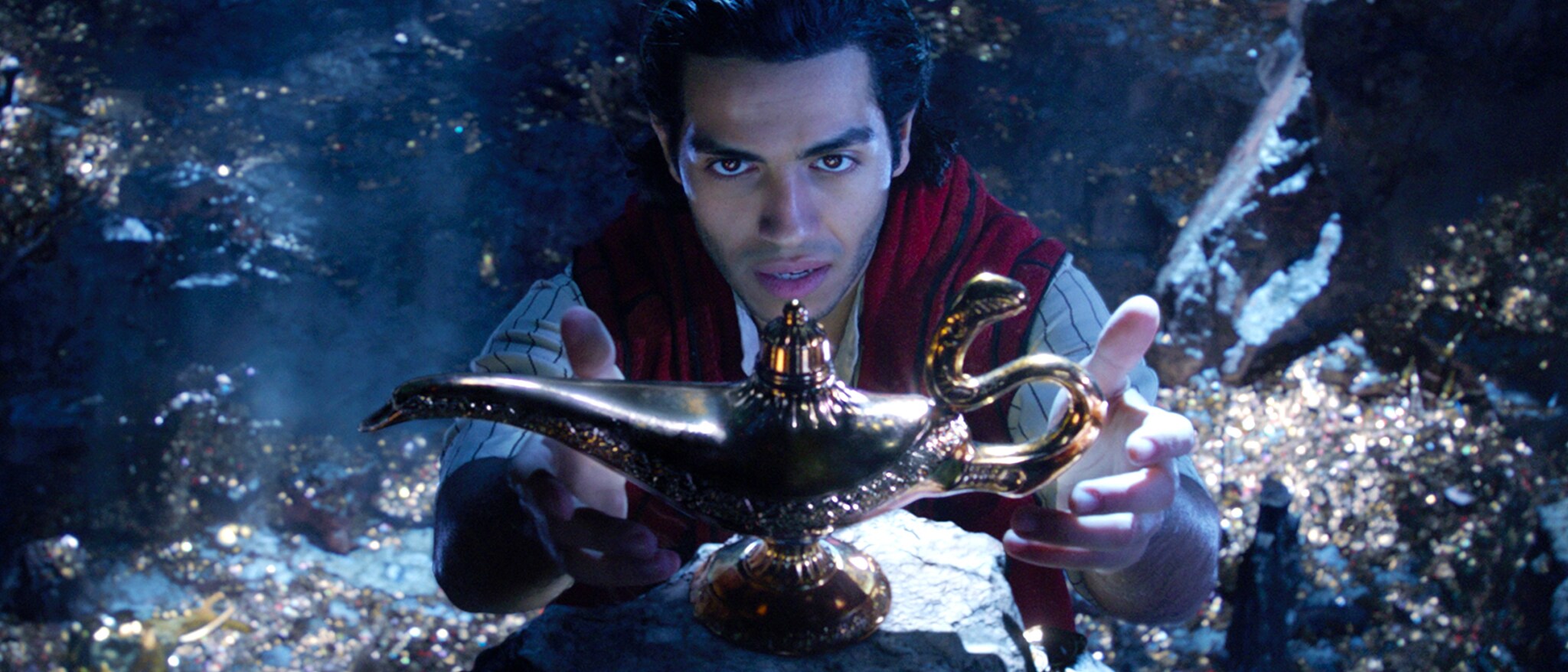
Scott has a clear, forceful voice and gives Jasmine political ambition that extends beyond choosing a husband. I watched that scene again to Speechless, Jasmine confronting Jafar, and her interest in governing Agrabah because I wanted to make sure I was not grading a memory instead of the movie sitting in front of me. Agency becomes convincing when the story gives a character decisions with cost, not merely lyrics about having a voice.
And here comes the expensive nonsense. The song is effective as performance and blunt as screenwriting. Scott sells emotional escalation that the surrounding political world has not fully earned.
Before anybody calls that nostalgia, the record says Disney credits Scott as Jasmine and Pasek and Paul with the new song Speechless. Then Speechless, Jasmine confronting Jafar, and her interest in governing Agrabah tells us whether the promise reached the screen.
Now watch who actually gets a decision.
The music tells on the movie.
Change was never the crime.
The visual argument is sitting right there. Speechless, Jasmine confronting Jafar, and her interest in governing Agrabah has to tell me where to look and what the character cannot say.
Here is my no-nonsense grading sheet: did the character make a choice, did the choice cost anything, could the performer actually perform, did the song expose something, did the visual style help the emotion, and did the cultural material feel known instead of rented? Disney credits Scott as Jasmine and Pasek and Paul with the new song Speechless Those facts answer the production side.
If the childhood memory leaves the room, does the scene stand up? Speechless, Jasmine confronting Jafar, and her interest in governing Agrabah should create enough tension and personality to become somebody’s new memory.
So no, the polish did not change my mind: The song is effective as performance and blunt as screenwriting.
Speechless stops time to make the argument
The second reprise places Jasmine inside an abstract corridor of disappearing guards, which gives the number a music-video force and breaks physical continuity. I checked the sequence twice to Jasmine singing while the men enforcing Jafar’s rule vanish from the frame because I wanted to make sure I was not grading a memory instead of the movie sitting in front of me. Musicals can suspend realism, but the suspension should deepen drama rather than replace the hard work of staging resistance.
This is where the pretty surface stops helping. The scene tells us she will not be silenced. The stronger version would also show exactly how she persuades people whose jobs, families, and lives depend on obedience.
The production trail gives us the official soundtrack includes Speechless as the remake’s major new number. Then Jasmine singing while the men enforcing Jafar’s rule vanish from the frame tells us whether the promise reached the screen.
Look past the dialogue and follow the reactions.
Now listen to what the arrangement is covering.
Please change the story if somebody has an actual idea.
Now the expensive pixels enter the chat. Jasmine singing while the men enforcing Jafar’s rule vanish from the frame has to tell me where to look and what the character cannot say.
I am not grading this on childhood loyalty: did the character make a choice, did the choice cost anything, could the performer actually perform, did the song expose something, did the visual style help the emotion, and did the cultural material feel known instead of rented? the official soundtrack includes Speechless as the remake’s major new number Those facts answer the production side.
Can this moment breathe without borrowing the animated version’s oxygen? Jasmine singing while the men enforcing Jafar’s rule vanish from the frame should create enough tension and personality to become somebody’s new memory.
My final reaction is not complicated: The scene tells us she will not be silenced.
Jafar is too small for his own ambition
Marwan Kenzari is handsome and controlled, but the direction strips away the theatrical venom that made Jafar frightening and funny. I went back with the nostalgia turned down to Jafar interrogating Aladdin, manipulating the Sultan, and taking the lamp because I wanted to make sure I was not grading a memory instead of the movie sitting in front of me. Quiet menace requires pressure beneath stillness.
Now the remake starts testing my patience. The remake gives him a political grievance and takes away the charisma that might make followers choose him. He becomes an explanation wearing red.
The paper trail matters here: Disney identifies Kenzari as Jafar and expands the character’s resentment about being second. Then Jafar interrogating Aladdin, manipulating the Sultan, and taking the lamp tells us whether the promise reached the screen.
Pay attention to who owns the silence.
The vocal track creates a separate argument.
The old version is not holy scripture.
The camera cannot hide behind detail. Jafar interrogating Aladdin, manipulating the Sultan, and taking the lamp has to tell me where to look and what the character cannot say.
My checklist fits on one sticky note: did the character make a choice, did the choice cost anything, could the performer actually perform, did the song expose something, did the visual style help the emotion, and did the cultural material feel known instead of rented? Disney identifies Kenzari as Jafar and expands the character’s resentment about being second Those facts answer the production side.
Would this scene create a memory from scratch? Jafar interrogating Aladdin, manipulating the Sultan, and taking the lamp should create enough tension and personality to become somebody’s new memory.
After the replay and the receipts, I am here: The remake gives him a political grievance and takes away the charisma that might make followers choose him.
Agrabah remains a cultural blender
The production draws from Middle Eastern, South Asian, North African, and fantasy references without giving the fictional kingdom a coherent social history. I ran the scene one more time to costume, dance, accent, architecture, food, and court ritual across Agrabah because I wanted to make sure I was not grading a memory instead of the movie sitting in front of me. Fantasy can combine traditions, but combination is not neutral when Hollywood has long treated vast regions as one decorative elsewhere.
Here is the part Disney cannot decorate away. The colors are gorgeous. The specificity is inconsistent. Beauty cannot substitute for knowing which culture a detail came from and why the story uses that detail.
I did not pull that from fandom air. The record is official production materials describe a diverse cast and a fictional kingdom while trade coverage documented casting and representation debates. Then costume, dance, accent, architecture, food, and court ritual across Agrabah tells us whether the promise reached the screen.
Watch who moves and who merely agrees.
The song is where the remake has nowhere to hide.
I did not come here demanding the same movie twice.
The frame starts answering questions nobody asked aloud. costume, dance, accent, architecture, food, and court ritual across Agrabah has to tell me where to look and what the character cannot say.
The movie has six jobs here: did the character make a choice, did the choice cost anything, could the performer actually perform, did the song expose something, did the visual style help the emotion, and did the cultural material feel known instead of rented? official production materials describe a diverse cast and a fictional kingdom while trade coverage documented casting and representation debates Those facts answer the production side.
Remove the recognition. Does the drama still work? costume, dance, accent, architecture, food, and court ritual across Agrabah should create enough tension and personality to become somebody’s new memory.
The verdict survived every rewatch: The colors are gorgeous.
The marketplace has speed but less danger
Guy Ritchie accelerates action and occasionally manipulates frame rate, giving the chase a playful snap. I looked again because the first reaction was loud to One Jump Ahead and the pursuit through Agrabah because I wanted to make sure I was not grading a memory instead of the movie sitting in front of me. Technique helps when character choices remain visible inside movement.
This choice bothered me more on replay. The scene entertains, though the city frequently feels like a designed route rather than a place where Aladdin has survived for years.
The credit and intent check gives us Disney names Ritchie as director and the sequence restages a central animated number. Then One Jump Ahead and the pursuit through Agrabah tells us whether the promise reached the screen.
Look at the scene without the inspirational sentence.
Then the familiar melody walks in carrying everybody’s childhood.
A remake is allowed to break things.
The image either carries the feeling or drops the feeling. One Jump Ahead and the pursuit through Agrabah has to tell me where to look and what the character cannot say.
I kept the standard basic on purpose: did the character make a choice, did the choice cost anything, could the performer actually perform, did the song expose something, did the visual style help the emotion, and did the cultural material feel known instead of rented? Disney names Ritchie as director and the sequence restages a central animated number Those facts answer the production side.
If the poster had a new title, would the sequence still matter? One Jump Ahead and the pursuit through Agrabah should create enough tension and personality to become somebody’s new memory.
I kept trying to argue myself out of this conclusion: The scene entertains, though the city frequently feels like a designed route rather than a place where Aladdin has survived for years.
Dalia is the remake’s best addition
Nasim Pedrad gives Jasmine a confidante with comic appetite, skepticism, and her own romantic plot. I gave the scene another chance to Dalia reading Aladdin, flirting with Genie, and protecting Jasmine because I wanted to make sure I was not grading a memory instead of the movie sitting in front of me. A new character earns space when she changes relational texture instead of explaining an update.
Now we need to stop pretending the budget is an answer. Dalia makes the palace feel inhabited by women who talk to each other. Her humor also gives Genie a human future beyond a generic reward.
The official version of events is Disney cast materials identify Pedrad as Dalia, a character created for the remake. Then Dalia reading Aladdin, flirting with Genie, and protecting Jasmine tells us whether the promise reached the screen.
Follow the power inside the blocking.
The soundtrack starts pressing the nostalgia button.
Nostalgia does not get veto power.
Now I need everybody to look at the composition. Dalia reading Aladdin, flirting with Genie, and protecting Jasmine has to tell me where to look and what the character cannot say.
My rubric is less complicated than Disney’s publicity tour: did the character make a choice, did the choice cost anything, could the performer actually perform, did the song expose something, did the visual style help the emotion, and did the cultural material feel known instead of rented? Disney cast materials identify Pedrad as Dalia, a character created for the remake Those facts answer the production side.
Does the beat earn emotion or withdraw emotion from our old account? Dalia reading Aladdin, flirting with Genie, and protecting Jasmine should create enough tension and personality to become somebody’s new memory.
The movie had every chance to change my mind: Dalia makes the palace feel inhabited by women who talk to each other.
The Cave of Wonders is an effects reel with a good rule
The cave remains one of the story’s cleanest moral machines: touch only the lamp, and greed reveals itself. I replayed the beat without the trailer in my head to Abu touching the jewel and the cave collapsing because I wanted to make sure I was not grading a memory instead of the movie sitting in front of me. The remake can render scale and lava with precision, yet danger depends on rhythm and temptation rather than pixels.
This is where my notes got rude. The sequence works because the rule is understandable. The spectacle supports the choice instead of replacing the choice.
Here is what the production record actually gives us: official synopsis preserves the diamond-in-the-rough and magic-lamp structure. Then Abu touching the jewel and the cave collapsing tells us whether the promise reached the screen.
Watch whose face receives time.
The number sounds prettier than the scene feels.
I am fine with a new ending, new politics, and new rules.
The design choice becomes impossible to ignore. Abu touching the jewel and the cave collapsing has to tell me where to look and what the character cannot say.
I asked six blunt questions: did the character make a choice, did the choice cost anything, could the performer actually perform, did the song expose something, did the visual style help the emotion, and did the cultural material feel known instead of rented? official synopsis preserves the diamond-in-the-rough and magic-lamp structure Those facts answer the production side.
Can the scene survive without the audience finishing the feeling? Abu touching the jewel and the cave collapsing should create enough tension and personality to become somebody’s new memory.
This is the ruling at the bottom of the page: The sequence works because the rule is understandable.
Prince Ali has bodies, color, and strangely little abandon
The parade is enormous, choreographed, and technically busy. The animated number felt impossible because Genie treated reality as a toy. I checked whether I was being unfair to Prince Ali entering Agrabah because I wanted to make sure I was not grading a memory instead of the movie sitting in front of me. Live staging should find its own form of impossibility rather than reproduce counts of elephants and costumes.
Here is where the movie loses me. The number is enjoyable. Smith brings energy, but the camera often records abundance instead of building a comic escalation.
The claim has a source: Disney marketing foregrounded the large-scale musical remake and Alan Menken’s returning songs. Then Prince Ali entering Agrabah tells us whether the promise reached the screen.
Look at who is allowed to be complicated.
Music exposes the gap fast.
The source can handle criticism.
The visual system tells the truth. Prince Ali entering Agrabah has to tell me where to look and what the character cannot say.
The scorecard does not care how much the shot cost: did the character make a choice, did the choice cost anything, could the performer actually perform, did the song expose something, did the visual style help the emotion, and did the cultural material feel known instead of rented? Disney marketing foregrounded the large-scale musical remake and Alan Menken’s returning songs Those facts answer the production side.
What happens when nostalgia stops spotting the movie twenty points? Prince Ali entering Agrabah should create enough tension and personality to become somebody’s new memory.
I can like pieces and still say this: The number is enjoyable.
The final wish still gives the movie a soul
Aladdin freeing Genie remains the choice that proves growth because he gives up the shortcut to status. I returned after reading the production notes to Aladdin using the final wish and Genie choosing a human life with Dalia because I wanted to make sure I was not grading a memory instead of the movie sitting in front of me. The emotional beat survives because friendship has accumulated friction and care.
And now the corporate polish starts showing. The ending earns warmth that many remakes only request. Smith and Massoud make the goodbye personal enough to resist the machinery around them.
I brought the receipt because this part is factual: the official plot retains Genie’s freedom while adding the framing story of his family. Then Aladdin using the final wish and Genie choosing a human life with Dalia tells us whether the promise reached the screen.
Now count the choices instead of the speeches.
Then the orchestra tries to do the acting.
I want the filmmakers to argue with the original.
The frame is where the sales pitch gets tested. Aladdin using the final wish and Genie choosing a human life with Dalia has to tell me where to look and what the character cannot say.
I am using the same test for every remake: did the character make a choice, did the choice cost anything, could the performer actually perform, did the song expose something, did the visual style help the emotion, and did the cultural material feel known instead of rented? the official plot retains Genie’s freedom while adding the framing story of his family Those facts answer the production side.
Would a first-time viewer receive the whole emotional equation? Aladdin using the final wish and Genie choosing a human life with Dalia should create enough tension and personality to become somebody’s new memory.
The receipts brought me back to one answer: The ending earns warmth that many remakes only request.
What Aladdin gains and what the industry failed to learn
The remake proves that culturally specific casting and star power can coexist with global commercial success. I watched again with the old movie out of reach to the ensemble’s chemistry and the careers promoted after release because I wanted to make sure I was not grading a memory instead of the movie sitting in front of me. The lesson should have been to invest in those performers and in more coherent cultural authorship.
This is where I stopped being generous. A billion-dollar result did not guarantee Mena Massoud the pipeline usually promised to a white male lead. That gap belongs in the legacy.
The file behind the opinion is the film’s worldwide commercial success is documented in Disney reporting and industry box-office records. Then the ensemble’s chemistry and the careers promoted after release tells us whether the promise reached the screen.
Watch where the camera places sympathy.
The vocal choices deserve their own side-eye.
A remake should make dangerous choices.
Now the lighting and faces have to do their jobs. the ensemble’s chemistry and the careers promoted after release has to tell me where to look and what the character cannot say.
Here is the test I refuse to soften: did the character make a choice, did the choice cost anything, could the performer actually perform, did the song expose something, did the visual style help the emotion, and did the cultural material feel known instead of rented? the film’s worldwide commercial success is documented in Disney reporting and industry box-office records Those facts answer the production side.
Does the new version own this moment yet? the ensemble’s chemistry and the careers promoted after release should create enough tension and personality to become somebody’s new memory.
My patience, nostalgia, and research all ended here: A billion-dollar result did not guarantee Mena Massoud the pipeline usually promised to a white male lead.
Receipt ledger
- Comparison rule: recognition is part of Disney’s sales pitch, so the animated source belongs in the review.
- Craft rule: criticism of a finished movie does not erase the labor of performers, animators, designers, technicians, musicians, or crew.
- Evidence rule: production claims are linked to studio or trade reporting; interpretation is labeled as CVM Sekai analysis.
- Spoiler rule: the full film is discussed because endings, omissions, and rearranged relationships are central to the argument.
Sources and production credits
Release, cast, filmmaker, music, production, and distribution facts were checked against the linked official Disney pages, filmmaker interviews, guild or studio craft materials, and contemporaneous reporting. Box-office figures are contextual evidence rather than a substitute for criticism. All scene readings, comparisons, judgments, and conclusions are original CVM Sekai editorial analysis.
Keep exploring
Return to the Aladdin hub for characters, animation, franchise branches, reviews, rants, and guides.