
Breach of Orders
Kawaki’s final-chance escort mission exposes the difference between blind obedience and accountable adaptation when new information changes who may be harmed.
Series: Boruto: Naruto Next Generations
Episode: 229 · Breach of Orders
Arc: Kawaki’s Shinobi Path
Release: December 19, 2021
Previous: Episode 228 · Kawaki’s Path to Becoming a Ninja
Directory: All 293 Boruto episodes
Bottom line
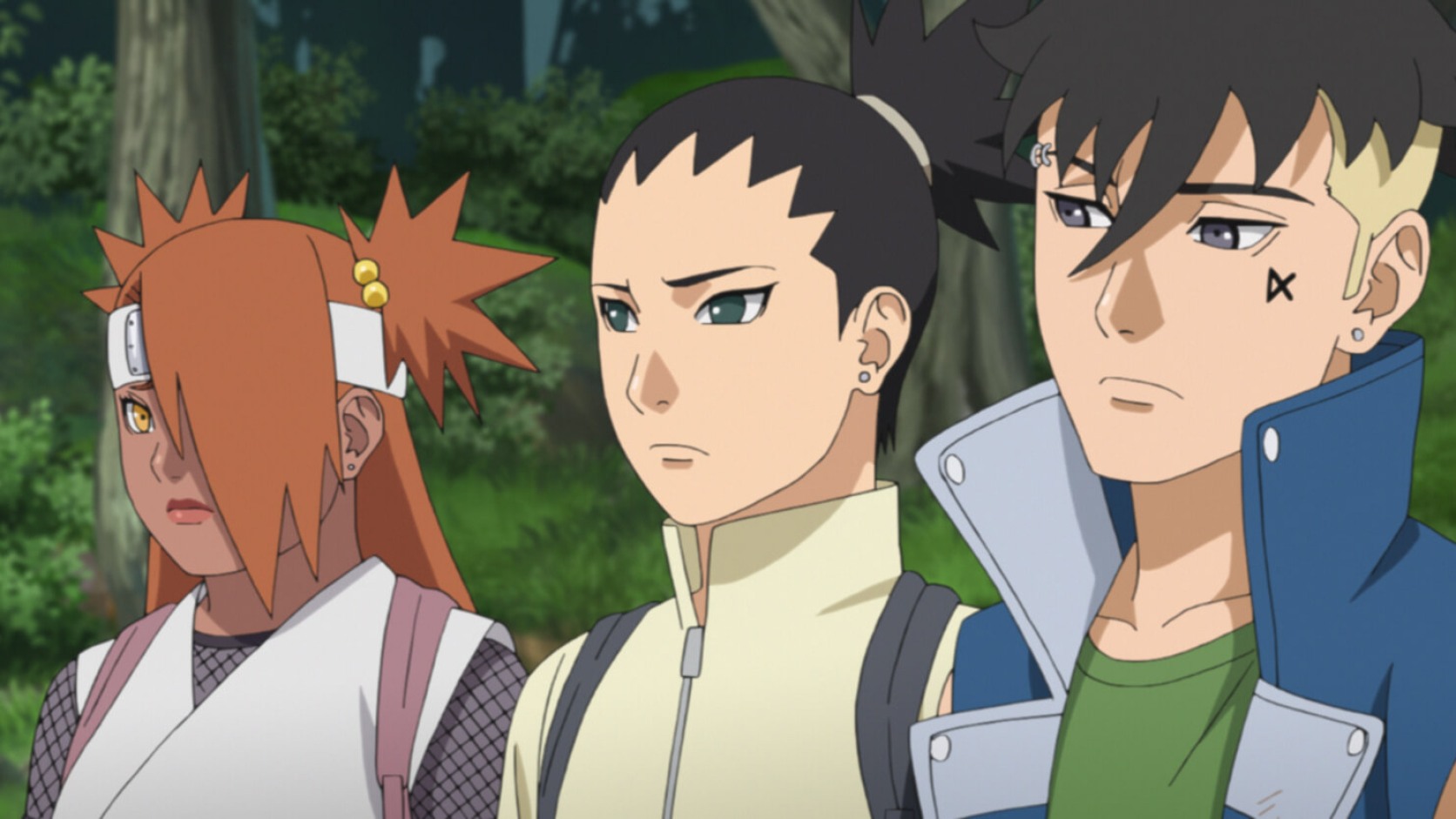
Boruto Episode 229 gives Kawaki one last chance to qualify as a genin by joining Shikadai and Cho-Cho on an escort mission for Mozuku from the Land of Calm Seas. Then the mission changes. Information arrives late, danger grows, and the clean line between following orders and protecting a person starts to break.
The title sounds like a verdict. The episode works when “breach” becomes the beginning of analysis. Which order was given? What information shaped that order? Who had authority to change the plan? What harm would compliance create after circumstances changed? Disobedience can be reckless, courageous, or both. Leadership requires more than celebrating the outcome.
The episode at a glance
- Series: Boruto: Naruto Next Generations
- Episode: 229
- Title: Breach of Orders
- Arc: Kawaki's Shinobi Path
- Original release: December 19, 2021
- RaeRae rating: Four bowls of ramen out of five
- Core question: When new information changes the moral stakes, how should a young team challenge an order without abandoning accountability?
Kawaki enters under a last-chance threat
Calling the mission his final opportunity makes every decision heavier. He is not only protecting Mozuku. He believes one failure may close the shinobi path and alter how Konoha sees him.
Fear can narrow judgment, increase impulsivity, and make correction sound like rejection. That is exactly why high-stakes evaluation needs clear standards and support.
The village can set a boundary without pretending one pressured mission measures stable capacity.
Shikadai carries two jobs
Shikadai must lead the escort and participate in Kawaki's assessment. Those roles can conflict. A mission captain should prioritize client and team safety, not stage opportunities for a candidate to prove himself.
An adult evaluator should collect evidence separately. Shikadai can provide observations without becoming responsible for the final verdict.
Teenage leadership needs fewer hidden assignments, not more.
Cho-Cho is a teammate, not a buffer
Cho-Cho's direct communication may help cut through Kawaki's defensiveness. Adults should not assign her the emotional labor of making him cooperative.
She deserves a defined operational role, access to support, and permission to set limits when behavior becomes unsafe.
Warmth is a skill. Warmth is not infinite institutional capacity.
Mozuku is a client and a young person
The escort mission concerns his body, homeland, and future. He should receive an understandable briefing, a chance to identify fears, and a route to raise concerns.
Protective secrecy may limit details, but professionals cannot demand blind trust from the person carrying the risk.
The team should never discuss his safety as though he were cargo.
The Land of Calm Seas deserves context
Mozuku comes from a place with different resources and political pressures. Konoha's relative power shapes the relationship even when the mission looks small.
Officials should ask why a child needs this escort, what local systems failed, and whether Konoha's intervention could create diplomatic consequences.
Helping one person cannot substitute for understanding the conditions placing others at risk.
Orders preserve coordination
Following a plan allows teams, reinforcements, and clients to predict behavior. Unannounced changes can isolate people and undermine rescue.
Kawaki needs to understand that obedience is not about pleasing authority. Communication keeps other people from acting on false assumptions.
The ethical problem begins when the plan no longer addresses reality.
New information can invalidate a plan
Mission orders are built from a briefing at one moment. Field conditions may reveal a threat, civilian need, or false premise nobody anticipated.
A responsible team needs authority to adapt within defined limits. The captain should report changes, document reasoning, and request backup whenever possible.
Rigid compliance is not good judgment when evidence changes materially.
Breach should trigger review
The first institutional response should preserve safety, then reconstruct the decision. What did Kawaki know? What alternatives existed? How urgent was the threat? Could he communicate?
Outcome bias must be resisted. A choice does not become wise because everyone survives, and a thoughtful choice does not become foolish only because harm occurs.
Review should evaluate the process available at the time.
Kawaki's instincts remain shaped by captivity
He learned to act before stronger people controlled the situation. Waiting for permission could mean losing the only available opening.
That history explains why orders may feel like danger rather than coordination. The team should name the difference directly and build safer habits through repetition.
Accountability becomes more effective when adults understand what the behavior once protected.
Shikadai needs authority to hear dissent
A captain who receives objections only as insubordination loses information. Shikadai should invite concise challenges: observation, predicted risk, proposed alternative.
He still makes the final call within mission scope. Listening does not dissolve command.
The process gives Kawaki a way to resist without disappearing into solo action.
Kawaki needs to report before moving
Even when his concern is correct, teammates cannot support a decision they do not know he made. A brief warning may prevent separation.
Communication should become one explicit evaluation goal. Adults can practice the skill with him before danger.
Expecting spontaneous transformation under threat is not training.
Mozuku's knowledge matters
The client may understand the people, route, or stakes better than Konoha. His information should shape planning without making him responsible for security.
Teams often silence protected people in the name of safety, then lose crucial context.
Listening preserves agency and improves the mission.
Escort work requires consent and boundaries
The team should explain where Mozuku may move independently, what happens during attack, and how physical intervention will be handled.
Emergency restraint may sometimes protect him, but authority should be narrow and reviewed afterward.
Protection does not grant ownership of another person's choices.
Intelligence failure belongs in the audit
If the threat exceeds the mission rank or briefing, Konoha must examine how information was missed. Young shinobi should not absorb the blame for institutional gaps.
Classification affects staffing, pay, medical support, and backup. Under-ranking danger exploits teams and clients.
The village owes correction and compensation when the assignment was materially misrepresented.
Shikadai's promotion needs support
His strategic talent makes leadership appear natural, but captaincy includes emotional and administrative labor. He needs adult backup and debriefing.
Managing Kawaki under a final-chance test adds complexity unrelated to the escort objective.
Konoha should not treat competence as permission to overload him.
Cho-Cho's safety cannot become secondary
The narrative focus on Kawaki's qualification may make every teammate look like part of his lesson. Cho-Cho is a person taking real risk.
Her assessment of danger and limits deserves equal weight. She should not be expected to absorb injury so somebody else can prove growth.
A fair test protects everyone involved.
The enemy is not evidence of mission worth
A stronger threat may make the story exciting, but dangerous escalation does not validate the assignment. Children should not need violence before routine work feels meaningful.
D-rank service teaches patience, reliability, and community responsibility.
The village should value those competencies without waiting for an ambush.
Protecting medicine is public health work
Mozuku's mission connects personal safety to resources needed by a wider community. The team is not only moving an object from one place to another.
Officials should understand storage, continuity, distribution, and what happens if delivery fails.
Public health planning cannot rest on one child and one escort team.
Scarcity changes the moral stakes
When medicine or resources are limited, powerful people may control access. A successful escort helps immediately but may leave structural inequality intact.
Konoha should coordinate with local leaders, medical experts, and residents rather than assuming military intervention solves governance.
Aid must avoid creating dependency or retaliation against the people served.
A child courier signals institutional failure
Mozuku's courage is real. Adults should ask why he carries such responsibility.
Celebrating bravery without changing the conditions requiring bravery turns exploitation into inspiration.
His community deserves systems that do not depend on a child surviving an armed route.
Kawaki recognizes coercion quickly
His history may help him notice when somebody is trapped or threatened. Lived experience can become valuable insight.
The village should respect that knowledge without requiring him to relive trauma for every mission.
Expertise does not erase the right to boundaries.
The team needs a retreat threshold
Before combat, Shikadai should know which conditions require withdrawal, reinforcement, or priority evacuation of Mozuku.
Emotional commitment can make retreat feel like betrayal. Written thresholds reduce that distortion.
Returning with help may protect the objective better than heroic collapse.
Backup must be reachable
A remote team needs communication tools, check-in times, and a response plan. If none exists, Konoha has shifted strategic risk onto teenagers.
Equipment failure should have a fallback route.
Redundancy is part of responsible mission design.
Medical care belongs on both sides
Team members, clients, and captured attackers may need treatment. Triage should follow medical need while preserving security.
Providing care to an enemy does not erase accountability. Humane conduct reflects village values under pressure.
Young shinobi need training before facing those decisions alone.
Documentation protects Kawaki
After a breach, specific records can show whether his choice addressed a real change or repeated unsafe independence.
Vague labels such as difficult or disobedient invite bias. Time, observation, communication attempts, alternatives, and outcomes provide better evidence.
Accurate documentation also lets him contest errors.
The test should allow repair
If Kawaki harms trust, qualification should not depend on a forced apology. He needs to understand impact, acknowledge choices, and change a future plan.
Teammates should retain the right to accept repair gradually.
Community is built through returning after conflict, not pretending conflict never happened.
What the episode gets right
Episode 229 places teamwork inside a mission where obedience and protection can genuinely conflict. Kawaki's instincts offer value and create risk at the same time.
Shikadai and Cho-Cho keep the story from becoming an individual combat test disguised as an escort.
The mission rank should change when danger changes
An escort assigned under a low-risk classification should be reclassified when armed opposition, political stakes, or scarce medicine becomes known. That change affects authority, compensation, staffing, and emergency support.
Konoha cannot benefit from a higher-risk success while paying and protecting the team as though the original briefing remained accurate.
Retroactive review should identify who knew what and when, then repair the planning process.
Kawaki needs a communication script
Under stress, “explain everything calmly” may be unrealistic. A short protocol can help: identify the new threat, state the immediate risk, propose one action, and confirm whether the captain heard.
The team can practice the script until use becomes familiar. Shikadai should respond with a clear decision or request for more information.
Shared language turns urgency into coordination faster than demanding perfect social instincts.
Shikadai needs a challenge window
Command works better when the plan includes moments for reassessment. At checkpoints, each teammate can report changes and objections before movement resumes.
An emergency still may require immediate action, but regular challenge windows reduce the pressure to breach silently.
Leadership is stronger when dissent has an expected place.
Cho-Cho can name what the team is avoiding
Her directness can surface tension others hide. That contribution should be treated as tactical information, not comic interruption.
She may notice when Kawaki withdraws, when Shikadai becomes too rigid, or when Mozuku is excluded from a decision about his own safety.
The team must listen without making her responsible for every difficult conversation.
Mozuku needs language access
Different regions may use unfamiliar terms, customs, or mission expectations. The escort team should confirm understanding rather than assume agreement.
Translation support and plain-language briefings protect informed consent. Nodding under pressure does not prove comprehension.
Respecting communication needs is part of security because misunderstandings can become dangerous during an attack.
Cultural humility improves the escort
Konoha shinobi should not assume their procedures fit every community. Mozuku may understand local relationships, terrain, and risks more accurately.
The team can bring specialized protection while remaining curious about what they do not know.
Humility is not indecision. Humility prevents institutional power from masquerading as complete knowledge.
Medicine needs a chain of custody
If the mission protects medical resources, every transfer should be documented. Storage temperature, tampering, contamination, and delivery authorization matter.
Young shinobi need enough instruction to protect the material without being expected to replace health professionals.
Successful arrival means little if the medicine is unusable or diverted after delivery.
The wider community needs continuity
One shipment cannot solve an ongoing access crisis. Konoha should ask how future supplies will travel and who remains vulnerable after the team leaves.
Diplomatic and public-health support may be more important than repeated armed escorts.
Heroic delivery becomes responsible aid only when somebody plans for tomorrow.
Captured attackers still require due process
If the team captures an enemy, interrogation and detention should follow lawful procedures. Teenagers should not be encouraged to improvise punishment.
Evidence must be preserved, injuries treated, and custody transferred to accountable adults.
The village shows its values most clearly when dealing with people who caused harm.
Kawaki's body should not be the contingency plan
His modified arm and durability may tempt teammates to place him between danger and everyone else. Capability does not equal consent.
Plans should distribute risk according to role, armor, terrain, and voluntary agreement. Medical limits remain relevant even when he appears resilient.
Kawaki escaped one system that treated his body as equipment. Konoha must not repeat the pattern politely.
A breach can reveal a policy gap
If several competent people believe disobedience was necessary, officials should examine whether the order lacked flexibility or an escalation channel.
Punishing the individual without updating policy guarantees repetition. Excusing every breach without standards destroys coordination.
Institutional learning holds both accountability and revision.
The client should participate in review
Mozuku can describe whether he felt informed, protected, ignored, or coerced. His testimony should matter without deciding the entire outcome.
The village must protect him from retaliation and avoid demanding emotional gratitude.
Client feedback turns mission success from an internal shinobi claim into something the protected person can evaluate.
Kawaki should hear the impact on teammates
Rules may feel abstract. Shikadai and Cho-Cho can explain how unexpected movement changed their risk, information, and options.
The conversation should focus on specific conduct rather than condemning his character. Kawaki also needs room to explain what he perceived.
Understanding impact is more likely to change future behavior than shame.
Shikadai should review his own command
The captain must ask whether he invited information, explained the plan, and adapted when the briefing failed. Rank does not make every decision correct.
Self-review models accountability for Kawaki. The lesson becomes reciprocal rather than an institution evaluating the outsider alone.
Leadership credibility grows when the captain can name a mistake without collapsing authority.
Cho-Cho needs recovery without caretaking
After danger, adults should not ask her to cheer up the team or reassure Kawaki. She may be frightened, angry, or exhausted.
Private medical and emotional support protects her from performing resilience. Her experience matters independently from the test outcome.
Care should reach the person who usually provides care.
The report should distinguish intent and effect
Kawaki may intend to protect Mozuku while creating additional danger for the formation. Both facts belong in the record.
Intent informs moral understanding. Effect informs repair and safety planning. Neither should erase the other.
Precise reporting avoids the false choice between calling him heroic and calling him hopeless.
Qualification should use multiple sources
The final decision should combine observed missions, teammate feedback, mentor notes, safety conduct, and demonstrated improvement. One dramatic outcome is insufficient.
Evaluators need safeguards against prejudice related to Kara, Karma, or Kawaki's communication style.
Standards should be published before the decision, with a clear appeal route afterward.
Failure should preserve a future path
If Kawaki does not qualify, Konoha should provide a written learning plan, continued education, and another review date. Losing the title cannot mean losing community.
He also deserves meaningful non-shinobi choices. Repetition should not become coercion.
A closed door without explanation would confirm every fear about conditional acceptance.
Success should not erase the breach
If Kawaki's action helps save Mozuku, officials may be tempted to call the decision correct and move on. Outcome alone cannot establish good process.
The team still needs to examine communication, alternatives, and risks. Recognition and correction can coexist.
Learning from a successful breach may prevent a deadly breach later.
The village owes Mozuku more than thanks
Konoha should follow up on his safety, the delivery, and conditions in the Land of Calm Seas. A completed contract does not end moral responsibility when systemic danger is known.
Diplomatic assistance should center local voices and avoid military domination.
Mozuku's courage deserves a future in which children are not necessary couriers.
Kawaki's progress may look uneven
He may communicate well in one moment and withdraw in the next. Trauma recovery and skill learning are rarely linear.
Evaluators should look for patterns across time rather than demanding constant improvement. Regression can signal exhaustion, a new trigger, or missing support.
Uneven growth still deserves accurate accountability.
A genin title cannot heal him
Certification may provide purpose and community, but no headband can repair abuse by itself. Kawaki will still need medical care, stable relationships, education, and autonomy.
The village should celebrate qualification without treating the title as proof that support can end.
Belonging must remain larger than employment.
The best order leaves room for reality
A useful order gives a team purpose, boundaries, priorities, and a method for responding when assumptions fail. That kind of structure supports judgment rather than replacing judgment.
Shikadai should not have to choose between rigid compliance and total improvisation. Kawaki should not have to choose between silence and disappearing into solo action. Cho-Cho and Mozuku should not have to absorb the consequences of an argument the system never taught them how to resolve.
The breach becomes valuable only if Konoha builds a better process afterward. Otherwise the village will keep praising exceptional improvisation while refusing to create ordinary safety.
Where the episode needs care
The “last chance” framework places too much meaning on one pressured assignment. Konoha also needs to own any intelligence or classification failures.
Mozuku should remain a participant with agency rather than a package used to evaluate Kawaki.
RaeRae verdict
Boruto Episode 229 earns four bowls of ramen out of five. Kawaki's problem is not simply that he hates orders. He has learned that authority often hides harm, while Konoha has not yet given him enough practice distinguishing control from coordination.
The breach deserves review rather than a slogan. If circumstances changed, the team needed a safe way to change the plan. If Kawaki acted alone, he needs to repair the risk created for Shikadai, Cho-Cho, and Mozuku. Both truths can stand together.
Before the next episode
Episode 230, “A Wish,” completes this mission and asks what Kawaki carries forward when protection cannot guarantee everyone survives.
Watch how Konoha turns grief into policy, support, and a genin decision rather than leaving every lesson inside one wounded child.
Sources and lawful viewing
The official Naruto site provides the Episode 229 synopsis and gallery. Crunchyroll carries “Breach of Orders” where regional availability permits. Release and streaming details can vary by country.
Official episode reference: Naruto Official episode guide
Licensed episode route: Crunchyroll licensed series page
After watching, ask what new information changed the mission. Orders deserve respect, but leadership requires a process for reality to answer back.