
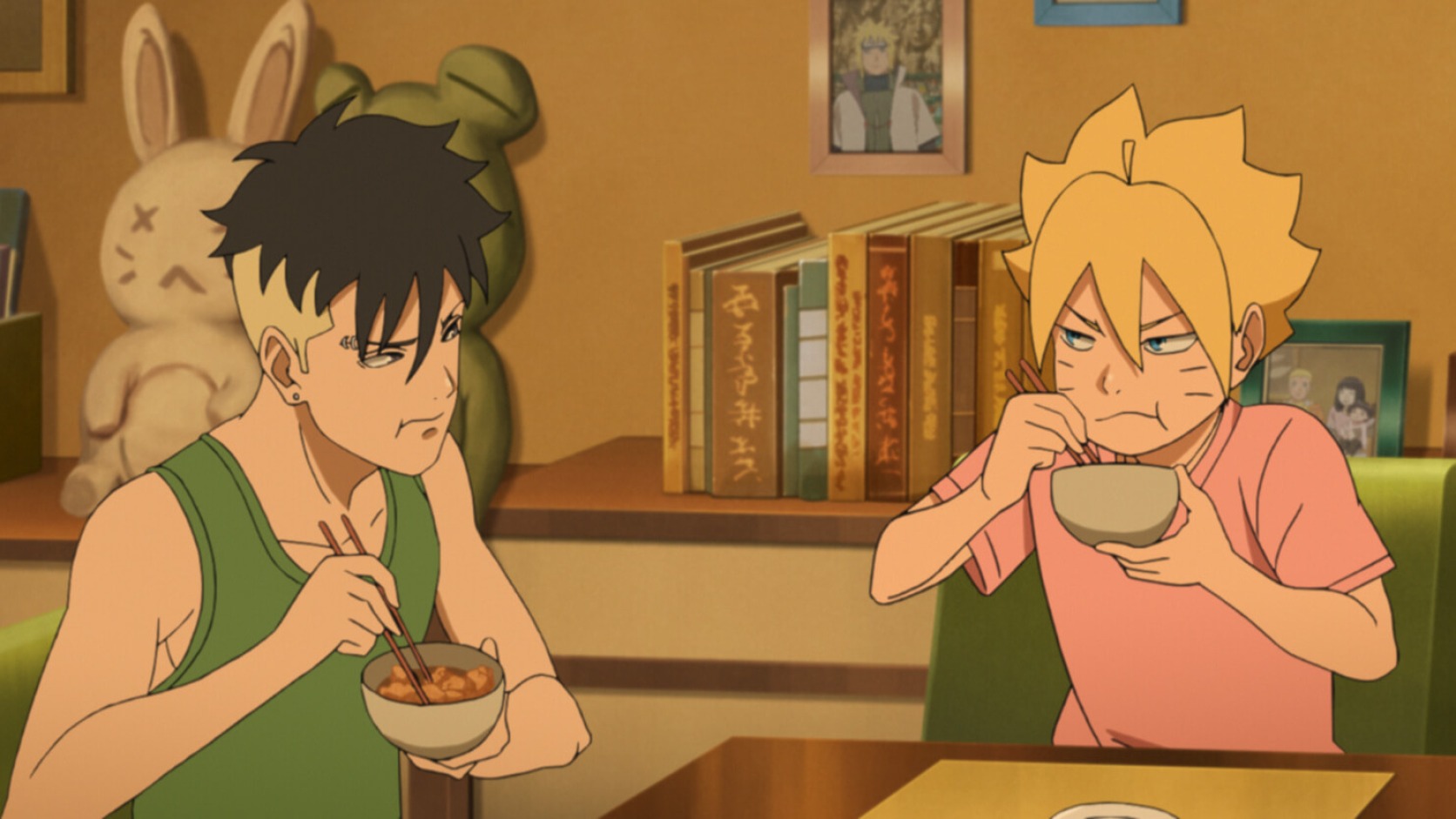
The Uzumaki Household
Ordinary routines give Kawaki evidence that food, privacy, conflict, and mistakes can exist without another hidden price, while Kāma gives the boys a goal they choose together.
Series: Boruto: Naruto Next Generations
Episode: 194 · The Uzumaki Household
Arc: Vessel
Release: April 11, 2021
Previous: Episode 193 · Coexistence
Directory: All 293 Boruto episodes
Bottom line
Boruto Episode 194 proves that ordinary life can do work no interrogation room can touch. Kawaki enters the Uzumaki household expecting every resource, rule, and mistake to carry a hidden price. Instead he finds breakfast, bathroom arguments, family photographs, teasing, noise, and people who remain present after conflict. Boruto is not ready to forgive the broken vase, and he should not be ordered to skip the harm for the sake of Kawaki's recovery. Kawaki is not ready to trust domestic warmth, and he should not be required to perform gratitude for shelter. Their breakthrough comes through Kāma because both boys finally possess information the other genuinely needs. Cooperation does not erase hostility, but shared ownership of the problem gives them a relationship neither adult policy nor forced proximity could manufacture. A household becomes healing when routines stay predictable, repair matters, privacy survives surveillance, and nobody loses food or belonging after a bad day.
Morning begins without a mission briefing
Kawaki wakes inside a home rather than a laboratory or Kara facility. No one starts the day by measuring his performance.
The absence of immediate demand feels ordinary to the Uzumakis and unfamiliar to him. Safety often enters through what does not happen.
Peaceful routine can feel suspicious
Breakfast, family chatter, and household movement have rhythms Kawaki does not know. Calm may look like the pause before an adult reveals the real price.
Nobody should interpret vigilance as rejection of the family. His body is waiting for evidence.
Family photographs establish history
The walls and shelves show relationships that existed before Kawaki arrived. He enters a space full of shared memory while carrying almost no safe memory of home.
Photographs can invite belonging and remind a newcomer that everyone else already has a place.
Kawaki needs room for mixed feelings
Warmth can produce relief, envy, grief, anger, and suspicion at the same time. A peaceful household highlights what his childhood lacked.
Recovery does not require choosing one clean emotion for the adults to understand.
Naruto stays home because Kawaki is there
Boruto notices that his father remains physically present all day, something work often denied the family. The surveillance arrangement creates the availability Boruto previously wanted.
That irony can hurt even when Boruto understands the security reason.
Boruto's resentment deserves a hearing
Naruto missed important family moments because Hokage duties consumed him. Now a stranger's risk brings him home. Boruto can read that change as proof that crisis earns attention ordinary need could not.
Compassion for Kawaki should not silence that wound.
Naruto should acknowledge the contradiction
Explaining security does not answer the emotional fact. Naruto can admit that Boruto deserved more presence before Kawaki arrived.
Accountability helps prevent the children from becoming competitors for one father's attention.
Kawaki should not carry Naruto's parenting debt
Boruto's anger belongs partly with Naruto, not entirely with the newcomer. Kawaki did not create the Hokage's absence or request surveillance inside the home.
Adults should keep old family injuries from becoming charges against the placed child.
The bathroom argument is ordinary and useful
Two boys want the same space on their own schedule. No world-ending threat is required for irritation.
Ordinary conflict allows Kawaki to learn that disagreement can end with inconvenience rather than violence, sale, or expulsion.
Privacy needs practical rules
Bathroom turns, closed doors, bedrooms, changing clothes, and personal belongings require explicit boundaries when someone new arrives.
Predictable rules protect every child and reduce the chance that confusion becomes humiliation.
Naruto's monitoring follows Kawaki everywhere
Shadow clones or direct observation may be necessary while the risk remains unknown. Constant presence can make basic privacy feel impossible.
Naruto should explain where monitoring applies, what remains private, and when restrictions will be reviewed.
Security should not become comedy alone
Watching the Hokage manage surveillance during bathroom routines is funny. The joke also reveals how invasive direct custody can become.
Humor works best when the story remembers the power underneath.
Food creates another competition
Boruto and Kawaki compare portions, speed, or preferred pieces because sibling rivalry finds the nearest available object.
Kawaki's hunger history gives the contest another layer. Food has rarely been abundant, predictable, and his to enjoy.
A full table teaches bodily safety
Regular meals tell Kawaki that survival does not depend on earning money for an adult or pleasing a captor. The lesson reaches the nervous system through repetition.
Nobody should comment on appetite in ways that create shame.
Sharing food does not settle ownership
The family provides meals because a child needs food, not because shelter grants access to his testimony or body.
Hospitality becomes ethical when no invisible invoice follows.
Hinata's care work holds the episode together
Meals, household rhythm, emotional temperature, and practical welcome do not appear by magic. Hinata performs work that makes the placement livable.
Naruto and the village should recognize and share that labor rather than treating maternal care as infinite.
Himawari models warmth without interrogation
She can include Kawaki in ordinary conversation without asking him to explain Kara, abuse, or Kāma. That restraint lowers the emotional price of being present.
Himawari still deserves protection from becoming the household peacekeeper.
The broken vase remains unresolved
The object carries Himawari's effort and love for Hinata. Kawaki's apology matters, but the damage remains visible.
Repair should honor the object, the maker, and the fear surrounding the break.
Boruto refuses instant forgiveness
He remains angry because the vase mattered to his sister. That loyalty is not cruelty.
Adults should help Boruto express anger without grabbing, threats, or permanent condemnation.
Kawaki may hear anger as threatened expulsion
In earlier homes, adult displeasure meant violence or sale. Boruto's refusal can sound like evidence that one mistake ended shelter.
The family must state clearly that accountability and belonging can coexist.
Repair needs action
An apology becomes stronger when followed by effort to replace or mend the vase. Material repair shows that Kawaki can affect the household without becoming defined by the worst moment.
Himawari should decide what repair feels meaningful.
A replacement cannot erase the original
Buying another vase may restore function while missing the handmade object's emotional history. Kawaki cannot reproduce Himawari's labor or memory.
Restoration should acknowledge what cannot be made identical.
The family can teach repair without humiliation
Explain why the vase matters, invite Kawaki to help, and allow frustration. Public shame would connect mistakes to danger again.
Responsibility grows better in a stable environment.
Boruto and Kawaki bicker like siblings before feeling like siblings
Shared space produces friction long before affection. The rhythm can look familiar without proving emotional closeness.
The story should let relationship names follow experience rather than lead experience.
Kāma finally creates a productive conversation
Both boys carry marks imposed through Ōtsutsuki power. Their bodies hold a problem adults cannot fully explain.
Mutual need gives the conversation an equality missing from the custody arrangement.
Boruto explains Momoshiki's mark
His Kāma arrived after defeating Momoshiki, without informed consent or understanding. Boruto may have family support, but bodily violation remains real.
Kawaki learns that privilege does not protect Boruto from this threat.
Kawaki explains Jigen's process
His mark came through trafficking, experimentation, and the deaths of other children. Sharing that information costs trust and exposes vulnerability.
Boruto should receive the disclosure without treating Kawaki as a research source.
Different origins create shared stakes
The boys did not acquire Kāma through the same path. Both face power installed for another being's purpose.
Solidarity becomes possible when similarity does not erase difference.
Kawaki proposes cooperation
Working together to remove both marks offers an objective neither boy must accept alone. The proposal comes from Kawaki rather than an adult assigning partnership.
Choice makes the connection more meaningful.
Cooperation is not friendship therapy
They can share research, training, and information while remaining irritated with each other. Nobody should require emotional intimacy as the price of collaboration.
A practical alliance may create trust over time.
Removing Kāma returns bodily authorship
Each mark exists to serve an Ōtsutsuki future. Seeking removal rejects the claim that power justifies occupation.
The goal concerns autonomy before combat advantage.
Research needs consent from both boys
Katasuke and village scientists may gain valuable information from comparing the marks. Boruto and Kawaki should understand procedures, risks, data use, and alternatives.
Shared danger does not create automatic research consent.
The boys need separate advocates
Their interests may align now and diverge later. One may accept a procedure the other rejects.
Independent support prevents cooperation from becoming pressure toward identical choices.
Naruto overhears important information
Direct supervision may expose conversations the boys expect to be private. Security makes some monitoring necessary, but personal disclosure still deserves boundaries.
Naruto should tell them what he heard and how the information will be used.
Surveillance changes honesty
People speak differently when authority listens. Kawaki may withhold details if every admission travels directly into intelligence files.
Protected private conversation supports better long-term trust.
Ordinary life produces better information
Kawaki shares more during a tense conversation with Boruto than under formal questioning. Safety and shared stakes create access coercion could not.
The lesson is not to use family as covert interrogation. The lesson is that trust matters.
The household should not become a research site
Home needs spaces where Kāma, Kara, and security are not the only topics. Constant observation would keep Kawaki defined by institutional value.
Ordinary boredom belongs in recovery.
Boruto needs his own life protected
Missions, friends, training, privacy, and time with family should continue. A newcomer cannot consume every routine because adults failed to plan support.
Meeting Boruto's needs reduces resentment without blaming Kawaki.
Kawaki needs routines he can predict
Meal times, bathroom expectations, sleep, medical appointments, and household rules should remain clear. Predictability reduces the need to scan for hidden danger.
Changes should be explained before they happen whenever possible.
Rules should apply across the household
No hitting, no entering rooms without permission, no destroying property, and no using private information as a weapon should bind Boruto and Kawaki alike.
Equal rules can coexist with support tailored to different needs.
Consequences cannot threaten shelter
If either boy breaks a rule, adults can require repair, separation, or loss of a specific privilege. Food, medical care, and a bed remain nonnegotiable.
Stability teaches that mistakes do not end personhood.
Peaceful life may produce grief
Watching the Uzumakis interact can show Kawaki what a family could have been. Comfort and mourning may arrive together.
Adults should not demand visible happiness because the environment is objectively safer.
Family photos can eventually include him
Adding Kawaki to household memory should happen through invitation, not symbolic adoption staged before he feels ready.
Belonging becomes stronger when the person controls how identity is represented.
Naruto should share domestic labor
Staying home for surveillance does not automatically mean contributing to meals, cleanup, scheduling, and emotional care. Presence needs practical responsibility.
The Hokage title cannot exempt him inside the household.
Hinata needs private support
She is hosting a traumatized child pursued by a hostile organization while protecting her own children. Compassion does not eliminate stress.
The village should provide help without turning the house into a staffed facility.
Himawari should keep ordinary childhood
She can care about Kawaki and remain upset about the vase. She also needs school, friends, play, and time that does not revolve around crisis.
Her kindness should never become family policy.
Boruto and Kawaki need conflict breaks
Forced togetherness can intensify hostility. Separate activities, private space, and time with different adults allow nervous systems to settle.
Distance can support coexistence rather than undermine connection.
Humor makes the household believable
Bathroom competition and eating rivalry prevent trauma from consuming every frame. People recovering from harm still joke, sulk, and act ridiculous.
Humor should sit beside pain without dismissing pain.
Ordinary annoyance is a form of inclusion
Boruto can complain about Kawaki's habits without framing every complaint as security danger. Treating someone as an annoying housemate can be more humanizing than constant reverence.
Respect still limits cruelty.
The episode moves from assignment to alliance
The Five Kage assigned Kawaki to Naruto's home. No policy can assign the boys' cooperation.
Their Kāma agreement becomes the first relationship choice they make together.
Household labor needs a visible plan
Adding another person creates more cooking, dishes, laundry, shopping, cleaning, appointment coordination, and emotional work. The episode presents comfort through an already functioning home, but comfort has producers.
Naruto should take responsibility for the labor created by his custody decision instead of treating physical surveillance as his only duty. Boruto and Kawaki can share age-appropriate chores once rules are explained, while Himawari should not inherit extra work because she responds most warmly. A household becomes sustainable when care is distributed rather than romanticized.
Food insecurity can survive a full pantry
Kawaki may eat quickly, guard portions, hide food, or react strongly when someone reaches near his plate. Those behaviors can persist after scarcity ends because the body does not trust one abundant meal.
The family should keep food accessible, avoid jokes that shame appetite, and make clear that another meal will arrive. Competition with Boruto can be playful only while Kawaki genuinely believes losing the contest will not mean going hungry. Predictability turns abundance into safety over time.
Privacy under monitoring requires negotiation
Naruto cannot promise complete privacy while Kara may track Kawaki and Kāma can activate unpredictably. Constant observation still risks recreating a world where Kawaki's body never belongs solely to him.
The household can define zones and moments with reduced monitoring, state what emergencies override those limits, and revisit the arrangement as evidence changes. Kawaki should know when a shadow clone is present. Secret surveillance may gather more information today while destroying the honesty needed tomorrow.
Boruto needs permission to protect sentimental value
The vase matters because Himawari made the gift for Hinata. Boruto's anger defends labor and affection that Kawaki cannot see from the broken pieces alone.
Adults should not answer by saying an object is replaceable or Kawaki's trauma matters more. Sentimental harm remains harm. The repair conversation can explain meaning without turning the object into proof that Kawaki does not deserve the home. Respect for the vase and protection for Kawaki belong together.
Kawaki needs permission to make ordinary mistakes
Not every spill, broken dish, sharp reply, or forgotten chore should become evidence of dangerous instability. A child accustomed to severe punishment may treat small accidents as emergencies and escalate while trying to avoid consequences.
Calm, proportionate responses teach scale. Clean the spill. Replace what can be replaced. Apologize when another person is affected. Move forward. Ordinary accountability helps Kawaki distinguish inconvenience from catastrophe and gives the entire household room to breathe.
The Kāma alliance needs explicit boundaries
Boruto and Kawaki agree to cooperate on removing the marks, but partnership should not mean unrestricted access to each other's bodies, memories, or medical results. Either boy can pause an experiment or refuse a training method.
They need adults who support research without controlling the goal, clinicians who explain risk, and separate advocates if their interests diverge. Shared purpose becomes ethical when “we” never erases each person's ability to say no.
Chosen brotherhood must remain chosen
Viewers know the story wants the boys to become family. Naruto may already hope that proximity and shared pain will create connection. Hope becomes pressure when adults start calling them brothers before both boys accept the relationship.
Let practical cooperation, irritating routines, repaired conflict, and voluntary loyalty build the word. A chosen bond can become stronger than an assigned label precisely because either person had space to resist, negotiate, and return.
Naruto should protect confidential disclosures
If Naruto overhears the boys comparing Kāma histories, his roles collide again. The information may affect village safety and medical decisions. The conversation also contains personal trauma shared in a domestic setting.
Naruto should tell Boruto and Kawaki what he heard, explain which facts must reach specific professionals, and keep everything else private. Trust does not require pretending security duties vanish. Trust requires refusing to use surveillance as unlimited permission.
Family support should outlast the emergency
Konoha may provide guards, medical attention, and leadership focus while Kara's threat feels immediate. Recovery will continue after urgency shifts to another crisis.
The household needs durable resources: counseling, respite for caregivers, educational support, medical specialists, and review of the placement. Short-term heroics cannot substitute for long-term care. Kawaki has already lived through adults who offered intense attention only while his usefulness remained high.
Ordinary joy should belong to Kawaki without debt
Laughing at a joke, enjoying food, winning an argument, or relaxing near family photos should not be treated as proof that Kawaki is cured or grateful. Pleasure can exist beside fear.
The household should allow good moments to remain good moments without converting them into progress reports. A child deserves enjoyment for its own sake. Recovery becomes more human when every smile stops carrying institutional meaning.
RaeRae verdict
Episode 194 earns its quieter pace because recovery happens in bathrooms, kitchens, arguments, and awkward meals long before anyone delivers a grand family speech. Kawaki does not need another institution explaining its kindness. He needs to watch what happens after he takes food, loses patience, occupies space, and makes mistakes. The Uzumaki household begins providing evidence that ordinary needs do not carry a hidden invoice.
Boruto's anger deserves equal respect. Naruto's constant presence arrives for surveillance after work repeatedly pulled him away from his children. The broken vase belongs to Himawari's effort and love. Nobody should demand forgiveness because Kawaki has suffered more. Repair means holding trauma and impact in the same conversation.
The Kāma proposal finally changes the relationship because Kawaki chooses the offer and Boruto has reason to accept. Both boys want their bodies back. They can cooperate without pretending to be friends, brothers, or matching victims. That practical alliance may grow precisely because adults did not manufacture the emotional label first. Keep the food predictable, protect privacy, share the domestic labor, repair what breaks, and let belonging survive conflict. That is the household work Kara never understood.
Carrying forward
Boruto Episode 195, “A Vase,” takes Kawaki into town with Naruto and Sarada to replace Himawari's gift. Watch whether buying a new object becomes genuine accountability, how public contact triggers defensive force, and whether Naruto can coach without humiliating a child whose body still expects every accidental touch to become attack.
Sources and lawful viewing
Official episode reference: Naruto Official episode guide
Licensed episode route: Crunchyroll licensed series page