
Coexistence
The Five Kage choose Naruto’s home, but custody becomes coexistence only when every child receives safety, privacy, a voice, and belonging that survives conflict.
Series: Boruto: Naruto Next Generations
Episode: 193 · Coexistence
Arc: Vessel
Release: April 4, 2021
Previous: Episode 192 · The Past
Directory: All 293 Boruto episodes
Bottom line
Boruto Episode 193 calls the arrangement coexistence, but the power is nowhere near equal. The Five Kage decide where Kawaki will live because Kara wants his body and international security depends on keeping the Vessel contained. Naruto offers direct supervision, warmth, and a home because he recognizes what fear and isolation did to his own childhood. Boruto sees an unknown, dangerous boy connected to Kāma entering the family without his consent. Himawari loses a vase and gains a volatile houseguest without choosing either. Kawaki enters because the Hokage can stop every escape. Everyone has valid needs, and nobody gets a simple veto. Ethical coexistence therefore requires more than good intentions: transparent restrictions, protected private space, sibling safety, medical consent, conflict rules, and belonging that never becomes payment for cooperation. Naruto can make the house different from Kara only by limiting his own power inside the arrangement.
Kawaki wakes under senior authority
Naruto, Shikamaru, and Konohamaru stand near the hospital bed when Kawaki wakes. Each adult represents power: village leadership, security strategy, and the team that found him.
Kawaki sees another room where officials already possess more information about him than he possesses about them.
Medical recovery begins under surveillance
The hospital treats wounds and prevents immediate collapse. Observation also serves security because Kawaki's body can transform and Kara may attempt retrieval.
Both purposes should be named. Hiding surveillance inside care destroys trust faster than honest limits.
Kawaki attempts escape again
He tests exits because every previous adult arrangement became dangerous. Running is not proof that the hospital mistreats him. Running is evidence that safety has not become credible.
Naruto can stop the attempt without mocking the fear behind the attempt.
Naruto demonstrates overwhelming control
Kawaki cannot outrun the Hokage or evade shadow clones indefinitely. Naruto makes physical escape impossible while trying to avoid brutal force.
The restraint may be necessary. The power difference should still remain visible rather than dressed up as voluntary cooperation.
Fear-based compliance would repeat Kara
Naruto could intimidate Kawaki into silence. Immediate order would come at the price of confirming that the strongest adult always decides what the child must do.
Protection has to look different even when refusal cannot control every security decision.
Shikamaru represents legitimate suspicion
Kawaki carries Kara technology, Kāma, incomplete information, and the possibility of tracking or remote activation. Shikamaru would fail the village by ignoring those risks.
Suspicion becomes unjust only when risk labels replace evidence and never receive review.
Konohamaru carries mission evidence
He witnessed the crashed transport, Kara puppets, Koji, Garō, and the resonance between marks. His report shapes every later decision.
Accurate testimony matters, but Kawaki should eventually have a chance to correct assumptions made while unconscious.
The Five Kage treat Kawaki as international security
Kara crosses borders and threatens every village. No single leader can pretend Kawaki's custody affects only Konoha.
Coordination is responsible. A summit about a child should still include rules protecting the child from political convenience.
Kawaki has no seat at the summit
Leaders debate his location, danger, and strategic value while he remains absent. Some absence may be necessary because he is recovering and the meeting contains classified concerns.
Independent representation could prevent security language from swallowing personhood.
Custody needs stated legal boundaries
Naruto accepts responsibility for supervision, but custody cannot mean ownership. The decision should define medical authority, movement limits, privacy, education, review dates, and access to advocacy.
Undefined benevolence depends too heavily on one good leader staying good.
The other Kage trust Naruto's judgment
Naruto has protected the world, understands dangerous power, and commands extraordinary strength. Those facts make his supervision practical.
Heroic reputation should not replace oversight. Trustworthy leaders benefit from accountable rules too.
Naruto brings personal history into policy
He remembers being treated as the Nine-Tails before being treated as a child. That history helps him see the person behind Vessel.
Personal empathy can guide policy, but policy must serve Kawaki's distinct circumstances rather than recreating Naruto's story.
Jinchūriki history offers a warning
Villages repeatedly sealed power inside children, feared the result, and blamed those children for public anxiety. Naruto knows that isolation can deepen danger.
Konoha has a chance to avoid turning Kāma into the next inherited stigma.
Naruto's home becomes a security site
Placing Kawaki in the Hokage's household offers close supervision and ordinary family life. The same choice brings international risk into a private home.
Security planning must protect Hinata, Boruto, Himawari, Kawaki, neighbors, and staff without transforming the house into a visible prison.
Hinata's consent matters
Naruto's authority as Hokage does not erase partnership inside the home. Hinata should receive full information, participate in boundaries, and retain the ability to raise safety concerns.
Care work should not land on her by default because Naruto made the policy decision.
Boruto learns after adults decide
An unfamiliar boy connected to Boruto's imposed mark will live in his house. Anger and fear are predictable responses when the family change arrives as an announcement.
Boruto deserves explanation before adults demand generosity.
Boruto's objection is not simple selfishness
Kawaki threatened Team 7, carries unknown technology, and may bring Kara toward the family. Boruto also fears what Kāma means for his own body.
Treating every objection as immaturity would silence legitimate safety needs.
Boruto does not control the final decision
Children cannot always veto emergency placement or public-safety measures. Adults remain responsible for deciding when lives are at risk.
Lack of veto makes participation, information, and protected boundaries more important.
Himawari deserves a voice too
She may welcome Kawaki with compassion, but kindness does not cancel her right to privacy and safety. Younger children often receive less information because adults assume adaptability.
Age-appropriate explanation should come before crisis reaches her room.
Kawaki does not choose the household freely
Naruto's house may become the safest available placement. Kawaki still enters because stronger adults control his alternatives.
Acknowledging coercion creates room to reduce coercion. Pretending the arrangement is voluntary closes that room.
Arrival cannot equal belonging
A doorway, meal, and bedroom create conditions for belonging without manufacturing emotional connection. Kawaki has known homes where adults claimed authority and caused harm.
He needs repeated evidence before the word family carries safety.
Boruto and Kawaki meet through Kāma
The matching marks make each boy a reminder of bodily violation and future danger. Their connection precedes any chosen relationship.
Adults should not use shared Kāma as proof that friendship or brotherhood is inevitable.
Hostility protects both boys from vulnerability
Boruto converts fear into confrontation. Kawaki converts uncertainty into contempt and readiness to fight. Anger feels safer than admitting either boy needs answers.
Understanding that defense does not make grabbing, threats, or damage acceptable.
Physical conflict needs an immediate rule
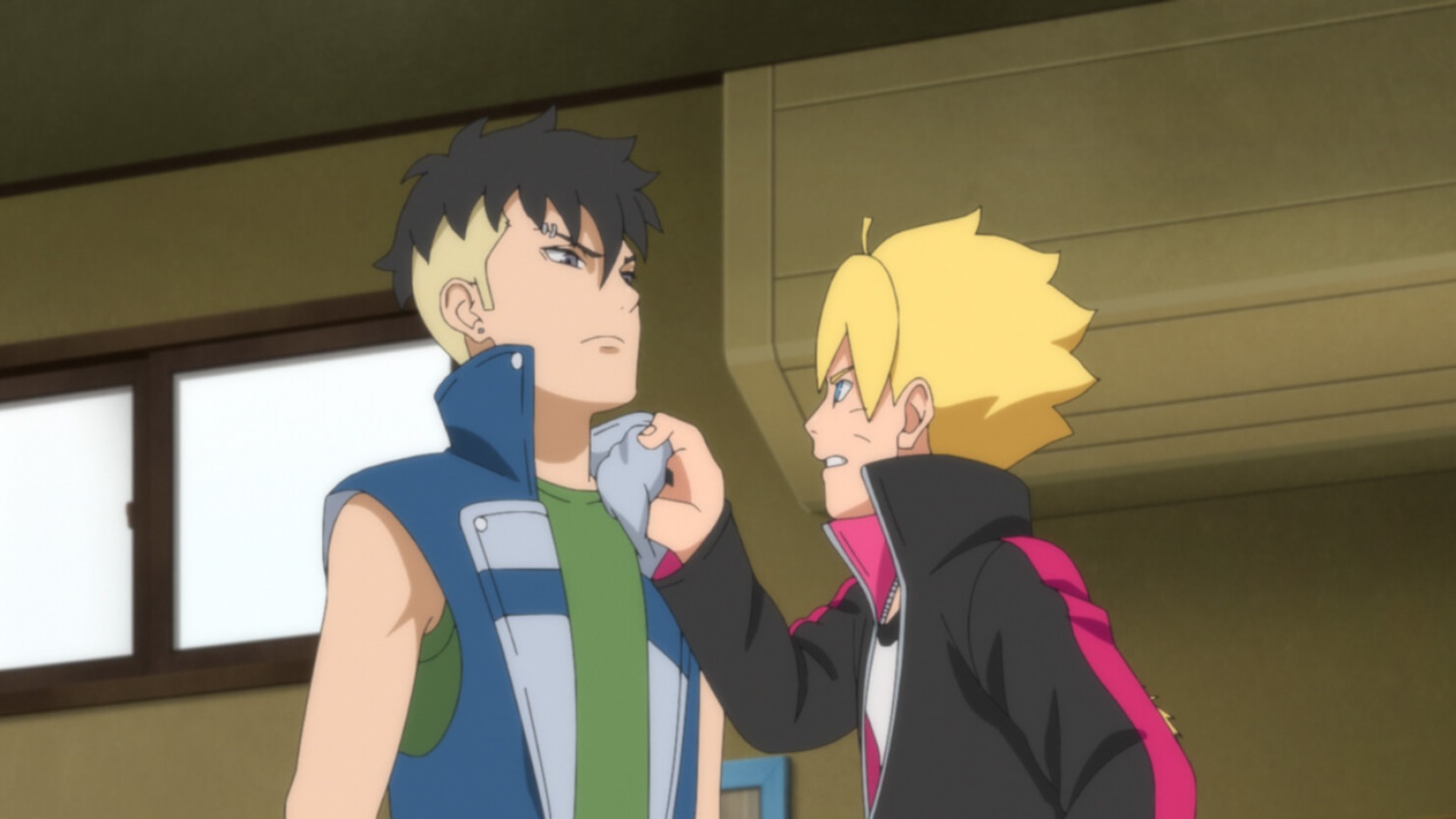
Boruto grabs Kawaki. Kawaki can respond with power capable of catastrophic harm. The household needs a clear rule against physical intimidation from either boy.
Consequences should focus on safety and repair rather than assigning one permanent troublemaker.
Naruto must intervene without humiliation
As parent, guardian, and Hokage, Naruto should separate the boys, name the boundary, and hear both concerns. Publicly overpowering Kawaki may restore order while reinforcing shame.
Calm authority can be firm without becoming another performance of dominance.
The vase makes household harm concrete
Himawari's vase is not strategically important, which makes the damage emotionally useful. Ordinary objects carry memory, effort, and belonging.
Kawaki learns that harm can matter even when nobody bleeds.
Breaking the vase affects Himawari
Adults may rush to interpret Kawaki's trauma or Boruto's reaction. Himawari owns the immediate loss.
Repair should begin by acknowledging her feelings rather than using her kindness as automatic absolution.
Kawaki apologizes
The apology shows that defensiveness has not erased conscience. Kawaki recognizes an unintended consequence and responds without being forced into a grand confession.
Accountability becomes possible when admitting harm does not threaten survival.
An apology does not require instant forgiveness
Himawari and Boruto can accept sincerity while remaining upset. Forgiveness belongs to the harmed person and may take time.
The household should separate repair from emotional performance.
Kawaki finally gives his name
Naming himself marks a small shift from Vessel toward personhood. He controls one piece of information after adults have circulated reports about his body and threat level.
The moment matters because self-definition arrives through choice.
A name should replace the project label
Officials may still need to discuss Kara's Vessel plan, but everyday language should center Kawaki. Labels shape how staff interpret every behavior.
“Vessel” belongs to Kara's intention, not his identity.
Coexistence is not friendship
The household can share space before trust, affection, or agreement. Coexistence means boundaries strong enough for conflict without expulsion.
Demanding instant closeness would make the arrangement more fragile.
Coexistence is not equal power
Naruto controls the home and custody. Boruto and Himawari belong to the established family. Kawaki depends on the placement and remains monitored.
Ethics require special protection for the person with the least power.
Private space needs real meaning
Kawaki should have a room or area where ordinary privacy survives, with stated exceptions for immediate danger. Boruto and Himawari need the same protection.
Nobody should search belongings or enter rooms merely from curiosity.
Food must never become leverage
Episode 192 showed resources tied to Kokatsu's demands. The Uzumaki household can offer meals regardless of cooperation, mood, or information shared.
Predictable food teaches safety through the body.
Chores need a different meaning from forced labor
Shared household responsibilities can support belonging. Kawaki's childhood labor history makes context essential.
Chores should be age-appropriate, shared, explained, and never connected to whether he deserves shelter.
Medical access must remain confidential
Kawaki needs ongoing care for modifications and Kāma. Naruto's supervision does not automatically grant unrestricted access to every medical detail.
Clinicians should share only what safety genuinely requires.
Surveillance should be visible and limited
Shadow clones may help Naruto prevent escape or attack. Secret monitoring would reinforce Kawaki's belief that safety language hides control.
Explain what monitoring exists, why, and when the measure will be reviewed.
Boruto needs care for Kāma too
The family may focus on the newly arrived child while Boruto's own imposed mark remains frightening and unexplained. Neglect could turn compassion into resentment.
Both boys deserve independent medical attention and emotional support.
Himawari should not become the peacekeeper
Her kindness may soften conflict, but adults must not rely on a younger child to regulate two traumatized boys. Emotional labor belongs with responsible caregivers.
Himawari gets to be a sibling, not a treatment plan.
Hinata should not carry invisible care work
Meals, cleaning, scheduling, emotional monitoring, and household repair can fall quietly onto the mother. Naruto's custody decision creates duties he must share.
Public heroism does not excuse private absence.
Shikamaru should remain a check on risk
His suspicion can protect the household from blind optimism. The role becomes useful when he evaluates specific evidence and revises conclusions.
Permanent distrust would turn oversight into stigma.
Naruto should remain accountable to family
Hokage authority cannot settle every disagreement at home. Hinata, Boruto, and Himawari need routes to say the arrangement is hurting them.
Listening does not require abandoning Kawaki. Listening supports safer adjustment.
Kawaki needs an advocate outside the household
When guardian and Hokage are the same person, conflict of interest becomes unavoidable. Kawaki should have someone independent who can hear complaints and challenge restrictions.
No child should depend solely on the goodwill of the official controlling custody.
The house needs a crisis plan
Kāma resonance, panic, Kara contact, or transformed-body conflict could place everyone at risk. Adults should decide roles before a crisis.
Planning reduces the chance that fear produces excessive force.
Repair should follow every rupture
The vase offers a small model: name harm, apologize, restore what can be restored, and change behavior. Future conflicts will require the same sequence at greater scale.
Families survive through repair, not the absence of mistakes.
Naruto cannot promise perfect safety
Kara remains dangerous, Kāma remains unknown, and the household will make mistakes. False certainty would collapse when the first threat arrives.
Naruto can promise honesty, protection, accountability, and continued care.
Trust should move at different speeds
Kawaki may trust Himawari before Boruto, Naruto before officials, or nobody for a long time. Each relationship has separate evidence.
The family should not treat one connection as blanket consent across the household.
Belonging must survive anger
Kawaki expects conflict to lead to violence, sale, or abandonment. The strongest corrective experience will arrive after a bad day.
When boundaries hold and the bed remains available, home begins to mean something new.
Placement review should begin before the placement fails
The Five Kage decision cannot become permanent merely because no better option is obvious on day one. Officials should schedule regular reviews of security risk, Kawaki's health, family impact, movement restrictions, and available alternatives.
Review should include separate conversations with Kawaki, Hinata, Boruto, and Himawari so nobody has to criticize the arrangement in front of the person who may feel blamed. Success should mean growing autonomy and safer relationships, not simply the absence of an escape attempt. A placement can remain necessary while specific conditions change.
Family consent is a continuing process
Naruto may have authority to open the household during an emergency, but family participation cannot end after the first announcement. Hinata and the children need ongoing information and meaningful influence over daily rules.
Consent inside a family is complicated because one member cannot always veto another person's shelter. That reality makes listening more important, not less. Adults should distinguish discomfort that needs support, concrete danger that needs action, and prejudice that needs correction. Every concern deserves a response even when the final arrangement remains.
Security disclosure needs a boundary too
The household requires information about Kāma activation, Kara's pursuit, Kawaki's transformed body, and emergency contact procedures. They do not need every detail of his abuse, medical history, or testimony.
Sharing only what safety requires protects Kawaki from becoming a story discussed around the dinner table without permission. Boruto can understand why certain rules exist without receiving private memories. Good security communication answers what family members must do, not every question curiosity can produce.
Naruto's roles can conflict
As Hokage, Naruto must protect Konoha and gather information about Kara. As guardian, he must protect Kawaki's privacy and interests. As Boruto and Himawari's father, he must keep their home safe. As Hinata's partner, he must share burdens and decisions.
No amount of personal integrity removes those conflicts. Naruto needs other adults to hold distinct roles: independent doctor, intelligence officer, family counselor, placement reviewer, and advocate for Kawaki. Separating responsibilities prevents one relationship from becoming the price of another.
Restorative repair fits the vase better than punishment
Kawaki breaks an object during conflict. A purely punitive response could impose repayment, isolation, or loss of privileges without addressing fear, intent, and the effect on Himawari. Ignoring the damage would also dismiss her loss.
Restorative repair asks what happened, who was affected, what responsibility Kawaki can take, and how the harm can be repaired. An apology, replacement, or careful attempt to mend the vase gives action to remorse. The process should not demand that Himawari comfort him or forgive on schedule.
Boruto deserves private time with his parents
A high-risk newcomer can consume every conversation. Boruto already feels Naruto's public duties stealing attention from the family, and Kāma has made his own future uncertain. Watching Naruto focus intensely on Kawaki could reopen that wound.
Naruto and Hinata should protect time where Boruto can speak without Kawaki present and without being compared to Naruto's childhood. Meeting Boruto's needs does not reduce compassion for Kawaki. Supported children have more room for patience than children told to suppress fear for someone else's recovery.
Kawaki needs relationships beyond Naruto
Direct supervision by the Hokage may keep him physically safe, but complete dependence on one powerful adult creates fragility. Kawaki should gradually build connections with medical staff, teachers, peers, an advocate, and trusted adults outside the household.
A wider support network reduces the terror attached to conflict with Naruto. If one disagreement appears capable of destroying every source of shelter and care, honest disagreement becomes impossible. Multiple reliable relationships make choice and accountability real.
Coexistence requires material resources
Warmth cannot solve the practical work created by another person in the home. The family needs space, food, clothing, medical coordination, security support, household time, and privacy protections. Expecting Hinata to absorb those needs invisibly would convert public policy into unpaid domestic labor.
Konoha authorized the placement, so Konoha should provide resources without turning the house into an institution. Support can remain discreet while ensuring that care does not depend on family exhaustion. Sustainable compassion needs infrastructure.
The household should plan for ordinary adolescence
Not every argument will concern Kara or trauma. Teenagers fight over noise, bathrooms, chores, food, attention, teasing, and objects. Treating every conflict as a security event would deny Kawaki ordinary life and keep Boruto under constant threat language.
The adults need two tracks: normal household boundaries for normal behavior and a specific safety plan for Kāma or transformed-body danger. Knowing the difference protects everyone from overreaction and prevents Kawaki's identity from collapsing into risk.
RaeRae verdict
Episode 193 makes a defensible decision and refuses to pretend the decision is simple. The Five Kage cannot let Kara recover Kawaki, and leaving an injured child without protection would be negligence. Naruto is uniquely capable of containing the physical danger while recognizing the person behind the power. His home may offer the ordinary stability no secure facility can reproduce.
None of that makes coexistence equal. Kawaki is under custody. Boruto and Himawari did not choose the placement. Hinata will absorb consequences inside the home. Naruto holds parental, guardian, military, and political power at once. Good intentions cannot resolve those conflicts by themselves.
The vase and Kawaki's name show why the household still matters. Ordinary harm creates an opportunity for ordinary accountability. Kawaki apologizes because admitting fault does not immediately place him back on the market. He names himself because the room leaves enough space for one voluntary disclosure. Konoha should build from those small proofs: clear rules, private space, food without debt, medical consent, sibling protection, independent advocacy, and belonging that survives conflict. That is how coexistence becomes more than a custody order.
Carrying forward
Boruto Episode 194, “The Uzumaki Household,” turns policy into breakfast, bathroom schedules, surveillance, arguments, and the exhausting work of sharing space. Watch who performs the care work, whether Boruto's fear receives attention, and whether Kawaki experiences boundaries as predictable safety rather than another set of commands.
Sources and lawful viewing
Official episode reference: Naruto Official episode guide
Licensed episode route: Crunchyroll licensed series page