
War Keeps Using the Knowledge It Calls Irrelevant
Josua excludes Vorzheva from the war room, then builds strategy from women, servants, memory, kinship, and a jester everyone rushes.
The thesis
The resistance cannot keep dismissing knowledge until the exact second it needs saving
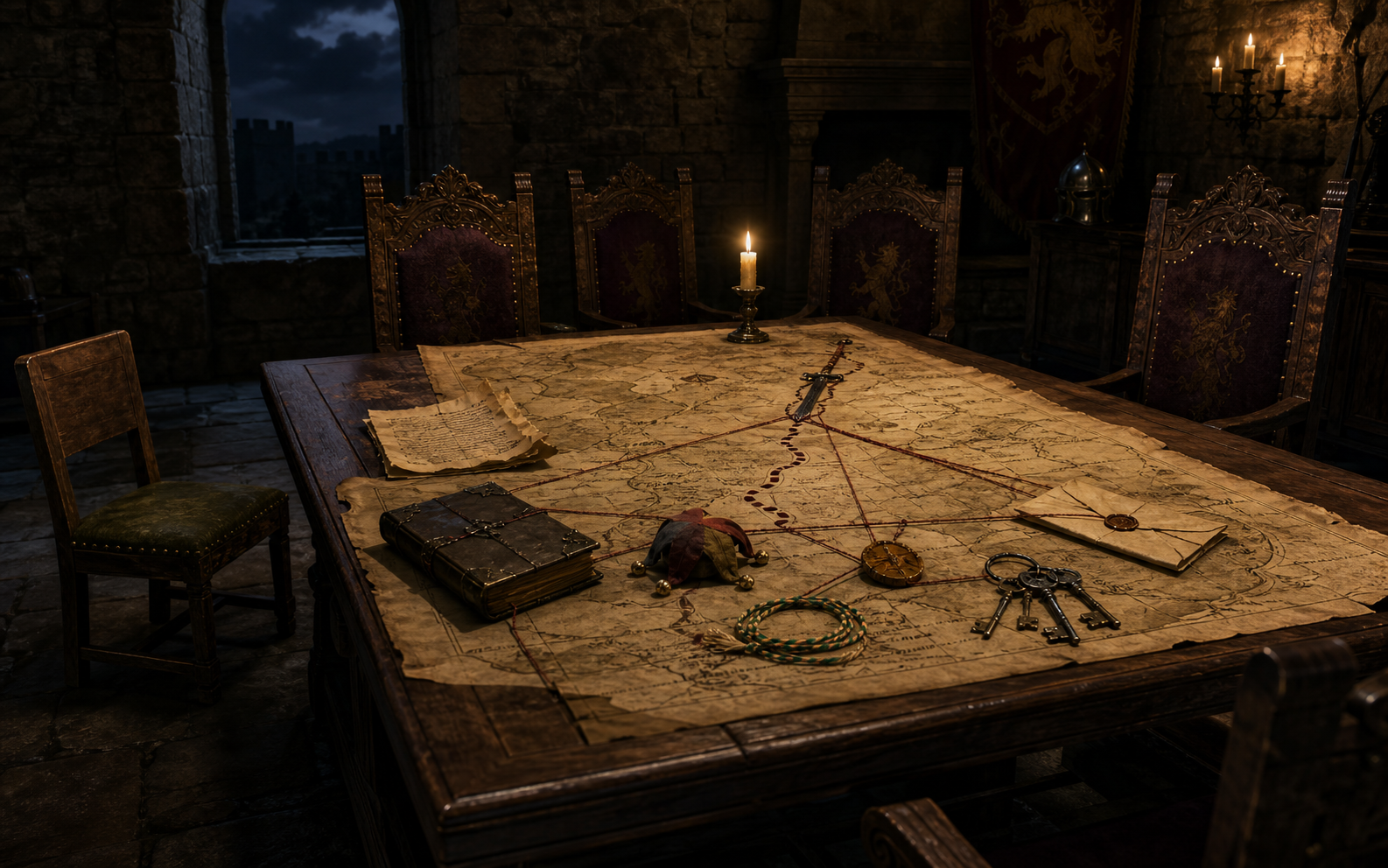
The sword search becomes possible because people compare forms of evidence the council’s hierarchy does not value equally. Manuscripts matter, but so do Gutrun’s escape testimony, Miriamele’s political imagination, Simon’s remembered stories, and Towser’s oral memory of Camaris and Colmund. The route to Thorn is not produced by one commanding intellect. It is assembled from witnesses whose authority looks inconvenient until the crisis runs out of respectable answers.
That makes Vorzheva’s exclusion from the war room more than a domestic slight. Josua cannot claim strategy belongs to men at the same moment his cause survives through women’s movement, kinship, warning, disguise, and diplomacy. The council is already using the category of knowledge it pretends is outside the room.
The receipts
Towser remembers the handoff because nobody important bothered to archive him
The investigators know they need the Three Swords, but prophecy does not supply a usable route. Towser remembers Camaris entrusting Thorn to Colmund. That human handoff connects title, custody, and northern loss in a way the formal archive cannot complete. Yet the men around him repeatedly rush the old jester as though the answer should arrive without the person who carried it.
Gutrun’s survival performs the same correction in another register. Her escape carries warning out of danger. Miriamele proposes a diplomatic mission because she can see relationships and obligations the fortress cannot solve by waiting behind walls. These are not soft decorations around the “real” war. They are the information systems allowing the war to have another move.
RaeRae’s take
If the strategy needs her knowledge, stop treating her presence as the distraction
Hierarchies love to separate authority from dependence. The council chair belongs to the official decision-maker; the memory, warning, route, translation, emotional leverage, and lived knowledge can arrive through somebody else and then disappear from the credit. Book 1 keeps making that theft visible by letting the dismissed witness become the hinge.
This does not mean every excluded voice is automatically correct. It means relevance cannot be decided by rank before the evidence is heard. Towser can misremember; manuscripts can conflict; diplomacy can fail; kinship can distort. The answer is comparison, not exclusion. The resistance finally finds Thorn’s trail when unequal sources are allowed to argue together. If Josua wants a different kingdom, his war room has to learn the lesson before victory—not afterward, when everybody’s labor can be polished into his legend.
On the record
Full-spoiler reading receipt
Return to The Dragonbone Chair hub → · Open every Book 1 Rants → · Open the series hub →