
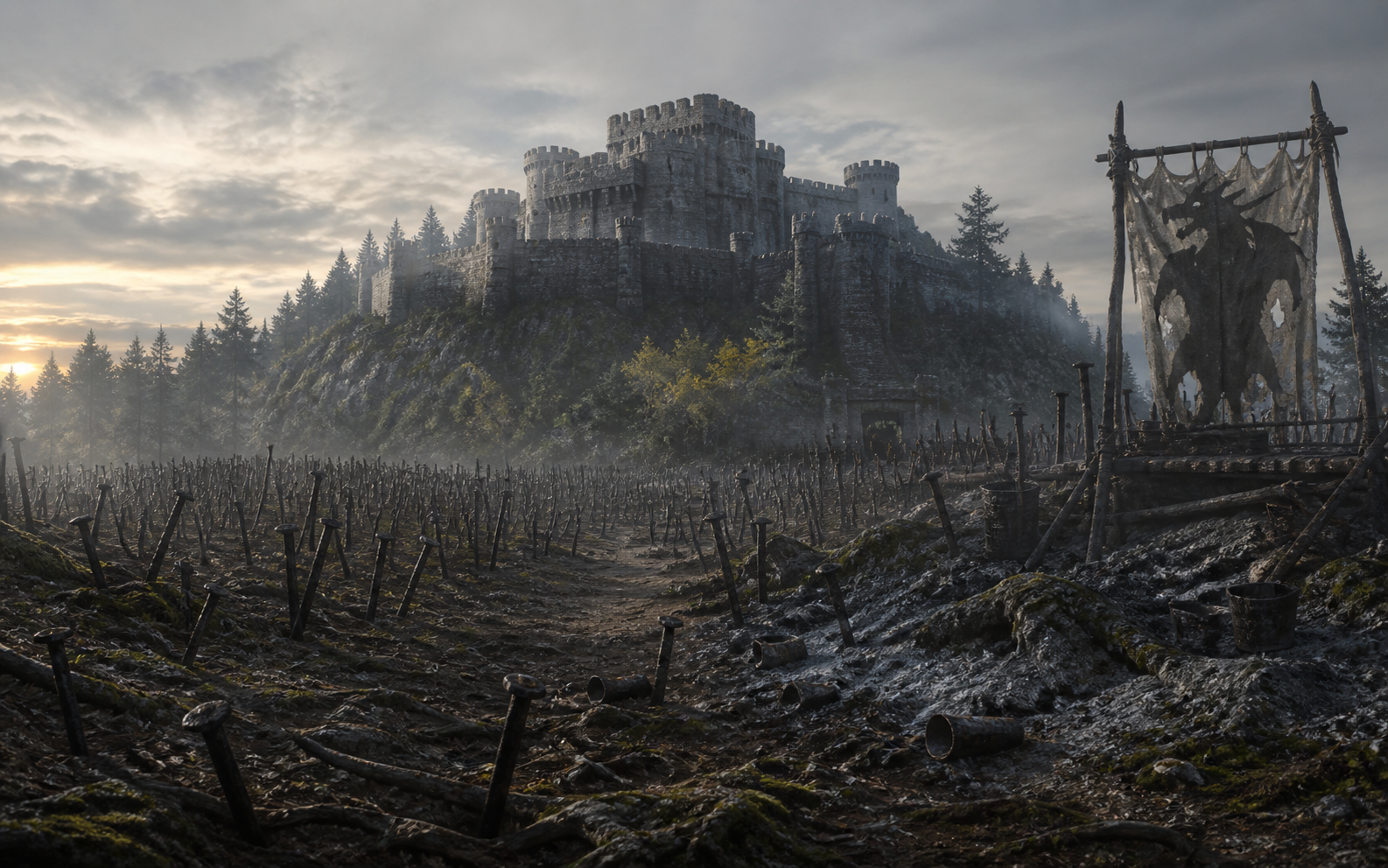
Naglimund Built a Monument to Somebody Else’s Fear
Nail-Fort’s famous defenses begin as iron driven into land the Sithi were forced to abandon.
The thesis
A brilliant defense can still be an ugly historical document
Naglimund’s iron field is tactically ingenious. Aeswides recognizes that iron terrifies and harms the Sithi, then turns that vulnerability into a defensive landscape. The fortress does not merely store weapons behind walls; it makes the surrounding ground itself hostile to the people whose land humanity has occupied.
Calling the design clever does not settle what the design means. The nails preserve an old fear in material form: hammered metal, controlled approach, safety purchased by ensuring somebody else cannot return. Generations later, the architecture looks neutral because the conquest that produced it has been converted into a feature tour.
The receipts
The iron field and the Hunë pyre show fear becoming infrastructure, then entertainment
Simon learns how Nail-Fort earned its name while walking through the surviving iron field, the original all-sides defense now partly obstructed by settlement and market life. The detail matters because ordinary use has grown over a structure created for an extraordinary enemy. History has not vanished; people have simply learned to sell things beside it.
The crowd around the dead Hunë performs a faster version of the same transformation. The corpse is visibly manlike, clothed in rough fabric, yet spectators decorate the story with invented tusks, skull necklaces, and whatever else makes victory feel larger. The pyre stops being evidence of a specific being and becomes a stage on which fear congratulates itself.
RaeRae’s take
Do not flatten different peoples into one monster just because the crowd uses the same voice
The Sithi and the Hunën are not interchangeable, and the threats attached to them are not morally or historically identical. One is an exiled people with a long record of dispossession and conflict; the other enters this chapter through a deadly encounter the defenders have immediate reason to fear. The connection is not “everyone humans fear is secretly the same.” The connection is what spectators do with fear after the encounter.
They turn vulnerability into permanent structure, then turn a body into folklore before the smoke clears. Both acts make complexity easier to govern. Iron says the old inhabitants can be kept out. The invented monster says the new enemy never needed to be understood. Naglimund protects real refugees and later becomes their necessary shelter, which makes the contradiction sharper: a humane refuge can still stand inside somebody else’s wound. The nails do not stop being receipts because good people now need the walls.
On the record
Full-spoiler reading receipt
Return to The Dragonbone Chair hub → · Open every Book 1 Rants → · Open the series hub →