
RaeRae Reviews · Volume 6 · Complete read
The abandoned church was never the Familia. The people were.
The series’ first complete found-family payoff—and an ensemble heist disguised as Bell’s duel.

Loves, bites and the honest verdict
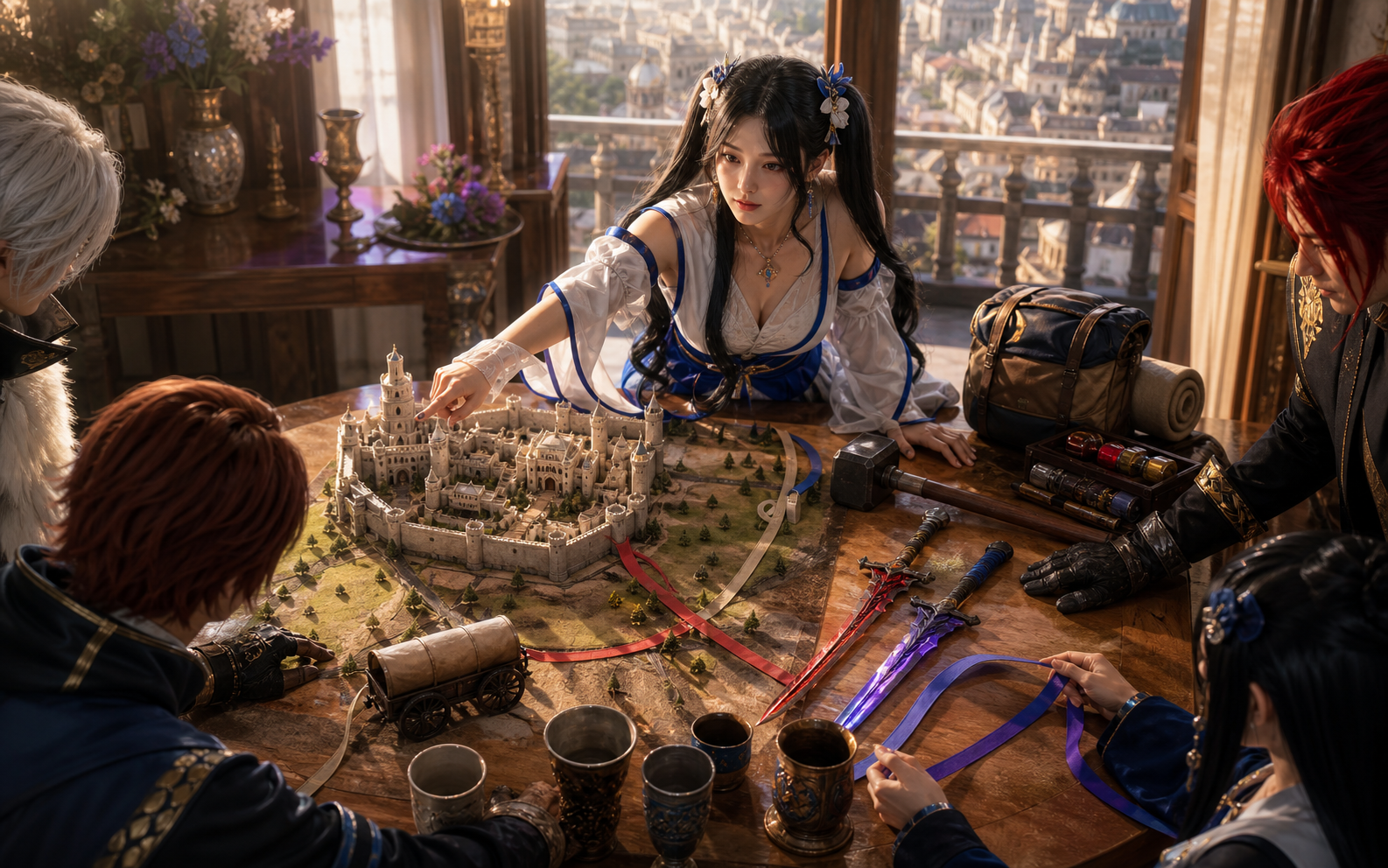
What works
Every new member’s choice costs something
Transfer, reputation, weapons, divine approval and public exposure keep belonging from becoming decorative dialogue.
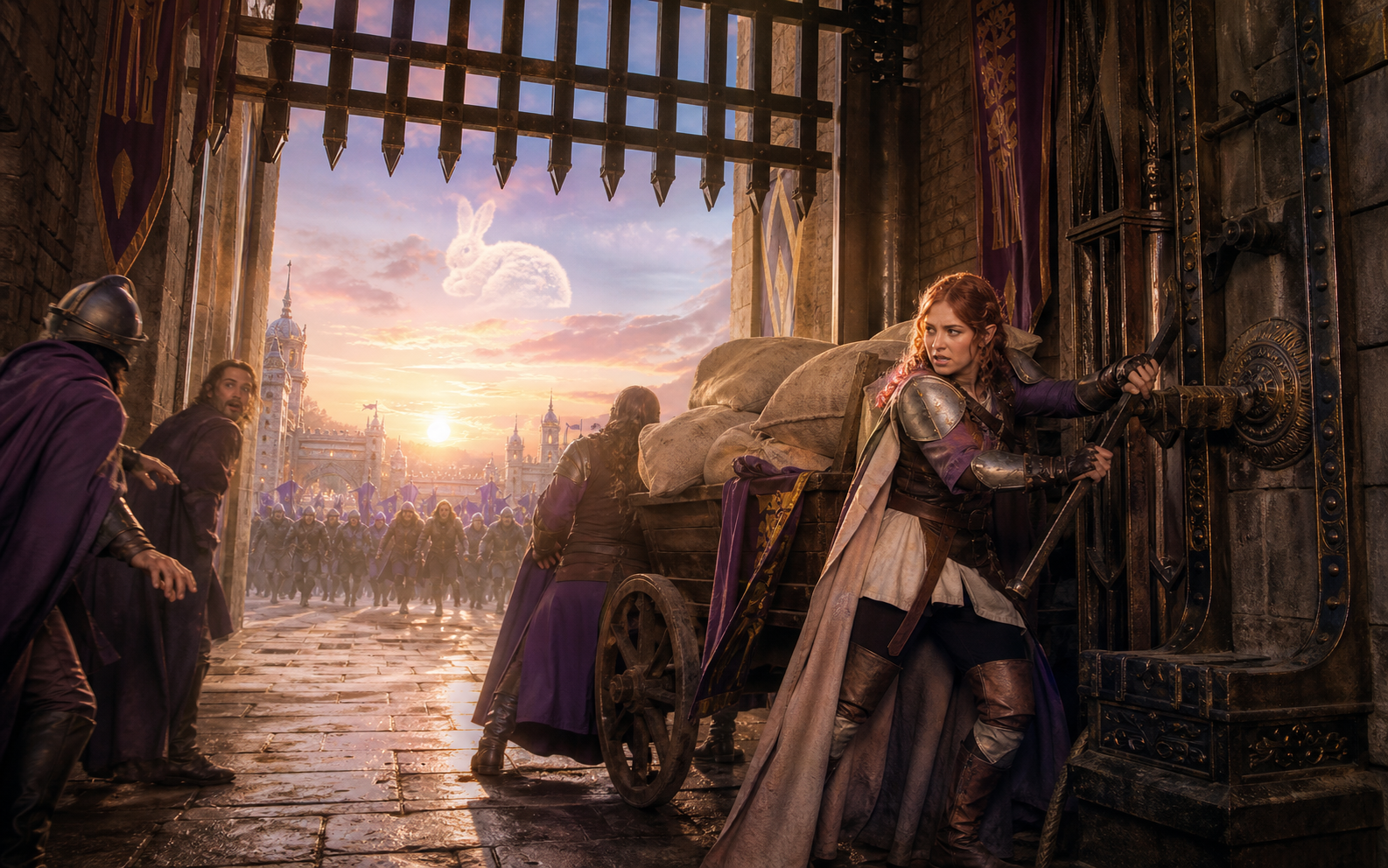
What works
The War Game distributes competence
Lilly writes the plan, Lyu breaks the wall, Mikoto controls the field, Welf supplies the impossible tools and Bell closes.
What bites
Apollo’s predation becomes entertainment
The gods understand exactly what he is doing. Too many treat it as a delightful wager until Hestia makes losing hurt.
The complete RaeRae ruling · full spoilers
The duel belongs to Bell. The victory belongs to the Familia Apollo accidentally forced into existence.
Volume 6 takes the found-family promise that has been accumulating since Bell met Lilly and finally gives it legal, tactical and public form. Apollo thinks he is designing a contest to acquire one exceptional boy. He instead creates the exact pressure under which Welf, Mikoto, Lilly, Lyu and Hestia reveal how much Bell already belongs to relationships he chose.
What works first
Apollo’s courtship language never hides the acquisition strategy
The story is clear that Apollo does not love Bell in any way that recognizes Bell as a person. He wants beauty, talent and the thrill of taking something another god values. The staged Hibachitei insult, Hyacinthus’s violence, public demand and Rabbit Hunt are administrative layers around the same idea: Bell’s refusal should not be allowed to end Apollo’s desire.
That clarity keeps the War Game from becoming a neutral sports arc. Hestia is defending consent against a god wealthy enough to turn coercion into entertainment.
What hurts
The church burns because Apollo understands symbolism too
The abandoned church is shabby and emotionally priceless. Bell and Hestia built a home there when neither could offer the other prestige. Destroying it attacks the evidence that Bell chose Hestia freely before his talent became a commodity.
I appreciate that the ending does not pretend the manor makes the loss convenient. A better building is not the same history. The Familia carries the church forward because the relationships survived, not because destruction secretly improved their real estate.
What deepens the book
Lilly’s captivity makes “belonging” more than a warm word
Lilly’s surrender to Zanis is tactical self-sacrifice: she believes removing herself may remove Soma Familia from Bell’s pursuit. The result exposes how divine affiliation can become imprisonment. Soma’s Falna, Divine Wine and the Familia’s interests all insist the person she rebuilt remains administratively theirs.
Her resistance and eventual Conversion make joining Hestia Familia a recovered act of authorship. She does not get rescued into a new owner. She fights for the right to choose where her name belongs.
The War Game
This is an ensemble heist disguised as Bell’s duel.
Lilly writes the architecture. Welf’s Crozzo Magic Swords make the castle walls irrelevant. Mikoto’s gravity magic turns numerical superiority into a courtyard full of pinned bodies. Lyu applies veteran violence at the points most likely to collapse. Lilly uses Luan’s face and Apollo Familia’s contempt for supporters to open the west gate.
Only then does Bell reach Hyacinthus. Aiz’s training gives him the language for the final opening; his left hand delivers the finish. The duel is personal and real. It is also the last room in a structure everybody else built.
That distribution of competence is why the victory feels hot instead of hollow. Every person is attractive because every person is dangerously good at something the plan requires. Yes, even strategy is hot. Especially strategy.
The emotional MVP
Lilly, opening the west gate
The series introduced her as a supporter people ignored. Volume 6 lets that social invisibility become the decisive weapon. She reads the enemy’s expectations, performs a face they trust and authors Bell’s route to the captain. She is not assisting the important part. She determines where the important part can happen.
The allegiance payoff
Welf and Mikoto join when joining looks terrible
Hestia Familia is homeless, hunted and outnumbered. It has no mansion, security or public guarantee of survival. Welf and Mikoto transfer anyway. Their membership matters because it costs divine approval, reputation and safety before it offers material reward. Found family becomes convincing at the point where affection accepts paperwork and risk.
The quiet tragedy
Cassandra is right in a world built not to believe her
Cassandra sees the violent rabbit and Trojan horse images, but accuracy does not produce authority. Her curse is social isolation disguised as prophecy. Apollo can stage a false grievance the city treats seriously; Cassandra can tell a true warning and remain background noise. The contrast is one of the volume’s sharpest ideas.
What bites
Too many gods treat predation as a delightful program until the victim wins.
The divine audience understands Apollo’s pattern. His appetite, pursuit and habit of collecting people are not secrets. Yet the War Game becomes entertainment because Orario’s gods value spectacle and wagers more reliably than another Familia’s safety. The problem is bigger than one villain. Apollo operates inside a culture willing to call coercion romantic when the powerful person is charismatic enough.
The book sometimes enjoys the pageantry so much that the violation risks becoming seasoning for a fun competition. Hestia’s victory terms restore the teeth: Apollo loses his Familia, assets and place in the city. She makes consequences reach the structures that allowed him to act.
I needed that severity. Anything softer would imply the problem was losing the game rather than arranging the hunt.
The Aiz material
One dance and one brutal lesson both treat Bell as a person capable of meeting her.
The dance is soft because neither has to perform hero or idol. The training is hard because Aiz understands Hyacinthus will not respect Bell’s wish to remain uninjured. She gives him technique that survives exhaustion. Bell using that lesson in the final exchange makes their relationship materially relevant without reducing Aiz to a romantic prize or emergency rescue.
Tiona’s participation strengthens the same point. Powerful women help Bell grow without the story pretending their strength threatens his heroism.
Why Volume 6 matters
Hestia Familia stops being a premise and becomes an institution.
Before this, “Familia” can mean Bell and Hestia’s private bond with Lilly and Welf operating nearby. After the War Game, the group has transferred members, shared risk, demonstrated complementary skills, defeated a larger organization and accepted a common home. Orario has witnessed the identity they built.
The manor is the visible outcome, not the proof. The proof occurred when people gathered around a homeless goddess and a hunted boy knowing the invitation came with a siege attached.
Apollo believed Bell’s value made him collectible. Volume 6 answers that Bell’s value is inseparable from his choices and relationships. He is not isolated treasure. He is family.
Final RaeRae verdict
Bell wins the duel. Lilly wins the map. Welf wins the walls. Mikoto wins the field. Hestia wins the right to say who her family is.
Volume 6 is the series’ first complete found-family payoff: coercive courtship with real consequences, a siege that distributes competence and a new home earned by people who became a Familia before the keys existed.