
Volume 6 · Tropes and themes · Full spoilers
The building was never the family.
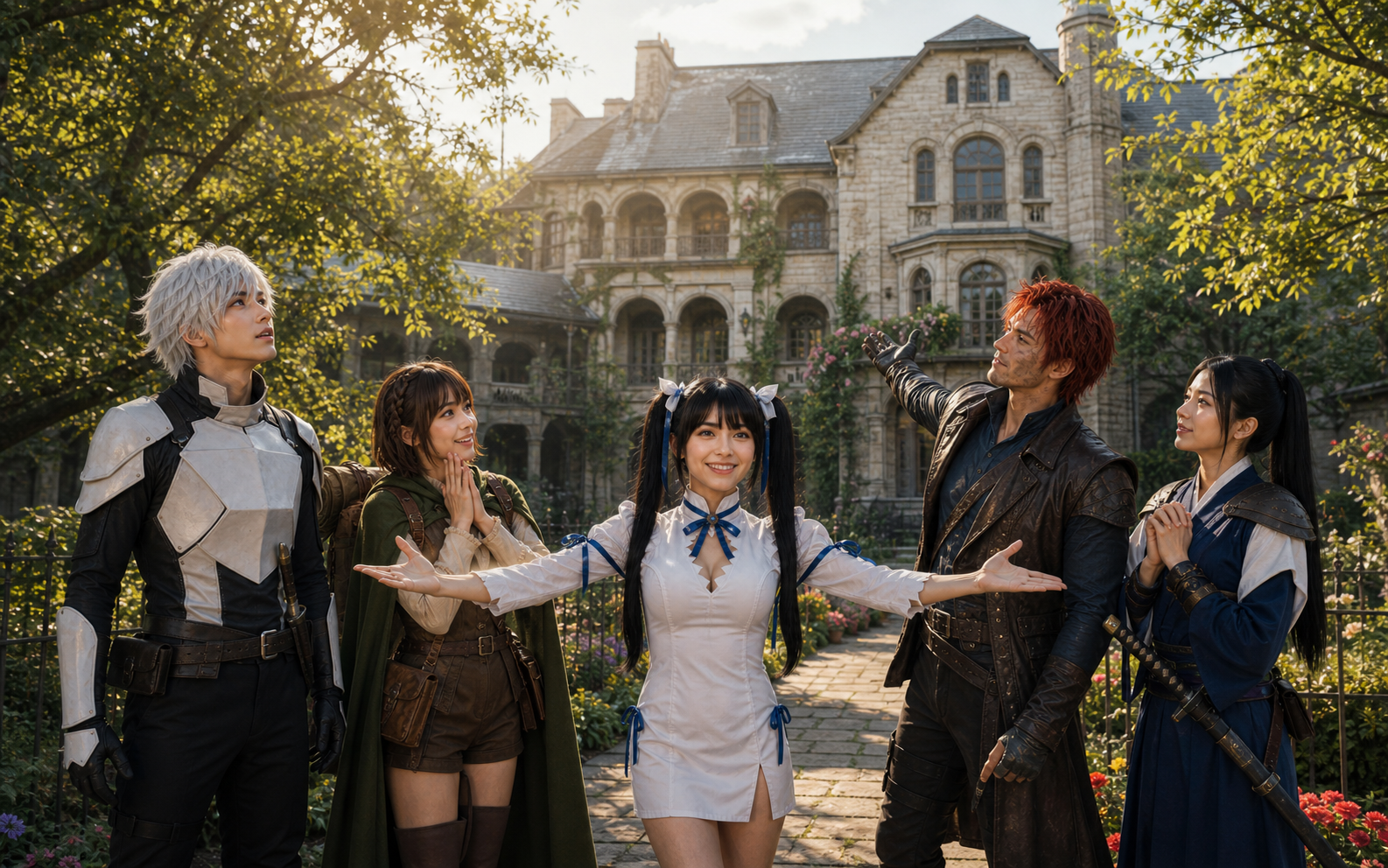
The ideas doing the heavy lifting
Theme
Found family becomes structure
Affection stops being private and becomes contracts, housing, risk, labor and a name five people agree to carry.

Theme
Possession dressed as love
Apollo treats Bell’s refusal as flirtation because acknowledging consent would end his entire plot.

Theme
Identity under intoxication
Divine Wine creates obedience by dissolving the self. Lilly wins by holding onto the person she chose to become.

System
Familia as divine contract
Belonging is emotional, but Falna makes it administrative. Leaving requires the old god to release what the new god welcomes.

Motif
Prophecy nobody wants
Cassandra’s curse is not that she is vague. It is that accuracy does not produce social credibility.

Theme
The duel crowns ensemble labor
Bell gets the final exchange only after every other member creates the route, weapons, breach and time.
RaeRae’s trope board · consent, contracts and one demolished church
The volume asks who gets to name a relationship—and what happens when power refuses the answer.
Apollo calls possession love, calls refusal flirtation and calls a staged provocation injured honor. Soma Familia reduces belonging to addiction and divine contract. Against both systems, Hestia Familia builds a messier definition: people choose one another, perform labor, accept risk and then create structures capable of honoring the choice.
Theme 01 · possession dressed as romance
Apollo’s plot only works if Bell’s “no” means nothing
Apollo treats pursuit as proof of passion and resistance as part of the game. Acknowledging Bell’s refusal would collapse the fantasy that desire grants jurisdiction. The trope is not merely “predatory admirer.” It is a powerful person using witnesses, custom, violence and legal ritual to translate appetite into entitlement.
The War Game matters because it exposes the machinery underneath the romantic language.
Theme 02 · home under attack
The building was never the family—and losing it still hurts
The church is materially poor and emotionally irreplaceable. Apollo destroys the first place where Bell and Hestia chose one another before either had status worth stealing. The story avoids the easy lesson that “home is people” means buildings do not matter. People make a home meaningful; destroying it is an attack on their shared memory.
The manor at the end does not replace the church. It gives the expanded Familia room to continue what began there.
Theme 03 · identity under intoxication
Divine Wine makes obedience feel like desire
Soma’s wine attacks the distinction between want and compulsion. Lilly’s old Familia benefited when she could not defend a stable self against that experience. Her resistance is therefore more than surviving a substance. She holds onto the person built through Bell, Hestia and her own repeated choices.
Recovery is not framed as purity. It is the ability to keep authorship while an old system insists it still owns her.
System 04 · belonging as contract
Falna turns an emotional truth into divine administration
Welf and Mikoto can love Bell’s group before they belong to Hestia Familia on paper. Lilly can reject Soma Familia emotionally while her Falna remains under Soma’s authority. Conversion exposes the administrative layer beneath found family: the old god must release what the new god welcomes.
The system makes consent complicated because divine paperwork can lag behind the human relationship—or be used to imprison it.
Motif 05 · unheard prophecy
Cassandra is accurate and socially powerless
Cassandra’s curse is not vague prediction. It is the inability to convert truth into credibility. Her warning exists in a community trained not to believe her, which makes accuracy emotionally isolating rather than empowering. Volume 6 uses her as a quiet counterpoint to Apollo: he can manufacture a false story people accept; she can tell a true one nobody will hold.
Theme 06 · asymmetric warfare
A tiny Familia wins by refusing the large Familia’s preferred battle
Hestia Familia cannot match Apollo’s numbers, resources or defensive position. Lilly’s plan converts difference into advantage. Magic swords remove walls, gravity removes movement, disguise removes trust and Bell removes the captain. Each member attacks a system rather than trying to win a fair contest Apollo designed to favor himself.
Theme 07 · chosen allegiance
Membership becomes meaningful when joining is inconvenient
Welf and Mikoto transfer while Hestia Familia is homeless, hunted and facing a ridiculous War Game. Lyu fights without the protection of formal membership. Their choices carry weight because the Familia offers no immediate prestige or safety. Belonging is demonstrated through accepted risk before it becomes housing and celebration.
Theme 08 · ensemble labor
The duel is the final corridor, not the whole siege
Bell defeats Hyacinthus, but the duel exists only because Welf breached the castle, Mikoto pinned the courtyard, Lyu disrupted the defenders and Lilly opened the gate. The hero’s visible finish crowns ensemble labor. It does not retroactively turn everyone else into an audience.
Theme 09 · public debut
A private family becomes an institution Orario can see
The War Game broadcasts Hestia Familia’s methods, loyalty and competence. Apollo wanted a public ritual that would transfer Bell into his collection. The result publicly establishes the very group he dismissed. Bell remains its star, but the city now knows the names and functions surrounding him.
The central receipt
Apollo has followers, assets and a castle. Hestia has consent.
The volume does not pretend consent is automatically stronger than power. The church burns. Bell is hunted. Lilly is captured. Consent requires strategy, allies, tools and consequences capable of defending it.
That is what turns found family from a warm feeling into structure: a name, contracts, housing, labor and people willing to make “no” survive contact with someone powerful enough to ignore it.
The building was never the family. The family is the group that rebuilds after somebody destroys the building to prove they can take one of its people.