
Tools
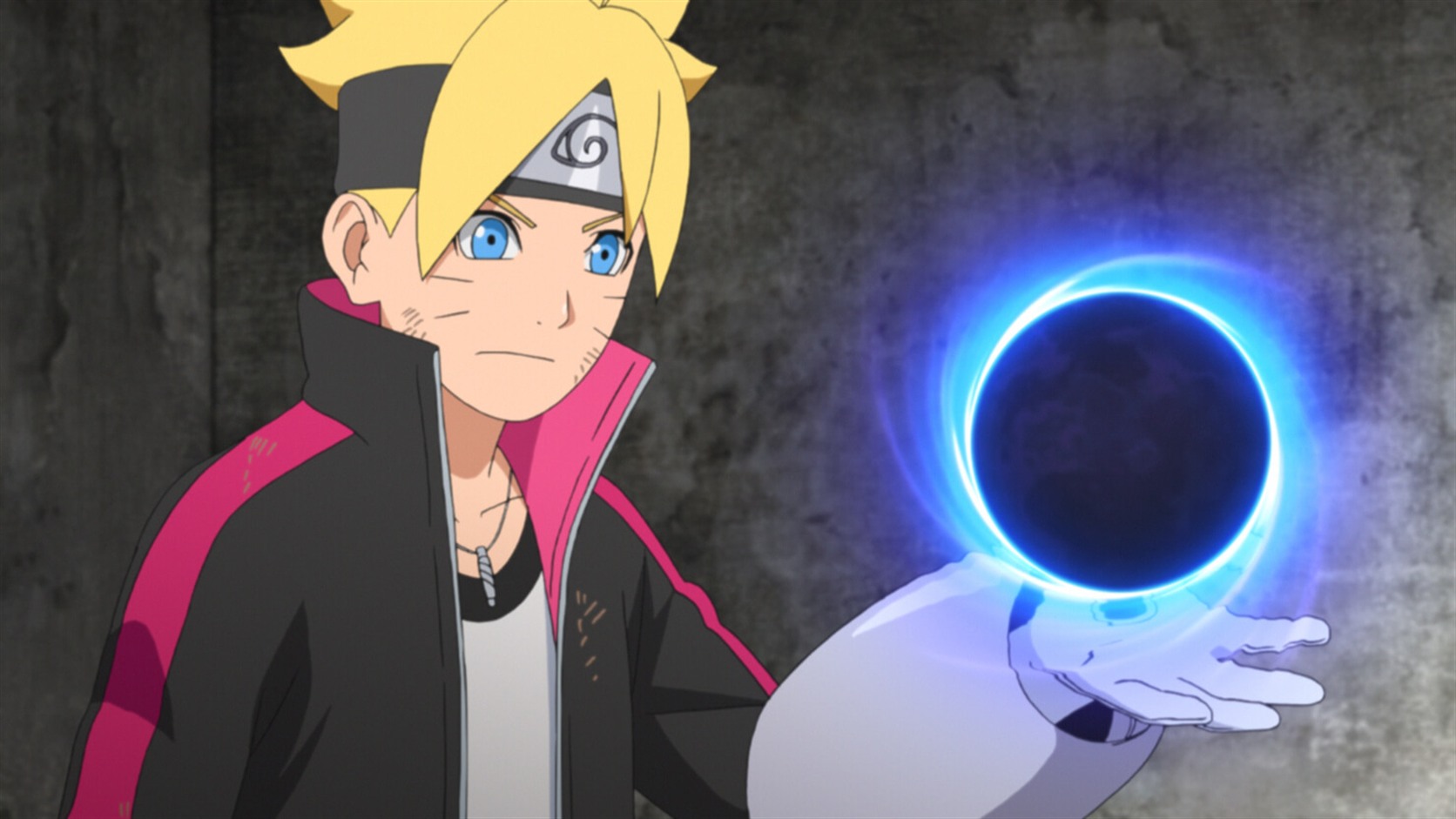
Team 7 refuses another disposable sacrifice, Katasuke turns guilt into repair, and Boruto prepares to stop Ao without letting one abuser define every scientific ninja tool.
Series: Boruto: Naruto Next Generations
Episode: 185 · Tools
Arc: Vessel
Release: 2021-02-07
Previous: Episode 184 · Puppets
Directory: All 293 Boruto episodes
Bottom line
Episode 185 refuses to let grief become an excuse for another disposable person. Konohamaru offers himself as bait. Katasuke offers himself next because guilt has convinced him that punishment equals responsibility. Boruto rejects both plans and finally states the lesson this arc has been building: scientific ninja tools deserve judgment through purpose and use, not fear born from one abuser. Team 7 chooses a harder route, keeps everyone inside the plan, studies Ao’s missing Byakugan, and turns Katasuke’s remaining absorption arm into a countermeasure. “Tools” is mostly preparation, but the preparation carries the whole argument.
Mugino’s absence fills the room
The survivors hide inside an abandoned structure, yet Mugino remains present through every silence. Boruto saw him die. Konohamaru lost a partner. Katasuke knows one of his inventions helped Ao make the killing possible.
Nobody receives enough time to grieve because Ao is still searching. Shinobi duty demands movement while shock has barely formed into language. The episode understands that survival can feel cruel when continuing means leaving somebody behind.
Healing foam proves the lab was never a detour
Sarada applies healing foam to Konohamaru’s injuries. A device tested during the lighter laboratory episode now keeps the team leader functional after a lethal encounter.
That continuity matters. Scientific ninja tools are not a theme pasted over the plot. The medical foam affects who can move, think, and fight. Katasuke’s work serves the rescue even while another part of his research sits on Ao’s arm.
Konohamaru thanks the person who built the support
Konohamaru thanks Katasuke for developing the treatment. Gratitude names labor that action stories often treat as background magic. Somebody researched the material, tested the application, documented the dose, and made field use simple enough for Sarada.
The thanks also interrupts Katasuke’s growing belief that every invention connected to him has become poison. One tool harmed Mugino through Ao. Another tool now treats Konohamaru.
Mitsuki checks the pursuit instead of guessing
Mitsuki assesses that Ao is not immediately following. His calm observation gives the group a small planning window. Sarada wants to retreat as soon as Konohamaru can travel.
Both choices show discipline. Fear may demand instant flight or instant revenge, but the team checks injuries, distance, enemy behavior, and mission priority first.
Boruto cannot put Mugino into past tense yet
Boruto’s frustration comes from grief, anger, and helplessness crashing together. Mugino shared his food, his apartment, his history, and the key to a life he pretended not to value. Then Boruto watched him choose a collapsing cave.
Konohamaru explains that Mugino made a decision to protect them. That truth does not make the death fair. The purpose of the choice lives in the survivors refusing to waste the time he created.
Sacrifice should not become contagious
Konohamaru decides the recovered intelligence must reach Konoha and offers to remain as a decoy. The logic sounds familiar because shinobi culture trains adults to convert themselves into mission resources.
Team 7 immediately sees the problem. Konohamaru is exhausted and injured. Repeating Mugino’s strategy would not honor Mugino by default. One desperate sacrifice does not create a moral coupon for the next adult to disappear.
The genin refuse the easy tragedy
Boruto, Sarada, and Mitsuki challenge Konohamaru’s plan. Their refusal matters because rank usually tells them to obey. They understand the tactical goal but reject a strategy built around guaranteed loss before every other option receives serious thought.
This is not childish denial. Team 7 has evidence, tools, numbers, and knowledge of Ao’s capabilities. They want a plan that uses those assets instead of turning their teacher into bait.
Katasuke volunteers because guilt wants a body
Katasuke offers himself next. He confesses that genjutsu forced information about his research from him and connects that leak to Kara’s weapons and Mugino’s death.
His guilt is understandable, but his proposed solution is punishment dressed as tactics. Dying in front of Ao would not recover the stolen research, protect future users, or bring Mugino home. Shame often offers one dramatic payment because long repair feels harder.
Coercion does not become consent after the damage
Katasuke was manipulated. Kara violated his mind and extracted knowledge. Security practices deserve review, but the person subjected to genjutsu did not freely hand an enemy a weapon manual.
Victims can still participate in repair without accepting the abuser’s guilt. Precision matters because Kara benefits when Katasuke starts treating himself as the true criminal.
Responsibility is not self-erasure
Katasuke has real responsibilities now. He can explain the stolen systems, build counters, secure later research, cooperate with investigators, and warn users about copied technology. None of those duties require him to die.
Self-erasure would remove the expert most capable of understanding the threat. Kara would gain another corpse and lose an obstacle.
Boruto admits his old judgment out loud
Boruto tells Katasuke that he once believed scientific ninja tools should not exist. The Chunin Exams gave him a personal reason to hate the field. He used a prohibited device to fake mastery, got exposed, and attached that humiliation to every invention.
Admitting the old position gives his new argument weight. Boruto is not defending a belief inherited from adults. He changed after seeing evidence.
The laboratory changed Boruto because people lived there
Sumire researched coexistence with Nue. Chamaru ran on a prosthetic leg. Medical foam treated an injury. Mobility tools conserved chakra. The chakra blade displayed a serious energy cost instead of hiding the flaw.
Boruto did not fall for a product pitch. He watched technology return choices, then watched researchers acknowledge limitations. That combination earned trust.
Boruto will not let Ao define every invention
Ao uses scientific ninja tools to murder, ambush, and conceal. Boruto understands that spectators could see those acts and reach the same sweeping conclusion he once reached.
He wants to stop Ao partly because people deserve protection and partly because abuse should not own the public meaning of the technology. One violent user cannot become the entire history of prosthetics, medicine, research, and support.
Protecting a field still requires criticizing the field
Boruto’s defense does not mean Katasuke’s lab becomes sacred. Researchers still need security, consent, oversight, transparent failure reporting, and rules for military use. The Chunin Exams remain a failure involving both Boruto and Katasuke.
Nuance asks for more accountability, not less. A field capable of helping bodies and scaling violence deserves close scrutiny without lazy condemnation.
Konohamaru changes the plan because leadership listens
Konohamaru accepts the team’s argument and abandons the decoy strategy. Authority does not collapse when a leader revises a plan. Trust grows because the genin know evidence can reach him.
The group moves from choosing who dies to asking how Ao fights. That shift turns grief into analysis without pretending the grief has ended.
Kara’s traitor hunt shows another kind of tool
Code and Delta accuse each other while Amado describes efforts to identify the traitor among the Inners. Jigen treats members as assets whose loyalty must be measured and whose maintenance can be withheld.
Kara calls people members while handling them like replaceable equipment. The organization’s obsession with tools extends beyond machines.
Missing maintenance becomes political evidence
Boro and Kashin Koji have skipped expected maintenance. Inside Kara, a missed appointment becomes a clue about allegiance because Amado’s technical access also functions as surveillance and control.
Maintenance can support a body, but dependence on one gatekeeper creates leverage. Kara’s augmented members gain power while surrendering privacy and autonomy to the person holding the diagnostic tools.
Code and Delta mistake hostility for independence
Code and Delta trade insults and suspect each other. Their aggression looks rebellious, yet both remain inside Jigen’s assignment structure. Loud contempt does not equal freedom.
Kara encourages rivalry because isolated members compare themselves against peers instead of examining the system controlling all of them.
Kashin Koji audits Ao’s loyalty
Koji meets Ao and questions his commitment. Ao insists on loyalty to Kara. The exchange reveals that Ao’s field record and past as a shinobi do not grant trust. Kara expects proof through continued violence.
Ao escaped one identity crisis by entering an institution that keeps demanding another demonstration of usefulness.
Ao calls himself a tool before anyone else can
Ao has reduced his purpose to service. Calling himself a tool may sound like certainty, but the label avoids the harder question of choice. Tools do not carry guilt. People do.
Kara gives Ao a role that converts survival into obedience. His injuries and alienation help explain why that offer reached him. They do not remove responsibility for Mugino’s death.
The screwdriver lesson returns with teeth
On the train, Ao showed Boruto that a screwdriver could repair or injure depending on use. Now Ao has chosen injury while Boruto prepares to use a weapon for protection.
The lesson was true even when the teacher betrayed the principle. Hypocrisy does not make the principle false. Ao’s failure demonstrates why users cannot hide behind neutral objects.
Team 7 inventories Ao instead of mythologizing him
Ao is a veteran, a sensor, an experienced killer, and an augmented operative. Fear could turn him into an unbeatable legend. The team instead lists known capabilities and losses.
He has an absorption arm, concealed weapons, combat experience, and Kara support. He no longer has the Byakugan. Every strength and absence belongs in the plan.
The missing Byakugan creates the blind spot
Ao once possessed the Byakugan and could see attacks from angles ordinary vision missed. His current prosthetic eye does not restore that exact perception. Team 7 can exploit a rear blind spot.
Disability does not make Ao lesser as a person. Battlefield analysis still includes sensory capability. Respecting a body does not require pretending every function remains unchanged.
The stolen absorption arm can become bait
Ao trusts the gauntlet because the device neutralized Boruto’s Rasengan. Team 7 plans to feed that confidence, force absorption, and attack from an angle the tool cannot cover.
The strategy targets dependence rather than raw power. A strong defense can narrow the user’s attention if success becomes automatic.
Boruto reaches for the chakra blade too soon
Boruto activates the prototype chakra blade and immediately loses too much chakra. The impressive weapon drains the person holding the handle. Episode 183 already showed that cost, and urgency has not removed the limit.
Determination cannot renegotiate physics. A tool becomes dangerous when enthusiasm ignores the user’s capacity.
Passing out is not proof of devotion
Boruto collapses because the blade consumes his chakra. Nobody praises the collapse as heroic commitment. The group treats the result as failed equipment fit.
That response matters in a culture that often rewards endurance past safety. A mission needs Boruto conscious more than the mission needs a dramatic glowing sword.
Katasuke modifies the remaining arm for Boruto
While Boruto recovers, Katasuke adjusts the remaining absorption arm for his body and planned role. The scientist answers guilt with useful labor instead of sacrifice.
Customization respects the user. Katasuke does not hand Boruto a generic device and demand adaptation. He changes the interface so Boruto can act within the strategy.
The tool does not replace Boruto’s training
Boruto still needs timing, clones, movement, judgment, and trust in Sarada and Mitsuki. The absorption arm supplies one capability against Ao’s weapon system. The device does not manufacture leadership or courage.
That distinction resolves the Chunin Exams argument. Hidden technology used to claim false mastery is cheating. Declared technology integrated into a team plan is equipment.
Sarada and Mitsuki remain essential to the counter
The plan depends on multiple angles and coordinated pressure. Boruto cannot simply wear the gauntlet and become the answer. Sarada reads openings. Mitsuki controls space. Konohamaru brings experience. Katasuke understands the hardware.
Shared strategy prevents the newest object from swallowing the people around the object.
“Tools” applies to people only when power wants obedience
Kara treats Ao as a disposable operative. Katasuke treats the absorption arm as equipment adjusted for a person. Konohamaru briefly treats himself as bait. Katasuke briefly treats himself as payment.
The episode draws a boundary: objects can be used, repaired, replaced, and discarded. People deserve choice, context, and a plan that does not begin with their disposal.
The episode spends time on planning because planning is character
No major battle resolves here. The group heals, argues, confesses, analyzes, and prepares. Those actions reveal who everyone has become.
Boruto now defends responsible research. Konohamaru listens. Katasuke chooses repair over punishment. Sarada and Mitsuki insist on collective survival. Ao chooses servitude while calling the choice purpose.
The healing foam quietly answers the Chunin Exams
The prohibited gauntlet gave Boruto an impressive result while hiding the absence of training. Healing foam does the opposite. The user makes no false claim. The treatment stabilizes a wound so Konohamaru can continue making decisions with his team.
Both objects came from scientific research, but only one entered a dishonest performance system. The comparison proves that moral judgment belongs with context, consent, and purpose rather than a blanket fear of engineered support.
Konohamaru’s decoy plan exposes an old leadership habit
Adult shinobi often protect younger teammates by deciding alone that their own death is the acceptable cost. The impulse comes from care, but unilateral sacrifice also denies everyone else a voice.
Team 7 challenges that habit. They do not reject Konohamaru’s authority or Mugino’s courage. They demand a strategy where leadership includes listening to the people being protected.
Katasuke needs recovery from coercion too
The episode treats Katasuke’s genjutsu mostly as a source of guilt and leaked research. Mind violation also leaves trauma. He lost control of his knowledge and then saw copies of that knowledge used against people beside him.
Repair should include care for Katasuke, not only security interrogation. A village that values his work cannot treat the researcher as another damaged component expected to function without support.
Boruto’s defense of science carries personal humility
Boruto has to admit that his earlier certainty was wrong. That admission costs pride because the Chunin Exams remain one of his most public failures. He separates a justified memory of shame from an unjustified judgment about every future tool.
Growth becomes credible when the character names the bad conclusion instead of pretending the new belief was always present.
The plan respects Ao enough to take him seriously
Team 7 does not assume a veteran with prosthetics can be overwhelmed by younger bodies and louder chakra. They study his combat history, current vision, absorption habit, concealed weapons, and psychological dependence on the equipment.
Respecting an opponent means refusing both pity and mythology. Ao is dangerous because of experience, choices, and technology working together.
Boruto’s fitted arm creates accountability through visibility
Everyone knows Boruto will use the absorption device. Katasuke fitted the unit. Konohamaru approved the plan. Sarada and Mitsuki understand their supporting roles. The tool enters the mission through shared knowledge.
That visibility creates accountability. If the system fails or causes harm, the team can examine the decision instead of discovering a hidden shortcut after victory.
Kara’s maintenance system is the warning behind Katasuke’s lab
Amado can monitor, repair, and withhold support from augmented members. The same technical access that keeps bodies functional can become a leash when one organization controls every replacement and diagnosis.
Konoha’s laboratory needs safeguards against that concentration of power. Patients should understand their devices, receive repair continuity, and retain choices beyond loyalty to one engineer or institution.
Preparing to fight does not finish grieving
Boruto’s new resolve could look like grief has been neatly converted into motivation. The emotional debt remains. Mugino still died, Konohamaru still lost a partner, and the turtle still waits in an apartment whose owner will not return.
Action postpones mourning because Ao remains close. The village will owe Mugino more than a mission report once Team 7 reaches safety.
The abandoned shelter becomes a temporary ethics room
Nobody planned a philosophical debate in a damaged building. Pressure forces one anyway. The group has to decide whether guilt authorizes self-sacrifice, whether stolen research condemns a whole field, whether rank can end disagreement, and whether a wounded enemy deserves a strategy more careful than revenge.
Those questions shape the coming fight before a single new attack lands. Team 7’s advantage begins with refusing Kara’s vocabulary. They will not call Katasuke disposable, will not call Boruto a delivery system for the gauntlet, and will not call Mugino’s death permission to stop thinking.
A real countermeasure includes the person wearing the device
Katasuke adjusts the arm to Boruto rather than asking Boruto to tolerate a poor fit. He also explains the activation window and expected use. Information gives the wearer a chance to understand risk.
That process separates support from control. Kara modifies people to satisfy missions chosen above them. Katasuke modifies equipment around a user participating in the plan. The hardware may share an engineering lineage, but the relationship around the hardware changes everything.
What I am watching next
Team 7 has a plan built around Ao’s absorption habits and lost Byakugan, but plans rarely survive first contact without adjustment. Ao remains experienced enough to recognize patterns and brutal enough to attack Katasuke or Konohamaru first.
Boruto must use a tool without repeating his old dependence on shortcuts. The difference will come from transparency, teamwork, and whether he can make the gauntlet serve a strategy rather than letting the gauntlet become the strategy.
RaeRae’s verdict
“Tools” earns its quiet pace because the argument happens before the fight. Mugino’s death tempts every adult toward another sacrifice. Team 7 refuses. Katasuke’s guilt tempts him to call death accountability. Boruto refuses that too. The kid who once blamed a whole field for his own worst decision now explains why Ao cannot own the meaning of every scientific ninja tool.
The strongest turn belongs to Katasuke. He begins ready to become bait and ends by fitting an absorption arm to Boruto. One choice removes a life. The other uses expertise to protect several lives. That change is the episode in miniature. Tools need users, but users also need institutions and teammates willing to challenge how power gets used. Team 7 walks toward Ao carrying technology openly, with a shared plan and no disposable person. Kara cannot say the same about anyone under Jigen.
Sources and lawful viewing
Official episode reference: Naruto Official episode guide
Licensed episode route: Crunchyroll licensed series page